
- 0
- 2,452 words
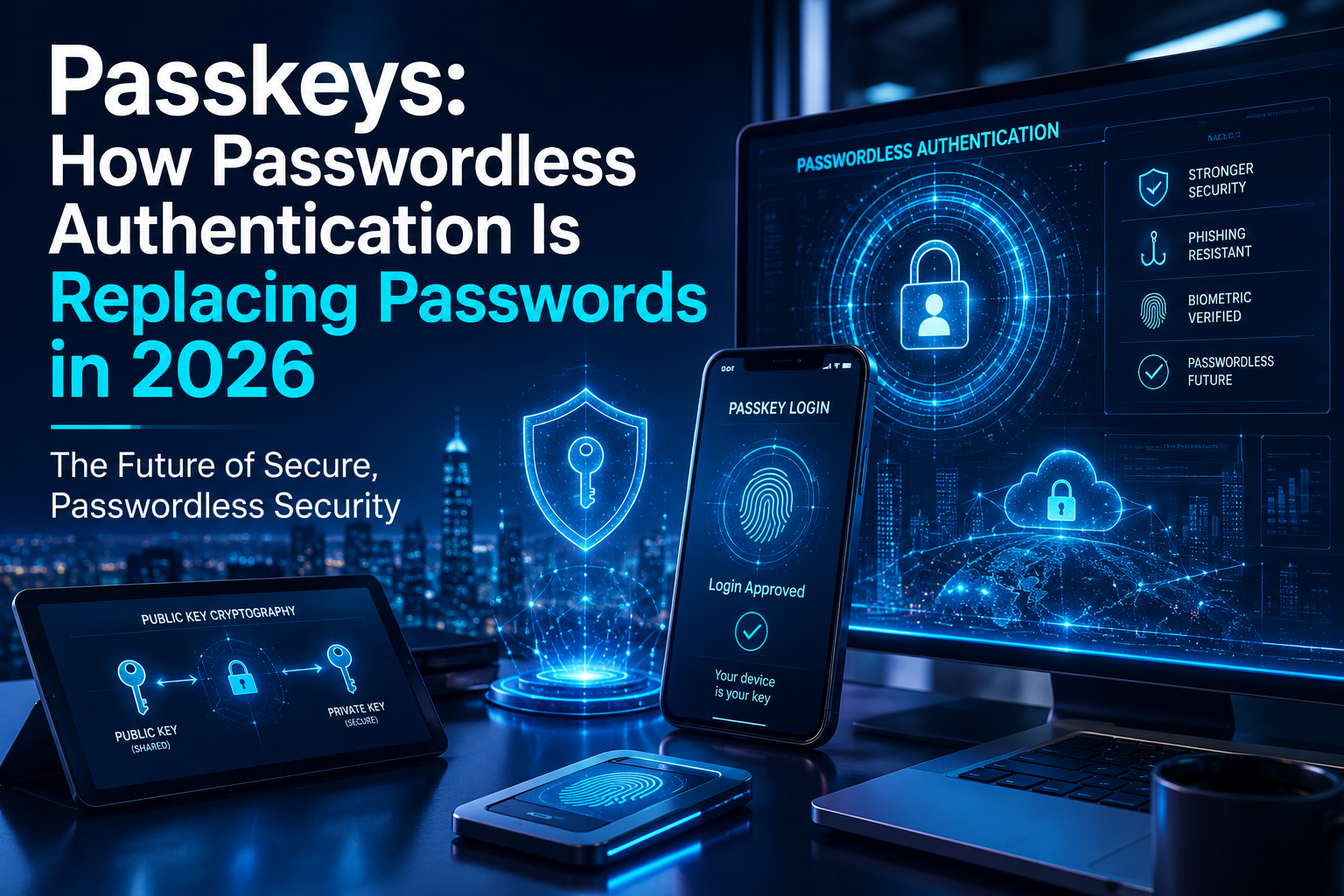
If you’ve ever forgotten a password, reset the same account multiple times, or worried that your login credentials were exposed in a data breach, you’re not alone. During my 15 years working in cybersecurity, I’ve watched organizations spend millions of dollars protecting passwords—yet attackers continued finding new ways to steal them. That experience convinced me of one important truth: passwords were never designed for today’s digital world.
The rise of passkeys, passwordless authentication, and modern passkey login technology is changing how we protect our online identities. Instead of relying on complex passwords that people often reuse or forget, passwordless security uses cryptographic keys stored securely on your trusted devices. This approach makes phishing attacks significantly harder while creating a faster and more convenient login experience.
Over the past few years, I’ve helped businesses transition from traditional passwords to passwordless authentication. Initially, many teams worried employees would struggle to adapt. Surprisingly, the opposite happened. Help desk tickets for password resets dropped dramatically, login success rates improved, and employees appreciated being able to authenticate with a fingerprint or facial recognition instead of remembering another complicated password.
The momentum behind passkeys has accelerated even further in 2026. Technology leaders such as Apple, Google, Microsoft, GitHub, and many financial institutions have embraced passkey login because it delivers stronger protection against phishing, credential theft, and password reuse attacks.
In this guide, I’ll explain how passkeys work, why passwordless authentication is rapidly replacing passwords, how passkeys vs passwords compare, and what businesses and everyday users should know before making the switch.

What Are Passkeys?
Understanding Passkeys
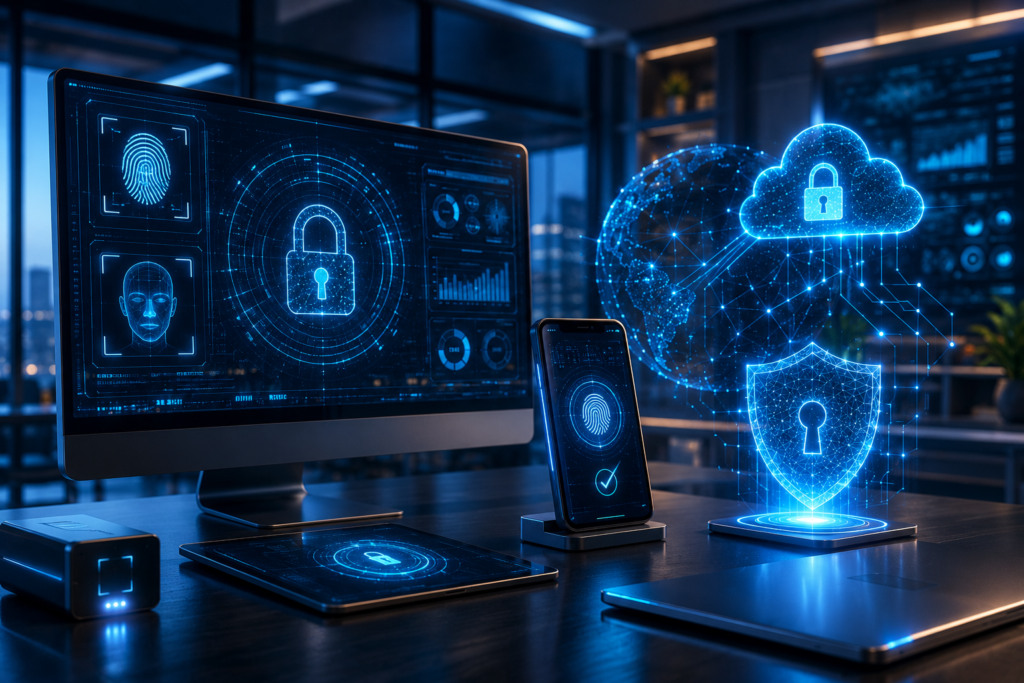
At their core, passkeys are a modern replacement for passwords. Instead of creating and remembering a secret string of characters, your device generates a unique pair of cryptographic keys. One key remains securely stored on your device, while the other is shared with the website or application you’re signing into.
This means your private authentication key never leaves your device. Even if a company’s servers are compromised, attackers cannot steal your passkey in the same way they can steal passwords from traditional databases.
From my experience implementing authentication systems, this architectural difference is one of the biggest security improvements I’ve seen in years. Businesses no longer need to worry about protecting massive password databases because there simply aren’t passwords to steal.
The Technology Behind Passwordless Authentication
Modern passwordless authentication relies on internationally recognized standards such as FIDO2 and WebAuthn. These standards allow your device and a website to verify each other’s identity using secure public key cryptography.
When you use passkey login, your device confirms your identity with a fingerprint, Face ID, Windows Hello, or another secure method before signing the authentication request. The process happens in seconds and dramatically reduces the risk of phishing attacks because there is no password to enter into a fake website.
Why Passkeys Are More Secure
One lesson I’ve learned from years of security consulting is that attackers almost always target people rather than technology. Phishing emails, fake login pages, credential stuffing, and password reuse remain among the most successful attack methods because they exploit human behavior.
Passkeys change that equation. Since there is no reusable password, attackers cannot trick users into typing credentials into fraudulent websites. Even if someone lands on a phishing page, the passkey login simply won’t authenticate because the cryptographic verification only works with the legitimate website.
This shift is why many cybersecurity professionals believe passwordless security represents one of the most important advances in digital identity protection over the past decade.
Why Passwords Are Becoming Obsolete
For decades, passwords served as the foundation of online security. They worked well when people had only a handful of online accounts. Today, however, the average internet user manages dozens—sometimes hundreds—of logins across banking, healthcare, shopping, work, and social media. This explosion of digital accounts has exposed the limitations of passwords and accelerated the shift toward passkeys, passwordless authentication, and stronger passwordless security.
Weak Passwords Remain a Major Security Risk
One of the biggest challenges I’ve encountered throughout my cybersecurity career is people’s tendency to create passwords that are easy to remember—but also easy to guess. Despite years of awareness campaigns, I still see passwords based on birthdays, pet names, sports teams, or simple number sequences.
Even organizations with strict password policies often struggle because employees eventually find shortcuts, such as writing passwords on sticky notes or storing them in unsecured documents. These habits undermine even the strongest security policies.
This is exactly where passkey login offers a significant advantage. Users no longer need to invent, remember, or manage complex passwords because authentication happens securely through their trusted device.
Password Reuse Creates a Domino Effect
Another common mistake is password reuse. During security assessments, I’ve seen employees use the same password for their corporate email, streaming services, online shopping, and personal social media accounts.
When one website suffers a data breach, attackers frequently use those stolen credentials to access accounts on completely different platforms through credential stuffing attacks. A single compromised password can quickly become a gateway to multiple accounts.
Because passkeys generate unique cryptographic credentials for every website or application, this domino effect disappears. Even if one service is compromised, attackers cannot reuse that authentication information elsewhere.
Expert Insight: One of the most effective security improvements I’ve helped organizations implement wasn’t forcing employees to create longer passwords—it was eliminating passwords altogether through passwordless authentication.
Phishing Attacks Continue to Evolve
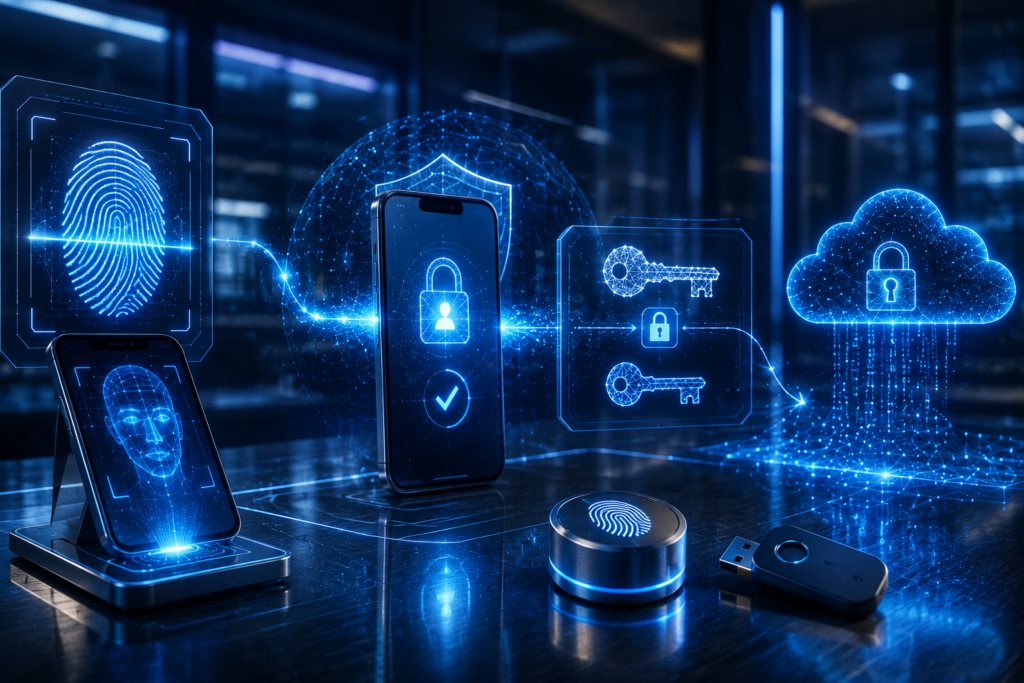
Phishing remains one of the most successful cyberattack techniques because it targets human behavior rather than software vulnerabilities. Attackers create convincing fake login pages that look nearly identical to legitimate websites, tricking users into entering their credentials.
Over the years, I’ve investigated incidents where businesses invested heavily in firewalls, endpoint protection, and employee training, yet a single phishing email still resulted in stolen credentials and unauthorized access.
With passkey login, phishing attacks become far less effective. Since there is no password to type, the authentication request is cryptographically verified against the legitimate website. If the domain doesn’t match, the authentication simply fails.
This phishing resistance is one of the strongest reasons why cybersecurity experts recommend passwordless security.
Brute-Force and Credential Stuffing Become Less Effective
Traditional passwords are vulnerable to automated attacks. Cybercriminals use powerful tools to test millions of password combinations or attempt credentials stolen from previous data breaches.
I’ve watched attackers compromise poorly protected systems within minutes simply because users relied on weak or reused passwords.
By adopting passkeys, organizations remove this attack surface entirely. There is no reusable secret for attackers to guess, steal, or automate against, making passwordless authentication significantly more resilient than traditional password-based systems.
Human Error Is Still the Biggest Vulnerability
Technology continues to improve, but people remain the most targeted element of cybersecurity. Employees forget passwords, reuse credentials, ignore security warnings, or accidentally reveal sensitive information.
After years of working with businesses of all sizes, I’ve learned that reducing human error is often more effective than adding another layer of technical complexity.
That’s why passkeys vs passwords is no longer just a discussion about convenience—it’s about eliminating one of the weakest links in digital security. By replacing passwords with secure device-based authentication, organizations reduce both user frustration and cybersecurity risk.
Key Takeaways
- Password reuse remains a leading cause of account compromise.
- Phishing attacks continue to grow more sophisticated every year.
- Weak passwords are still widely used despite security awareness efforts.
- Passkeys eliminate many risks associated with traditional credentials.
- Passwordless authentication improves both security and user experience.
- Passkey login reduces password reset requests and strengthens passwordless security for individuals and businesses alike.
How Passwordless Authentication Works
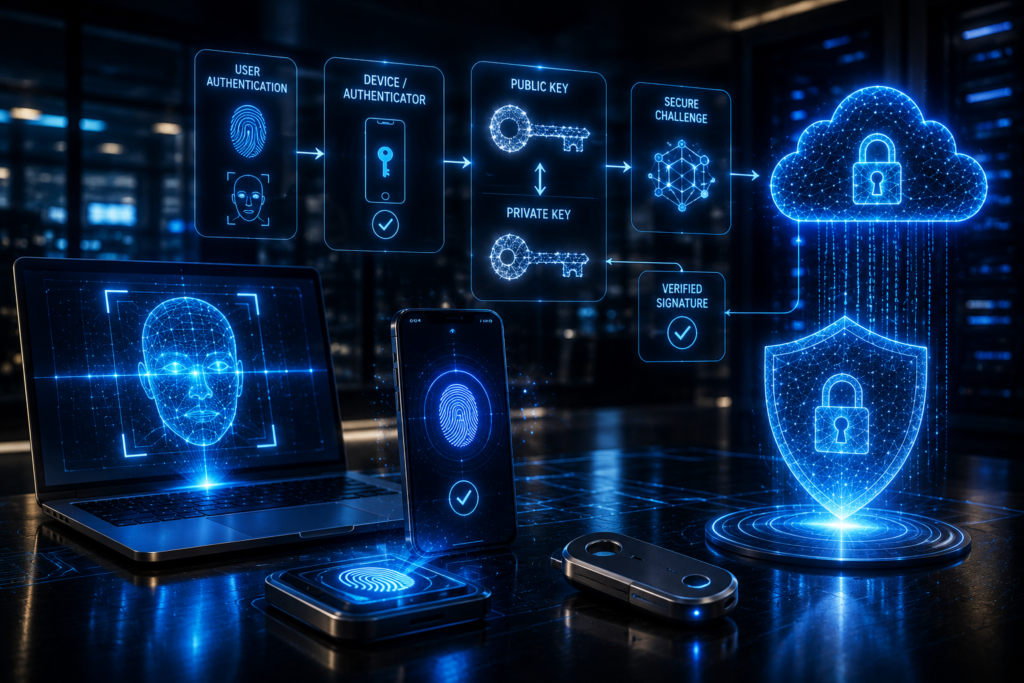
Many people assume passwordless authentication is simply logging in with a fingerprint or facial recognition. In reality, those biometric methods are only part of the process. Behind the scenes, passkeys rely on advanced public key cryptography to verify your identity without ever transmitting a password.
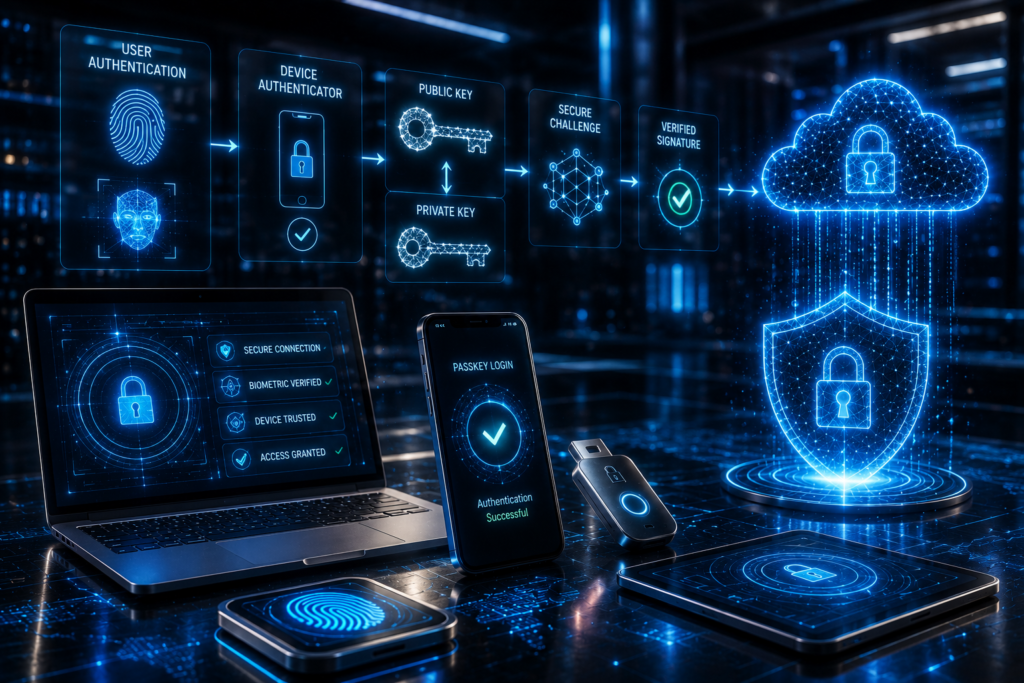
In simple terms, when you create a passkey login, your device generates two cryptographic keys:
- A private key, which stays securely stored on your device and never leaves it.
- A public key, which is shared with the website or service you’re using.
When you sign in, the website sends a unique challenge to your device. After you verify your identity using Face ID, a fingerprint, Windows Hello, or your device PIN, the private key signs that challenge. The website then verifies the signature using the stored public key. Because the private key never leaves your device, attackers cannot intercept or steal it during the login process.
This cryptographic design is what makes passwordless security so effective against phishing, credential theft, and brute-force attacks.
Benefits of Passkeys
The shift toward passkeys, passwordless authentication, and passwordless security isn’t just another technology trend—it’s a fundamental improvement in how we protect digital identities. After working with authentication systems for more than 15 years, I can confidently say that passkeys solve many of the problems that have frustrated both users and IT teams for decades.
When I first started consulting for businesses, password-related issues consumed a surprising amount of time. Employees frequently forgot passwords, reused weak credentials, or accidentally exposed them through phishing attacks. Help desk teams spent countless hours resetting passwords instead of focusing on more valuable work. Since organizations began adopting passkey login, I’ve seen these issues decline dramatically.
H3: Stronger Security Against Modern Cyber Threats
The greatest advantage of passkeys is their ability to resist attacks that commonly defeat password-based systems.
Unlike passwords, passkeys are built on public key cryptography. Your private key never leaves your trusted device, making it nearly impossible for attackers to steal through traditional hacking techniques.
With passwordless authentication, organizations gain protection against:
- Phishing attacks
- Credential stuffing
- Password database breaches
- Brute-force attacks
- Password reuse
- Social engineering attempts targeting login credentials
This makes passwordless security one of the most effective defenses available in today’s cybersecurity landscape.
H3: Faster and More Convenient Passkey Login
Let’s be honest—people dislike passwords.
They forget them, mistype them, or spend valuable time resetting them. I’ve watched employees waste several minutes every week simply trying to remember the correct password for an application they rarely use.
A passkey login simplifies this process. Instead of entering a username and password, users simply verify their identity using:
- Face ID
- Fingerprint recognition
- Windows Hello
- Device PIN
- Hardware security keys
Most logins are completed in just a few seconds, creating a smoother experience without sacrificing security.
H3: Better User Experience
One lesson I’ve learned over the years is that security tools only work when people are willing to use them.
Complex password policies often frustrate users. Requirements such as uppercase letters, numbers, symbols, and mandatory password changes encourage unsafe shortcuts rather than better security.
Passkeys eliminate this frustration. Users don’t need to remember dozens of complex credentials because authentication happens seamlessly through their trusted device. This balance between convenience and protection is one of the main reasons businesses are embracing passwordless authentication.
H3: Reduced IT Costs
Password resets remain one of the most common help desk requests in many organizations.
In one enterprise deployment I supported, password reset tickets represented a significant portion of monthly support requests. After introducing passkey login for eligible applications, password-related support requests dropped noticeably within months. The IT team could then focus on improving infrastructure and responding to real security issues instead of handling forgotten passwords.
For growing businesses, this translates into:
- Lower operational costs
- Improved employee productivity
- Reduced downtime
- Fewer support tickets
- Better return on cybersecurity investments
H3: Improved Protection for Businesses
Businesses today face increasingly sophisticated cyber threats. Ransomware groups, phishing campaigns, and credential theft continue to target organizations of every size.
By implementing passwordless authentication, companies significantly reduce their attack surface. Since there are no passwords stored on servers, attackers have far fewer opportunities to compromise employee accounts.
I’ve advised several organizations during their transition to passkeys, and one common observation stands out: executives quickly realize that passwordless security isn’t simply an IT upgrade—it’s a business risk reduction strategy.
Final Thoughts
The move from traditional passwords to passkeys is more than just a technological upgrade—it’s a major step toward a safer and more user-friendly digital future. As cyber threats continue to evolve, relying solely on passwords is no longer enough to protect personal and business accounts. Passwordless authentication offers a smarter approach by eliminating many of the weaknesses that attackers have exploited for years.
From my experience working with authentication systems, I’ve seen firsthand how passkey login simplifies security while improving the user experience. Organizations that adopt passwordless security not only reduce the risk of phishing attacks, credential theft, and password reuse but also save valuable time and IT resources. Employees spend less time resetting forgotten passwords, and security teams can focus on more strategic initiatives instead of managing password-related issues.
When comparing passkeys vs passwords, the advantages are clear. Passkeys provide stronger protection through public key cryptography, resist phishing attacks, and offer a faster, more convenient login experience using biometrics or trusted devices. While some legacy systems may still require passwords during the transition period, the industry is rapidly moving toward passwordless authentication as the new standard.
Major technology companies—including Apple, Google, Microsoft, GitHub, Amazon, and many financial institutions—have already embraced passkeys, signaling that passwordless security is no longer an emerging trend but the future of digital identity. As more websites and applications adopt passkey login, users can expect a safer and more seamless online experience across all their devices.
If you haven’t started using passkeys yet, now is the perfect time. Enable passwordless authentication on the accounts that support it, keep your devices updated, and learn how modern authentication works. Taking these simple steps today will help protect your digital identity against tomorrow’s cyber threats while making everyday logins faster, easier, and significantly more secure.
Ultimately, passkeys are replacing passwords because they solve the long-standing security and usability problems that traditional credentials never could. The future of authentication is passwordless—and that future has already begun.
Author

razakh6402@gmail.com
Related Posts
Browser Security Extensions: Top Chrome Security Extensions & Privacy Browser Extensions You Need in 2026
- 0
- 2,358 words
best budgeting appsEvery year, browsers become smarter, websites become faster, and online services become more convenient. Unfortunately, cybercriminals evolve just as quickly....
Read out all
Cybersecurity Checklist: Essential Small Business Cybersecurity Guide (2026)
- 0
- 2,462 words
Cyberattacks are no longer a problem reserved for large enterprises. Over the last 15 years, I’ve worked with startups, retail stores, healthcare...
Secure Cloud Storage: Best Secure Cloud Storage Services for Business & Personal Use (2026 Guide)
- 0
- 2,443 words
Whether you’re backing up family photos, sharing confidential client documents, or managing sensitive business files, choosing the right secure cloud storage service...
AI Scams: How to Protect Yourself from AI-Powered Scams in 2026 (Expert Guide)
- 0
- 1,918 word
Artificial intelligence has transformed the way we work, communicate, and manage our finances. Unfortunately, cybercriminals have embraced the same technology to create...
Read out all
Future of Cybersecurity: Top Cybersecurity Trends 2026, AI Innovations, and Predictions for the Next Decade
- 1
- 2,173 words
Twenty-five years ago, cybersecurity focused primarily on protecting desktop computers, on-premises servers, and corporate networks. Firewalls, antivirus software, and perimeter defenses formed...
Home Network Security Guide: 25 Expert Strategies to Build a Secure Home Network in 2026
- 0
- 1,999 word
Home network security is no longer optional. https://www.effectivecpmnetwork.com/zwmk61nzik?key=c215b6a50560356c577d53e1d461ad7a Twenty-five years ago, most households connected a single desktop computer to the internet. Today,...
Read out all