
- 1
- 1,688 word
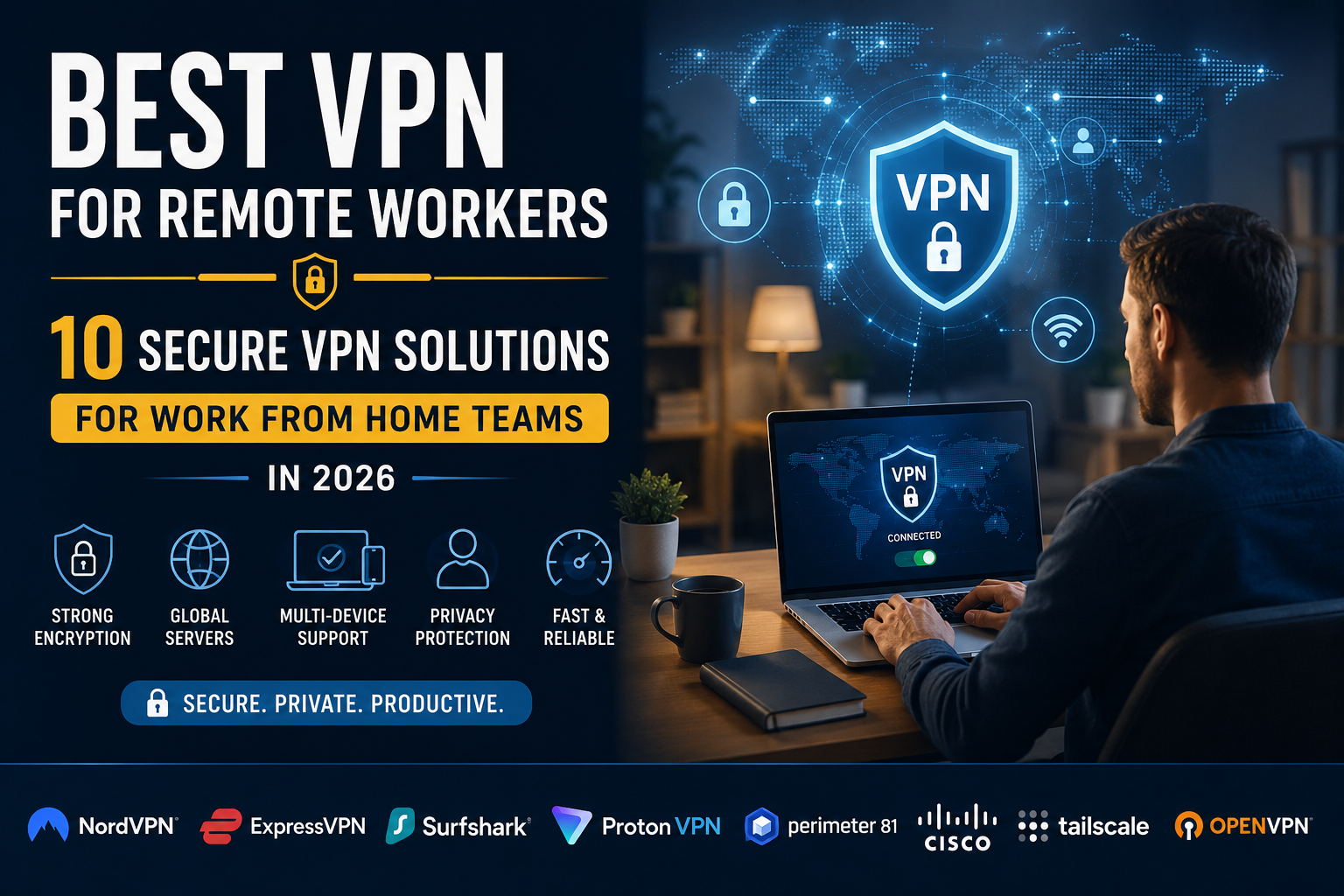
Remote work is no longer a temporary trend. It has become a permanent operating model for startups, small businesses, enterprises, consultants, and freelancers worldwide.
Over the last 15 years, I’ve helped organizations secure remote teams, implement business VPN for remote employees, investigate cybersecurity incidents, and design secure access architectures for distributed workforces. One lesson has remained constant: remote workers are often the weakest entry point for attackers.
Whether employees work from home, coworking spaces, hotels, airports, or coffee shops, cybercriminals actively target unsecured connections, stolen credentials, and poorly configured remote access systems.
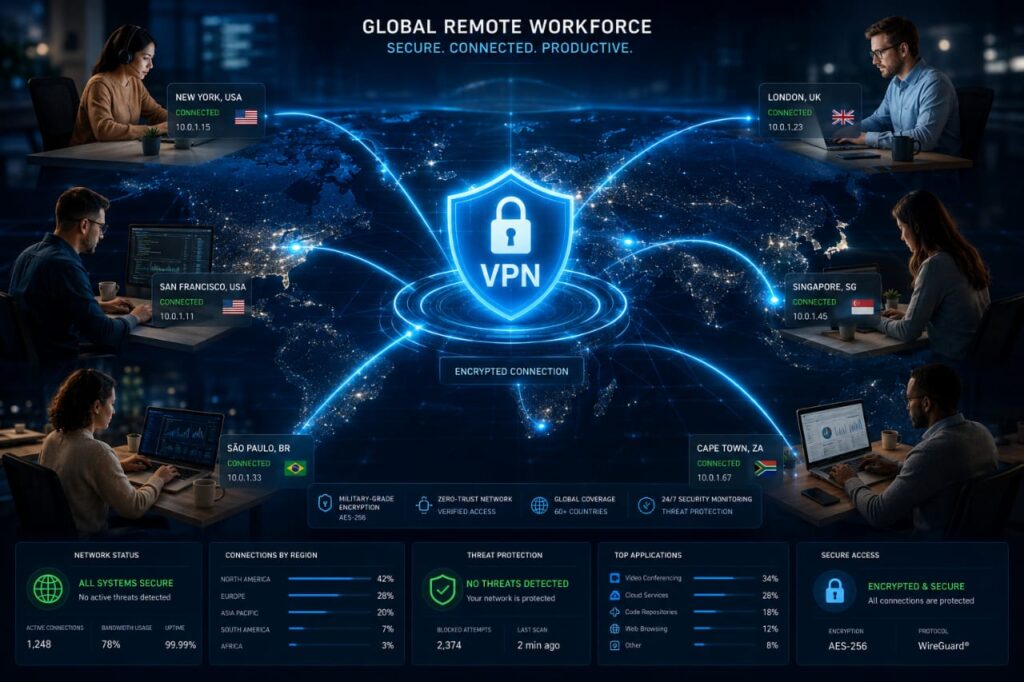
A secure VPN for remote work creates an encrypted tunnel between users and company resources, significantly reducing exposure to data theft, interception attacks, and unauthorized access.
Choosing the best VPN for remote workers requires much more than looking at speed or price. Security architecture, business management tools, privacy practices, compliance capabilities, and scalability all matter.
In this guide, I’ll analyze the leading remote work VPN solutions available in 2026 and explain which options best fit different types of remote teams.
Why Remote Workers Need a Secure VPN
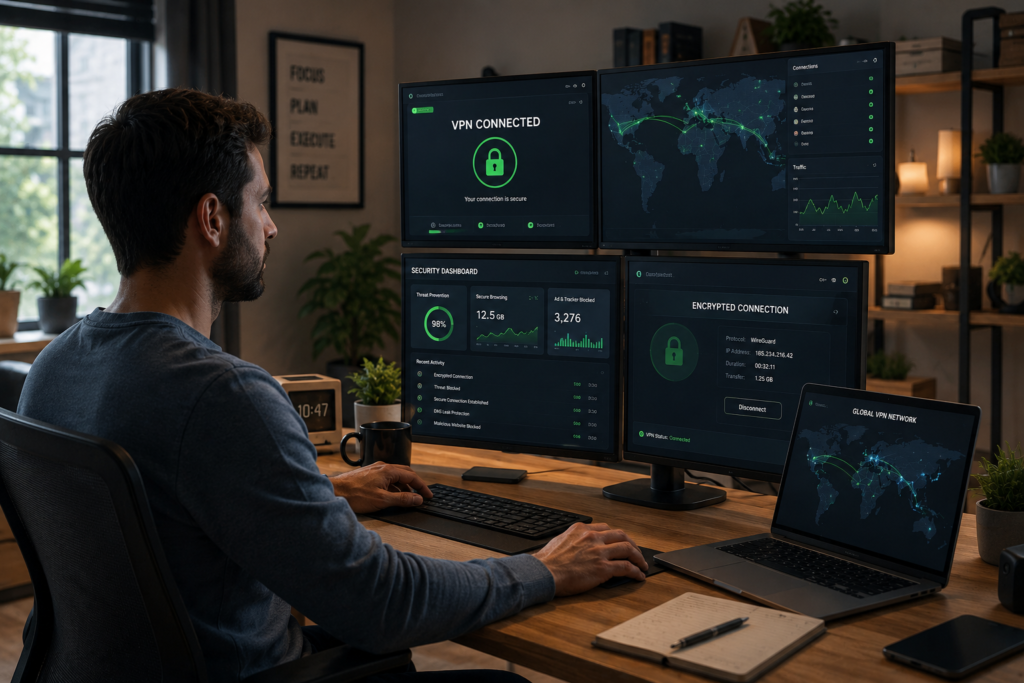
Remote work expands the attack surface significantly.
Public Wi-Fi Risks
One consulting client experienced credential theft after an employee connected to a hotel Wi-Fi network without VPN protection. Attackers captured sensitive traffic and attempted unauthorized access to internal systems.
A VPN encrypts data in transit and reduces this risk.
Data Breaches
Remote employees regularly access:
- Customer databases
- Financial systems
- Cloud applications
- Internal documents
- Collaboration platforms
Without encryption, sensitive information becomes vulnerable.
Remote Access Security
Secure remote access remains a core cybersecurity requirement. Organizations increasingly rely on encrypted VPN connectivity combined with strong authentication to protect corporate resources. (Cisco)
Compliance Requirements
Many industries must meet:
- GDPR
- HIPAA
- SOC 2
- ISO 27001
- PCI DSS
VPN usage often supports compliance initiatives by protecting sensitive data.
Business Continuity
VPN infrastructure allows employees to continue working securely regardless of location, helping organizations maintain operations during disruptions.
What Makes the Best VPN for Remote Workers?
Security and Encryption
Look for:
- AES-256 encryption
- WireGuard protocol
- Kill switch
- DNS leak protection
- Multi-factor authentication
Server Network
A larger network improves:
- Reliability
- Availability
- Geographic flexibility
- Disaster recovery options
Speed and Performance
Fast VPNs minimize:
- Video conferencing issues
- Cloud application latency
- File transfer delays
Ease of Use
Employees should connect securely with minimal training.
Multi-Device Support
Modern workers often use:
- Laptops
- Smartphones
- Tablets
- Home desktops
Business Features
The best business VPN for remote employees should include:
- Centralized administration
- User management
- Access policies
- Dedicated IPs
- Activity monitoring
Privacy Policy
Choose providers with verified no-logs policies.
Compliance Standards
Look for providers supporting enterprise-grade security frameworks and compliance controls.
Best VPNs for Remote Workers in 2026
NordVPN
Official Website: NordVPN
Security Features
- AES-256 encryption
- WireGuard-based NordLynx
- Threat Protection
- Kill Switch
- MFA support
Pricing
Affordable personal plans with business-focused solutions through NordLayer.
Performance
Consistently among the fastest VPN providers.
Advantages
- Excellent security
- Large server network
- Strong privacy reputation
Limitations
- Advanced business management requires NordLayer
Ideal Users
Freelancers, consultants, and remote professionals.
ExpressVPN
Official Website: ExpressVPN
Security Features
- TrustedServer technology
- AES-256 encryption
- Lightway protocol
- Dedicated business offerings
Pricing
Premium pricing compared to competitors.
Performance
Excellent reliability and global speeds.
Advantages
- User-friendly
- Reliable connections
- Strong security posture
Limitations
- Higher cost
Ideal Users
Remote professionals prioritizing simplicity.
ExpressVPN recently expanded into business-focused VPN services designed for remote teams and SMBs. (TechRadar)
Surfshark
Official Website: Surfshark
Security Features
- WireGuard
- MultiHop
- CleanWeb
- Kill switch
Pricing
One of the most affordable premium VPNs.
Performance
Strong speeds globally.
Advantages
- Unlimited devices
- Great value
Limitations
- Fewer enterprise controls
Ideal Users
Freelancers and small teams.
Proton VPN
Official Website: Proton VPN
Security Features
- Swiss privacy protections
- Open-source apps
- Secure Core servers
Pricing
Free and premium tiers available.
Performance
Good performance with strong privacy focus.
Advantages
- Excellent transparency
- Strong privacy standards
Limitations
- Smaller server footprint than leaders
Ideal Users
Privacy-conscious remote workers.
Perimeter 81
Official Website: Perimeter 81
Security Features
- Zero Trust Network Access
- Cloud firewall
- Device posture checks
- Dedicated gateways
- Split tunneling
Pricing
Starts around $8 per user monthly for business plans. (Check Point SASE)
Performance
Designed specifically for organizations.
Advantages
- Excellent centralized management
- Business-focused controls
- Easy deployment
Limitations
- More expensive than consumer VPNs
Ideal Users
SMBs and distributed teams.
Cisco Secure Access
Official Website: Cisco Secure Access
Security Features
- Zero Trust architecture
- SSE capabilities
- VPN-as-a-Service
- Identity protection
- Granular access controls
Pricing
Enterprise-focused pricing.
Performance
Optimized for large organizations.
Advantages
- Enterprise-grade security
- Strong access control
- Scalable architecture
Limitations
- Complexity for smaller teams
Ideal Users
Enterprises and regulated industries.
Cisco Secure Access combines cloud-native security with zero-trust remote access capabilities for hybrid workforces. (Cisco)
Tailscale
Official Website: Tailscale
Security Features
- WireGuard-based architecture
- Identity-aware networking
- Device authentication
Pricing
Flexible personal and business plans.
Performance
Excellent due to direct peer-to-peer connections.
Advantages
- Easy deployment
- Modern architecture
Limitations
- Different approach than traditional VPNs
Ideal Users
Technical teams and developers.
OpenVPN Access Server
Official Website: OpenVPN Access Server
Security Features
- Open-source foundation
- Strong encryption
- MFA integration
Pricing
Flexible licensing.
Performance
Depends on deployment infrastructure.
Advantages
- High customization
- Enterprise flexibility
Limitations
- Requires administrative expertise
Ideal Users
Organizations needing full control.
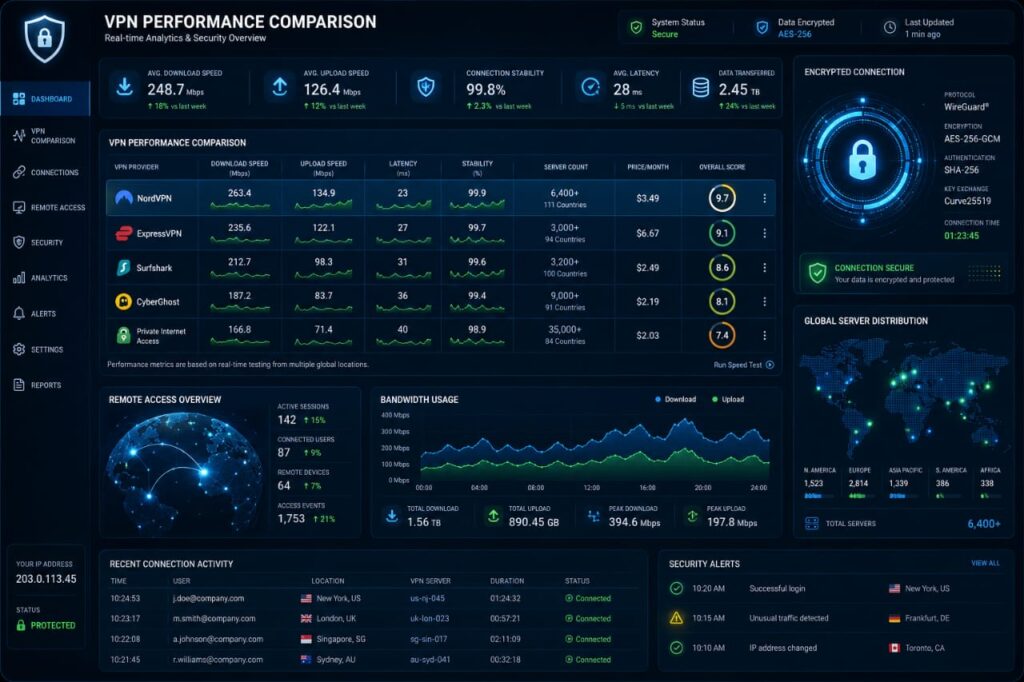
VPN Comparison Table for Remote Employees
| VPN Provider | Encryption | Business Features | Device Support | Pricing | Best For |
|---|---|---|---|---|---|
| NordVPN | AES-256 | NordLayer Integration | Excellent | $$ | Remote professionals |
| ExpressVPN | AES-256 | Teams Management | Excellent | $$$ | SMBs |
| Surfshark | AES-256 | Limited | Unlimited | $ | Freelancers |
| Proton VPN | AES-256 | Moderate | Good | $$ | Privacy-focused users |
| Perimeter 81 | AES-256 | Advanced ZTNA | Excellent | $$ | Small businesses |
| Cisco Secure Access | Enterprise-grade | Extensive | Enterprise | $$$$ | Large enterprises |
| Tailscale | WireGuard | Identity-based | Excellent | $$ | Developers |
| OpenVPN Access Server | AES-256 | Customizable | Excellent | Variable | IT teams |
Best Business VPN for Remote Employees
Small Businesses
Perimeter 81 offers the strongest balance of security and simplicity.
Startups
Tailscale provides fast deployment with minimal management overhead.
Enterprises
Cisco Secure Access delivers advanced Zero Trust capabilities and enterprise scalability. (Cisco)
Freelancers
NordVPN and Surfshark remain excellent choices.
Distributed Teams
ExpressVPN Teams and Perimeter 81 provide centralized management and strong security controls. (TechRadar)
Secure VPN for Remote Work: Essential Features Businesses Should Demand
Zero Trust Architecture
Never trust users automatically.
Verify every connection continuously.
Multi-Factor Authentication
MFA dramatically reduces credential-based attacks. (Cisco)
Dedicated IPs
Useful for:
- Access control
- Whitelisting
- Secure applications
Split Tunneling
Balances security and performance.
Threat Protection
Modern VPNs increasingly include malware, phishing, and threat-blocking capabilities. (TechRadar)
Identity Management
Identity-driven access policies are becoming critical in remote work environments.

Common VPN Mistakes Remote Workers Make
Using Free VPNs for Work
Many free VPNs lack enterprise-grade security.
Weak Passwords
A VPN cannot protect compromised credentials.
Ignoring Updates
Outdated software creates exploitable vulnerabilities.
Connecting Through Unsecured Networks
Always activate the VPN before accessing sensitive resources.
Misconfigured VPN Settings
I frequently encounter split-tunneling mistakes that unintentionally expose corporate traffic.
Future of Remote Work VPN Solutions
AI-Powered Security
AI increasingly identifies suspicious behavior before attacks occur.
Zero Trust Networks
Traditional perimeter security continues to decline.
SASE Platforms
Secure Access Service Edge solutions are becoming the preferred enterprise architecture.
Cloud-Based VPN Infrastructure
Cloud-native deployment improves scalability and resilience.
Passwordless Authentication
Passkeys and passwordless systems will reduce credential theft dramatically.
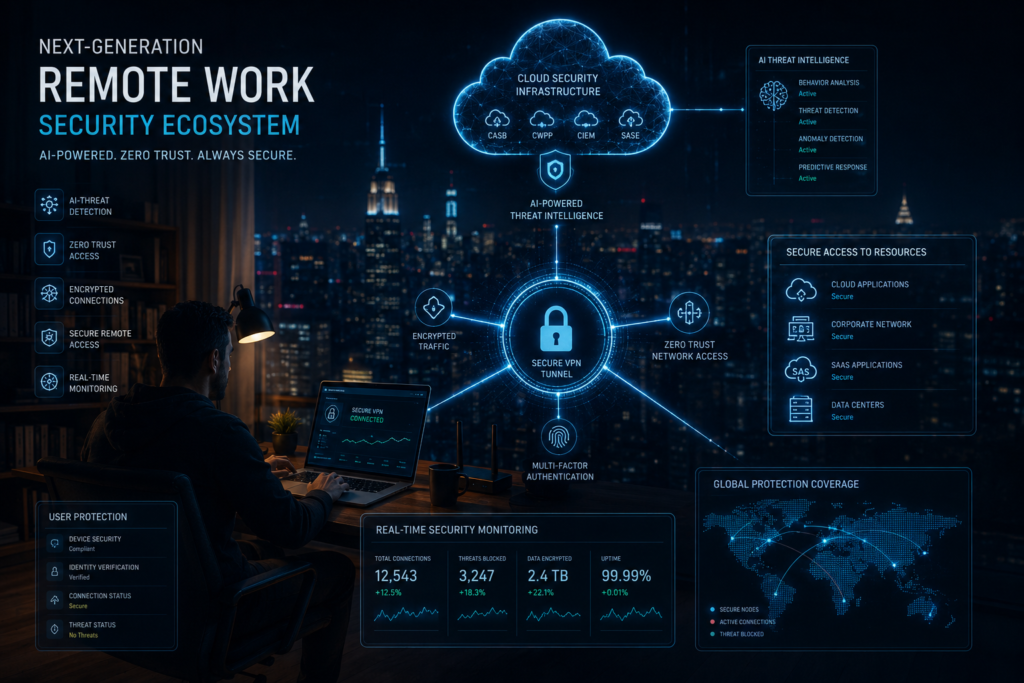
These trends are already visible in modern enterprise platforms such as Cisco Secure Access and emerging Zero Trust ecosystems. (Cisco)
Benefits and Limitations of VPNs for Work From Home Employees
Benefits
- Secure remote access
- Strong encryption
- Privacy protection
- Compliance support
- Safe public Wi-Fi usage
- Reduced interception risks
Limitations
- Possible speed reduction
- Configuration complexity
- Subscription costs
- Application compatibility issues
A VPN remains one layer of security rather than a complete cybersecurity strategy.
Frequently Asked Questions
What is the best VPN for remote workers?
NordVPN, ExpressVPN, and Perimeter 81 are among the best VPN solutions for remote workers in 2026.
Why do remote employees need a VPN?
VPNs encrypt traffic and protect remote connections from cyber threats.
Is a business VPN different from a personal VPN?
Yes. Business VPNs provide centralized management, access controls, and enterprise security features.
Are free VPNs safe for remote work?
Generally no. Most organizations should avoid free VPNs for business use.
What is the most secure VPN for remote work?
Cisco Secure Access and Perimeter 81 offer some of the strongest enterprise-grade protections.
Can VPNs improve remote work security?
Absolutely. VPNs reduce risks associated with unsecured networks and data interception.
Which VPN is best for small businesses?
Perimeter 81 is one of the strongest business VPN for remote employees solutions available today.
Do remote work VPN solutions affect internet speed?
Yes, but premium VPNs minimize performance impact through optimized infrastructure.
Conclusion
Selecting the best VPN for remote workers requires balancing security, usability, performance, and business requirements.
For individual professionals, NordVPN, ExpressVPN, and Surfshark provide excellent protection and reliability. For organizations seeking a true business VPN for remote employees, Perimeter 81, Cisco Secure Access, and OpenVPN Access Server offer advanced management and security controls.
As remote work continues to evolve, businesses should prioritize secure VPN for remote work solutions that support Zero Trust principles, strong authentication, threat protection, and centralized administration.
The most effective remote work VPN solutions are no longer just encryption tools. They have become foundational components of modern cybersecurity strategies.
If your organization relies on distributed teams or work-from-home employees, now is the right time to evaluate your VPN architecture, strengthen remote access security, and invest in a solution that can scale alongside your workforce.
Author

razakh6402@gmail.com
Related Posts
Browser Security Extensions: Top Chrome Security Extensions & Privacy Browser Extensions You Need in 2026
- 0
- 2,358 words
best budgeting appsEvery year, browsers become smarter, websites become faster, and online services become more convenient. Unfortunately, cybercriminals evolve just as quickly....
Read out all
Passkeys: How Passwordless Authentication Is Replacing Passwords in 2026
- 0
- 2,452 words
If you’ve ever forgotten a password, reset the same account multiple times, or worried that your login credentials were exposed in a...
Read out all
Cybersecurity Checklist: Essential Small Business Cybersecurity Guide (2026)
- 0
- 2,462 words
Cyberattacks are no longer a problem reserved for large enterprises. Over the last 15 years, I’ve worked with startups, retail stores, healthcare...
Secure Cloud Storage: Best Secure Cloud Storage Services for Business & Personal Use (2026 Guide)
- 0
- 2,443 words
Whether you’re backing up family photos, sharing confidential client documents, or managing sensitive business files, choosing the right secure cloud storage service...

AI Scams: How to Protect Yourself from AI-Powered Scams in 2026 (Expert Guide)
- 0
- 1,918 word
Artificial intelligence has transformed the way we work, communicate, and manage our finances. Unfortunately, cybercriminals have embraced the same technology to create...
Read out all
Future of Cybersecurity: Top Cybersecurity Trends 2026, AI Innovations, and Predictions for the Next Decade
- 1
- 2,173 words
Twenty-five years ago, cybersecurity focused primarily on protecting desktop computers, on-premises servers, and corporate networks. Firewalls, antivirus software, and perimeter defenses formed...
1 comment