
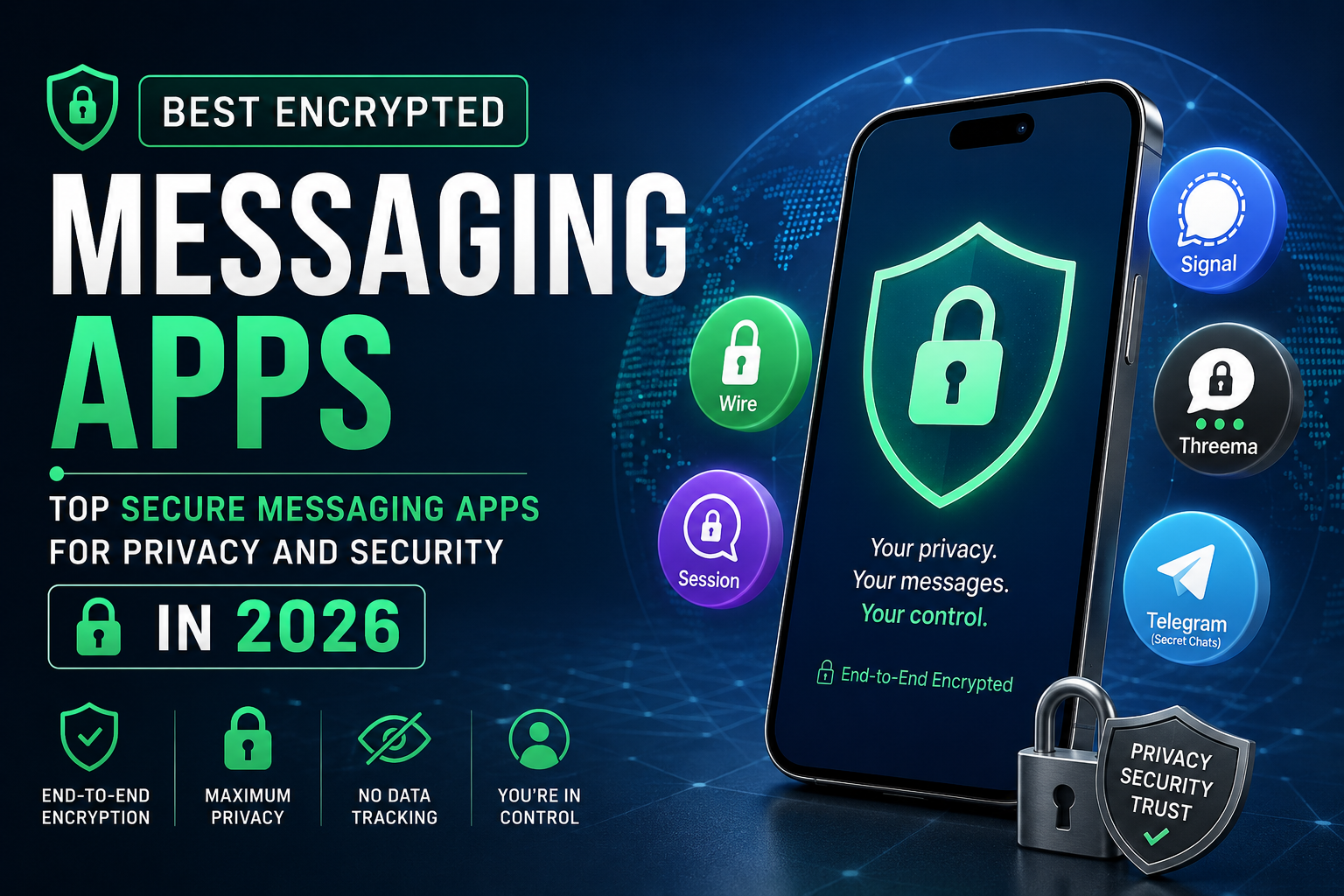
- 4
- 1,775 word
Digital communication has never been more convenient or more vulnerable.
During my 25 years working in cybersecurity, privacy consulting, and secure communications, I have witnessed the evolution of messaging technologies from simple SMS systems to highly sophisticated encrypted communication platforms. Unfortunately, I have also investigated countless security incidents where private conversations were exposed due to poor security practices, weak platforms, compromised devices, or misunderstood privacy settings.
Today, cybercriminals target personal and business communications through phishing attacks, spyware, social engineering campaigns, account takeovers, and data breaches. At the same time, growing concerns about mass surveillance, data collection, and online tracking have made privacy a top priority for individuals and organizations alike.
This is where secure messaging apps play a critical role.
The best encrypted messaging app protects conversations using advanced cryptographic technologies that prevent unauthorized access to messages, files, voice calls, and shared data. Whether you are a journalist protecting sources, a business securing sensitive information, or simply someone who values privacy, choosing the right encrypted chat app has become an essential part of modern digital security.
In this guide, I’ll share practical insights from decades of evaluating secure communication systems and explain which private messaging apps deserve your trust in 2026.
What Is End to End Encrypted Messaging?
End to end encrypted messaging is a communication method where only the sender and intended recipient can read the messages being exchanged.
Even the messaging provider cannot access the content of the communication.
Definition of End to End Encrypted Messaging
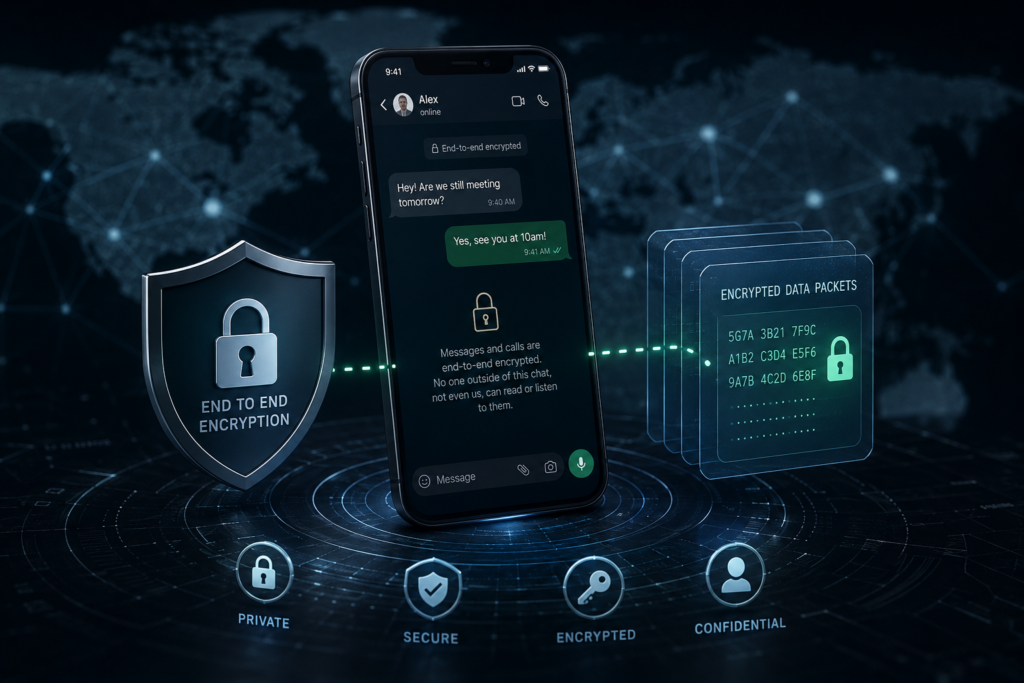
When a message is sent through an end-to-end encryption system, it is encrypted on the sender’s device and only decrypted on the recipient’s device.
Anyone intercepting the communication sees only unreadable encrypted data.
How Encryption Works
Encryption converts readable information into ciphertext using mathematical algorithms.
A simplified process includes:
- Message creation
- Encryption using cryptographic keys
- Secure transmission
- Decryption by the recipient
Think of it as placing a letter inside a locked safe that only the recipient can unlock.
Why Encryption Matters
Encryption helps protect against:
- Cybercriminals
- Hackers
- Data breaches
- Surveillance attempts
- Insider threats
Without encryption, communication can potentially be intercepted and viewed during transmission.
Difference Between Encrypted and Non-Encrypted Messaging
Non-encrypted platforms expose communications to significantly greater risks.
Encrypted platforms protect message content even if communication channels are compromised.
Encryption Keys
Encryption keys serve as digital locks and unlock mechanisms.
Strong secure messaging apps use unique cryptographic keys for every communication session.
Metadata Considerations
One of the biggest misconceptions I encounter is that encryption protects everything.
It doesn’t.
Metadata may still reveal:
- Who communicated
- When communication occurred
- Device information
- Frequency of contact
The best private messaging apps attempt to minimize metadata collection.
Security Limitations
No encrypted chat app can protect users from:
- Infected devices
- Screenshot leaks
- Social engineering
- Poor password practices
Security is always a combination of technology and user behavior.
Why Secure Messaging Apps Are More Important Than Ever
Growing Cyber Threats
Cybercrime continues to grow at an alarming pace.
Ransomware groups, phishing operators, spyware vendors, and cybercriminal organizations increasingly target communications because conversations often contain valuable information.
Privacy Concerns
Users have become more aware of how technology companies collect and monetize data.
Privacy-focused secure messaging apps offer greater control over personal information.
Data Collection Practices
Many platforms collect extensive user data, including:
- Contact lists
- Device identifiers
- Usage patterns
- Location information
The best encrypted messaging app minimizes unnecessary data collection.
Remote Work Security
The rise of hybrid and remote work environments has increased the need for secure communication channels.
I frequently advise organizations to replace insecure communication methods with end to end encrypted messaging solutions.
Protection From Cybercriminals
Strong encryption significantly reduces the risk of unauthorized message interception.
While not a complete security solution, it creates an important protective layer.
Best Encrypted Messaging Apps in 2026
Signal
Signal remains my top recommendation for most users.
The platform consistently demonstrates a strong commitment to privacy and transparency.
Key strengths include:
- End-to-end encryption by default
- Open-source code
- Minimal metadata collection
- Independent security audits
Advantages:
- Exceptional privacy protections
- Trusted by security professionals
- Simple user experience
Limitations:
- Smaller user base than WhatsApp
Best for:
- Privacy-conscious individuals
- Journalists
- Activists
- Security professionals
Learn more at the Signal Foundation.
WhatsApp uses the Signal Protocol to secure communications.
Security benefits include:
- End-to-end encrypted messaging
- Secure voice calls
- Encrypted video calls
Privacy concerns:
- Metadata collection
- Parent company ecosystem integration
Best for:
- Everyday users
- Family communication
- Broad accessibility
More information is available through WhatsApp Security resources.
Telegram
Telegram offers strong usability but often causes confusion regarding encryption.
Important distinction:
Regular chats are not end-to-end encrypted by default.
Only Secret Chats provide true end-to-end encryption.
Strengths:
- Large file sharing
- Cloud synchronization
- Massive group support
Weaknesses:
- Default chats rely on server-side architecture
Best for:
- Large communities
- Content distribution
Session
Session focuses heavily on anonymity.
Key features:
- No phone number required
- Decentralized infrastructure
- Enhanced metadata protection
Advantages:
- Strong anonymity
- Privacy-first design
Limitations:
- Smaller ecosystem
- Fewer mainstream features
Best for:
- High-privacy users
Wire
Wire combines security with enterprise collaboration.
Features include:
- End-to-end encryption
- Team management
- Enterprise controls
- Compliance support
Best for:
- Organizations
- Professional teams
- Regulated industries
Learn more through Wire.
Threema
Threema is one of the strongest privacy-focused messaging solutions available.
Strengths:
- Swiss privacy protections
- Anonymous account creation
- Minimal data collection
Best for:
- Privacy advocates
- European users
- Security-conscious professionals
More details are available through Threema.
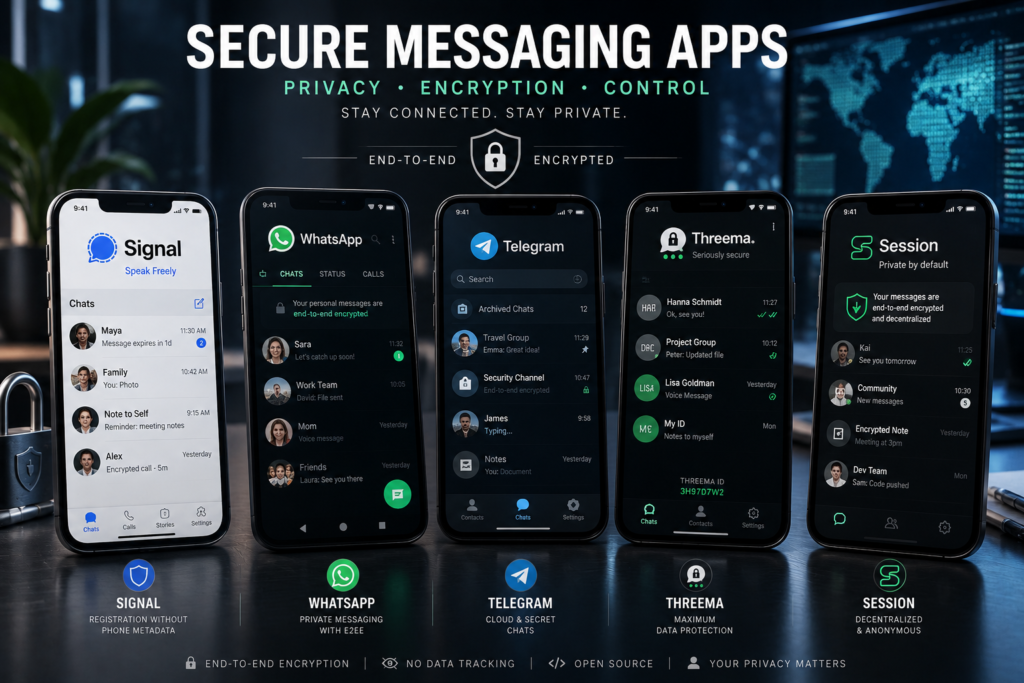
Comparison Table – Best Encrypted Messaging Apps
| App | End-to-End Encryption | Open Source | Metadata Protection | Best For | Ease of Use |
|---|---|---|---|---|---|
| Signal | Yes (Default) | Yes | Excellent | Privacy-focused users | Excellent |
| Yes (Default) | Partial | Moderate | Everyday users | Excellent | |
| Telegram | Secret Chats Only | Partial | Moderate | Communities and groups | Excellent |
| Session | Yes | Yes | Excellent | Anonymous communication | Good |
| Wire | Yes | Yes | Strong | Businesses and teams | Very Good |
| Threema | Yes | Partial | Excellent | Privacy advocates | Very Good |
Expert Recommendations
For most users:
- Signal
For family communication:
For anonymous communication:
- Session
For businesses:
- Wire
For maximum privacy:
- Threema
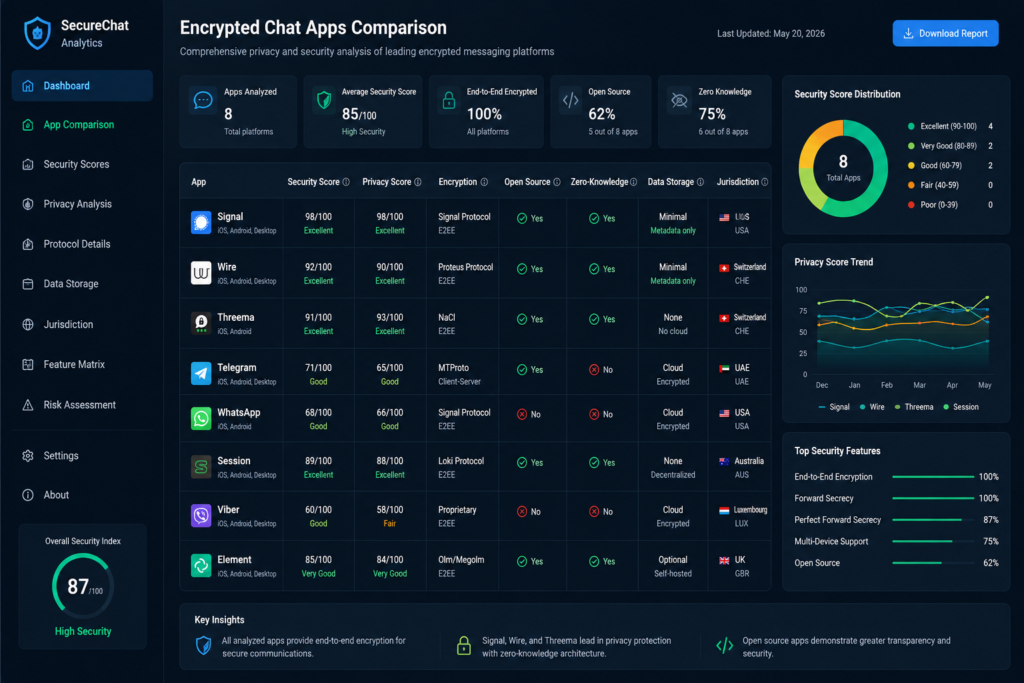
Features to Look for in a Private Messaging App
End-to-End Encryption
The foundation of secure communications.
Open Source Code
Allows independent security review and transparency.
Metadata Protection
Reduces exposure of communication patterns.
Self-Destructing Messages
Limits long-term message retention.
Multi-Factor Authentication
Adds an extra security layer.
Secure File Sharing
Protects sensitive documents and media.
Cross-Platform Compatibility
Ensures secure communication across devices.
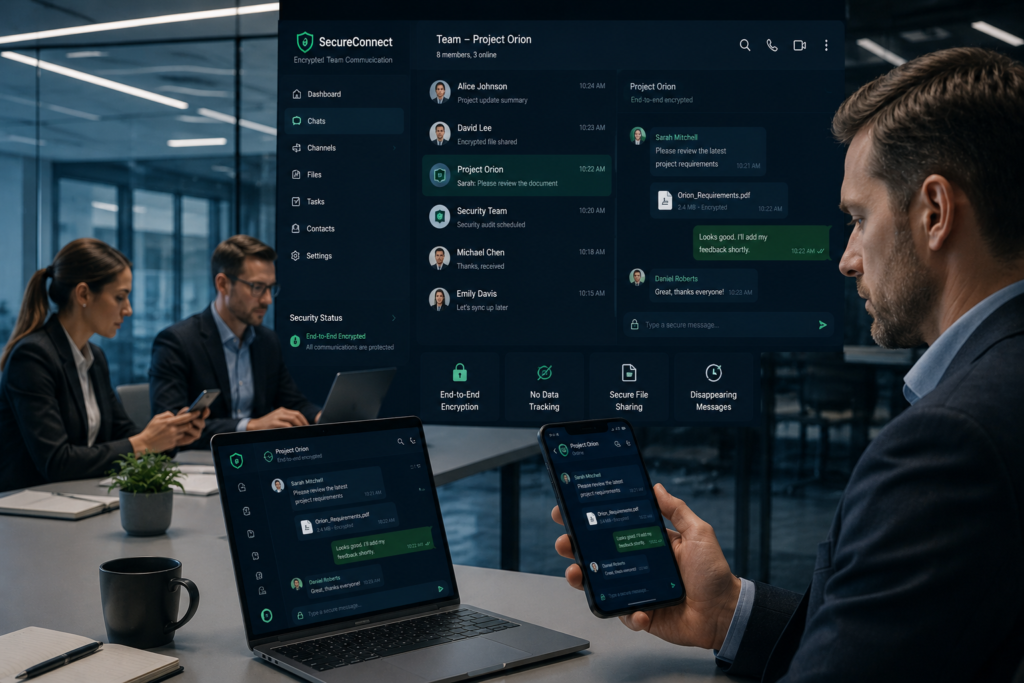
Encrypted Chat Apps for Business Users
Business communication presents unique challenges.
Organizations must balance security, compliance, usability, and productivity.
Secure Team Communication
Sensitive business information requires protected channels.
Enterprise Collaboration
Teams need secure file sharing, voice calls, and project communication.
Compliance Requirements
Many industries face regulatory obligations regarding data protection.
Data Retention Considerations
Organizations must carefully balance privacy and recordkeeping requirements.
Recommended solutions:
- Wire
- Microsoft Teams with E2EE features
- Signal for sensitive communications
- Modern replacements for legacy Wickr deployments
For most organizations, Wire currently provides one of the strongest combinations of security and enterprise functionality.
Common Myths About Secure Messaging Apps
Encryption Guarantees Complete Anonymity
False.
Encryption protects content, not necessarily identity.
All Messaging Apps Are Equally Secure
False.
Implementation quality varies dramatically.
VPNs Replace Encrypted Messaging
False.
VPNs and encryption solve different security problems.
End-to-End Encryption Protects Metadata
Not always.
Metadata protection depends on platform architecture.
Security Best Practices When Using Private Messaging Apps
Enable MFA
Use multi-factor authentication whenever possible.
Verify Encryption Keys
Verify safety numbers for highly sensitive conversations.
Keep Apps Updated
Updates often contain critical security fixes.
Use Disappearing Messages
Reduce long-term exposure.
Avoid Insecure Backups
Backups can bypass encryption protections.
Protect Devices
A compromised device can defeat encryption.
Beware of Phishing Attacks
Most successful attacks target users rather than encryption systems.
Future Trends in Secure Messaging
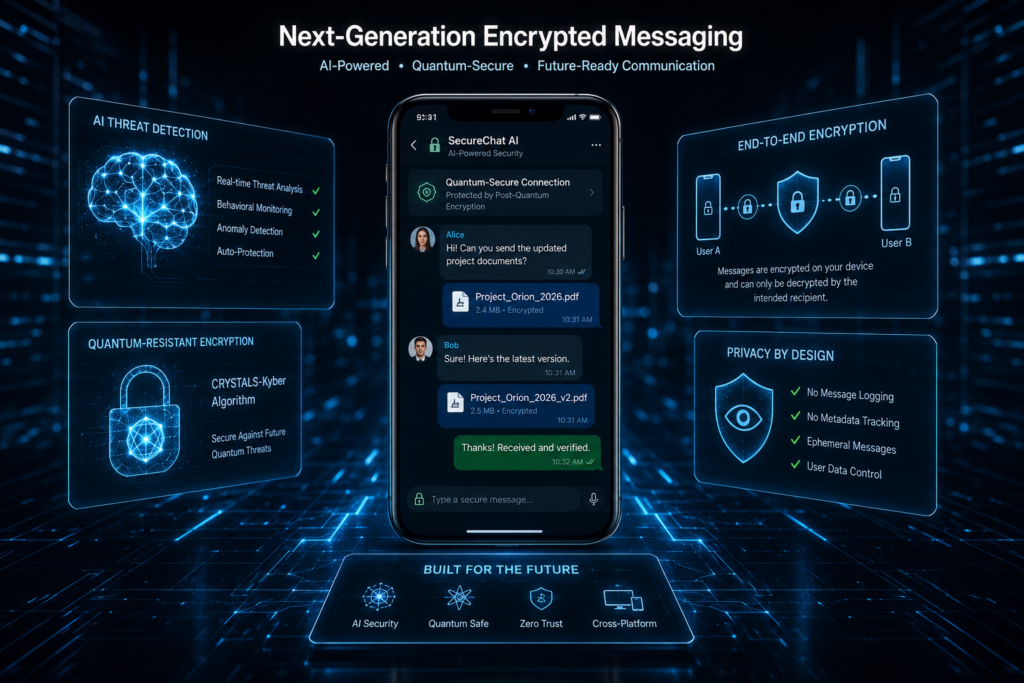
Quantum-Resistant Encryption
Developers are preparing for future quantum computing threats.
Decentralized Messaging Networks
Reducing reliance on centralized infrastructure.
AI-Powered Threat Detection
Improving account protection and abuse detection.
Enhanced Metadata Protection
Greater focus on protecting communication patterns.
Privacy-First Communication Ecosystems
Future secure messaging apps will integrate privacy into every layer of communication.
Based on current industry trends, I expect metadata protection and post-quantum cryptography to become major competitive differentiators during the coming decade.
Frequently Asked Questions
Which is the best encrypted messaging app?
Signal is widely considered the best encrypted messaging app due to its strong security architecture, open-source development, minimal metadata collection, and end-to-end encryption by default.
Are secure messaging apps completely private?
No. While secure messaging apps protect message content, metadata, device security, user behavior, and account settings can still impact overall privacy.
What is end to end encrypted messaging?
End to end encrypted messaging ensures that only the sender and recipient can read messages. Even the service provider cannot access message content.
Is Signal safer than WhatsApp?
From a privacy perspective, Signal generally offers stronger protections because it collects significantly less metadata and operates with a privacy-first philosophy.
Which encrypted chat app is best for businesses?
Wire is one of the best encrypted chat apps for businesses because it combines strong encryption with collaboration tools, compliance support, and enterprise management features.
Conclusion
Choosing the best encrypted messaging app is no longer optional for individuals and organizations that value privacy and security.
The increasing sophistication of cyber threats, growing concerns about surveillance, and expanding digital communication ecosystems make secure messaging apps an essential part of modern cybersecurity.
For most users, Signal remains my top recommendation due to its excellent security architecture, transparency, and privacy protections. Businesses should strongly consider Wire, while users seeking enhanced anonymity may prefer Session or Threema.
Remember that end to end encrypted messaging is only one part of digital security. Device protection, strong authentication, software updates, and phishing awareness remain equally important.
Take time to evaluate your current communication tools, review your privacy requirements, and adopt secure messaging solutions that align with your security goals. In today’s threat landscape, protecting conversations is one of the most effective steps you can take toward safeguarding your digital life.
Author

razakh6402@gmail.com
Related Posts

Browser Security Extensions: Top Chrome Security Extensions & Privacy Browser Extensions You Need in 2026
- 0
- 2,358 words
best budgeting appsEvery year, browsers become smarter, websites become faster, and online services become more convenient. Unfortunately, cybercriminals evolve just as quickly....
Read out all
Passkeys: How Passwordless Authentication Is Replacing Passwords in 2026
- 0
- 2,452 words
If you’ve ever forgotten a password, reset the same account multiple times, or worried that your login credentials were exposed in a...
Read out all
Cybersecurity Checklist: Essential Small Business Cybersecurity Guide (2026)
- 0
- 2,462 words
Cyberattacks are no longer a problem reserved for large enterprises. Over the last 15 years, I’ve worked with startups, retail stores, healthcare...
Secure Cloud Storage: Best Secure Cloud Storage Services for Business & Personal Use (2026 Guide)
- 0
- 2,443 words
Whether you’re backing up family photos, sharing confidential client documents, or managing sensitive business files, choosing the right secure cloud storage service...
AI Scams: How to Protect Yourself from AI-Powered Scams in 2026 (Expert Guide)
- 0
- 1,918 word
Artificial intelligence has transformed the way we work, communicate, and manage our finances. Unfortunately, cybercriminals have embraced the same technology to create...
Read out all
Future of Cybersecurity: Top Cybersecurity Trends 2026, AI Innovations, and Predictions for the Next Decade
- 1
- 2,173 words
Twenty-five years ago, cybersecurity focused primarily on protecting desktop computers, on-premises servers, and corporate networks. Firewalls, antivirus software, and perimeter defenses formed...
4 comments