
- 0
- 2,446 words
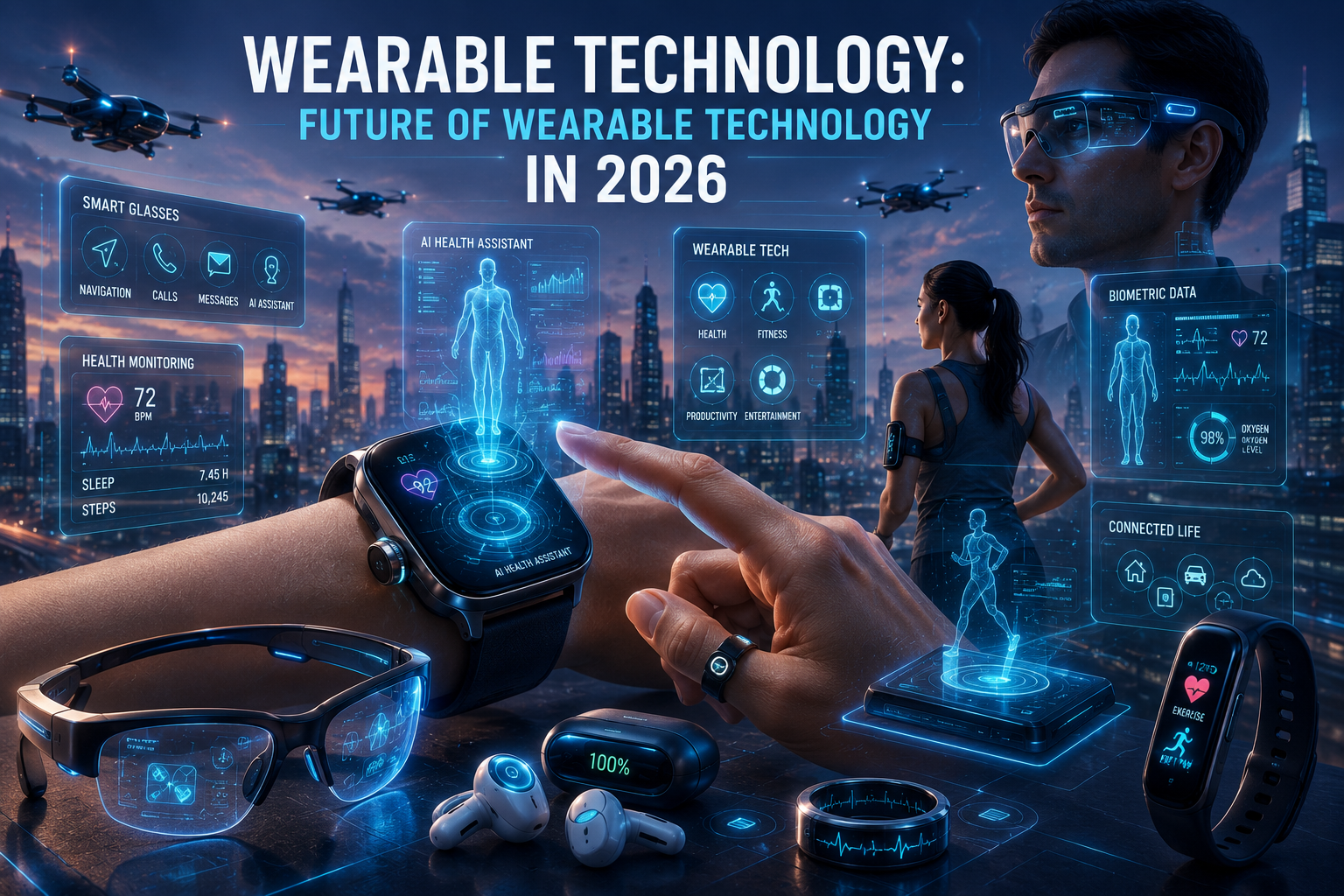
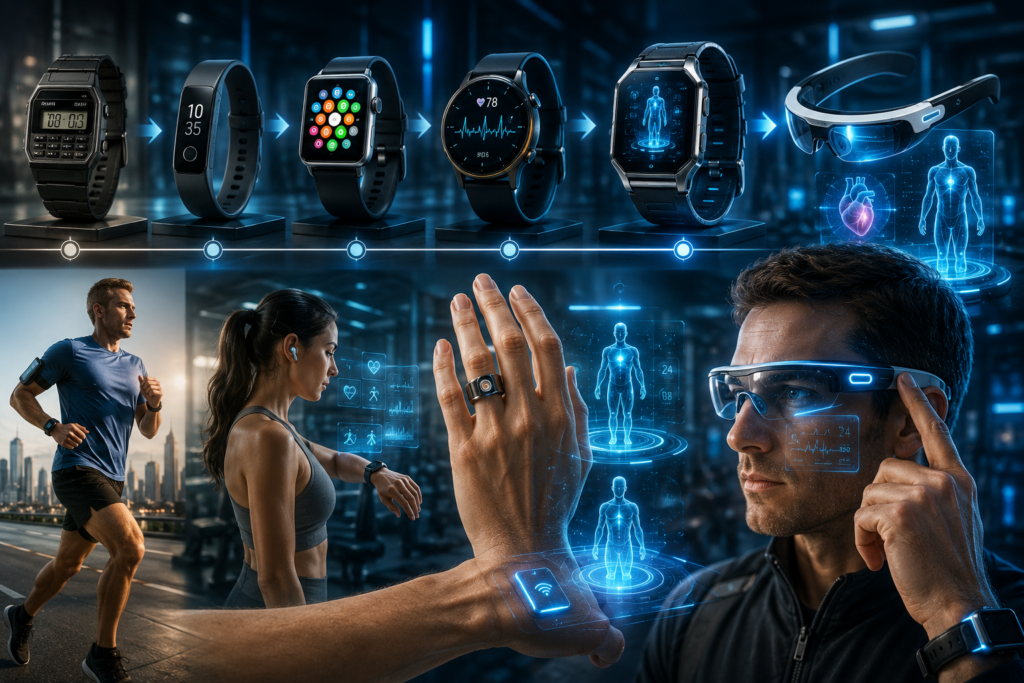
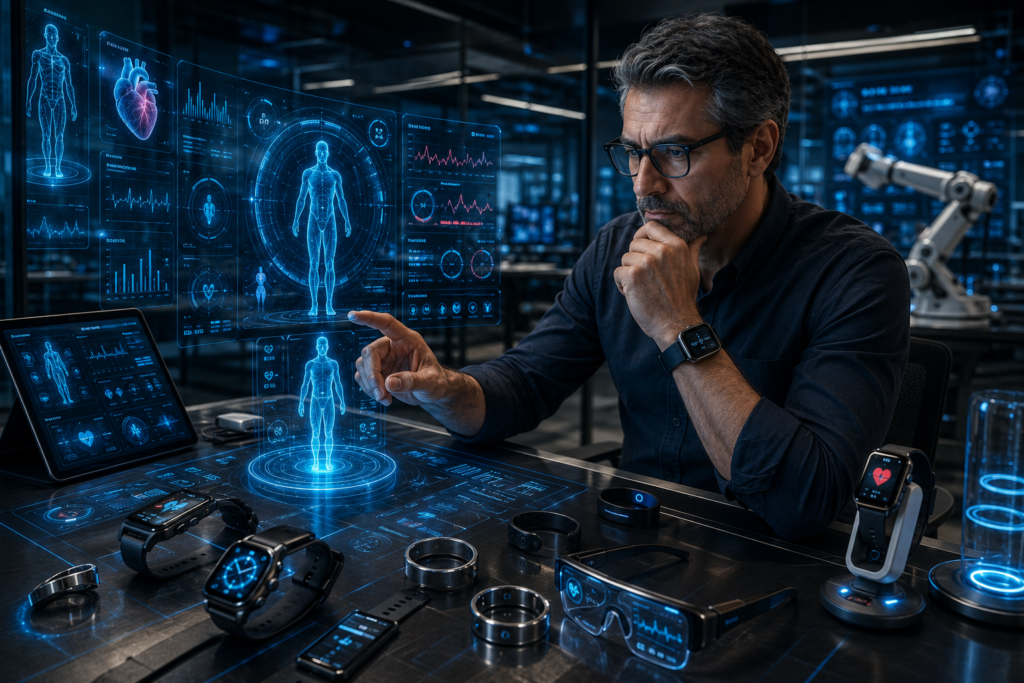
Walk into any airport, hospital, fitness center, university campus, or manufacturing plant today, and you’ll notice something remarkable wearable technology has quietly become part of everyday life. What was once limited to simple digital watches has evolved into intelligent ecosystems of connected wearable devices capable of monitoring our health, improving workplace safety, enhancing athletic performance, and even assisting surgeons during complex medical procedures.
Having spent more than 25 years working alongside consumer electronics companies, healthcare technology innovators, and Internet of Things (IoT) solution providers, I’ve witnessed this transformation firsthand. In the late 1990s, wearable products were often viewed as niche gadgets. Today, they are sophisticated computing platforms powered by artificial intelligence, advanced biometric sensors, cloud computing, and edge AI. That evolution is precisely why the future of wearable technology is one of the most exciting frontiers in modern innovation.
One of the biggest shifts I’ve observed is the transition from passive devices that simply collected information to intelligent systems capable of understanding, interpreting, and acting on data in real time. Modern smart wearable technology no longer counts steps alone—it can detect irregular heart rhythms, estimate stress levels, monitor sleep quality, analyze workout recovery, and even alert users to potential health concerns before noticeable symptoms appear.
These devices combine miniature sensors, wireless connectivity, artificial intelligence, and cloud computing to deliver information that was once available only through specialized medical or laboratory equipment.
Instead of acting as standalone devices, they function as intelligent companions connected to smartphones, healthcare systems, and cloud platforms.
The Digital Transformation of Wearable Devices
One of the most significant developments I’ve observed is the convergence of wearable computing with digital health.
Early wearable devices primarily tracked physical activity. Current platforms can interpret biometric signals, identify behavioral patterns, and generate personalized recommendations.
This shift has been enabled by several technological advances:
- Smaller, more efficient sensors
- Improved battery technology
- Edge AI processing
- Faster wireless communication
- Cloud-based analytics
- Machine learning algorithms
AI Wearables
Artificial intelligence is rapidly becoming the brain behind modern wearable technology. AI-powered wearables analyze biometric data in real time, identify patterns, and provide personalized insights rather than simply displaying raw information.
Current applications include:
- Continuous heart-rate and ECG monitoring
- Sleep quality analysis
- Stress detection
- Personalized fitness coaching
- Voice AI assistants
- Predictive health alerts
In my experience, AI is shifting wearables from reactive tools to proactive companions. Instead of telling users what has already happened, modern devices increasingly anticipate needs and recommend actions before issues arise.
As edge AI chips become more powerful, future AI wearables will process more data directly on the device, improving speed, privacy, and battery efficiency.
Smart Rings
Smart rings are one of the fastest-growing segments in wearable technology. Despite their compact size, these intelligent devices incorporate advanced wearable sensors capable of continuously monitoring biometric data while remaining almost invisible during daily activities.

When I first evaluated early smart ring prototypes, I was skeptical that such a small device could deliver meaningful health insights. Today’s models have exceeded those expectations by combining miniaturized electronics, low-power chipsets, and AI-powered analytics into a comfortable form factor.
The collected data is synchronized with smartphones or cloud platforms, where AI algorithms generate personalized recommendations.
Benefits
- Comfortable for 24/7 wear
- Longer battery life than many smartwatches
- Lightweight design
- Discreet appearance
- High-quality sleep monitoring
Future Potential
By 2035, smart rings may incorporate continuous blood pressure monitoring, non-invasive glucose monitoring, hydration tracking, and advanced emotional state analysis, making them indispensable personal health companions.
This information is securely transmitted to healthcare professionals for continuous assessment.
Why It Matters
Instead of waiting until symptoms become noticeable, wearable devices can identify subtle changes that indicate fatigue, illness, dehydration, or cardiovascular concerns.
This transition from reactive healthcare to predictive healthcare is one of the most important developments I have witnessed throughout my career.
Smart Clothing
Smart clothing integrates electronics directly into fabrics, creating garments capable of collecting health and performance data without requiring separate devices.
Applications
- Athlete performance analysis
- Military monitoring
- Workplace safety
- Rehabilitation
- Physical therapy
- Industrial worker protection
Benefits
- Comfortable continuous monitoring
- Greater sensor coverage
- Better posture tracking
- Injury prevention
- Improved ergonomics
As conductive fabrics and flexible electronics mature, smart clothing will become increasingly common across healthcare, sports, and industrial environments.
AR & VR Wearables
Augmented Reality (AR) and Virtual Reality (VR) are reshaping the future of wearable computing.
While VR creates immersive digital environments, AR overlays digital information onto the physical world. Mixed reality combines both experiences.
Current Applications
- Medical training
- Industrial maintenance
- Engineering visualization
- Architecture
- Gaming
- Remote collaboration
- Education
Future Potential
Future AI-powered AR glasses will become lightweight everyday assistants capable of:
- Real-time translation
- Facial recognition (where legally permitted)
- Navigation
- Live health analytics
- Context-aware AI assistance
Human Augmentation Devices
Perhaps the most exciting frontier is human augmentation.
These wearable technologies enhance natural human abilities rather than simply monitoring them.
Examples include:
- Wearable robotics
- Exoskeleton technology
- AI-assisted mobility
- Strength-enhancing suits
- Rehabilitation devices
- Neural interfaces
In manufacturing, healthcare, logistics, and defense, exoskeletons are already reducing injuries and increasing worker productivity.
Over the next decade, I expect human augmentation devices to become one of the fastest-growing segments of the wearable industry.
Future of Wearable Technology Across Industries
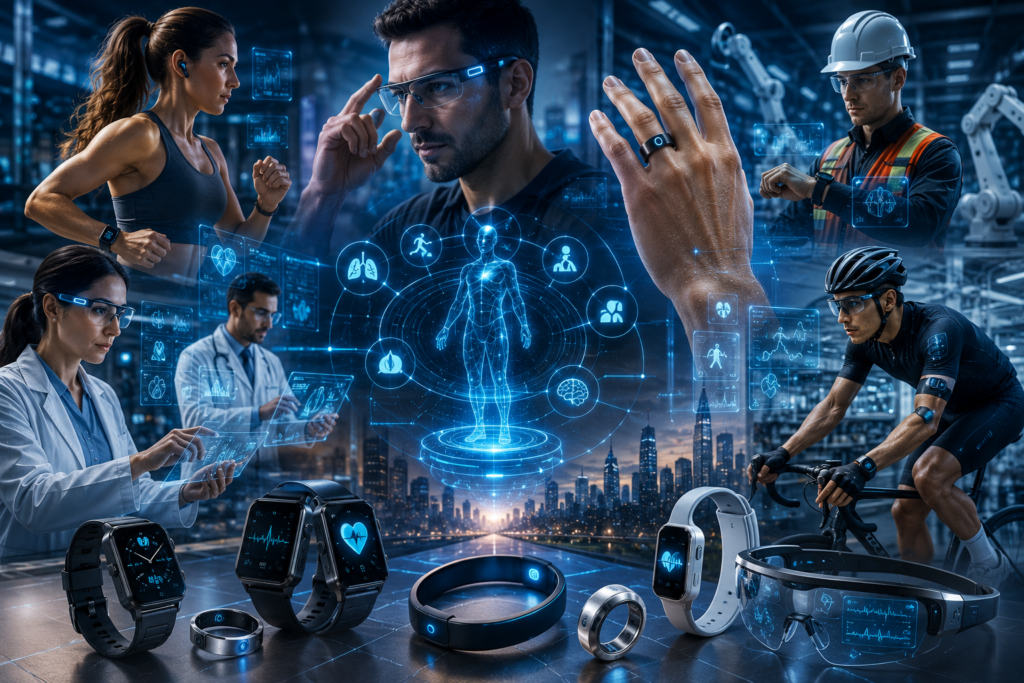
Wearable technology is no longer confined to consumer electronics. It is transforming nearly every major industry by improving efficiency, safety, health, and decision-making.
Healthcare
Healthcare remains the largest beneficiary of wearable innovation.
Hospitals increasingly rely on wearable healthcare devices for:
- Remote patient monitoring
- Continuous ECG monitoring
- Chronic disease management
- Elderly care
- Post-operative recovery
From my experience working with digital health initiatives, the greatest value isn’t simply collecting health data—it’s enabling doctors to intervene before conditions worsen.
Fitness
Fitness wearables have evolved from simple step counters into AI-powered personal trainers.
Modern devices provide:
- Workout recommendations
- Recovery analysis
- VO₂ Max estimation
- Heart rate zones
- Sleep optimization
- Personalized coaching
This data helps users train smarter rather than simply exercising harder.
Sports
Professional sports organizations increasingly depend on wearable sensors to optimize athlete performance.
Applications include:
- Injury prevention
- Fatigue monitoring
- Sprint analysis
- Recovery optimization
- Hydration tracking
- Performance analytics
Many elite teams now consider wearable technology essential to competitive success.
Manufacturing
Industrial wearables improve worker safety and operational efficiency.
Examples include:
- Smart helmets
- Smart glasses
- Worker fatigue monitoring
- Environmental sensors
- Exoskeleton support
- Hazard detection
These technologies reduce workplace injuries while improving productivity.
Military
Defense organizations utilize wearable systems for:
- Soldier health monitoring
- Situational awareness
- Navigation
- Communication
- Fatigue analysis
- Smart body armor integration
Future AI-powered military wearables will likely integrate drones, autonomous systems, and battlefield analytics.
Students can:
- Explore virtual laboratories
- Visualize anatomy
- Practice engineering simulations
- Learn through interactive environments
This creates far deeper engagement than traditional classroom methods.
AI in Wearable Technology: The Biggest Revolution
Artificial Intelligence has transformed wearable technology from passive tracking devices into intelligent companions capable of understanding, predicting, and responding to human needs.
AI Health Monitoring
Modern AI wearables continuously analyze health metrics to detect irregular patterns and provide early alerts for potential health concerns.
Benefits
- Early disease detection
- Continuous monitoring
- Personalized recommendations
- Reduced healthcare costs
Personalized Health Coaching
Instead of generic advice, AI creates individualized wellness plans based on:
- Sleep quality
- Stress levels
- Exercise habits
- Recovery status
- Nutrition patterns
This personalization significantly improves long-term engagement.
Predictive Healthcare
One of the most exciting developments is predictive healthcare.
Rather than waiting for illness to develop, AI models increasingly identify warning signs before symptoms become severe.
This shift could fundamentally transform preventive medicine over the next decade.
AI Fitness Assistants
Today’s AI fitness assistants can:
- Recommend workouts
- Analyze recovery
- Prevent overtraining
- Optimize exercise intensity
- Track long-term progress
I’ve observed that users are far more likely to maintain healthy routines when coaching feels personalized rather than generic.
Smart Notifications
Future wearable AI will filter unnecessary notifications while surfacing only information relevant to the user’s current activity, location, and health status.
Voice AI Assistants
Voice-powered assistants integrated into wearables will increasingly manage schedules, answer questions, translate languages, control smart homes, and provide health guidance—all hands-free.
Edge AI Processing
Edge AI allows wearable devices to process data locally instead of relying entirely on cloud servers.
Advantages include:
- Faster response times
- Better privacy
- Lower latency
- Reduced internet dependence
- Improved battery efficiency
Privacy and Accuracy
Despite remarkable progress, AI wearables must address challenges related to:
- Data privacy
- Algorithm transparency
- Clinical validation
- Regulatory compliance
- Ethical AI usage
Responsible innovation will determine public trust in the next generation of wearable devices.
Smart Wearable Technology vs Traditional Devices
| Feature | Traditional Devices | Smart Wearable Technology |
|---|---|---|
| Health Monitoring | Basic | Continuous AI-powered monitoring |
| Connectivity | Limited | IoT, Cloud, Bluetooth, Wi-Fi |
| AI Features | None | Advanced AI assistants |
| Battery Efficiency | Long | Improving with Edge AI |
| Data Analytics | Minimal | Real-time predictive insights |
| Personalization | Low | Highly personalized |
| Healthcare Integration | Rare | Extensive remote healthcare support |
| User Experience | Static | Interactive and adaptive |
Traditional wearable devices still offer simplicity, affordability, and excellent battery life. However, AI-powered smart wearable technology delivers far greater value through intelligent analytics, predictive healthcare, personalized coaching, and seamless connectivity. As AI and sensor technology continue to mature, smart wearables will increasingly become the preferred choice for consumers and enterprises alike.
Benefits of Wearable Devices
Wearable devices are transforming daily life by combining convenience, intelligence, and real-time insights into compact, user-friendly technology.
Better Health Monitoring
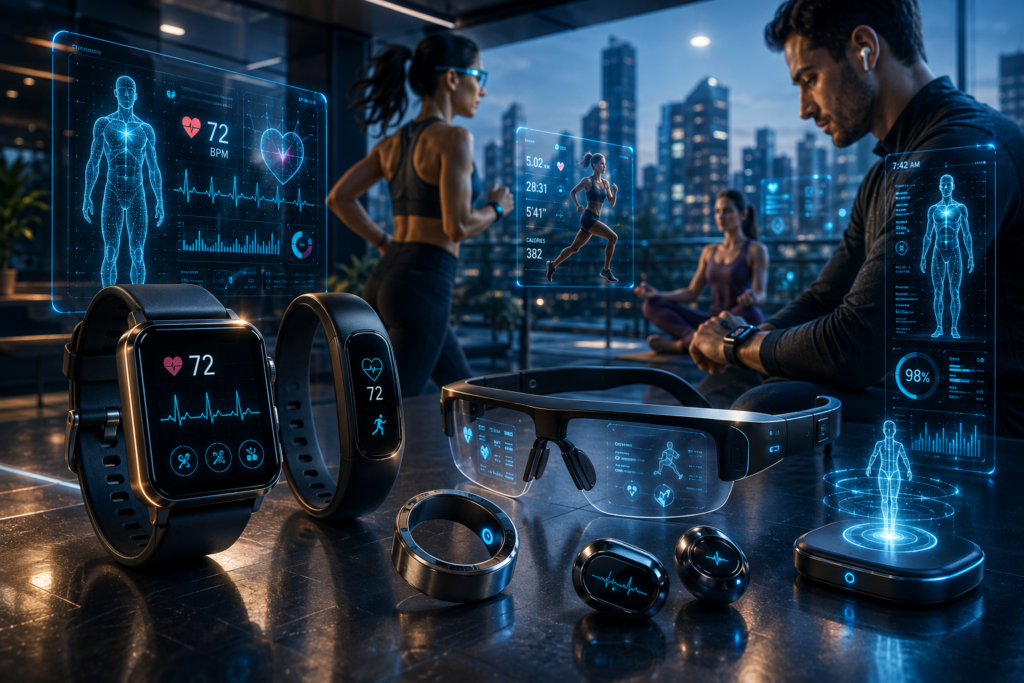
Continuous tracking of heart rate, sleep, ECG, stress, blood oxygen, and other vital signs enables users to understand their health more proactively.
Improved Fitness Tracking
AI-driven coaching helps users optimize workouts, monitor recovery, and achieve fitness goals more efficiently.
Challenges Facing the Future of Wearable Technology
Despite rapid innovation, several challenges must be addressed to unlock the full potential of wearable technology.
- Privacy Concerns: Protecting sensitive biometric and health data from misuse.
- Cybersecurity Risks: Preventing hacking, unauthorized access, and data breaches.
- Battery Limitations: Extending battery life without compromising functionality.
- Data Accuracy: Ensuring wearable sensors provide clinically reliable measurements.
- High Costs: Making advanced wearables affordable for a broader audience.
- Technology Adoption: Overcoming user resistance and improving digital literacy.
- Ethical Issues: Addressing consent, AI bias, and responsible data usage.
- Regulatory Challenges: Meeting evolving healthcare, safety, and privacy regulations worldwide.
From my perspective, organizations that prioritize security, transparency, and user trust will lead the next wave of wearable innovation.
Future of Wearable Technology Predictions Through 2035
Looking ahead, I anticipate several transformative developments:
- AI Personal Health Companions: Always-on assistants that provide real-time health guidance and predictive care.
- Smart Contact Lenses: Displaying information directly within the user’s field of vision while monitoring eye health.
- Brain-Computer Wearables: Enabling intuitive interaction between humans and digital systems.
- Medical Nanotechnology: Tiny wearable-integrated systems supporting targeted diagnostics and therapies.
- Wearable Exoskeletons: Assisting mobility, rehabilitation, and physically demanding occupations.
- Emotion Recognition Wearables: Detecting stress, fatigue, and emotional states to support mental well-being.
- Fully Connected Smart Ecosystems: Seamless integration between wearables, homes, vehicles, and workplaces.
- Human Digital Twins: AI-generated virtual health models that simulate and predict future medical outcomes.
My 25 Years of Experience in Wearable Technology
When I first started following wearable electronics more than 25 years ago, the industry looked very different from what we see today. Most “wearable” products were little more than digital watches with alarms, stopwatches, and calculator functions. At the time, many people viewed them as convenient gadgets rather than platforms capable of changing healthcare, sports, or the workplace.
Artificial intelligence has become the defining force behind this transformation. Early wearable devices collected information; modern AI-powered wearables understand it. They recognize patterns, identify potential risks, and generate recommendations tailored to each individual. In my view, this shift from passive data collection to intelligent decision-making represents the single most important advancement in wearable computing.
I’ve also been impressed by how industries beyond healthcare have embraced wearable technology. Manufacturing companies use smart helmets and safety wearables to reduce workplace accidents. Professional sports teams rely on biometric analytics to improve athlete performance and recovery. Educational institutions are experimenting with mixed reality learning, while logistics organizations deploy smart glasses to improve operational efficiency.
If there’s one lesson I’d share with organizations adopting wearable technology, it’s this: focus on outcomes rather than devices. The true value lies in improving health, increasing productivity, enhancing safety, or creating better customer experiences—not simply adding another connected gadget.
Frequently Asked Questions (FAQs)
1. What is wearable technology?
Wearable technology refers to electronic devices designed to be worn on the body. These devices use sensors, artificial intelligence, and wireless connectivity to collect, analyze, and share data related to health, fitness, communication, productivity, and everyday activities.
2. What is the future of wearable technology?
The future of wearable technology lies in AI-powered health monitoring, predictive healthcare, smart glasses, smart rings, wearable robotics, brain-computer interfaces, and fully connected IoT ecosystems. By 2035, wearables are expected to become more intelligent, personalized, and seamlessly integrated into daily life.
3. What are wearable devices?
Wearable devices include smartwatches, fitness trackers, smart rings, augmented reality glasses, wearable medical devices, smart clothing, VR headsets, hearing devices, and exoskeletons. These products combine sensors, software, and connectivity to provide real-time insights and enhanced user experiences.
4. How does AI improve wearable technology?
Artificial intelligence enables wearable devices to analyze health data, recognize patterns, predict potential risks, provide personalized recommendations, automate fitness coaching, and deliver intelligent notifications. AI transforms wearables from simple tracking tools into proactive digital assistants.
Conclusion
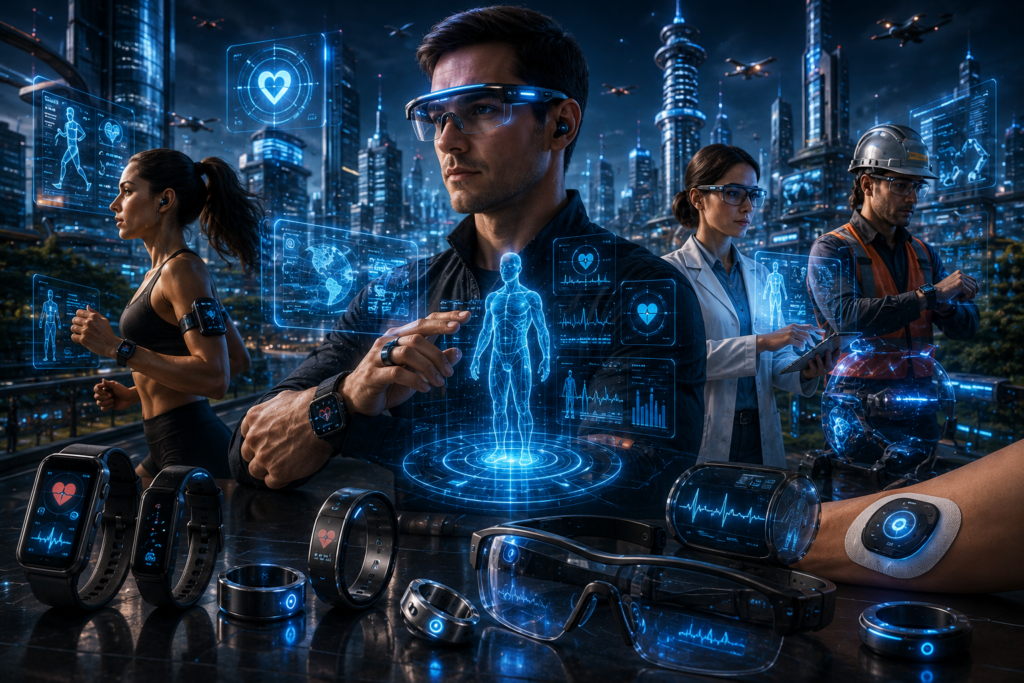
Wearable technology has evolved from simple digital accessories into intelligent ecosystems that are reshaping healthcare, fitness, sports, education, manufacturing, workplace safety, and everyday life. Powered by artificial intelligence, advanced biometric sensors, and the Internet of Things, today’s wearable devices are no longer limited to tracking activity—they deliver real-time insights, predictive health monitoring, personalized coaching, and seamless digital experiences.
As we’ve explored throughout this guide, the future of wearable technology will be defined by smarter AI assistants, non-invasive health monitoring, augmented and mixed reality, wearable robotics, human augmentation, and increasingly connected digital ecosystems. Emerging wearable tech trends such as smart rings, smart glasses, wearable healthcare devices, and edge AI will continue to push innovation well beyond consumer electronics into enterprise, industrial, and medical applications.
While challenges related to privacy, cybersecurity, battery life, and regulation remain, the opportunities far outweigh the obstacles. Organizations that invest in secure, user-centric, and AI-driven smart wearable technology today will be better positioned to thrive in tomorrow’s digital economy.
Author

razakh6402@gmail.com
Related Posts

Lead Generation Software: 12 Best Lead Generation Tools for B2B Sales (2026 Guide)
- 0
- 2,300 words
If someone had asked me 15 years ago what the biggest challenge in sales was, my answer would have been simple: finding...
Survey Software: 12 Best Online Survey Tools & Feedback Software for Businesses (2026 Guide)
- 0
- 1,871 word
Whether I was helping a SaaS startup validate a new feature, assisting an HR team with employee engagement, or optimizing customer experience...
Read out all
Online Course Platform: 12 Best LMS Software & eLearning Platforms for Course Creators (2026 Guide)
- 0
- 1,900 word
The online education industry has changed dramatically over the last 15 years. When I built my first digital training portal, simply uploading...

Team Communication Software: 12 Best Business Messaging Apps for Modern Workplaces in 2026 (Expert Tested)
- 0
- 2,305 words
I’ve personally tested dozens of team communication software platforms while consulting for marketing agencies, software companies, HR departments, remote development teams, and...

Invoice Software: 12 Best Invoicing Software for Small Business in 2026 (Expert Tested)
- 0
- 2,493 words
I’ve worked with freelancers chasing late payments, agencies managing hundreds of monthly invoices, startups scaling internationally, and established businesses struggling with outdated...

Generate one SEO-optimized title thatdigital asset management software
- 6
- 2,632 words
One of the most memorable projects I led involved migrating nearly half a million digital assets from a traditional file server into...