- 2
- 2,616 words
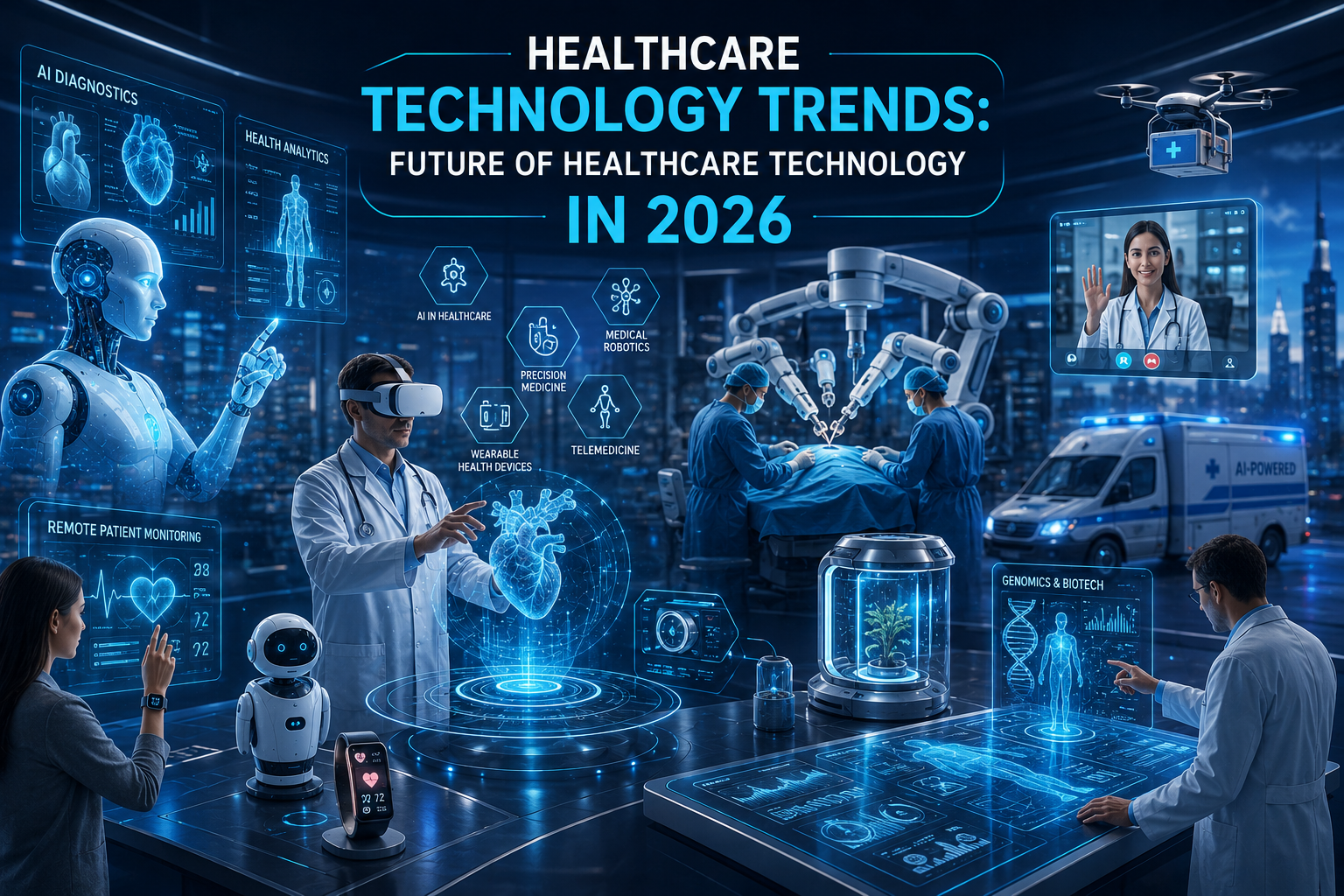
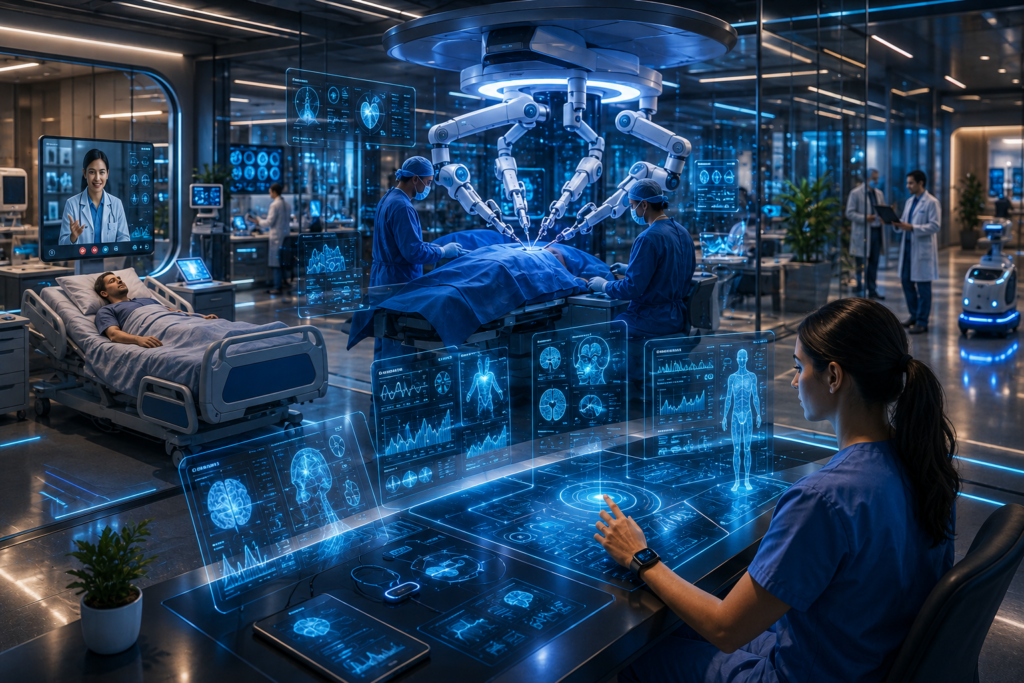
Healthcare is experiencing one of the most remarkable transformations I have witnessed in more than 25 years of working alongside hospitals, healthcare providers, medical technology companies, and digital transformation teams. When I first stepped into the healthcare technology field, patient records were stored in paper folders, doctors relied almost entirely on physical examinations, and remote consultations were considered nearly impossible. Today, the conversation has completely changed. Healthcare technology trends, AI in healthcare, and digital healthcare solutions are reshaping how hospitals operate, how doctors diagnose diseases, and how patients receive care from virtually anywhere in the world.
What makes the future of healthcare technology especially exciting is that innovation is no longer limited to large research hospitals. Artificial intelligence, cloud computing, wearable devices, robotic surgery, precision medicine, and predictive analytics are becoming accessible to healthcare providers of all sizes. In my experience, organizations that embrace these medical technology innovations are improving patient outcomes, reducing operational costs, and preparing themselves for a healthcare landscape that is becoming increasingly connected and data-driven.

What Is the Future of Healthcare Technology?
The future of healthcare technology refers to the continuous evolution of digital tools, intelligent systems, and connected medical devices that improve patient care, streamline clinical workflows, and make healthcare more accessible. It combines AI in healthcare, cloud computing, robotics, big data, wearable devices, and automation to create smarter, safer, and more efficient healthcare systems.
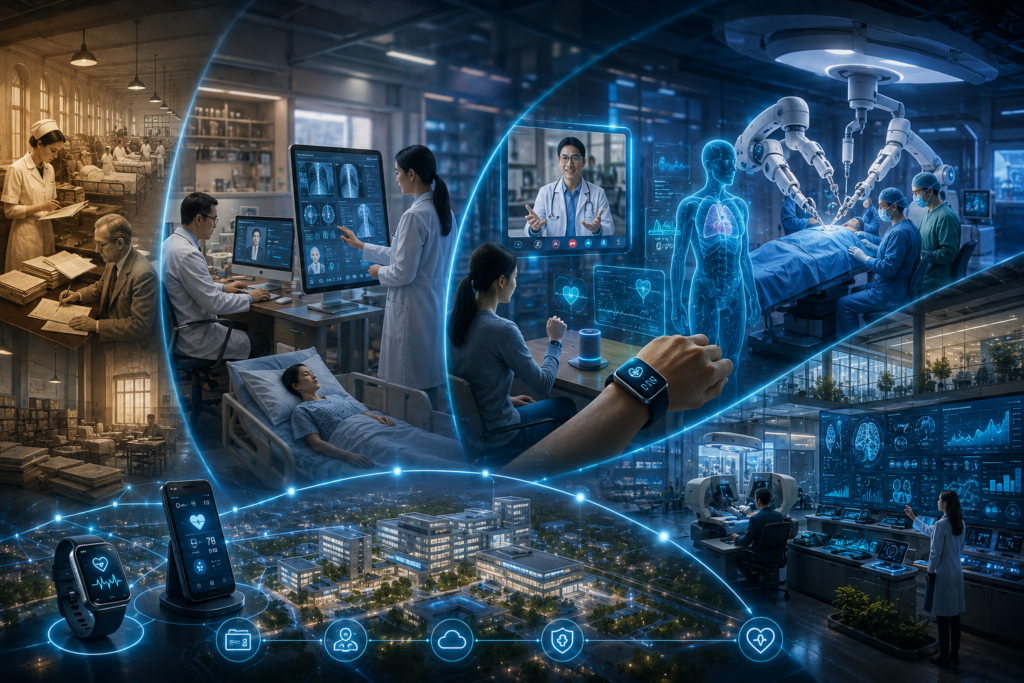
Unlike traditional healthcare, which often relied on manual processes and isolated information, digital healthcare integrates patient data, diagnostics, treatment plans, and communication into a connected ecosystem. This integration enables healthcare providers to deliver personalized care while improving efficiency across hospitals and clinics.
From my perspective, the healthcare industry has reached a turning point. Twenty years ago, introducing electronic health records was considered a major technological achievement. Today, hospitals are implementing AI-powered clinical decision support systems, robotic surgical platforms, and predictive healthcare analytics. These advancements illustrate how rapidly medical technology innovations are progressing.
Why Healthcare Technology Matters More Than Ever
Several factors are accelerating the adoption of healthcare technology trends worldwide:
- Growing demand for personalized healthcare
- Aging populations requiring continuous monitoring
- Rising healthcare costs
- Increased prevalence of chronic diseases
- Shortage of healthcare professionals
- Advances in artificial intelligence and cloud computing
- Government investments in healthcare modernization
In my experience, organizations that invest strategically in digital healthcare are not only improving patient outcomes but also creating more resilient healthcare systems capable of responding to future public health challenges.
Healthcare technology is no longer about replacing healthcare professionals—it is about empowering them with better tools. The best hospitals I have worked with use AI in healthcare to assist physicians, automate repetitive administrative tasks, improve diagnostic accuracy, and provide patients with faster access to quality care.
Top Healthcare Technology Trends Transforming Medicine
Over the past decade, I have seen healthcare evolve faster than at any other point in my career. Hospitals are no longer relying solely on traditional clinical expertise. Instead, they are combining medical knowledge with AI in healthcare, cloud computing, connected devices, and advanced analytics to deliver smarter, faster, and more personalized care. These healthcare technology trends are defining the future of healthcare technology and changing how patients experience medicine.
From my experience working with healthcare organizations, AI consistently improves decision-making when used responsibly. Doctors still make the final decisions, but AI provides valuable insights that increase speed and accuracy.
Telemedicine Platforms
Telemedicine has transformed access to healthcare.
Years ago, remote consultations were uncommon. Today, patients can consult specialists from home using secure video platforms.
Benefits include:
- Faster appointments
- Reduced travel time
- Better rural healthcare access
- Lower healthcare costs
- Improved follow-up care
The growth of digital healthcare has made telemedicine one of the most impactful medical technology innovations of the decade.
Wearable Health Devices
Wearable devices have shifted healthcare from reactive treatment to proactive prevention.
Modern smartwatches and medical wearables continuously monitor:
- Heart rate
- Blood oxygen
- ECG readings
- Sleep quality
- Blood glucose
- Physical activity
These devices generate valuable health data that physicians can use for early intervention.
In my opinion, wearable technology represents one of the strongest pillars of the future of healthcare technology, allowing healthcare providers to identify health issues before they become emergencies.
Remote Patient Monitoring
Remote patient monitoring enables healthcare providers to observe patients outside hospitals using connected medical devices.
Hospitals now monitor:
- Blood pressure
- Diabetes
- Cardiac conditions
- COPD
- Recovery after surgery
This technology reduces unnecessary hospital admissions while improving patient comfort.
One lesson I’ve learned is that patients recover better when they can remain in familiar home environments while still being monitored by healthcare professionals.
Precision Medicine
Traditional medicine often applies the same treatment to many patients.
Precision medicine changes that approach by tailoring treatment according to:
- Genetics
- Lifestyle
- Environment
- Medical history
This represents one of the most exciting healthcare technology trends because personalized treatment dramatically improves outcomes while reducing unnecessary side effects.
Robotic Surgery
Robotic-assisted surgery continues to redefine surgical precision.
Benefits include:
- Smaller incisions
- Less bleeding
- Faster recovery
- Greater surgical accuracy
- Reduced infection risk
After observing robotic surgery programs over the years, I believe surgeons equipped with robotic systems achieve consistency that was difficult to imagine twenty years ago.
Healthcare Automation
Administrative work consumes enormous healthcare resources.
Automation now assists with:
- Appointment scheduling
- Insurance verification
- Medical coding
- Billing
- Inventory management
- Patient communication
These medical technology innovations allow healthcare professionals to spend more time caring for patients rather than completing paperwork.
Medical Imaging AI
AI-powered imaging systems assist radiologists in identifying diseases earlier.
Applications include:
- Breast cancer detection
- Lung disease diagnosis
- Brain imaging
- Fracture detection
- Stroke assessment
Medical imaging AI does not replace specialists—it enhances their ability to identify subtle abnormalities that might otherwise be overlooked.
Future of Healthcare Technology Across Medical Industries
The future of healthcare technology extends far beyond hospitals. Every healthcare sector is benefiting from digital transformation.
Hospitals
Modern hospitals increasingly rely on:
- AI diagnostics
- Smart patient rooms
- Automated pharmacy systems
- Predictive staffing
- Robotic surgery
- Cloud healthcare platforms
These technologies improve operational efficiency while enhancing patient care.
Primary Care
Family physicians now use digital healthcare tools for:
- Virtual consultations
- Electronic prescriptions
- AI-assisted diagnosis
- Patient portals
- Preventive healthcare analytics
This makes primary care more convenient and accessible.
Emergency Medicine
Emergency departments benefit from:
- AI triage systems
- Ambulance telemedicine
- Real-time patient monitoring
- Predictive emergency analytics
Every minute matters during emergencies, and these healthcare technology trends save valuable time.
Mental Health
Digital mental healthcare continues expanding through:
- Online therapy platforms
- AI mental health assistants
- Mood tracking apps
- Virtual counseling
- Remote psychiatric consultations
Technology is helping reduce barriers to mental healthcare worldwide.
Medical Research
Researchers now use AI to:
- Analyze genomic data
- Discover new drugs
- Predict disease behavior
- Process clinical trials faster
Drug development that once required years can now be accelerated using intelligent algorithms.
Pharmaceutical Industry
Pharmaceutical companies increasingly adopt:
- AI drug discovery
- Digital laboratories
- Predictive analytics
- Automated manufacturing
- Precision medicine research
These medical technology innovations significantly shorten research timelines.
Elderly Care
An aging global population makes digital elderly care increasingly important.
Smart technologies now include:
- Fall detection
- Medication reminders
- Remote monitoring
- Smart home healthcare
- Emergency alerts
These systems help seniors maintain independence while improving safety.
Home Healthcare
Home healthcare has evolved dramatically.
Patients now receive:
- Virtual doctor visits
- Wearable monitoring
- Smart medication dispensers
- Home diagnostic devices
- Remote rehabilitation
In my experience, home healthcare represents one of the fastest-growing sectors within digital healthcare.
AI in Healthcare: The Biggest Medical Revolution
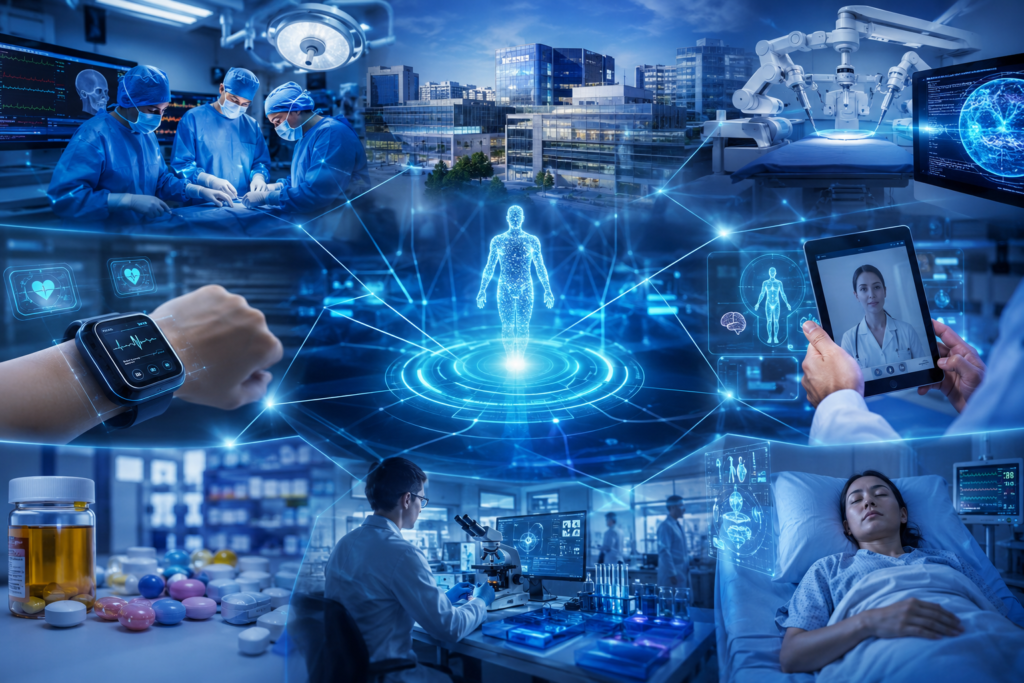
If I had to identify one technology transforming medicine more than any other, it would unquestionably be AI in healthcare.
Artificial intelligence is reshaping nearly every aspect of healthcare delivery.
AI Diagnostics
AI systems analyze symptoms, laboratory results, and medical imaging faster than ever before.
Rather than replacing physicians, AI provides decision support that improves diagnostic confidence.
Medical Imaging AI
AI enhances radiology by detecting:
- Early cancers
- Brain abnormalities
- Lung diseases
- Bone fractures
- Cardiovascular conditions
This leads to earlier treatment and better patient outcomes.
Predictive Healthcare
Predictive analytics identifies patients who are at high risk before serious complications occur.
Hospitals use predictive AI for:
- Readmission prevention
- Disease progression
- ICU monitoring
- Infection control
Personalized Medicine
AI analyzes:
- Genetic profiles
- Lifestyle data
- Medical history
- Treatment response
This enables personalized therapies that improve effectiveness while minimizing side effects.
Drug Discovery
AI dramatically accelerates pharmaceutical research by identifying promising drug candidates in weeks instead of months.
This is one of the most valuable medical technology innovations emerging today.
Clinical Decision Support
Doctors receive AI-generated recommendations based on millions of clinical records and research papers.
These systems improve consistency without removing physician oversight.
AI Virtual Assistants
Healthcare virtual assistants now help with:
- Appointment scheduling
- Medication reminders
- Patient education
- Symptom assessment
- Administrative support
They improve patient engagement while reducing staff workload.
From my perspective, AI will never replace compassionate healthcare professionals. Instead, it will empower them with better information, faster insights, and more time to focus on patient care.
Digital Healthcare vs Traditional Healthcare
While traditional healthcare remains essential for many treatments and emergencies, digital healthcare is creating a more connected, efficient, and patient-centered system. In my experience, the most successful organizations combine the strengths of both approaches rather than replacing one with the other.
Benefits of Medical Technology Innovations
The rapid pace of medical technology innovations is delivering measurable benefits across healthcare systems worldwide.
Key advantages include:
- Better Patient Outcomes: Earlier diagnosis, personalized treatments, and continuous monitoring improve recovery rates.
- Faster Diagnosis: AI-powered tools help clinicians detect diseases more quickly and accurately.
- Cost Reduction: Automation streamlines operations and reduces administrative expenses.
- Global Healthcare Access: Telemedicine connects patients with specialists regardless of location.
- Preventive Medicine: Wearables and predictive analytics identify health risks before symptoms appear.
- Improved Hospital Efficiency: Smart workflows reduce waiting times and optimize resource allocation.
- Enhanced Decision-Making: Real-time data supports clinicians in making informed treatment choices.
- Better Patient Experience: Digital portals, virtual consultations, and remote monitoring make care more convenient and personalized.
As someone who has watched healthcare evolve over decades, I believe these innovations are not just improving medicine—they are redefining what quality healthcare means for future generations.
Challenges Facing Future Healthcare Technology
While I am optimistic about the future of healthcare technology, experience has taught me that every major innovation brings new challenges. Over the past 25 years, I have seen hospitals adopt groundbreaking systems only to discover that technology alone is never enough. Success depends on people, processes, governance, and trust.
Healthcare Cybersecurity
As hospitals become more connected through digital healthcare, cybersecurity becomes increasingly critical.
Healthcare organizations face threats such as:
- Ransomware attacks
- Medical device hacking
- Electronic health record breaches
- Cloud security vulnerabilities
- Identity theft
Protecting patient information must remain a top priority.
Patient Data Privacy
Modern healthcare collects enormous amounts of sensitive information.
Organizations must balance innovation with:
- Patient consent
- Data transparency
- Regulatory compliance
- Ethical AI usage
Trust is one of healthcare’s greatest assets, and maintaining that trust requires responsible data management.
Regulatory Compliance
Healthcare technology evolves faster than regulations.
Healthcare providers must comply with various privacy and safety standards while adopting new innovations.
Maintaining compliance without slowing innovation remains a significant challenge.
Infrastructure Costs
Implementing advanced medical technology innovations requires major investments in:
- Cloud infrastructure
- AI platforms
- Medical equipment
- Staff training
- Cybersecurity
Smaller healthcare providers often struggle with these costs.
Technology Adoption
Even the best technology fails if healthcare professionals are not comfortable using it.
Successful implementation requires:
- Comprehensive training
- Leadership support
- Change management
- Continuous education
In my experience, technology adoption is more about people than software.
Digital Skills Gap
Healthcare professionals increasingly need digital literacy.
Future healthcare teams will require skills in:
- AI-assisted decision-making
- Data interpretation
- Digital collaboration
- Telemedicine platforms
- Healthcare analytics
Continuous learning will become essential.
Ethical Challenges
Emerging technologies raise important questions about:
Gene Editing
CRISPR and related technologies will continue advancing personalized medicine, offering new hope for genetic disorders that currently have limited treatment options.
Predictive Disease Prevention
Healthcare will shift from treating illness to preventing it through continuous monitoring, AI analytics, genomics, and wearable technology.
Fully Connected Smart Hospitals
By 2035, hospitals are likely to integrate:
- AI diagnostics
- Robotics
- IoMT devices
- Cloud healthcare
- Digital twins
- Real-time analytics
creating a seamless patient experience from admission to recovery.
Healthcare Technology Statistics (2026)
| Metric | Latest Trend (2026) |
|---|---|
| AI Adoption in Healthcare | Rapid growth across diagnostics, administration, and patient support |
| Telemedicine Growth | Continued expansion for primary care and specialist consultations |
| Wearable Health Devices | Millions of users generating real-time health data daily |
| Healthcare Cloud Adoption | Most large healthcare organizations expanding cloud infrastructure |
| Robotic Surgery | Increasing use in minimally invasive procedures |
| Remote Patient Monitoring | Significant growth driven by chronic disease management |
| Digital Healthcare Investment | Strong global investment from governments and private sectors |

Frequently Asked Questions (FAQs)
1. What is the future of healthcare technology?
The future of healthcare technology focuses on AI, digital healthcare, robotics, precision medicine, wearable devices, and predictive analytics to improve patient care.
2. What are the biggest healthcare technology trends?
AI diagnostics, telemedicine, wearable health devices, remote patient monitoring, robotic surgery, precision medicine, and smart hospitals are among the leading trends.
3. How is AI changing healthcare?
AI improves diagnosis, automates administrative work, supports clinical decisions, accelerates drug discovery, and enhances patient care.
4. What is digital healthcare?
Digital healthcare uses connected technologies such as electronic health records, telemedicine, mobile health apps, cloud platforms, and AI to improve healthcare delivery.
5. What are smart hospitals?
Smart hospitals integrate AI, IoMT devices, robotics, cloud computing, and real-time analytics to improve efficiency and patient outcomes.
6. Will AI replace doctors?
No. AI is designed to support healthcare professionals by providing insights and automation, while doctors continue making clinical decisions.
7. What is telemedicine?
Telemedicine enables patients to consult healthcare providers remotely using secure digital communication platforms.
8. How do wearable health devices help patients?
They continuously monitor health metrics such as heart rate, sleep, blood oxygen, and activity levels, enabling earlier detection of potential health issues.
9. What technologies will shape healthcare by 2035?
AI, robotics, digital twins, genomics, nanomedicine, predictive analytics, and personalized medicine are expected to play major roles.
10. How can hospitals prepare for future healthcare technology?
Hospitals should invest in digital infrastructure, staff training, cybersecurity, cloud platforms, AI adoption, and patient-centered digital transformation.
Conclusion
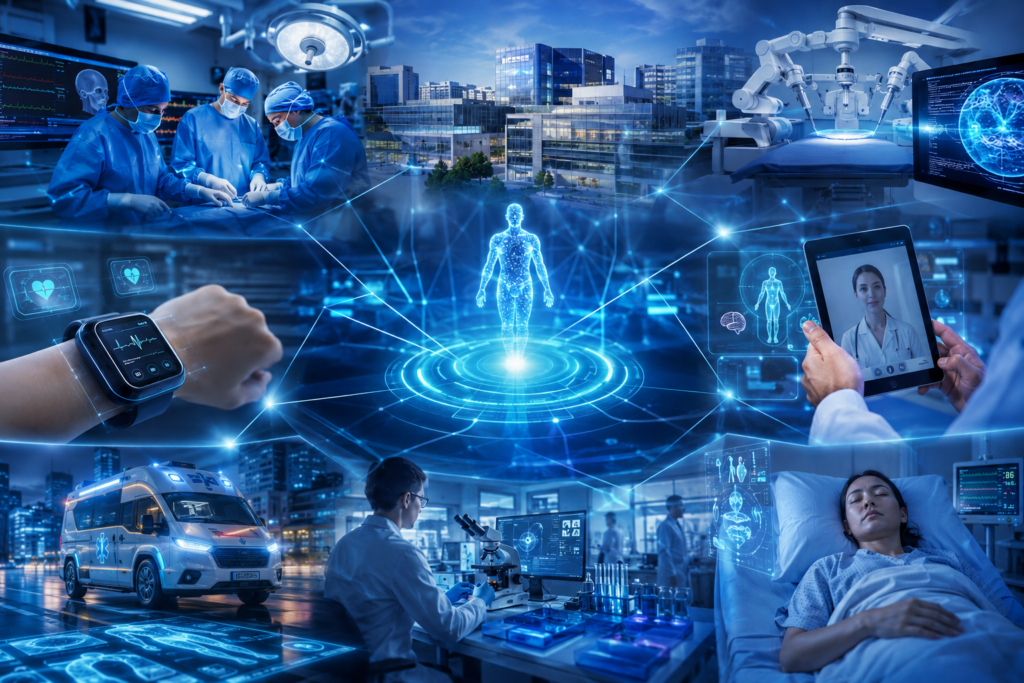
The future of healthcare technology is no longer a distant vision—it is unfolding today. From AI in healthcare and digital healthcare platforms to robotic surgery, wearable devices, and predictive analytics, the industry is entering a new era where innovation enhances every stage of patient care.
Throughout my 25 years in healthcare technology, I have learned that successful transformation is driven by more than cutting-edge tools. It requires thoughtful implementation, continuous education, strong cybersecurity, ethical governance, and a commitment to keeping patients at the center of every decision.
Organizations that embrace these healthcare technology trends today will be better prepared to deliver faster diagnoses, more personalized treatments, improved operational efficiency, and better long-term health outcomes. Looking toward 2035, the combination of AI, automation, genomics, smart hospitals, and connected care will continue redefining modern medicine.
Author

razakh6402@gmail.com
Related Posts

Lead Generation Software: 12 Best Lead Generation Tools for B2B Sales (2026 Guide)
- 0
- 2,300 words
If someone had asked me 15 years ago what the biggest challenge in sales was, my answer would have been simple: finding...
Survey Software: 12 Best Online Survey Tools & Feedback Software for Businesses (2026 Guide)
- 0
- 1,871 word
Whether I was helping a SaaS startup validate a new feature, assisting an HR team with employee engagement, or optimizing customer experience...
Read out all
Online Course Platform: 12 Best LMS Software & eLearning Platforms for Course Creators (2026 Guide)
- 0
- 1,900 word
The online education industry has changed dramatically over the last 15 years. When I built my first digital training portal, simply uploading...

Team Communication Software: 12 Best Business Messaging Apps for Modern Workplaces in 2026 (Expert Tested)
- 0
- 2,305 words
I’ve personally tested dozens of team communication software platforms while consulting for marketing agencies, software companies, HR departments, remote development teams, and...

Invoice Software: 12 Best Invoicing Software for Small Business in 2026 (Expert Tested)
- 0
- 2,493 words
I’ve worked with freelancers chasing late payments, agencies managing hundreds of monthly invoices, startups scaling internationally, and established businesses struggling with outdated...
Generate one SEO-optimized title thatdigital asset management software
- 6
- 2,632 words
One of the most memorable projects I led involved migrating nearly half a million digital assets from a traditional file server into...
2 comments