
- 0
- 2,467 words
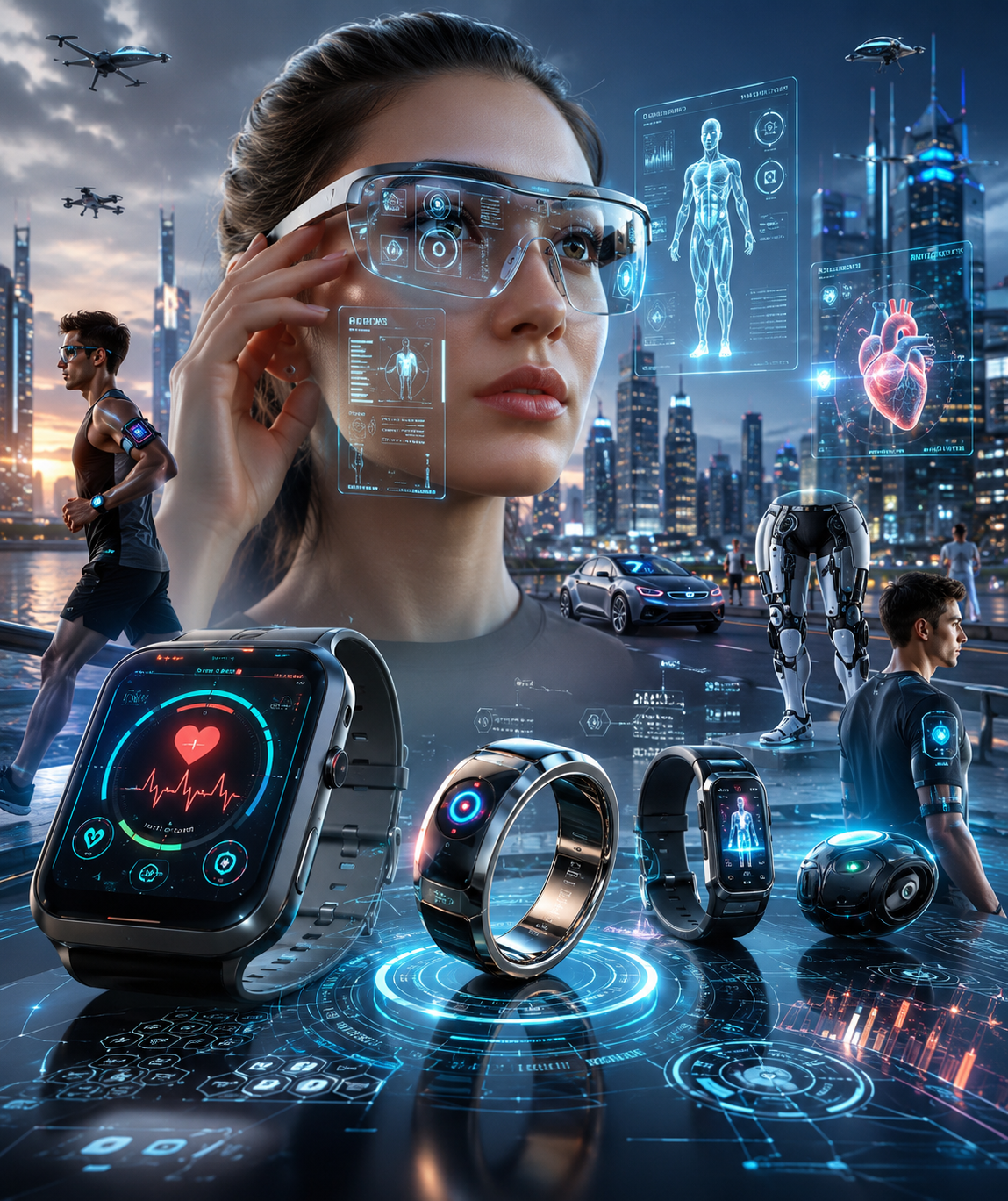
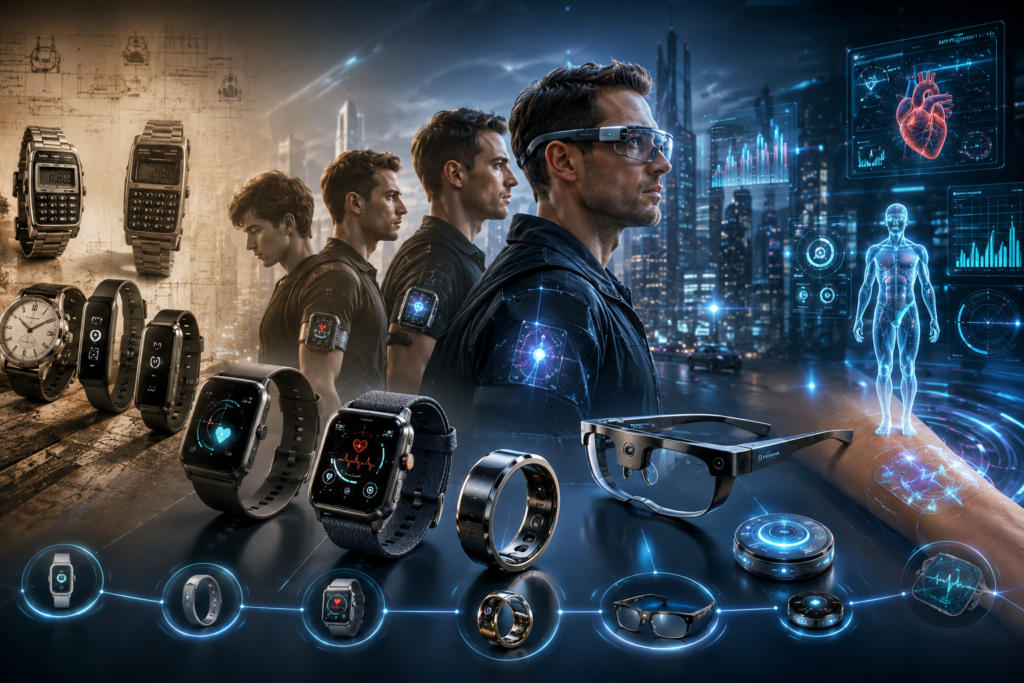
Over the past 25 years, I’ve had the opportunity to watch wearable technology evolve from simple digital watches into intelligent AI-powered companions capable of monitoring health, improving productivity, and even detecting medical conditions before symptoms become obvious. Few technology sectors have advanced as rapidly—or become as deeply integrated into our daily lives—as wearable devices.
Today, the future of wearable technology is no longer limited to counting steps or displaying smartphone notifications. Artificial intelligence, advanced biometric sensors, edge AI, cloud computing, and the Internet of Things (IoT) are transforming ordinary wearable devices into intelligent assistants that continuously learn from user behavior and provide personalized recommendations.
What excites me most is how smart wearable technology is reshaping multiple industries simultaneously. Healthcare providers now rely on wearable healthcare devices for remote patient monitoring. Athletes use AI-powered fitness trackers to optimize performance. Manufacturing companies deploy industrial wearables to improve worker safety, while businesses increasingly adopt smart glasses to enhance productivity and collaboration.
What Is Wearable Technology?
Wearable technology refers to electronic devices designed to be worn on the body that collect data, provide real-time information, automate tasks, and connect users with digital services. Unlike traditional electronics that remain in pockets or on desks, wearable devices stay with users throughout the day, continuously gathering information through embedded sensors.
Common examples include:
Why Wearable Technology Matters
In my experience, wearable technology has become valuable because it delivers information exactly when users need it most.
Rather than opening multiple apps or visiting healthcare providers for routine monitoring, users receive continuous, real-time insights throughout the day.
This capability is transforming:
- Preventive healthcare
- Workplace safety
- Sports performance
- Personal productivity
- Digital wellness
- Medical research
- Enterprise collaboration
- Smart city infrastructure
As AI continues to improve, wearable devices will become even more personalized, predictive, and indispensable.
Top Wearable Tech Trends Transforming the Future
AI Wearables
Artificial intelligence is rapidly becoming the foundation of modern wearable technology. Rather than simply collecting data, AI-powered wearables analyze patterns, predict outcomes, and provide personalized recommendations in real time.
Today’s AI wearables can detect irregular heart rhythms, monitor stress levels, recommend recovery periods after workouts, and even identify subtle behavioral changes that may indicate early signs of illness. As edge AI chips become more powerful, these insights are increasingly processed directly on the device, improving both speed and privacy.
From my experience, the most impactful shift has been the transition from reactive monitoring to predictive assistance. Instead of telling users what happened, AI wearables now help anticipate what may happen next, making them invaluable for healthcare, fitness, and workplace productivity.
Key benefits include:
- Personalized health insights
- Predictive analytics
- Real-time coaching
- Smarter battery optimization
- Adaptive notifications
- Enhanced user experiences
Smart Glasses
Smart glasses have evolved far beyond their early experimental stages. Modern AR glasses overlay digital information onto the physical world, enabling hands-free navigation, remote collaboration, live translation, and immersive training experiences.
In industries such as manufacturing, logistics, and healthcare, smart glasses allow professionals to access instructions, diagnostics, or expert guidance without taking their hands off the task. This not only improves efficiency but also enhances safety and accuracy.
Looking ahead, I expect smart glasses to become lighter, more stylish, and increasingly AI-driven, positioning them as one of the most transformative wearable technologies of the next decade.
Top Wearable Tech Trends Transforming the Future (Continued)
Fitness Wearables
Fitness wearables have evolved far beyond simple step counters. Today’s AI-powered fitness trackers analyze heart rate variability (HRV), recovery time, VO₂ max, sleep stages, stress levels, and even hydration trends. They continuously learn from user behavior, providing personalized recommendations rather than generic fitness advice.
During the early days of fitness tracking, most people focused on daily step goals. Today, professional athletes and everyday users alike rely on wearable devices to optimize recovery, prevent injuries, and improve overall performance.
Modern fitness wearables typically offer:
- Continuous heart-rate monitoring
- Blood oxygen (SpO₂) tracking
- Sleep quality analysis
- Recovery scoring
- Personalized workout coaching
- Stress management insights
- AI-powered health recommendations
As wearable sensors become more accurate, these devices will increasingly function as personal health coaches rather than simple activity trackers.
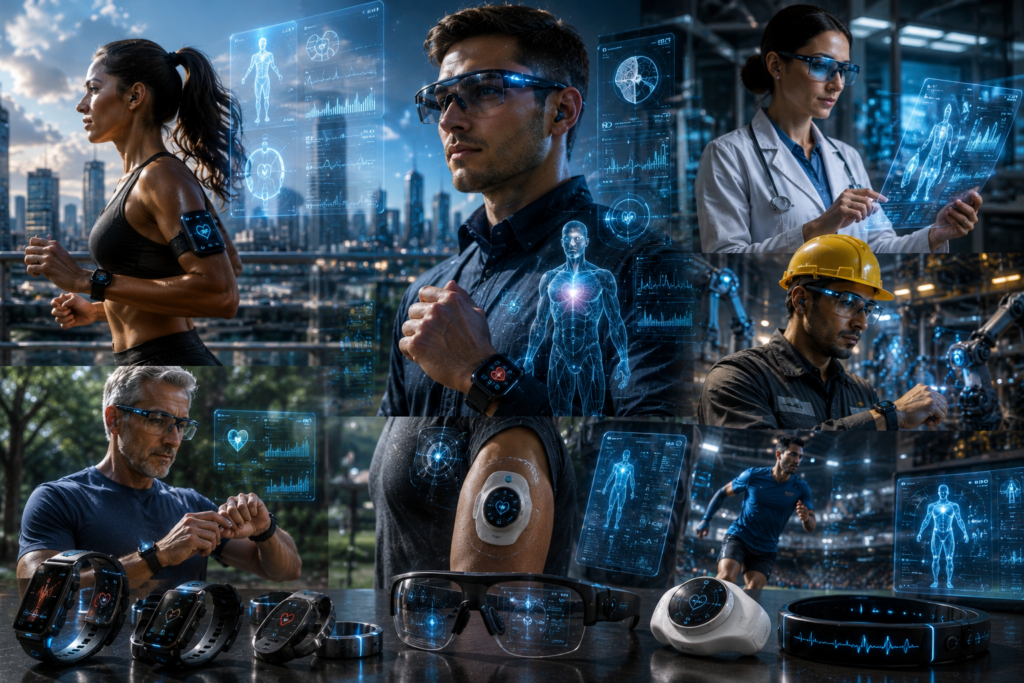
I’ve visited industrial environments where workers receive real-time hazard alerts through wearable technology without stopping their tasks. Supervisors can monitor environmental risks, worker fatigue, and equipment conditions simultaneously.
Major benefits include:
- Improved workplace safety
- Faster maintenance
- Reduced accidents
- Hands-free communication
- Better productivity
- Real-time workforce analytics
As AI continues to mature, industrial wearables will become indispensable tools for frontline workers.
Augmented Reality Wearables
Augmented Reality (AR) wearables overlay digital information onto the physical world, creating immersive and interactive experiences.
Common applications include:
- Remote technical assistance
- Medical visualization
- Warehouse navigation
- Interactive education
- Product visualization
- Maintenance guidance
Healthcare professionals can view patient information while performing procedures, technicians receive repair instructions directly in their field of vision, and students experience interactive learning without looking away from real-world objects.
The combination of AR glasses, AI, and edge computing will dramatically improve productivity across countless industries.
Human Augmentation
One of the most exciting wearable tech trends is human augmentation—the use of wearable technology to enhance physical or cognitive abilities.
Examples include:
- Robotic exoskeletons
- AI hearing enhancement
- Vision assistance
- Brain-computer interfaces
- Smart prosthetics
- Cognitive support devices
Although many of these technologies are still developing, I’ve watched them move from research laboratories toward commercial adoption.
Over the next decade, wearable technology will increasingly assist individuals rather than simply monitor them.
Future of Wearable Technology Across Industries
Wearable technology is no longer limited to consumer gadgets. Nearly every major industry is integrating intelligent wearables to improve efficiency, safety, productivity, and decision-making.
Healthcare
Healthcare represents the fastest-growing wearable technology sector.
Hospitals increasingly use wearable healthcare devices for:
- Remote patient monitoring
- Chronic disease management
- Cardiac monitoring
- Diabetes management
- Elderly care
- Post-surgical recovery
Continuous biometric monitoring enables physicians to identify health problems much earlier than traditional periodic checkups.
From my perspective, preventive healthcare will become the defining application of wearable technology over the next decade.
Sports
Elite athletes now depend heavily on wearable devices to optimize performance.
Sports organizations use wearables for:
- Performance analytics
- Fatigue monitoring
- Recovery optimization
- Injury prevention
- Training personalization
- Biomechanical analysis
Even amateur athletes benefit from AI-driven coaching previously available only to professionals.
Manufacturing
Smart wearable technology is making factories significantly safer.
Industrial wearables help workers by:
- Providing hazard alerts
- Displaying work instructions
- Monitoring fatigue
- Tracking environmental conditions
- Improving communication
Many manufacturers are already integrating wearables into Industry 4.0 initiatives.
Military
Defense organizations use wearable technology for:
- Soldier health monitoring
- Tactical communication
- Night vision
- GPS tracking
- Environmental sensing
- Situational awareness
Future military wearables will incorporate AI-assisted decision support and advanced augmented reality displays.
Retail
Retail employees increasingly wear smart devices for:
- Inventory management
- Customer assistance
- Contactless payments
- Voice communication
- Order fulfillment
These tools reduce manual tasks while improving customer experiences.
Education
Educational institutions are beginning to adopt wearable computing for:
- Interactive learning
- Virtual laboratories
- Remote collaboration
- AR-based education
- Accessibility support
Students benefit from immersive learning environments that make complex concepts easier to understand.
Logistics
Warehouse operations increasingly rely on wearable devices including:
- Smart scanners
- Voice-guided headsets
- Smart glasses
- Location tracking
- Productivity monitoring
These technologies improve efficiency while reducing human error.
Smart Cities
The future of wearable technology extends into connected smart cities where wearable devices communicate seamlessly with transportation systems, healthcare services, emergency responders, and public infrastructure.
Imagine your smartwatch automatically notifying emergency services after detecting a severe fall or your smart glasses guiding you through unfamiliar public spaces with real-time navigation.
That future is rapidly becoming reality.
AI and Smart Wearable Technology
Artificial intelligence has become the driving force behind modern wearable technology. Instead of simply collecting data, AI-powered wearables interpret information, recognize patterns, and deliver actionable insights.
AI Health Assistants
Modern wearables increasingly function as personal health assistants capable of monitoring daily activities, identifying health risks, and recommending lifestyle improvements.
Examples include:
- Medication reminders
- Stress reduction advice
- Hydration recommendations
- Sleep optimization
- Personalized exercise plans
Predictive Health Monitoring
Predictive analytics is one of AI’s greatest strengths.
Wearables can identify subtle biometric changes that may indicate:
- Cardiac irregularities
- Respiratory issues
- Fatigue
- Elevated stress
- Sleep disorders
Earlier detection often leads to better medical outcomes.
Personalized Fitness Coaching
Rather than following generic exercise programs, AI creates individualized fitness plans based on:
- Recovery levels
- Heart-rate variability
- Sleep quality
- Previous workouts
- Long-term goals
This personalization significantly improves training effectiveness.
Real-Time Translation
AI-powered smart glasses are beginning to provide live language translation during conversations.
This capability has enormous potential for:
- International business
- Tourism
- Education
- Healthcare
- Global collaboration
Emotion Recognition
Emerging wearable sensors can estimate emotional states by analyzing:
- Heart-rate variability
- Voice patterns
- Facial expressions
- Skin conductivity
Although still evolving, emotion-aware computing could improve mental health support and workplace wellbeing.
Smart Notifications
Future wearable devices will prioritize only meaningful notifications using contextual AI.
Instead of constant interruptions, wearables will determine:
- Urgency
- User activity
- Current location
- Calendar events
- Stress level
This dramatically reduces digital distractions.
AI Medical Diagnostics
AI-powered wearables are increasingly assisting healthcare professionals by detecting patterns associated with:
- Atrial fibrillation
- Sleep apnea
- Diabetes management
- Hypertension
- Neurological disorders
While wearables should never replace professional medical diagnosis, they are becoming valuable early-warning systems.
Benefits
- Earlier disease detection
- Personalized healthcare
- Improved productivity
- Better decision-making
- Reduced healthcare costs
Risks
- False positives
- Algorithm bias
- Device dependency
- Regulatory challenges
Privacy Concerns
Wearables collect sensitive biometric information, making strong encryption, transparent privacy policies, and user control over data essential.
Future Outlook
By 2035, AI will make wearable devices increasingly proactive, predictive, and personalized, helping users maintain healthier and more productive lives.
Smart Wearable Technology vs Traditional Devices
| Feature | Traditional Devices | Smart Wearable Technology |
|---|---|---|
| Connectivity | Limited or None | Cloud, IoT, Bluetooth, Wi-Fi |
| Health Monitoring | Basic | Advanced biometric monitoring |
| AI Features | None | AI-powered insights and predictions |
| Battery Optimization | Standard | Intelligent adaptive battery management |
| Productivity | Limited | Voice assistants, automation, notifications |
| Medical Support | Minimal | Remote patient monitoring and diagnostics |
| User Experience | Static | Personalized and adaptive |
| Future Potential | Low | Extremely High |
Traditional wearable devices still serve important purposes due to their simplicity, affordability, and long battery life. However, AI-powered wearable technology represents the future because it transforms raw data into meaningful insights, enabling smarter healthcare, productivity, and everyday decision-making.
Benefits of Wearable Devices
Better Health Monitoring
Continuous biometric tracking enables early detection of health issues and supports preventive healthcare.
Improved Productivity
Smart notifications, voice assistants, and hands-free communication help professionals stay focused.
Enhanced Fitness
AI coaching delivers personalized workout plans, recovery guidance, and performance analytics.
Workplace Safety
Industrial wearables reduce accidents through real-time hazard detection and fatigue monitoring.
Smart Healthcare
Remote patient monitoring improves treatment outcomes while reducing unnecessary hospital visits.
Personalized Experiences
Machine learning adapts recommendations based on each user’s habits, goals, and health data.
Emergency Detection
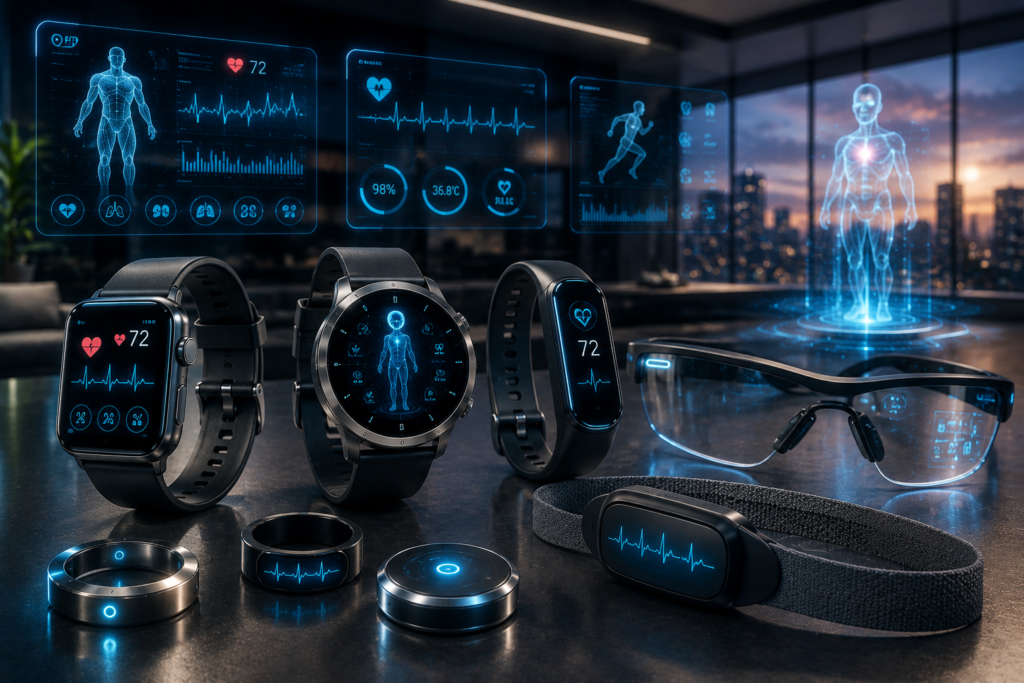
Modern smartwatches can automatically detect falls, monitor irregular heart rhythms, and notify emergency contacts when needed.
Challenges Facing Wearable Technology
Despite impressive progress, wearable technology still faces several important challenges.
Privacy Concerns
Wearables continuously collect highly personal biometric data, making transparency and user consent critical.
Cybersecurity Risks
Connected devices remain potential targets for hacking, emphasizing the need for strong encryption and secure software updates.
Battery Limitations
Advanced AI features and continuous sensing consume significant power. Improving battery life remains a major engineering priority.
Device Accuracy
Although wearable sensors continue to improve, measurements can still vary based on placement, movement, and environmental conditions.
High Costs
Premium AI-powered wearable devices often remain expensive, limiting accessibility for some consumers.
Data Ownership
Users increasingly want greater control over how their health and behavioral data is stored, shared, and monetized.
User Adoption
Some consumers remain hesitant due to privacy concerns, complexity, or uncertainty about long-term value.
Ethical Concerns
As wearable technology becomes more intelligent, developers must address issues surrounding surveillance, algorithmic bias, informed consent, and responsible AI.
My 25 Years of Experience with Wearable Technology
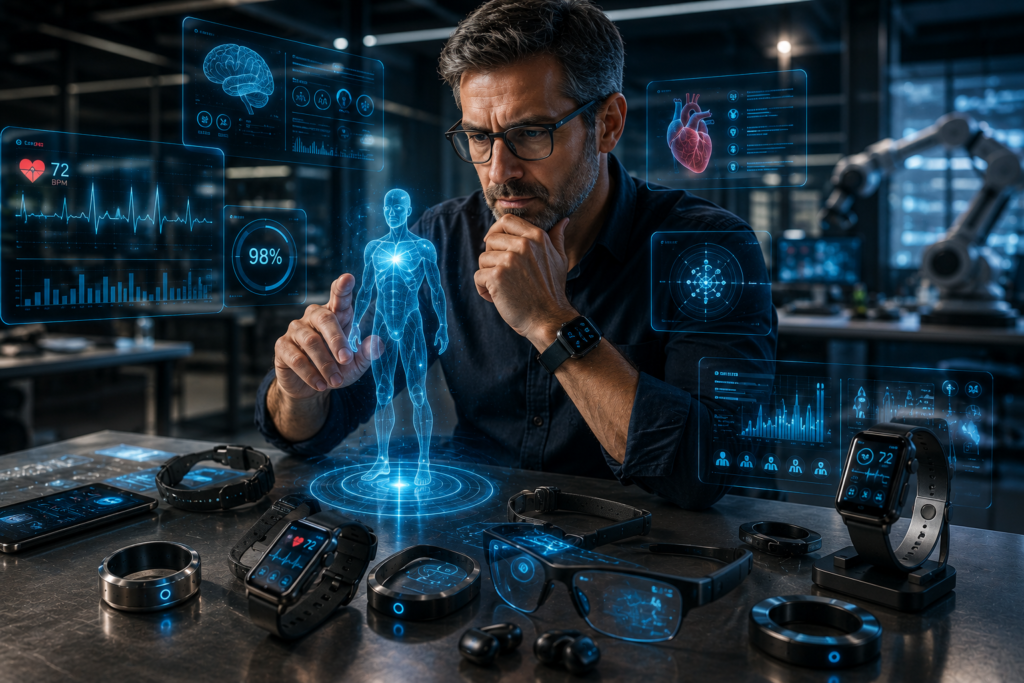
When I first encountered wearable technology, digital watches were considered innovative because they could store alarms, calendars, and basic calculations. At that time, few people imagined that devices worn on the wrist would one day monitor heart rhythms, detect falls, analyze sleep, or communicate with healthcare providers.
Looking ahead, I believe the next decade will bring intelligent wearables that blend seamlessly into our lives. Smart glasses, AI companions, digital skin patches, and brain-computer interfaces will gradually become everyday tools, making technology more intuitive, less intrusive, and deeply personalized.
Frequently Asked Questions (FAQs)
1. What is wearable technology?
Wearable technology refers to electronic devices worn on the body that collect data, connect to digital systems, and provide real-time insights. Examples include smartwatches, fitness trackers, smart rings, AR glasses, and wearable healthcare devices.
2. What is the future of wearable technology?
The future of wearable technology lies in AI-powered devices capable of predictive health monitoring, personalized assistance, human augmentation, and seamless integration with smart homes, vehicles, and cities.
3. How does AI improve wearable devices?
AI enables wearable devices to analyze biometric data, predict health risks, personalize recommendations, optimize battery usage, and deliver intelligent notifications based on user behavior.
4. What are wearable healthcare devices?
Wearable healthcare devices continuously monitor health metrics such as heart rate, blood oxygen, sleep quality, blood glucose, and physical activity to support preventive care and remote patient monitoring.
5. Are wearable devices secure?
Modern wearable devices include encryption and security features, but users should keep software updated, use strong authentication, and review privacy settings to protect personal data.
Conclusion
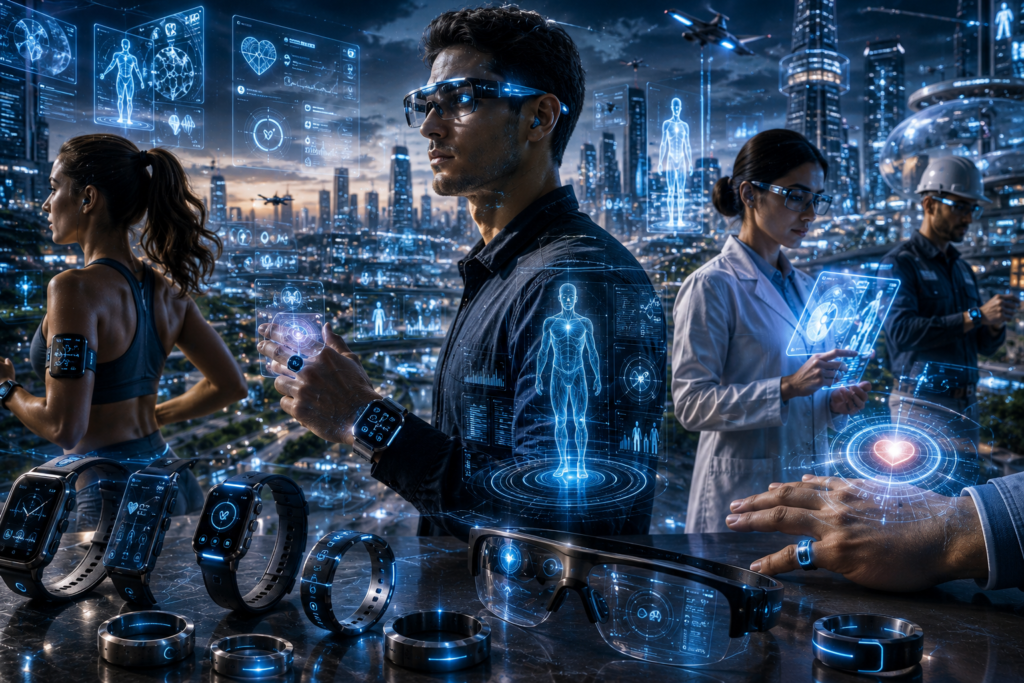
Wearable technology has evolved from simple digital watches into intelligent, AI-powered ecosystems that are reshaping healthcare, fitness, workplaces, and everyday life. The rapid convergence of artificial intelligence, biometric monitoring, wearable sensors, and the Internet of Things is transforming wearable devices into proactive digital companions capable of improving health, productivity, and safety.
The future of wearable technology will be defined by smarter, more personalized experiences. Innovations such as AI assistants, smart glasses, smart rings, digital skin, brain-computer interfaces, and wearable medical technology will make computing more natural and less intrusive than ever before. Businesses will leverage these advancements to increase efficiency, healthcare providers will deliver more proactive care, and consumers will enjoy richer, data-driven lifestyles.
From my perspective after more than 25 years of following this industry, the greatest opportunity lies not in the devices themselves but in the value they create. The most successful smart wearable technology will be the solutions that seamlessly integrate into everyday routines while solving meaningful real-world problems.
Author

razakh6402@gmail.com
Related Posts

Lead Generation Software: 12 Best Lead Generation Tools for B2B Sales (2026 Guide)
- 0
- 2,300 words
If someone had asked me 15 years ago what the biggest challenge in sales was, my answer would have been simple: finding...
Survey Software: 12 Best Online Survey Tools & Feedback Software for Businesses (2026 Guide)
- 0
- 1,871 word
Whether I was helping a SaaS startup validate a new feature, assisting an HR team with employee engagement, or optimizing customer experience...
Read out all
Online Course Platform: 12 Best LMS Software & eLearning Platforms for Course Creators (2026 Guide)
- 0
- 1,900 word
The online education industry has changed dramatically over the last 15 years. When I built my first digital training portal, simply uploading...

Team Communication Software: 12 Best Business Messaging Apps for Modern Workplaces in 2026 (Expert Tested)
- 0
- 2,305 words
I’ve personally tested dozens of team communication software platforms while consulting for marketing agencies, software companies, HR departments, remote development teams, and...

Invoice Software: 12 Best Invoicing Software for Small Business in 2026 (Expert Tested)
- 0
- 2,493 words
I’ve worked with freelancers chasing late payments, agencies managing hundreds of monthly invoices, startups scaling internationally, and established businesses struggling with outdated...

Generate one SEO-optimized title thatdigital asset management software
- 6
- 2,632 words
One of the most memorable projects I led involved migrating nearly half a million digital assets from a traditional file server into...