
- 0
- 1,900 word
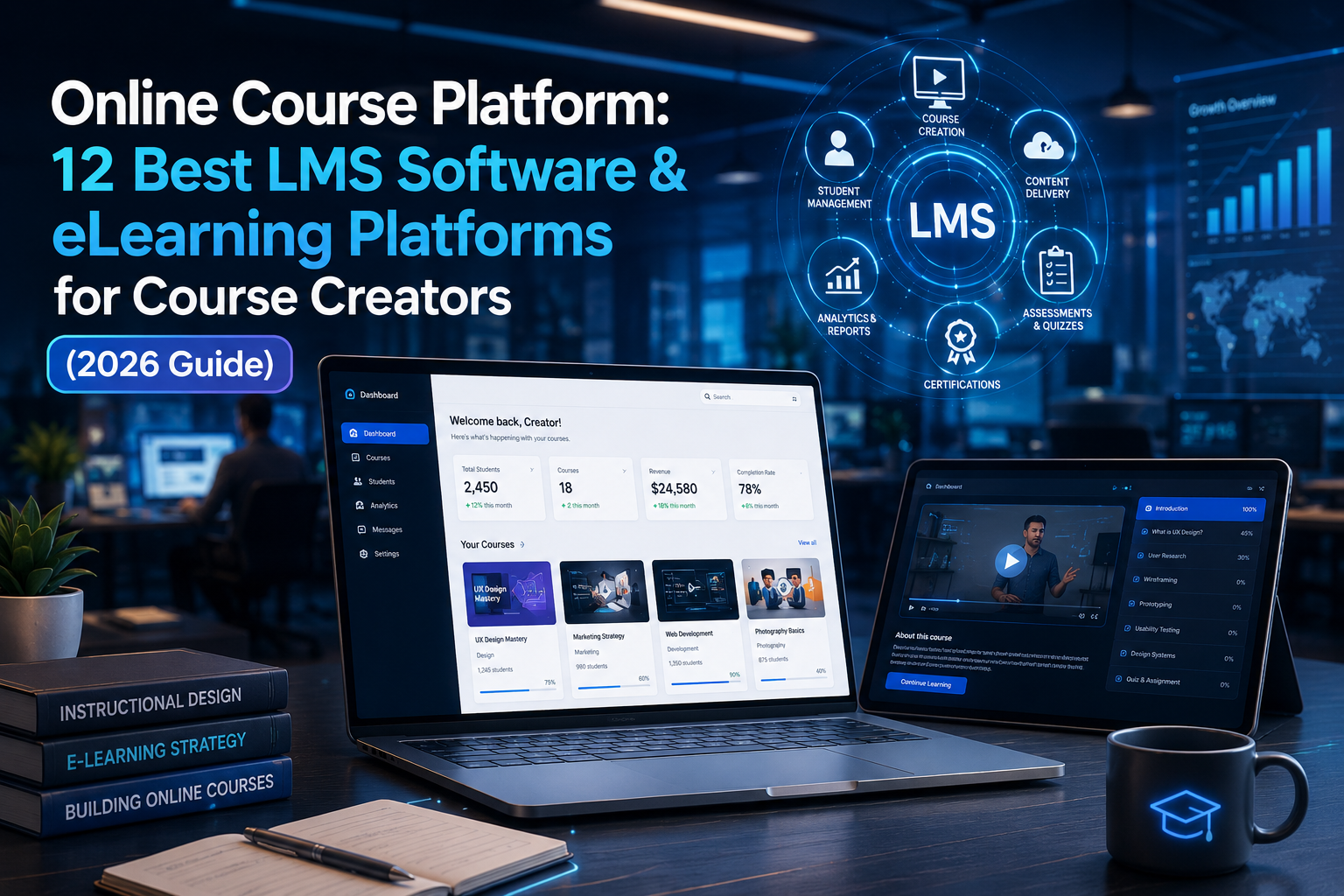
The online education industry has changed dramatically over the last 15 years. When I built my first digital training portal, simply uploading videos and PDFs felt revolutionary. Today, learners expect AI-powered recommendations, mobile learning, interactive quizzes, live classes, certificates, discussion communities, and personalized learning paths—all from a single online course platform.
I’ve personally evaluated dozens of LMS software solutions while helping coaching businesses, SaaS companies, universities, and corporate training teams launch successful online learning programs. Some platforms are incredibly easy to use but lack advanced automation. Others offer enterprise-grade learning analytics yet require weeks of implementation.
One lesson I’ve learned repeatedly is this: the best platform isn’t necessarily the most expensive one—it’s the one that aligns with your goals, audience, and growth plans.
Whether you’re creating your first online course, training thousands of employees, or launching a digital academy, choosing the right course creation platform can significantly improve learner engagement, completion rates, and revenue.
In this guide, I’ll share practical insights from years of testing these platforms in real-world environments, highlighting what works, what doesn’t, and which solution is best for different use cases.

Why Choosing the Right Online Course Platform Matters
The online learning industry is no longer limited to universities or educational institutions. Today, virtually every industry relies on digital learning.
Over the past decade, I’ve worked with:
- Independent coaches selling premium courses
- Marketing agencies onboarding clients
- SaaS companies training customers
- Healthcare organizations delivering compliance training
- Universities offering blended learning
- Corporate HR departments managing employee development
- Professional certification providers
- Membership communities offering continuous education
Although each organization had different goals, they all faced the same question:
Which online course platform should we trust?
The answer was rarely straightforward.
Online Education Is Growing Faster Than Ever
Digital learning has evolved from a convenience into a necessity. Businesses now prioritize continuous employee development, creators monetize expertise through online courses, and universities increasingly deliver hybrid education.
Modern learners also expect:
- Learning on any device
- Short, engaging lessons
- Interactive assessments
- Personalized recommendations
- AI-assisted learning
- Progress tracking
- Certificates upon completion
Older learning systems struggle to meet these expectations, making modern LMS software essential.
Digital Creators Need More Than Course Hosting
Many creators assume uploading videos is enough.
It isn’t.
Successful creators today need an integrated course creation platform that combines:
- Course hosting
- Landing pages
- Email marketing
- Payment processing
- Membership management
- Community engagement
- Sales funnels
- Analytics
I’ve seen creators migrate twice within a year simply because their initial platform couldn’t scale with their growing business.
Choosing the right solution from the start saves time, money, and countless hours of content migration.
Corporate Training Requires Different Features
Businesses have very different priorities than creators.
Instead of marketing tools, they focus on:
- Employee onboarding
- Compliance tracking
- Learning paths
- HR integrations
- Reporting
- Certification renewal
- SCORM compatibility
- User permissions
- Security
Enterprise-grade LMS software excels in these areas, whereas creator-focused platforms often do not.
Universities Prioritize Learning Experience
Educational institutions usually require:
- Assignment submission
- Gradebooks
- Student discussions
- Attendance tracking
- Virtual classrooms
- Academic reporting
- Learning analytics
Platforms built specifically for education generally outperform creator-focused systems in these environments.
My Biggest Recommendation After 15 Years
One mistake appears repeatedly.
People buy software based solely on monthly pricing.
Instead, ask yourself:
- Will this platform still meet my needs in three years?
- Can it automate repetitive tasks?
- Does it integrate with my existing tools?
- Can students enjoy learning on mobile devices?
- Does it provide actionable learning analytics?
Thinking long term almost always leads to a better investment.
How I Evaluated These LMS Software Platforms
After reviewing countless learning systems over the years, I stopped judging platforms by flashy landing pages or marketing promises.
Instead, I evaluate them the same way I’d recommend software to a paying client.
Here are the criteria I consistently use.
Ease of Use
The best platform should let you build your first course without spending weeks reading documentation.
I value:
- Clean dashboards
- Logical navigation
- Fast onboarding
- Minimal technical setup
Some platforms impress with advanced functionality but overwhelm beginners.
Course Builder
An excellent course builder should make content creation enjoyable.
I looked for:
- Drag-and-drop editing
- Lesson templates
- Multimedia support
- Drip scheduling
- Learning paths
- Interactive content
The smoother the workflow, the faster instructors can publish quality courses.
Student Experience
A beautiful admin dashboard means nothing if students struggle.
I paid close attention to:
- Navigation
- Progress tracking
- Lesson organization
- Video playback
- Discussion areas
- Certificates
- Mobile responsiveness
Platforms with intuitive learner experiences consistently achieve higher completion rates.
Mobile Learning
Today, a large percentage of learners complete lessons on smartphones or tablets.
Strong mobile experiences include:
- Native apps
- Offline learning
- Push notifications
- Responsive course design
- Cross-device synchronization

AI Features
Artificial intelligence is transforming online education.
The best eLearning platform providers now include:
- AI lesson generation
- Quiz creation
- Course outlines
- Automated summaries
- Personalized recommendations
- Learning assistance
AI won’t replace great instructors, but it dramatically speeds up course production.
Analytics & Learning Insights
Data helps improve course quality.
I always examine whether a platform provides:
- Completion rates
- Student engagement
- Quiz performance
- Learning analytics
- Revenue reporting
- Funnel tracking
Without meaningful analytics, optimizing your courses becomes guesswork.
Integrations
No platform exists in isolation.
I evaluate integrations with:
- Zoom
- Google Workspace
- Microsoft Teams
- Slack
- Zapier
- Stripe
- PayPal
- HubSpot
- Salesforce
- Mailchimp
Strong integrations reduce manual work and improve automation.
Marketing & Sales
For creators, marketing tools matter almost as much as learning features.
I compare:
- Landing pages
- Coupons
- Affiliate systems
- Upsells
- Email campaigns
- Memberships
- Checkout experience
Platforms designed for creators often outperform traditional enterprise LMS solutions here.
Security & Reliability
Training data is valuable.
I look for:
- Role-based permissions
- SSL encryption
- Single Sign-On (SSO)
- GDPR compliance
- Data backups
- User management
Enterprise organizations especially cannot compromise on security.
Customer Support
Support quality becomes critical during launches.
The best vendors provide:
- Live chat
- Extensive documentation
- Video tutorials
- Community forums
- Fast ticket responses
- Dedicated onboarding
Excellent support often distinguishes premium providers from budget alternatives.
Scalability
Finally, I ask one question:
Can this platform grow with your business?
Migrating thousands of students later can be expensive and disruptive.
Choosing a scalable online teaching platform from the beginning saves significant time and resources.

Best Online Course Platforms
Thinkific
Overview
Thinkific has consistently remained one of my favorite platforms for creators who want an excellent balance between simplicity and flexibility. Over the years, I’ve recommended it to coaches, consultants, educators, and small businesses launching premium online academies.
Unlike many competitors, Thinkific focuses heavily on making course creation approachable without sacrificing professional features.
Best For
- Coaches
- Course creators
- Entrepreneurs
- Membership businesses
- Small training organizations
Key Features
- Drag-and-drop course builder
- AI-assisted course creation
- Website builder
- Landing pages
- Student communities
- Certificates
- Quizzes
- Live lessons
- Payment integrations
- Learning analytics
Pros
- Extremely beginner-friendly
- Excellent student experience
- Fast setup
- Strong community tools
- Reliable performance
Cons
- Limited advanced marketing automation
- Fewer enterprise features than corporate LMS platforms
Pricing
Free plan available, with paid plans starting around $49/month.
My Personal Experience
I’ve launched multiple client academies on Thinkific because it minimizes technical headaches. Most instructors can publish their first course within a day, and students consistently find the learning interface intuitive.
Who Should Choose It
If you’re selling courses online and want a reliable course creation platform without hiring developers, Thinkific remains one of the strongest choices.
Key Features
- Interactive video lessons
- AI-powered authoring tools
- Assessments and quizzes
- Certificates
- Learning paths
- SCORM support
- White-label branding
- Mobile app options

Online Course Platform vs LMS Software
If you’re an entrepreneur selling expertise, choose an online course platform like Thinkific or Kajabi. If you’re managing employee development or university programs, a robust LMS software such as Docebo, TalentLMS, or Moodle is a better fit.
Key Features Every Course Creation Platform Should Have
A modern course creation platform should include:
- Drag-and-drop course builder
- HD video hosting
- Interactive quizzes
- Assignments
- Live virtual classrooms
- Student analytics
- Certificates
- AI lesson generation
- AI quiz creation
- Discussion communities
- Mobile learning
- Stripe & PayPal integration
- Membership support
- Email marketing automation
- Third-party integrations
- Learning analytics dashboard
Best Online Course Platform for Different Users
| User | Recommendation |
|---|---|
| Beginners | Podia |
| Coaches | Kajabi |
| Small Businesses | Thinkific |
| Solopreneurs | Teachable |
| Schools | Canvas LMS |
| Universities | Moodle |
| Corporate Training | TalentLMS |
| Enterprises | Docebo |
| Customer Education | Absorb LMS |
| Content Creators | LearnWorlds |
Common Mistakes When Choosing an Online Teaching Platform
After years of consulting with organizations, I see the same mistakes repeatedly:
- Choosing solely based on price
- Ignoring future scalability
- Overlooking integrations
- Neglecting the student experience
- Selecting platforms with limited customization
- Underestimating migration costs
- Missing hidden transaction fees
- Failing to test customer support before purchase
Always evaluate your needs for the next three to five years, not just today.
Frequently Asked Questions
What is the best online course platform?
Thinkific offers the best balance of usability, flexibility, and value for most creators.
Which LMS software is best for businesses?
TalentLMS, Absorb LMS, and Docebo are excellent for corporate training.
Which course creation platform is easiest?
Podia and Thinkific are among the easiest options for beginners.
Is an online teaching platform suitable for beginners?
Yes. Platforms like Teachable and Podia require minimal technical expertise.
What is the difference between LMS software and an eLearning platform?
LMS software primarily manages learning, while an eLearning platform often includes course delivery, engagement, analytics, and collaboration features.
Which platform is best for universities?
Moodle and Canvas LMS remain top choices for higher education.
Can I sell courses without coding?
Absolutely. Platforms such as Thinkific, Kajabi, and Teachable let you build and sell courses without programming knowledge.
Which platform has the best AI features?
Docebo, Kajabi, LearnWorlds, and Absorb LMS currently lead in AI-powered learning tools.

Final Verdict
After reviewing and implementing dozens of learning platforms over the years, a few clear leaders stand out.
- Best Overall: Thinkific
- Best Budget: Podia
- Best for Creators: Kajabi
- Best for Educators: LearnWorlds
- Best Open-Source LMS: Moodle
- Best for Corporate Training: TalentLMS
- Best Enterprise LMS: Docebo
- Best AI-Powered Option: Docebo
Ultimately, the right online course platform depends on your goals. If you’re launching your first digital course, prioritize ease of use and speed with Thinkific or Podia. If you’re building a premium creator business, Kajabi offers an unmatched all-in-one ecosystem. Educational institutions will appreciate the flexibility of Moodle or Canvas LMS, while enterprises managing large-scale training programs will benefit from the AI-driven automation and analytics offered by Docebo or Absorb LMS.
Invest in a platform that can grow with your audience, integrate with your existing tools, and deliver an engaging learning experience. A scalable, well-designed LMS software isn’t just an expense—it’s the foundation of a successful digital learning business for years to come.
Author

razakh6402@gmail.com
Related Posts

Lead Generation Software: 12 Best Lead Generation Tools for B2B Sales (2026 Guide)
- 0
- 2,300 words
If someone had asked me 15 years ago what the biggest challenge in sales was, my answer would have been simple: finding...
Survey Software: 12 Best Online Survey Tools & Feedback Software for Businesses (2026 Guide)
- 0
- 1,871 word
Whether I was helping a SaaS startup validate a new feature, assisting an HR team with employee engagement, or optimizing customer experience...
Read out all
Team Communication Software: 12 Best Business Messaging Apps for Modern Workplaces in 2026 (Expert Tested)
- 0
- 2,305 words
I’ve personally tested dozens of team communication software platforms while consulting for marketing agencies, software companies, HR departments, remote development teams, and...
Invoice Software: 12 Best Invoicing Software for Small Business in 2026 (Expert Tested)
- 0
- 2,493 words
I’ve worked with freelancers chasing late payments, agencies managing hundreds of monthly invoices, startups scaling internationally, and established businesses struggling with outdated...
Generate one SEO-optimized title thatdigital asset management software
- 6
- 2,632 words
One of the most memorable projects I led involved migrating nearly half a million digital assets from a traditional file server into...
Digital Asset Management Software: 10 Best DAM Software Solutions for Smarter Brand & Media Asset Management (2026 Guide)
- 1
- 2,252 words
This is where digital asset management software changes the game. A modern DAM software platform centralizes your digital content into a searchable,...