
- 0
- 2,649 words
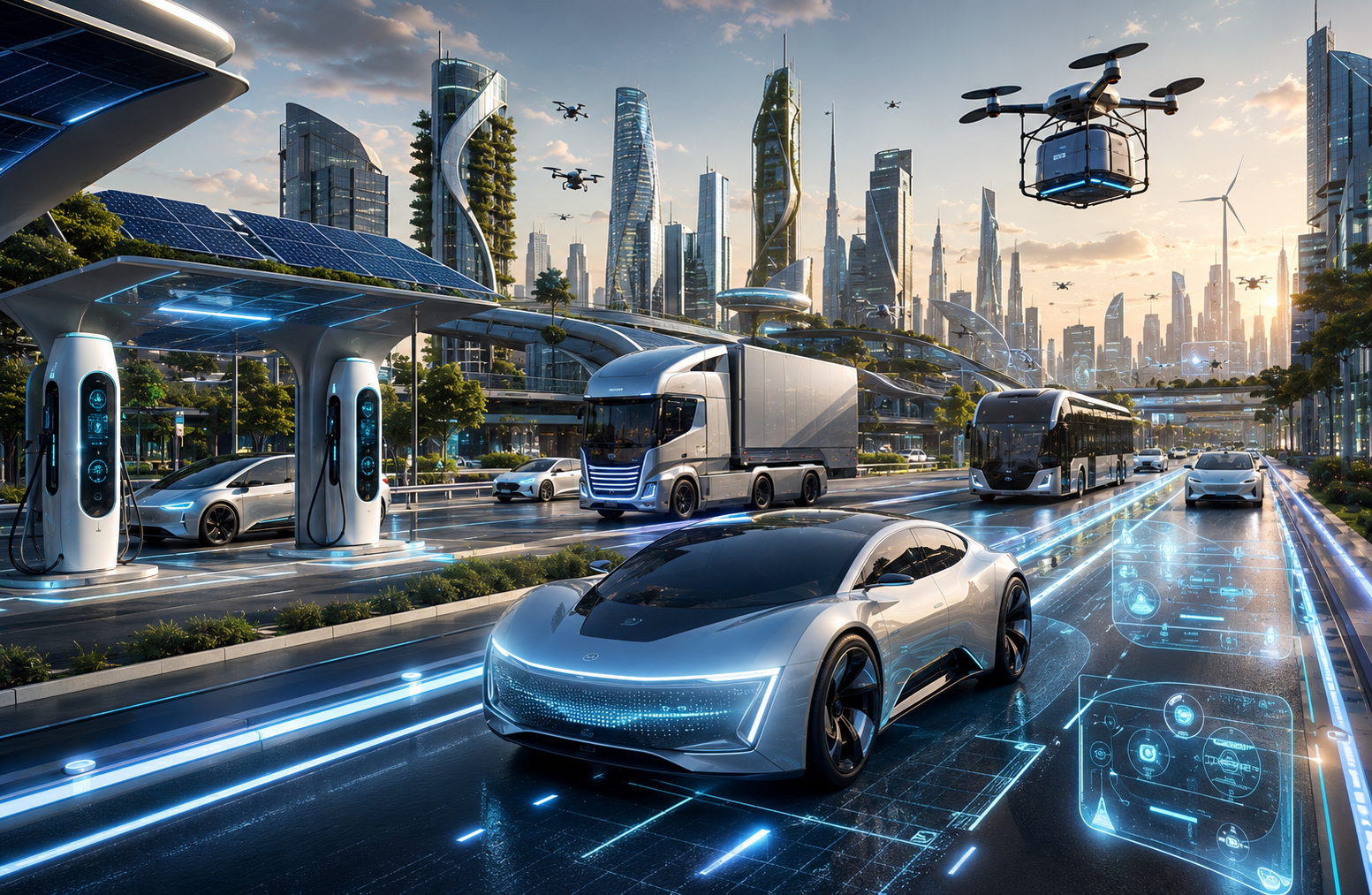
The electric vehicles future is no longer a distant vision it is unfolding faster than even many industry experts predicted a decade ago. Around the world, governments are investing billions in charging infrastructure, battery manufacturing, renewable energy integration, and clean transportation policies, while automakers are racing to develop smarter, safer, and more affordable electric vehicles. As someone who has spent more than 25 years working alongside automotive engineers, battery researchers, and mobility innovators, I’ve witnessed this transformation from early experimental prototypes to today’s intelligent, AI-powered electric vehicles.
When I first became involved in electric mobility projects, range anxiety, expensive batteries, and limited charging infrastructure were the industry’s biggest obstacles. Today, those challenges are being addressed through remarkable EV technology trends, including solid-state batteries, ultra-fast charging, wireless charging, connected vehicle ecosystems, and artificial intelligence. These breakthroughs are making electric car technology more practical for everyday drivers while opening entirely new opportunities for commercial fleets, logistics companies, and smart cities.
The future of electric vehicles extends far beyond replacing gasoline engines with electric motors. It represents a complete transformation of transportation through connected cars, autonomous driving, renewable energy integration, vehicle-to-grid (V2G) technology, and intelligent mobility services. Modern EVs are evolving into software-defined vehicles capable of receiving over-the-air updates, optimizing battery performance with AI, and interacting seamlessly with smart infrastructure.
What Is the Future of Electric Vehicles?
The future of electric vehicles refers to the ongoing evolution of transportation powered primarily by electricity instead of fossil fuels. It encompasses advancements in battery technology, autonomous driving, smart charging networks, connected vehicle platforms, and sustainable manufacturing processes.
Unlike traditional vehicles that rely on internal combustion engines, electric vehicles use electric motors powered by rechargeable battery packs. This shift dramatically improves energy efficiency, reduces greenhouse gas emissions, and lowers operating costs over a vehicle’s lifetime.
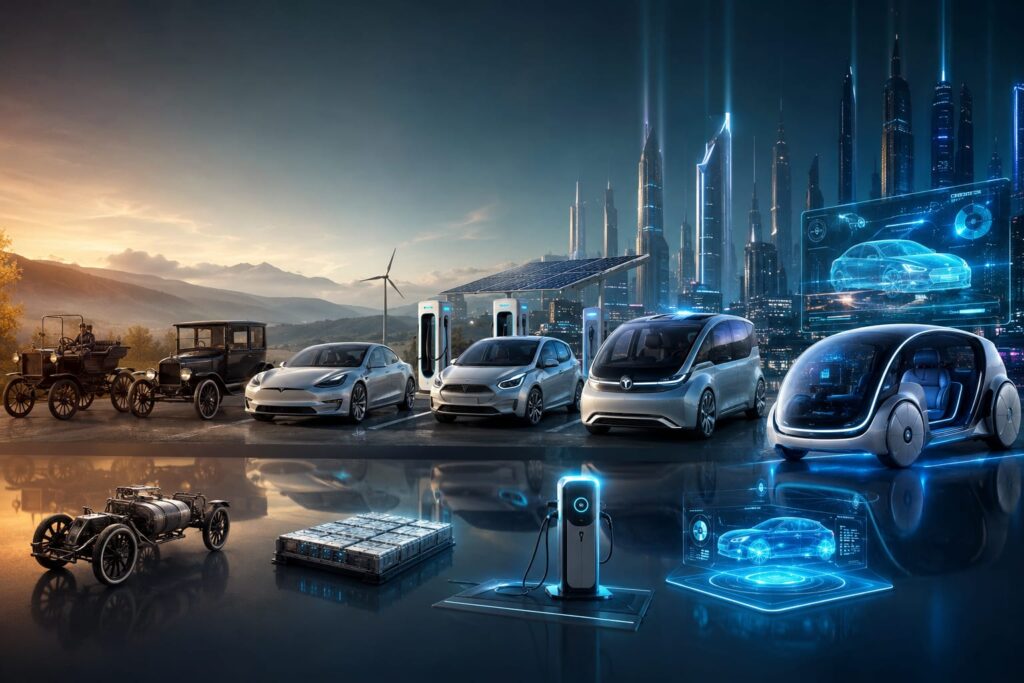
These improvements made electric vehicles increasingly competitive with traditional gasoline-powered cars.
Rise of Tesla and Global EV Adoption
One of the most significant turning points came when manufacturers demonstrated that electric vehicles could deliver exceptional performance alongside sustainability. Companies like Tesla accelerated consumer interest by combining long-range batteries, software-defined vehicles, and continuous over-the-air updates.
This success encouraged established automakers—including BMW, Mercedes-Benz, Hyundai, Ford, General Motors, and BYD—to dramatically increase investments in electric mobility.
Today, global EV adoption is expanding rapidly across passenger cars, commercial fleets, buses, and heavy-duty trucks.
AI-Powered Electric Vehicles
Artificial intelligence has become one of the defining characteristics of modern electric car technology.
Today’s EVs can use AI to:
- Predict battery health
- Optimize energy consumption
- Improve route planning
- Enhance driver assistance systems
- Increase charging efficiency
- Detect maintenance issues before failures occur
Top EV Technology Trends Transforming Transportation
Solid-State Batteries
Among all EV technology trends, solid-state batteries have the potential to redefine the industry. Unlike conventional lithium-ion batteries that use liquid electrolytes, solid-state batteries use solid materials, improving safety, increasing energy density, and enabling significantly faster charging.
From my perspective, this technology represents the next major leap in electric mobility. If manufacturers achieve large-scale, cost-effective production, drivers could see ranges exceeding 700–900 kilometers on a single charge while reducing fire risks and extending battery life.
Benefits
- Higher energy density
- Improved safety
- Longer battery lifespan
- Faster charging
- Reduced battery degradation
Future Potential
As manufacturing costs decline, solid-state batteries are expected to power premium EVs first before gradually expanding into mainstream passenger vehicles, commercial fleets, and heavy-duty transport.
Ultra-Fast Charging
Charging technology has advanced at an impressive pace. Early EV charging often required many hours, limiting convenience. Today, ultra-fast charging systems are capable of adding hundreds of kilometers of driving range in under 20 minutes under ideal conditions.
The most advanced charging networks combine intelligent battery management, liquid-cooled cables, and AI-driven power optimization to maximize efficiency while protecting battery health.
Current Applications
- Highway charging corridors
- Fleet depots
- Commercial logistics hubs
- Urban fast-charging stations
Market Impact
Ultra-fast charging reduces one of the biggest psychological barriers to EV adoption—range anxiety—making electric vehicles more practical for long-distance travel and commercial operations.
Wireless Charging
Wireless EV charging is moving from research laboratories into real-world pilot projects. Instead of plugging in a charging cable, vehicles recharge through electromagnetic induction while parked or even while driving over specially equipped roads.
In my view, this technology will be particularly valuable for public transport, autonomous taxis, and logistics fleets where reducing downtime directly improves operational efficiency.
Autonomous Electric Vehicles
Electric powertrains and autonomous driving complement each other remarkably well. EVs already rely heavily on electronic control systems, making them an ideal platform for self-driving technologies.
Future autonomous electric vehicles will combine:
- AI perception systems
- High-definition mapping
- Advanced sensors
- Machine learning
- Vehicle-to-vehicle communication
- Predictive navigation
The combination of electrification and autonomy has the potential to transform ride-sharing, freight transport, and urban mobility.
AI in Electric Vehicles
Artificial intelligence is becoming the digital brain of modern EVs.
Key applications include:
- Intelligent battery management
- Predictive maintenance
- Driver monitoring
- Personalized cabin experiences
- Adaptive energy optimization
- Autonomous driving assistance
Throughout my work with connected mobility systems, I’ve found that AI often delivers value in ways consumers rarely notice—from extending battery life to improving charging efficiency behind the scenes.
Smart Charging Infrastructure
Modern charging infrastructure is becoming increasingly intelligent.
Emerging features include:
- AI-powered load balancing
- Renewable energy integration
- Dynamic pricing
- Automated scheduling
- Grid optimization
- Mobile payment systems
These innovations help utilities manage growing electricity demand while providing drivers with a more convenient charging experience.
Battery Recycling Innovations
Battery recycling has become one of the most important aspects of sustainable electric mobility. Advanced recycling technologies now recover valuable materials such as lithium, nickel, cobalt, and copper for reuse in new batteries.
In my experience, the industry increasingly views battery recycling not as waste management but as a strategic supply-chain solution that reduces dependence on newly mined raw materials and supports a more circular EV economy.
Future of Electric Vehicles Across Industries
The impact of electric mobility extends far beyond personal transportation. Nearly every major industry is exploring electrification to improve efficiency, reduce emissions, and lower operating costs.
Personal Transportation
Consumers benefit from lower fuel costs, quieter driving, advanced safety systems, and connected digital experiences.
Logistics
Electric delivery vans and long-haul trucks are helping logistics companies reduce operating expenses while meeting sustainability targets.
Public Transportation
Cities worldwide are replacing diesel buses with electric buses, improving air quality and reducing noise pollution.
Construction
Electric construction equipment is beginning to reduce emissions on job sites while lowering maintenance costs.
Mining
Battery-powered mining vehicles improve underground air quality and reduce ventilation requirements, delivering both environmental and operational benefits.
Agriculture
Electric tractors and autonomous farming equipment are supporting precision agriculture while reducing fuel consumption.
Emergency Services
Electric ambulances, police vehicles, and fire-support vehicles provide instant torque, quiet operation, and lower lifetime operating costs.
Smart Cities
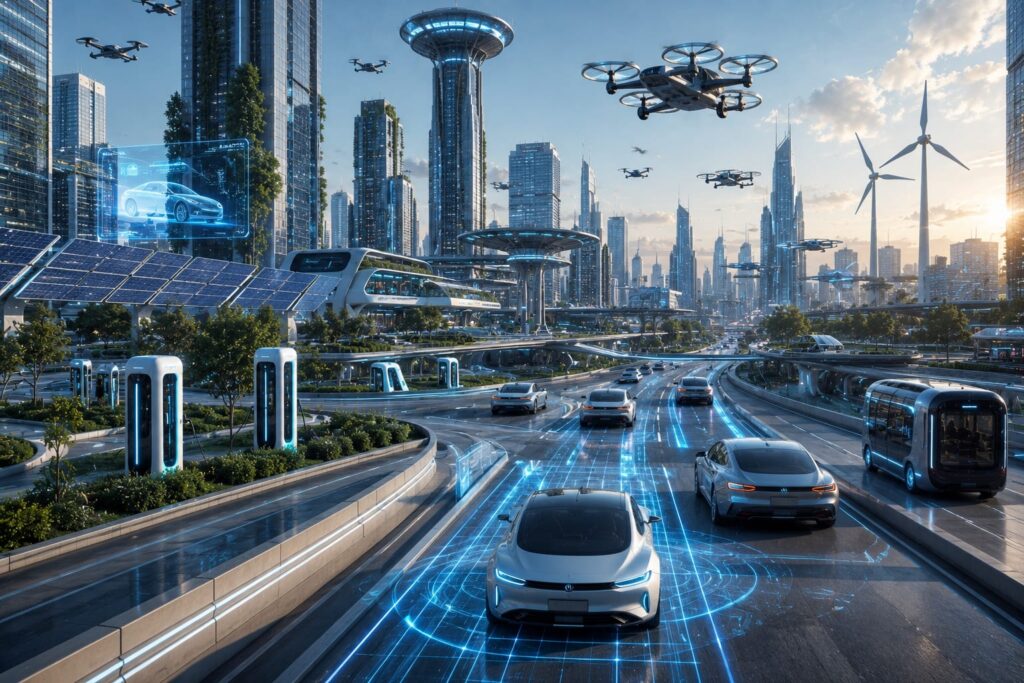
Electric vehicles are becoming an essential component of intelligent urban ecosystems where connected transportation, renewable energy, and AI-powered traffic management work together to improve mobility, reduce congestion, and enhance quality of life.
EV Innovations Driving the Future
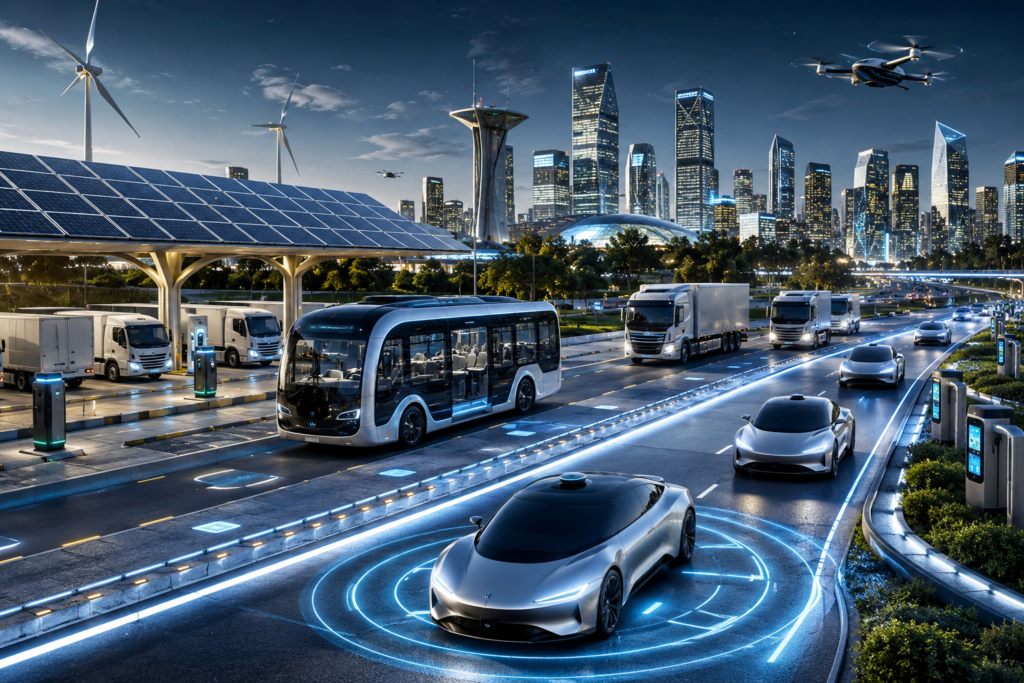
The next decade will be defined by EV innovations that go far beyond improving battery range. Electric vehicles are evolving into intelligent, connected platforms that integrate artificial intelligence, renewable energy, cloud computing, and autonomous driving. Based on my experience working with automotive technology projects, the biggest breakthroughs will come from combining multiple technologies rather than relying on a single innovation.
Next-Generation Batteries
Battery technology remains the foundation of the future of electric vehicles. While lithium-ion batteries continue to improve, manufacturers are investing heavily in next-generation chemistries.
Key Developments
- Solid-state batteries
- Sodium-ion batteries
- Lithium-sulfur batteries
- Silicon-anode technology
- Advanced battery management systems
Benefits
- Longer driving range
- Faster charging
- Improved safety
- Lower manufacturing costs
- Extended battery lifespan
Challenges
- Scaling production
- Material availability
- Manufacturing costs
- Supply chain development
AI Driving Assistants
Artificial intelligence is transforming vehicles into intelligent mobility companions.
Modern AI systems can:
- Learn driver preferences
- Predict maintenance requirements
- Optimize battery usage
- Recommend charging stops
- Improve navigation
- Enhance safety
From my observations, AI is becoming just as valuable as horsepower once was. Drivers increasingly appreciate software that makes travel easier rather than simply making vehicles faster.
Autonomous Driving Systems
Autonomous driving continues advancing through AI, computer vision, radar, lidar, and high-definition mapping.
Future autonomous EVs will offer:
- Safer transportation
- Reduced traffic congestion
- Lower accident rates
- Greater mobility for elderly and disabled passengers
- Improved logistics efficiency
Although fully autonomous driving still faces regulatory and technical hurdles, advanced driver-assistance systems are already delivering measurable safety improvements.
Connected Vehicle Platforms
Electric vehicles are becoming software-defined machines.
Connected platforms enable:
- Over-the-air software updates
- Remote diagnostics
- Cloud-based navigation
- Cybersecurity monitoring
- Smart home integration
- Fleet management
These capabilities allow manufacturers to improve vehicles long after customers drive them off the dealership lot.
Smart Charging Networks
Charging networks are becoming increasingly intelligent through AI and cloud computing.
Future charging systems will feature:
- Automatic charger reservation
- Dynamic electricity pricing
- Renewable energy optimization
- Vehicle scheduling
- Predictive maintenance
For fleet operators, these systems can dramatically reduce operational costs while maximizing vehicle availability.
Renewable Energy Integration
One of the greatest strengths of electric mobility is its compatibility with renewable energy.
Electric vehicles increasingly work alongside:
- Solar power
- Wind farms
- Home battery storage
- Smart grids
- Vehicle-to-grid (V2G) systems
In the coming years, millions of EVs may serve as distributed energy storage systems, helping stabilize electrical grids during periods of peak demand.
Electric Vehicles vs Traditional Gasoline Vehicles
| Feature | Gasoline Vehicles | Electric Vehicles |
|---|---|---|
| Running Cost | High fuel expenses | Lower electricity costs |
| Maintenance | Frequent servicing, oil changes | Fewer moving parts, reduced maintenance |
| Fuel/Charging | Gas stations | Home charging and public charging stations |
| Performance | Slower torque delivery | Instant torque and rapid acceleration |
| Emissions | Produces CO₂ and pollutants | Zero tailpipe emissions |
| Noise Level | Engine noise | Quiet operation |
| Smart Features | Limited software integration | AI, OTA updates, connected services |
| Long-Term Cost | Higher lifetime ownership costs | Lower operating and maintenance costs |
Why EVs Represent the Future
Internal combustion vehicles will likely remain important for specialized applications and regions where charging infrastructure is still developing. However, electric vehicles offer clear advantages in energy efficiency, operating costs, environmental impact, and digital capabilities.
From my perspective, the future isn’t about eliminating gasoline vehicles overnight. It’s about allowing electric mobility to become the dominant choice wherever it delivers better value—and that transition is already well underway.
Benefits of the Electric Vehicles Future
Lower Operating Costs
Electricity generally costs less than gasoline, and EVs require fewer routine maintenance services.
Zero Tailpipe Emissions
Electric vehicles improve urban air quality by eliminating direct exhaust emissions.
Better Performance
Instant torque delivers smooth acceleration and an enjoyable driving experience.
Lower Maintenance
Without oil changes, spark plugs, or complex transmissions, maintenance costs are significantly reduced.
AI Integration
Artificial intelligence continuously improves efficiency, safety, navigation, and battery management.
Renewable Energy Compatibility
Electric vehicles can be charged using solar and wind power, supporting cleaner transportation.
Improved Energy Efficiency
EVs convert a much higher percentage of stored energy into vehicle movement than gasoline engines.
Smart Mobility
Connected vehicles communicate with charging stations, navigation systems, and smart infrastructure.
Cleaner Cities
Reduced emissions and quieter streets contribute to healthier urban environments.
Sustainable Transportation
Electric mobility supports long-term climate goals while reducing dependence on fossil fuels.
Challenges Facing the Future of Electric Vehicles
Charging Infrastructure
Many regions still require significant investment in public charging networks, particularly for rural and long-distance travel.
Battery Costs
Battery prices have fallen dramatically, but they remain one of the largest components of EV manufacturing costs.
Raw Material Supply
Growing demand for lithium, nickel, cobalt, and rare earth elements requires diversified supply chains and responsible sourcing.
Battery Recycling
Building efficient recycling systems is essential for recovering valuable materials and supporting a circular economy.
Grid Capacity
As EV adoption increases, utilities must modernize electricity grids to handle additional demand.
Consumer Adoption
Some consumers remain concerned about driving range, charging availability, and resale value, although these concerns continue to diminish.
Manufacturing Challenges
Automakers must redesign production facilities, retrain workers, and secure reliable battery supply chains.
Government Regulations
Policies regarding emissions, incentives, charging standards, and battery recycling will continue shaping market growth.
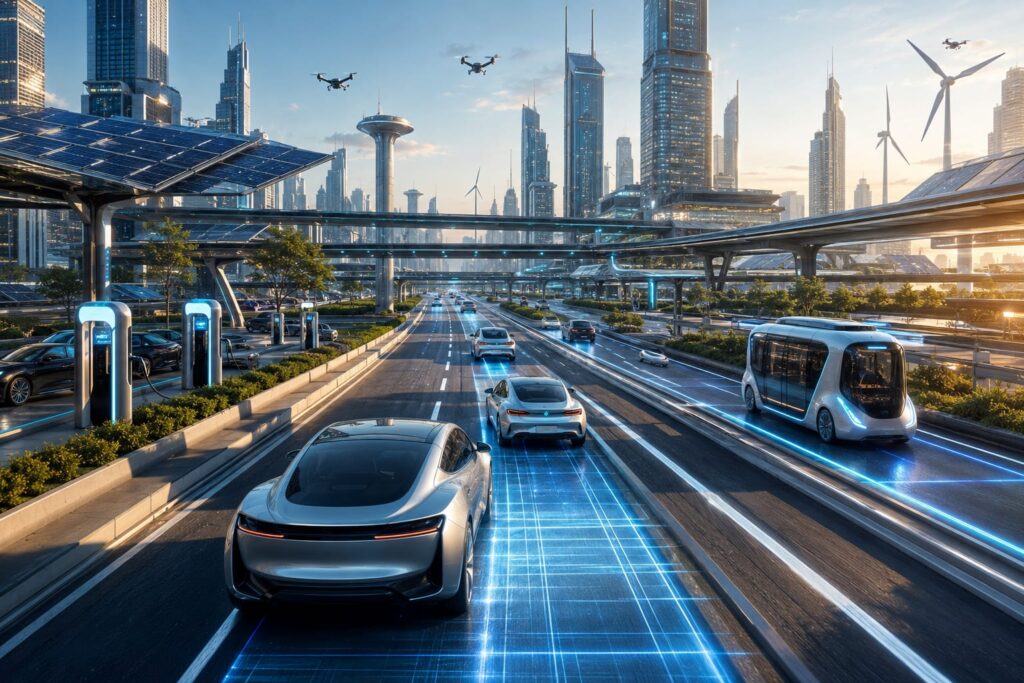
The transition will not happen uniformly across every country, but the overall direction is clear: transportation is becoming cleaner, smarter, and increasingly connected.
My 25 Years of Experience in Electric Vehicle Technology
When I began working with electric vehicle technologies, the industry was driven more by ambition than commercial success. Battery packs were expensive, charging stations were scarce, and many people doubted that electric vehicles could compete with gasoline-powered cars.
I watched lithium-ion batteries transform the industry by making practical driving ranges possible. I also witnessed software evolve from a minor feature into one of the most valuable components of modern vehicles.
One of the most surprising breakthroughs has been the speed at which charging technology improved. Years ago, overnight charging was considered acceptable. Today, ultra-fast charging can restore hundreds of kilometers of range during a short break.
The rise of connected vehicles has also exceeded my expectations. Vehicles now receive software updates, monitor their own systems, and communicate with cloud services in ways that seemed futuristic early in my career.
Looking ahead, I believe the next decade will be remembered not simply for replacing gasoline engines but for creating intelligent transportation ecosystems powered by AI, renewable energy, and connected infrastructure. Companies that embrace software, sustainability, and continuous innovation will define the next generation of mobility.
Frequently Asked Questions (FAQs)
1. What is the future of electric vehicles?
The future of electric vehicles includes smarter batteries, AI-powered driving systems, autonomous mobility, wireless charging, and deeper integration with renewable energy and smart cities.
2. Why are electric vehicles becoming more popular?
They offer lower operating costs, zero tailpipe emissions, better performance, government incentives, and continuous improvements in charging infrastructure.
3. What are the latest EV technology trends?
Major trends include solid-state batteries, ultra-fast charging, wireless charging, AI-powered vehicles, autonomous driving, connected vehicle platforms, and vehicle-to-grid technology.
4. How long do EV batteries last?
Most modern EV batteries are designed to last between 10 and 20 years, depending on usage, climate, and charging habits.
5. What are solid-state batteries?
Solid-state batteries replace liquid electrolytes with solid materials, improving safety, energy density, charging speed, and longevity.
Conclusion
The electric vehicles future is no longer a theoretical concept—it is becoming the foundation of global transportation. Advances in electric car technology, rapid EV technology trends, and groundbreaking EV innovations are transforming how people travel, how goods are delivered, and how cities manage mobility.
Breakthroughs in battery technology, artificial intelligence, autonomous driving, ultra-fast charging, wireless charging, and renewable energy integration will continue reshaping the future of electric vehicles through 2035. While challenges such as charging infrastructure, battery supply chains, and grid modernization remain, the momentum behind electric mobility has never been stronger.
Governments, automakers, technology companies, utilities, and consumers all play a critical role in this transition. Organizations that invest in electrification, digital innovation, and sustainable transportation today will be best positioned to thrive in tomorrow’s mobility ecosystem.
The road ahead is electric, intelligent, and connected. By embracing electric mobility now, we can build cleaner cities, strengthen energy resilience, reduce emissions, and create a transportation system that is more efficient, sustainable, and prepared for the future.
Author

razakh6402@gmail.com
Related Posts

Lead Generation Software: 12 Best Lead Generation Tools for B2B Sales (2026 Guide)
- 0
- 2,300 words
If someone had asked me 15 years ago what the biggest challenge in sales was, my answer would have been simple: finding...

Survey Software: 12 Best Online Survey Tools & Feedback Software for Businesses (2026 Guide)
- 0
- 1,871 word
Whether I was helping a SaaS startup validate a new feature, assisting an HR team with employee engagement, or optimizing customer experience...
Read out all
Online Course Platform: 12 Best LMS Software & eLearning Platforms for Course Creators (2026 Guide)
- 0
- 1,900 word
The online education industry has changed dramatically over the last 15 years. When I built my first digital training portal, simply uploading...

Team Communication Software: 12 Best Business Messaging Apps for Modern Workplaces in 2026 (Expert Tested)
- 0
- 2,305 words
I’ve personally tested dozens of team communication software platforms while consulting for marketing agencies, software companies, HR departments, remote development teams, and...

Invoice Software: 12 Best Invoicing Software for Small Business in 2026 (Expert Tested)
- 0
- 2,493 words
I’ve worked with freelancers chasing late payments, agencies managing hundreds of monthly invoices, startups scaling internationally, and established businesses struggling with outdated...

Generate one SEO-optimized title thatdigital asset management software
- 6
- 2,632 words
One of the most memorable projects I led involved migrating nearly half a million digital assets from a traditional file server into...