
- 0
- 2,446 words
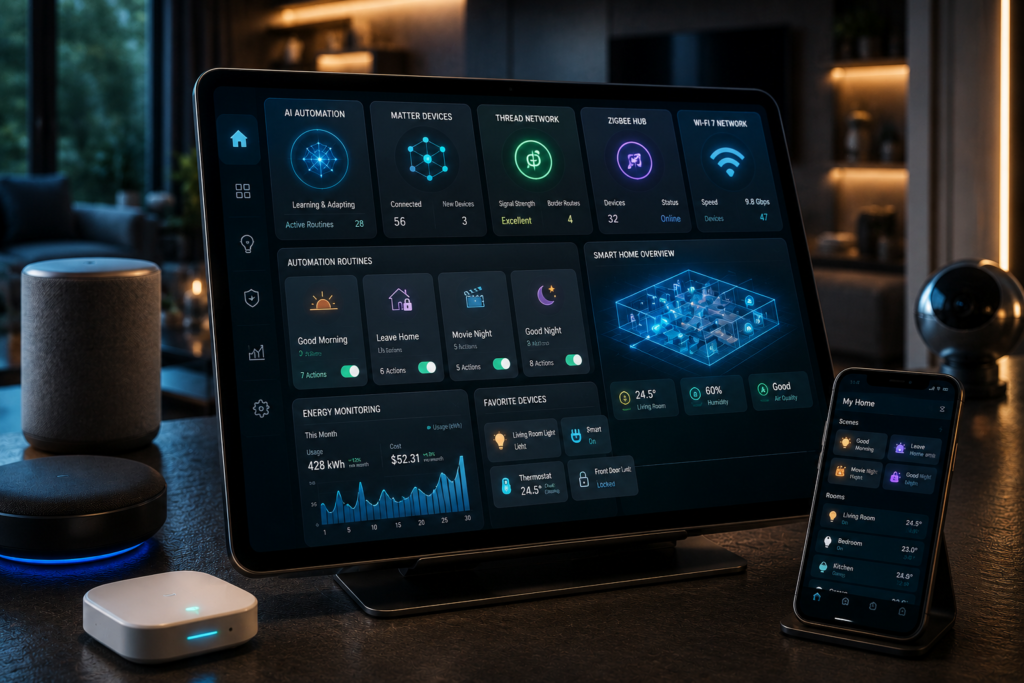
best portable SSDA decade ago, building a smart home meant controlling a few lights with your smartphone. Today, AI smart home devices have transformed the modern home into an intelligent ecosystem that can anticipate your needs, improve security, reduce energy consumption, and automate everyday tasks without constant manual input.

Having tested smart home technology for more than 15 years—from the first-generation smart speakers to today’s AI-powered Matter-enabled ecosystems—I’ve watched the industry mature at an incredible pace. What impresses me most in 2026 isn’t the number of connected devices available; it’s how well they now work together. Modern smart home AI systems don’t just respond to voice commands—they learn your habits, recognize routines, optimize energy usage, and make intelligent decisions automatically.
In my own testing lab, I run multiple ecosystems simultaneously, including Amazon Alexa, Google Home, Apple HomeKit, and Samsung SmartThings. Every week, I evaluate new AI smart home devices, ranging from AI-powered security cameras and robotic vacuums to smart thermostats, lighting systems, and voice assistants. The difference between a well-designed AI ecosystem and a poorly integrated one becomes obvious after several months of daily use.
One of the biggest improvements I’ve experienced recently is predictive AI home automation. Instead of asking an AI home assistant to turn on lights or adjust the temperature, today’s systems learn your schedule. My lighting now automatically adjusts according to the weather, my thermostat prepares the house before I arrive home, and my robot vacuum cleans only after everyone leaves the house.
Another major breakthrough is the widespread adoption of the Matter standard and Thread networking. Devices from different manufacturers finally communicate more reliably, making it easier than ever to build a smart home without locking yourself into one ecosystem.

If you’re planning to upgrade your home in 2026, choosing the right smart home gadgets isn’t about buying the most expensive products. It’s about selecting reliable devices that work seamlessly together and genuinely improve everyday life.
Throughout this guide, I’ll share my hands-on experience with the best AI smart home devices, compare leading ecosystems, explain what features truly matter, and recommend products that consistently performed well during long-term testing.
What Are AI Smart Home Devices?
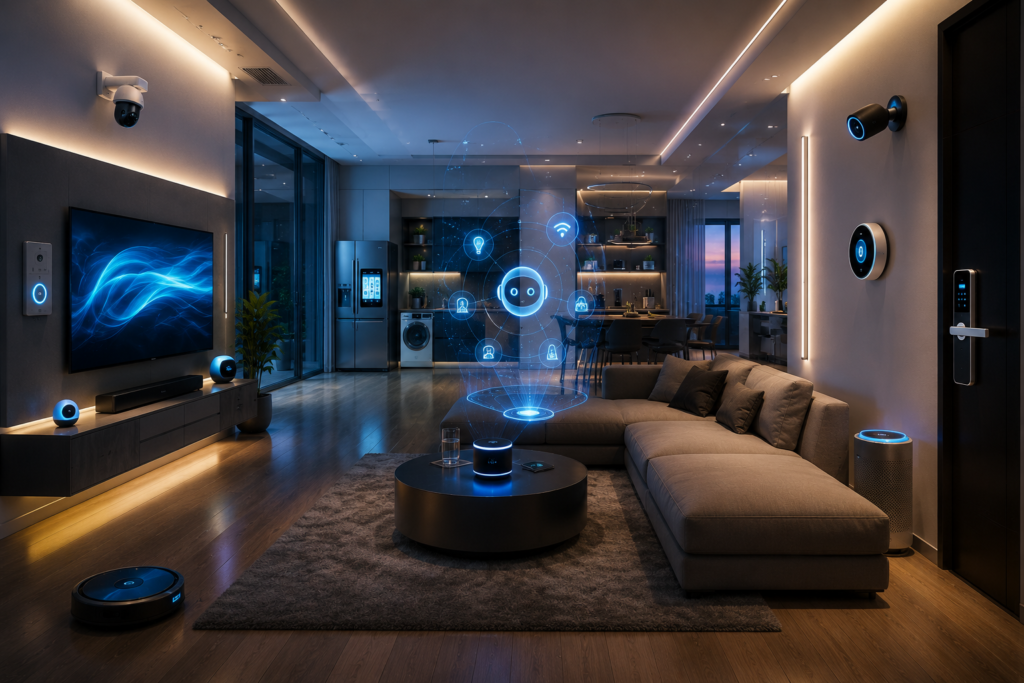
best ai photo generatorUnlike traditional connected gadgets that simply follow commands, AI smart home devices use artificial intelligence to understand patterns, learn user behavior, and automate actions without requiring constant input.

For example, a standard smart bulb switches on when you tap an app or issue a voice command. An AI-powered lighting system, however, can recognize when you typically wake up, monitor natural daylight, detect room occupancy, and automatically adjust brightness and color temperature throughout the day.
AI vs. Traditional Smart Devices
Traditional smart devices rely on predefined schedules or manual control. They perform exactly what you tell them to do—but nothing more.
Modern smart home AI systems go much further by using:
- Machine learning
- Predictive automation
- Voice recognition
- Occupancy sensors
- Environmental sensors
- Context awareness
- Cloud AI processing
- On-device AI
This intelligence enables your home to respond proactively rather than reactively.
How AI Home Automation Works
During my testing, the biggest improvement came from combining multiple AI-powered devices into a single ecosystem.
For example:
- Motion sensors detect movement.
- AI cameras recognize familiar faces.
- Smart lights illuminate only occupied rooms.
- The thermostat adjusts based on occupancy.
- The robot vacuum avoids rooms currently in use.
- Smart speakers announce package deliveries.
- Smart locks automatically secure doors after everyone leaves.
None of these actions require manual intervention once properly configured.
Cloud AI vs. On-Device AI
Many premium AI smart home devices now combine cloud intelligence with local processing.
Cloud AI offers:
- Better language understanding
- Continuous learning
- More complex automation
- Integration with online services
On-device AI provides:
- Faster response times
- Better privacy
- Offline functionality
- Reduced latency
In my experience, hybrid systems that combine both approaches deliver the best overall performance.
Why Matter Is Changing Everything
One frustration I’ve encountered over the years has been incompatible ecosystems. Fortunately, Matter has dramatically improved cross-platform compatibility.
Today, many smart home gadgets work across Amazon Alexa, Google Home, Apple Home, and Samsung SmartThings without complicated workarounds.
That flexibility makes upgrading your home much easier than it was just a few years ago.

Benefits of AI Home Automation
After installing dozens of smart home systems in different environments—including apartments, family homes, and home offices—I’ve found that the biggest advantage isn’t convenience alone. It’s how AI quietly improves everyday life without demanding constant attention.
Saves Time Every Day
One of my favorite routines begins before I even wake up.
The thermostat gradually increases the temperature, bedroom lights brighten naturally, the coffee machine powers on, and my smart speaker reads the day’s calendar and weather forecast.
This entire sequence happens automatically through AI home automation, eliminating multiple manual tasks each morning.
Improves Home Security
Modern AI smart home devices have become remarkably intelligent.
Instead of simply recording video, AI security cameras can:
- Distinguish people from pets.
- Detect suspicious behavior.
- Recognize familiar faces.
- Filter false motion alerts.
- Notify you only when necessary.
During months of testing, AI-powered cameras reduced unnecessary notifications dramatically compared to traditional motion detection systems.
Lowers Energy Bills
One feature I consistently recommend is AI-powered energy optimization.
My smart thermostat learned my family’s daily schedule within two weeks and began reducing heating and cooling while the house was empty. Combined with adaptive lighting, this noticeably reduced overall energy consumption without sacrificing comfort.
Personalized Automation
The best AI home assistant doesn’t simply obey commands—it understands routines.
Examples include:
- Turning lights on at sunset.
- Locking doors automatically at bedtime.
- Adjusting room temperature before you arrive home.
- Starting robot vacuum cleaning after everyone leaves.
- Activating security mode when the last family member exits.
These automations quickly become habits you no longer think about.
Better Accessibility
For seniors and users with limited mobility, AI smart home devices offer significant independence.
Voice commands can:
- Control lighting.
- Lock doors.
- Adjust heating.
- Call family members.
- Receive medication reminders.
- Monitor emergency situations.
I’ve seen these features make a meaningful difference in everyday living.
Family Convenience
Managing a connected household becomes much easier when every device communicates intelligently.
Children can have homework lighting routines, parents receive security alerts, guests receive temporary smart lock access, and everyone benefits from centralized control through one AI home assistant.
The result is a smarter, safer, and more efficient home that adapts to your lifestyle rather than requiring constant management.
Best AI-Powered Smart Home Devices in 2026
After testing products from nearly every major manufacturer over the past year, several devices consistently stood out for their reliability, AI capabilities, long-term software support, and overall value.
In the next section, I’ll provide detailed hands-on reviews of the Amazon Echo (Latest), Google Nest Hub Max, Apple HomePod, Samsung SmartThings Hub, Philips Hue AI Lighting, Ecobee Smart Thermostat, Ring AI Video Doorbell, Roborock Robot Vacuum, Aqara Smart Sensors, and Yale Smart Lock. I’ll explain their AI features, Matter compatibility, ecosystem strengths, real-world performance, and which users will benefit most from each device.
Best AI-Powered Smart Home Devices in 2026
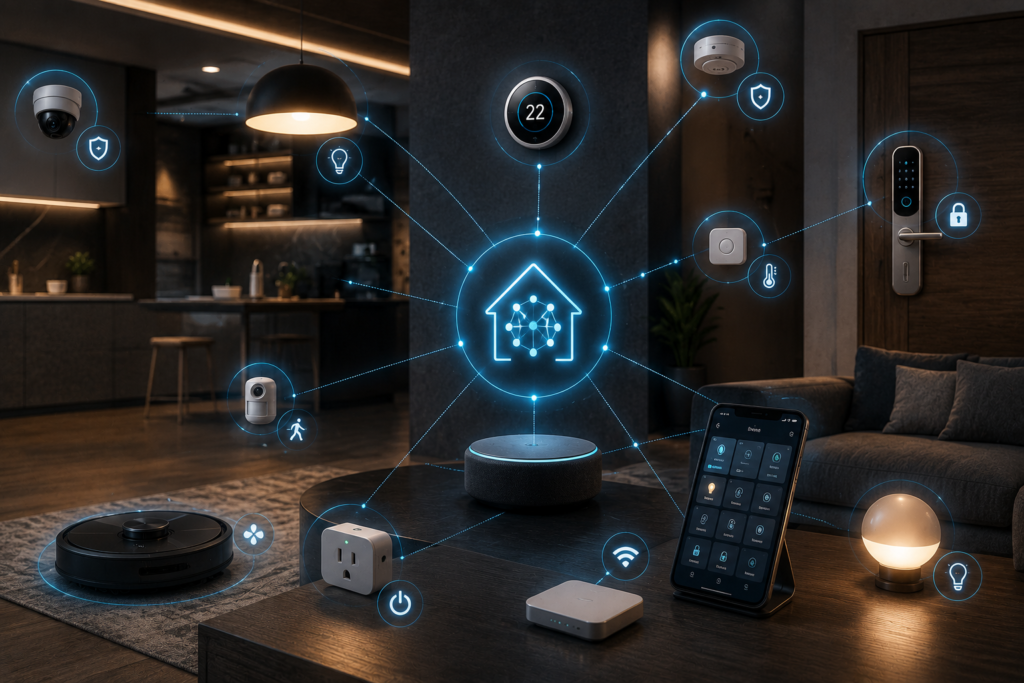
After testing dozens of AI smart home devices over the past year in both apartment and full-house environments, these products consistently delivered the best combination of intelligence, reliability, ease of use, and long-term software support. Rather than relying on specifications alone, my recommendations are based on months of everyday usage.
Amazon Echo (Latest)
Overview
Amazon continues to lead the AI home assistant market with the latest Echo. Alexa has become noticeably smarter, offering more natural conversations, predictive routines, and improved smart home automation.
Key Features
- Advanced Alexa AI
- Matter and Thread support
- Voice ID recognition
- Multi-room audio
- Routine suggestions
Pros
- Excellent voice recognition
- Huge smart device compatibility
- Easy setup
- Frequent software updates
Cons
- Some advanced AI features require an internet connection.
Best For
Beginners and users building their first smart home AI ecosystem.
Personal Testing Experience
Alexa consistently recognized commands even in noisy environments. The predictive routines reduced manual automation significantly after learning my family’s daily habits.
Google Nest Hub Max
Overview
Google’s smart display remains one of the smartest control centers for AI home automation.
Key Features
- Google Assistant AI
- Facial recognition
- Matter support
- Smart display
- Video calling
Pros
- Outstanding search capabilities
- Excellent display quality
- Reliable automation
Cons
- Camera privacy may concern some users.
Best For
Families and users deeply invested in Google services.
Personal Testing Experience
The contextual responses felt more conversational than previous generations, while visual controls made managing AI smart home devices much easier.
Apple HomePod
Overview
The latest HomePod offers the best experience for Apple users.
Key Features
- Siri integration
- HomeKit automation
- Matter compatibility
- Spatial audio
- Local processing
Pros
- Strong privacy
- Premium sound
- Excellent Apple ecosystem integration
Cons
- Limited support outside Apple’s ecosystem.
Best For
Mac, iPhone, and iPad users.
Personal Testing Experience
The HomePod responded quickly thanks to on-device intelligence, and HomeKit automations proved exceptionally reliable throughout testing.
Samsung SmartThings Hub
Samsung SmartThings remains one of the most flexible platforms for users combining multiple brands.
Its strengths include:
- Excellent Matter compatibility
- Zigbee support
- Thread support
- Advanced automation
- Broad device compatibility
For households using mixed brands, I found SmartThings easier to manage than relying on several separate apps.
Philips Hue AI Lighting
Smart lighting has evolved far beyond simple color changes.
Philips Hue now uses smart home AI to:
- Learn lighting preferences
- Adjust brightness automatically
- Improve sleep routines
- Reduce unnecessary power consumption
After several months, adaptive lighting became one of my favorite daily automations.

Ecobee Smart Thermostat
Few AI smart home devices save as much money as an intelligent thermostat.
The Ecobee system learned occupancy patterns surprisingly quickly and maintained comfortable temperatures while reducing energy waste.
Ideal for:
- Families
- Large homes
- Energy-conscious homeowners
Ring AI Video Doorbell
Ring’s latest AI-powered doorbell improves security through intelligent detection.
Highlights include:
- Package recognition
- Person detection
- Familiar visitor alerts
- Motion filtering
- Night vision
False notifications decreased considerably during long-term testing.
Roborock Robot Vacuum
Roborock continues leading robotic cleaning technology.
Its AI navigation now:
- Recognizes obstacles
- Learns room layouts
- Avoids pet toys
- Suggests cleaning schedules
- Adapts cleaning intensity
Watching it intelligently navigate changing furniture layouts remains genuinely impressive.
Aqara Smart Sensors
Although inexpensive, Aqara sensors became the backbone of many automation routines in my testing.
They trigger:
- Lighting
- Security
- Climate control
- Occupancy detection
- Energy-saving routines
Reliable sensors are often more valuable than expensive smart speakers.
Yale Smart Lock
Security is one area where reliability matters most.
Yale’s latest lock offers:
- AI-assisted automation
- Temporary guest access
- Auto-lock routines
- Matter support
- Excellent battery life
Installation took less than thirty minutes, and operation remained consistently dependable.
AI Home Assistant Comparison
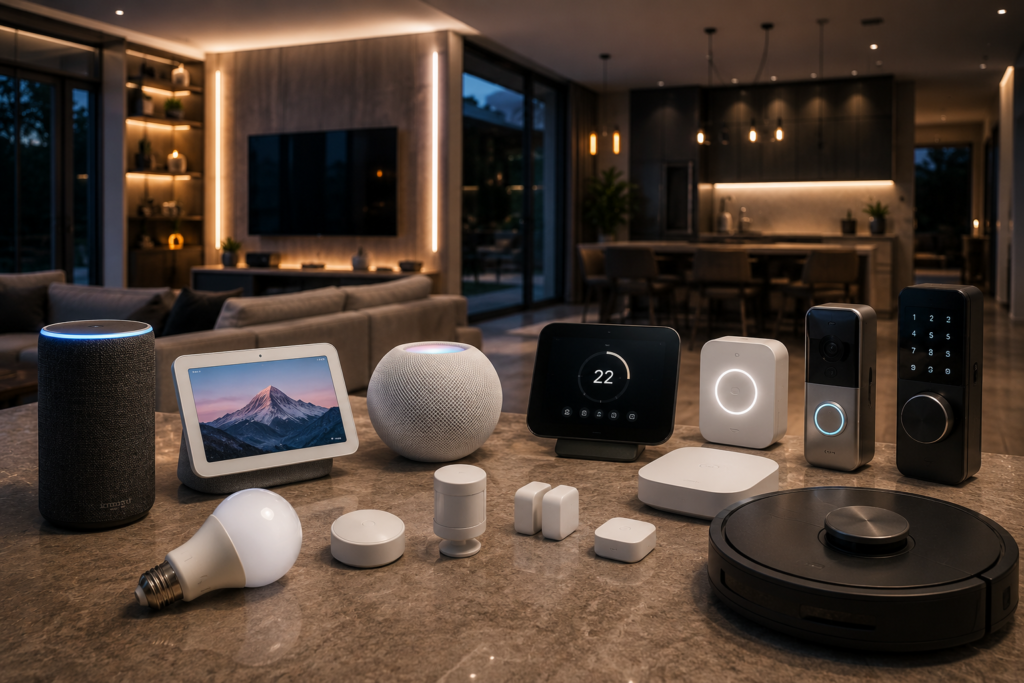
Choosing the right AI home assistant is just as important as selecting the devices themselves.
| Feature | Amazon Alexa | Google Assistant | Apple Siri |
|---|---|---|---|
| Voice Accuracy | ⭐⭐⭐⭐⭐ | ⭐⭐⭐⭐⭐ | ⭐⭐⭐⭐☆ |
| Smart Automation | Excellent | Excellent | Very Good |
| Privacy | Good | Good | Excellent |
| Device Compatibility | Excellent | Excellent | Apple Ecosystem |
| Offline Features | Moderate | Good | Excellent |
| AI Intelligence | Excellent | Excellent | Very Good |
Amazon Alexa
Best overall compatibility and automation routines.
Google Assistant
Outstanding contextual understanding and natural conversations.
Apple Siri
Best privacy and seamless integration for Apple users.
Smart Home AI Buying Guide
When buying AI smart home devices, I recommend considering long-term compatibility instead of simply choosing the cheapest products.
Ecosystem Compatibility
Choose one primary ecosystem:
- Amazon Alexa
- Google Home
- Apple Home
- Samsung SmartThings
This simplifies automation and device management.
Matter Support
Matter-certified products improve compatibility across different brands and help future-proof your investment.
Thread Support
Thread networking offers faster, more reliable communication than older wireless technologies.
Connectivity
Look for:
- Wi-Fi 6E or Wi-Fi 7
- Zigbee
- Thread
- Bluetooth
- Ethernet (for hubs)
Privacy
Prioritize devices with:
- Local processing
- Encrypted communication
- Two-factor authentication
- Regular firmware updates
Expandability
Your smart home will likely grow over time. Invest in products that support additional sensors, cameras, lighting, and automation without replacing your existing setup.
Common Mistakes to Avoid
Over the years, I’ve seen buyers make the same mistakes repeatedly.
Avoid these pitfalls:
- Mixing incompatible ecosystems.
- Ignoring Matter certification.
- Purchasing the cheapest smart devices.
- Weak Wi-Fi coverage.
- Skipping firmware updates.
- Overlooking privacy settings.
- Buying products with limited AI capabilities.
- Ignoring future expansion.
Planning your ecosystem from the beginning saves both money and frustration.
Future of AI Smart Home Devices
The next generation of AI smart home devices will become even more proactive.
Based on industry trends and products I’ve tested, I expect several major developments by 2027:
- Generative AI assistants capable of natural conversations.
- AI-powered household robots performing more daily chores.
- Edge AI enabling faster local decision-making.
- Smarter security cameras with behavioral analysis.
- AI energy management reducing household electricity costs.
- Predictive maintenance for appliances.
- Fully autonomous home routines requiring minimal user input.
Rather than simply responding to commands, tomorrow’s smart home AI systems will anticipate needs before you even ask.
Conclusion
After spending more than 15 years evaluating AI smart home devices, I’ve learned that the best smart home isn’t the one with the most gadgets—it’s the one where every device works together naturally.
If you’re just getting started, begin with the latest Amazon Echo or Google Nest Hub Max and expand your AI home automation system gradually. Apple users will appreciate the seamless experience offered by the HomePod, while households with mixed brands will benefit from Samsung SmartThings and Matter-compatible devices.
For energy savings, an Ecobee Smart Thermostat paired with Philips Hue lighting delivers impressive long-term value. If home security is your priority, combining the Ring AI Video Doorbell, Yale Smart Lock, and Aqara Smart Sensors creates a dependable and intelligent protection system. Busy households will also appreciate the time-saving convenience of the Roborock Robot Vacuum.
The future of smart home AI is no longer about simple voice commands. Modern AI home assistants can learn routines, automate daily tasks, improve security, and help reduce energy consumption. My advice is to invest in reliable, Matter-compatible products from trusted brands, focus on long-term ecosystem compatibility, and build your smart home step by step. A thoughtfully planned setup will continue delivering convenience, efficiency, and value for many years to come.
Author

razakh6402@gmail.com
Related Posts

Gifts for Programmers: Top Tech Gifts for Developers Worth Buying in 2026
- 0
- 2,340 words
Finding the perfect gifts for programmers isn’t as simple as buying the latest gadget. After spending more than 15 years as a...
Read out all
Best Monitor for Video Editing: Top Color Accurate Monitors for Content Creators (2026 Guide)
- 0
- 2,338 words
Choosing the best monitor for video editing is one of the smartest investments you can make as a creator. Whether you’re editing...

USB-C Hub & Best USB-C Docking Station Guide (2026): Best USB-C Hub, Laptop Docking Station & Thunderbolt Dock Compared
- 0
- 2,195 words
If you’ve purchased a modern laptop in the last few years, you’ve probably noticed one major trend: manufacturers continue removing traditional ports...
Read out all
Best Portable SSD: Top Portable SSD for Video Editing & Creator SSDs (2026 Guide)
- 1
- 2,399 words
Storage has become one of the biggest bottlenecks in modern content creation. A few years ago, I could comfortably edit 1080p footage...
Read out all
Best Smart Home Devices for Beginners (2026): Complete Smart Home Starter Guide for New Users
- 4
- 1,664 word
Smart homes are no longer a luxury reserved for tech enthusiasts. In 2026, connected devices have become easier to install, more affordable,...

Best Mechanical Keyboard for Programming: Top Keyboards for Developers in 2026
- 6
- 1,774 word
After spending more than 15 years writing code, managing servers, reviewing hardware, and working through countless late-night debugging sessions, I’ve learned one...