
- 0
- 2,029 words
Over the last 25 years, I have witnessed several major technology revolutions firsthand. I watched the internet move from a niche communication tool to the foundation of global commerce. I saw cloud computing evolve from a controversial concept into the backbone of enterprise IT. Today, I see blockchain technology following a remarkably similar path.
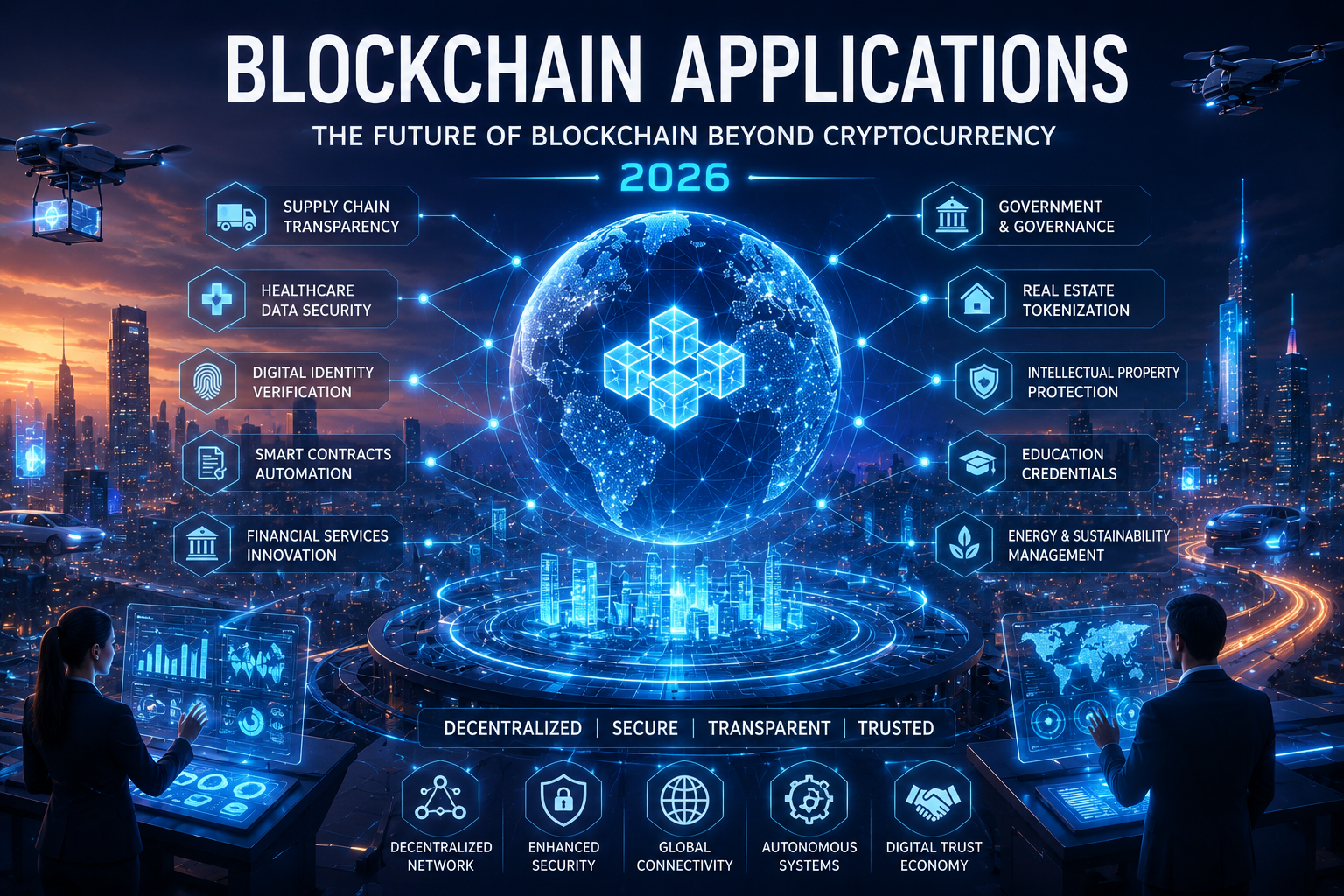
When most people hear the word blockchain, they immediately think of Bitcoin or cryptocurrency. That association is understandable because cryptocurrencies introduced blockchain technology to the world. However, after years of analyzing digital transformation projects and advising organizations on emerging technologies, I believe the most significant impact of blockchain lies far beyond digital currencies.
The future of blockchain beyond cryptocurrency is centered on trust, transparency, automation, and secure data sharing. Organizations are increasingly exploring blockchain applications that solve real business challenges rather than focusing solely on financial transactions.
What makes blockchain important is not the token itself. The real innovation is the ability to create trusted digital systems where participants can share information securely without relying on a single central authority.
As businesses continue their digital transformation journeys, enterprise blockchain is emerging as a powerful tool capable of reshaping industries ranging from healthcare and logistics to government services and education.
What Is Blockchain Technology?
Understanding Blockchain Fundamentals
Blockchain is a distributed ledger technology that records transactions across multiple computers. Instead of storing information in a centralized database, blockchain distributes data across a network of participants.
Each transaction is grouped into a block. These blocks are connected chronologically, forming a chain. Once recorded, data becomes extremely difficult to alter, creating a permanent and auditable history.
The key characteristics include:
- Decentralization
- Transparency
- Security
- Immutability
- Traceability
These qualities make blockchain applications valuable across numerous industries.
Why Blockchain Became Popular Through Crypto
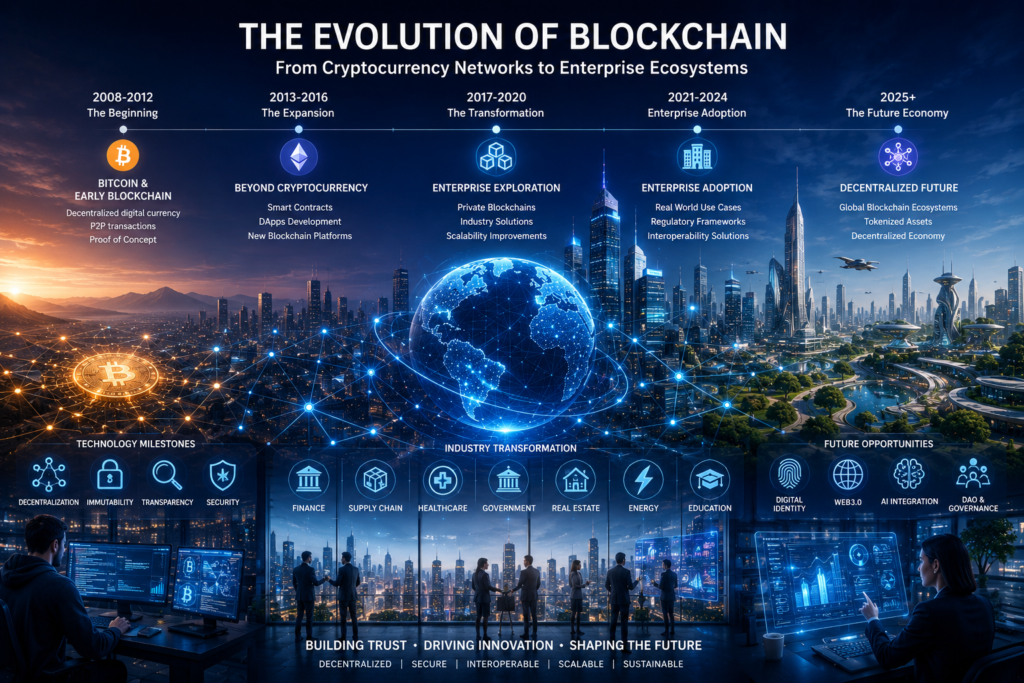
Cryptocurrencies served as the first large-scale demonstration of blockchain technology. Bitcoin proved that people could exchange value digitally without banks or intermediaries.
This breakthrough captured global attention and sparked massive investment in blockchain research and development.
The Shift Toward Blockchain Beyond Cryptocurrency
Today, businesses increasingly recognize that blockchain technology can solve challenges unrelated to digital currencies.
Organizations are using enterprise blockchain networks to improve transparency, streamline operations, reduce fraud, and automate complex workflows through smart contracts.
The conversation has shifted from cryptocurrency speculation toward practical blockchain use cases that deliver measurable business value.
Blockchain Beyond Cryptocurrency: The Next Evolution
Why Businesses Are Investing in Enterprise Blockchain
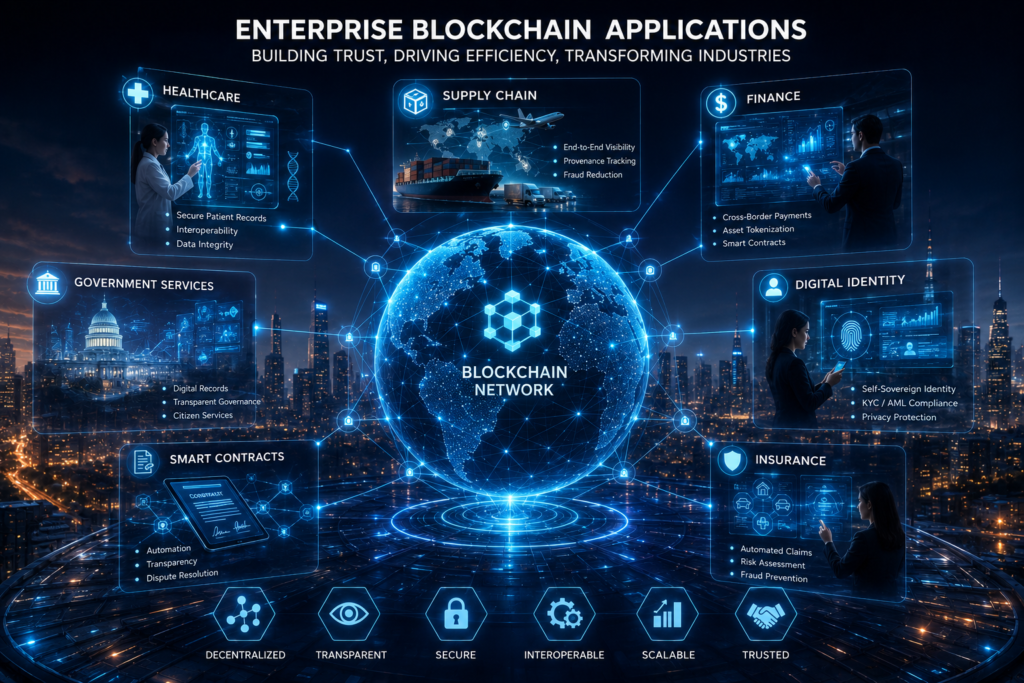
Enterprise blockchain solutions provide organizations with secure environments for collaboration and data sharing.
Unlike public cryptocurrency networks, enterprise blockchain systems typically operate with permissioned access, allowing organizations to maintain compliance and control.
Major enterprises now explore blockchain applications for:
- Supply chain visibility
- Identity management
- Regulatory compliance
- Contract automation
- Digital asset management
How Blockchain Is Transforming Digital Trust
Trust has always been expensive.
Businesses spend billions annually on audits, verification processes, intermediaries, and fraud prevention systems.
Blockchain technology future trends suggest a shift toward “trust by design.” Instead of verifying transactions after the fact, blockchain creates transparent records that participants can trust immediately.
Decentralization Beyond Financial Transactions
Decentralization extends beyond money.
Modern blockchain use cases include:
- Verifying academic credentials
- Tracking pharmaceuticals
- Managing intellectual property rights
- Monitoring carbon credits
- Securing healthcare records
These applications demonstrate how blockchain beyond cryptocurrency is becoming a foundational digital infrastructure.
Top Blockchain Applications Reshaping Industries
Supply Chain Management
Supply chain transparency remains one of the most successful blockchain applications.
Companies use enterprise blockchain platforms to track products from origin to consumer.
For example, global retailers have implemented blockchain systems to trace food products within seconds rather than days.
Healthcare Records
Healthcare organizations struggle with fragmented patient data.
Blockchain enables secure, interoperable medical records that authorized providers can access while maintaining patient privacy.
Digital Identity Verification
Digital identity systems represent one of the fastest-growing blockchain use cases.
Blockchain-based identities give individuals greater control over personal information while reducing identity theft risks.
Real Estate Transactions
Property transactions often involve lengthy paperwork and multiple intermediaries.
Blockchain technology can streamline ownership verification, title transfers, and contract execution.
Intellectual Property Protection
Creators and businesses use blockchain to establish ownership and track usage rights for digital assets.
This is particularly valuable in music, publishing, and software industries.
Government Services
Governments worldwide are exploring blockchain applications for:
- Public records
- Tax administration
- Licensing systems
- Land registries
These initiatives aim to improve efficiency and transparency.
Voting Systems
Secure digital voting remains a promising blockchain use case.
Although challenges remain, blockchain can increase election transparency and reduce tampering risks.
Education Credentials
Universities increasingly issue blockchain verified diplomas and certifications.
Employers can instantly verify credentials without relying on manual verification processes.
Cross-Border Trade
International trade often involves extensive documentation and compliance checks.
Blockchain simplifies document sharing and verification among multiple stakeholders.
Insurance Automation
Insurance companies use smart contracts to automate claims processing and reduce fraud.
This can significantly improve customer experience while lowering administrative costs.
Enterprise Blockchain vs Traditional Databases
| Feature | Enterprise Blockchain | Traditional Database |
|---|---|---|
| Security | Cryptographic protection and distributed validation | Centralized security controls |
| Transparency | Shared visibility among participants | Limited visibility |
| Trust | Trust distributed across network | Trust placed in central authority |
| Immutability | Records are difficult to alter | Data can be modified |
| Auditability | Built-in audit trail | Requires additional auditing systems |
| Cost | Higher initial implementation cost | Lower implementation cost |
| Scalability | Improving but can face limitations | Typically higher transaction speed |
Blockchain Use Cases Driving Business Innovation
Smart Contracts
Smart contracts automatically execute agreements when predefined conditions are met.
This reduces manual intervention and minimizes errors.
Asset Tokenization
Tokenization converts physical or digital assets into blockchain-based representations.
Examples include:
- Real estate
- Art
- Commodities
- Securities
Supply Chain Transparency
Blockchain enables real-time visibility into product movement and provenance.
This helps organizations improve accountability and sustainability reporting.
Digital Identity Systems
Self-sovereign identity solutions are becoming increasingly important in the digital economy.
Regulatory Compliance
Enterprise blockchain solutions provide immutable records that simplify compliance audits.
Fraud Prevention
Blockchain’s transparent nature makes fraudulent alterations significantly more difficult.

Blockchain Technology Future: Emerging Trends for 2026 and Beyond
AI + Blockchain Integration
Artificial intelligence and blockchain are becoming complementary technologies.
AI analyzes data while blockchain ensures data integrity.
This combination creates trusted AI systems capable of operating with greater transparency.
Blockchain and IoT
Internet of Things devices generate enormous amounts of data.
Blockchain provides secure mechanisms for device authentication and data sharing.
Decentralized Digital Identity
Governments and enterprises increasingly recognize decentralized identity as a critical component of future digital ecosystems.
Green Blockchain Initiatives
Modern blockchain platforms are adopting energy-efficient consensus mechanisms.
This addresses concerns regarding environmental sustainability.
Web3 Infrastructure
Web3 represents a decentralized internet where users have greater control over their data and digital assets.
Enterprise blockchain solutions are expected to play a major role in this evolution.
Central Bank Digital Currencies (CBDCs)
Many central banks continue exploring digital currencies built on blockchain-inspired architectures.
CBDCs may accelerate broader blockchain adoption.
Real-World Asset Tokenization
Financial institutions increasingly view tokenization as a transformative opportunity.
Analysts predict trillions of dollars in assets could eventually move onto blockchain networks.
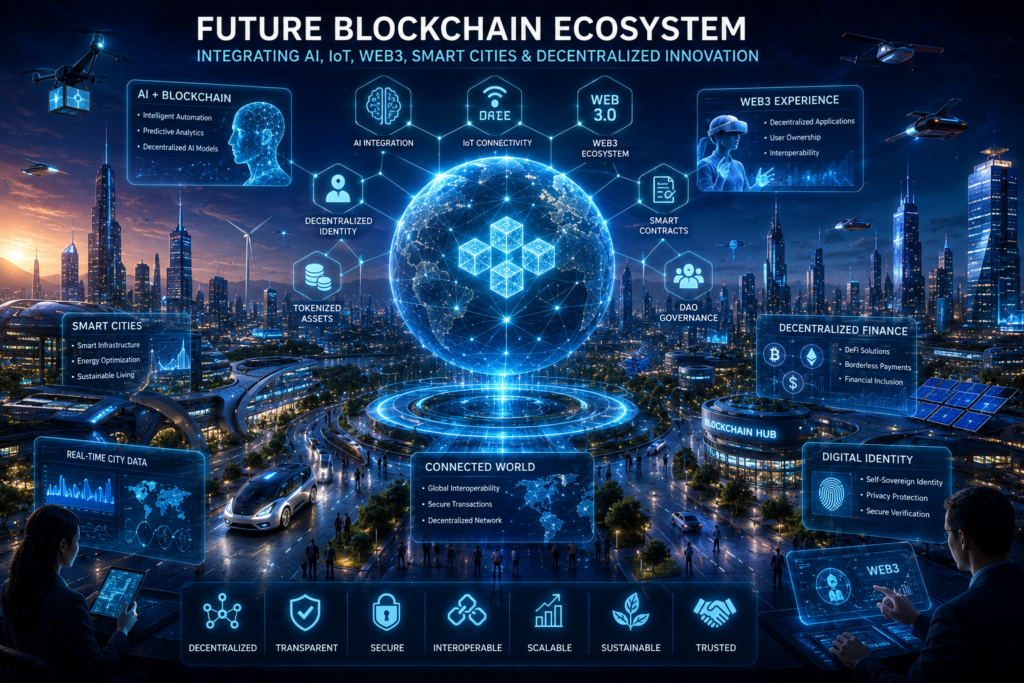
Blockchain in Smart Cities
Smart cities will use blockchain for:
- Identity management
- Utility monitoring
- Transportation systems
- Public services
Challenges Limiting Blockchain Adoption
Scalability Issues
Some blockchain networks still struggle with high transaction volumes.
Performance improvements remain a major focus area.
Regulatory Uncertainty
Regulations vary significantly across jurisdictions.
Organizations often delay implementation until legal frameworks become clearer.
Energy Consumption Concerns
Although newer systems are more efficient, public perception remains influenced by early energy-intensive networks.
Integration Complexity
Integrating blockchain with legacy systems requires substantial planning and investment.
User Adoption Barriers
Technology succeeds when users find it easy to use.
Many blockchain solutions still face usability challenges.
Balanced analysis is essential. Blockchain is not a universal solution. Organizations should evaluate specific business problems before implementation.
Future Opportunities for Businesses
Industries That Will Benefit Most
The industries likely to benefit most include:
- Healthcare
- Financial services
- Manufacturing
- Logistics
- Government
- Education
- Insurance
Enterprise Adoption Roadmap
Organizations should:
- Identify trust-related challenges.
- Evaluate blockchain suitability.
- Launch pilot programs.
- Measure outcomes.
- Scale successful initiatives.
Investment Outlook
Investment continues shifting toward practical blockchain use cases rather than speculative projects.
This trend supports long-term enterprise blockchain growth.
Innovation Potential
The blockchain technology future extends far beyond current implementations.
As standards mature and interoperability improves, new opportunities will emerge.
Expert Insights From 25 Years of Technology Experience
Having worked through multiple technology adoption cycles, I notice strong similarities between blockchain today and cloud computing fifteen years ago.
In the early days, many executives dismissed cloud technology as risky and impractical. Over time, businesses realized the technology itself was not the destination—it was an enabler of new business models.
Blockchain follows the same pattern.
The organizations achieving success today are not asking, “How can we use blockchain?”
Instead, they ask, “What trust problem are we trying to solve?”
One lesson I learned repeatedly during digital transformation projects is that technology alone never creates value. Business process redesign, stakeholder alignment, and user adoption determine success.
Another observation is that transformational technologies often experience a period of inflated expectations followed by disillusionment. Blockchain has already gone through much of that cycle.
What remains now is the practical, value-driven phase where enterprise blockchain delivers measurable outcomes.
My advice to business leaders is simple: start learning, experiment carefully, and focus on solving real business problems rather than chasing trends.
Frequently Asked Questions
What is blockchain beyond cryptocurrency?
Blockchain beyond cryptocurrency refers to using blockchain technology for applications such as supply chains, healthcare, identity verification, government services, and enterprise operations.
What are the biggest blockchain applications?
Major blockchain applications include supply chain management, digital identity, healthcare records, smart contracts, asset tokenization, and fraud prevention.
How does enterprise blockchain work?
Enterprise blockchain uses permissioned networks where authorized participants securely share data and execute transactions.
Is blockchain secure?
Yes. Blockchain uses cryptography, distributed validation, and immutable records to provide strong security, although implementation quality remains important.
What industries use blockchain?
Industries using blockchain include finance, healthcare, logistics, manufacturing, education, insurance, and government.
Can blockchain replace databases?
Not entirely. Traditional databases remain more efficient for many use cases. Blockchain is most valuable when multiple parties need shared trust and transparency.
What is the future of blockchain technology?
The blockchain technology future includes AI integration, digital identity systems, tokenized assets, smart cities, Web3 infrastructure, and enterprise automation.
Is blockchain a good investment for businesses?
Businesses that apply blockchain strategically to solve trust, transparency, and efficiency challenges can achieve significant long-term value.

Conclusion
The future of blockchain beyond cryptocurrency is no longer theoretical. Organizations worldwide are already implementing blockchain applications that improve transparency, automate processes, strengthen security, and build digital trust.
Enterprise blockchain continues expanding into healthcare, supply chains, government services, education, insurance, and countless other sectors. While challenges remain, the momentum behind real world blockchain use cases continues to grow.
From my perspective after 25 years of observing technology evolution, blockchain has entered the phase where practical business value matters more than hype. That is often the moment when transformative technologies begin creating lasting impact.
Looking ahead, the convergence of blockchain, artificial intelligence, IoT, digital identity, and Web3 infrastructure will unlock entirely new business models and economic opportunities.
The next decade will not be defined by blockchain as a cryptocurrency technology. It will be defined by blockchain as a trust infrastructure powering the digital economy of the future.
Author

razakh6402@gmail.com
Related Posts

Lead Generation Software: 12 Best Lead Generation Tools for B2B Sales (2026 Guide)
- 0
- 2,300 words
If someone had asked me 15 years ago what the biggest challenge in sales was, my answer would have been simple: finding...
Survey Software: 12 Best Online Survey Tools & Feedback Software for Businesses (2026 Guide)
- 0
- 1,871 word
Whether I was helping a SaaS startup validate a new feature, assisting an HR team with employee engagement, or optimizing customer experience...
Read out all
Online Course Platform: 12 Best LMS Software & eLearning Platforms for Course Creators (2026 Guide)
- 0
- 1,900 word
The online education industry has changed dramatically over the last 15 years. When I built my first digital training portal, simply uploading...

Team Communication Software: 12 Best Business Messaging Apps for Modern Workplaces in 2026 (Expert Tested)
- 0
- 2,305 words
I’ve personally tested dozens of team communication software platforms while consulting for marketing agencies, software companies, HR departments, remote development teams, and...
Invoice Software: 12 Best Invoicing Software for Small Business in 2026 (Expert Tested)
- 0
- 2,493 words
I’ve worked with freelancers chasing late payments, agencies managing hundreds of monthly invoices, startups scaling internationally, and established businesses struggling with outdated...
Generate one SEO-optimized title thatdigital asset management software
- 6
- 2,632 words
One of the most memorable projects I led involved migrating nearly half a million digital assets from a traditional file server into...