
- 0
- 1,918 word
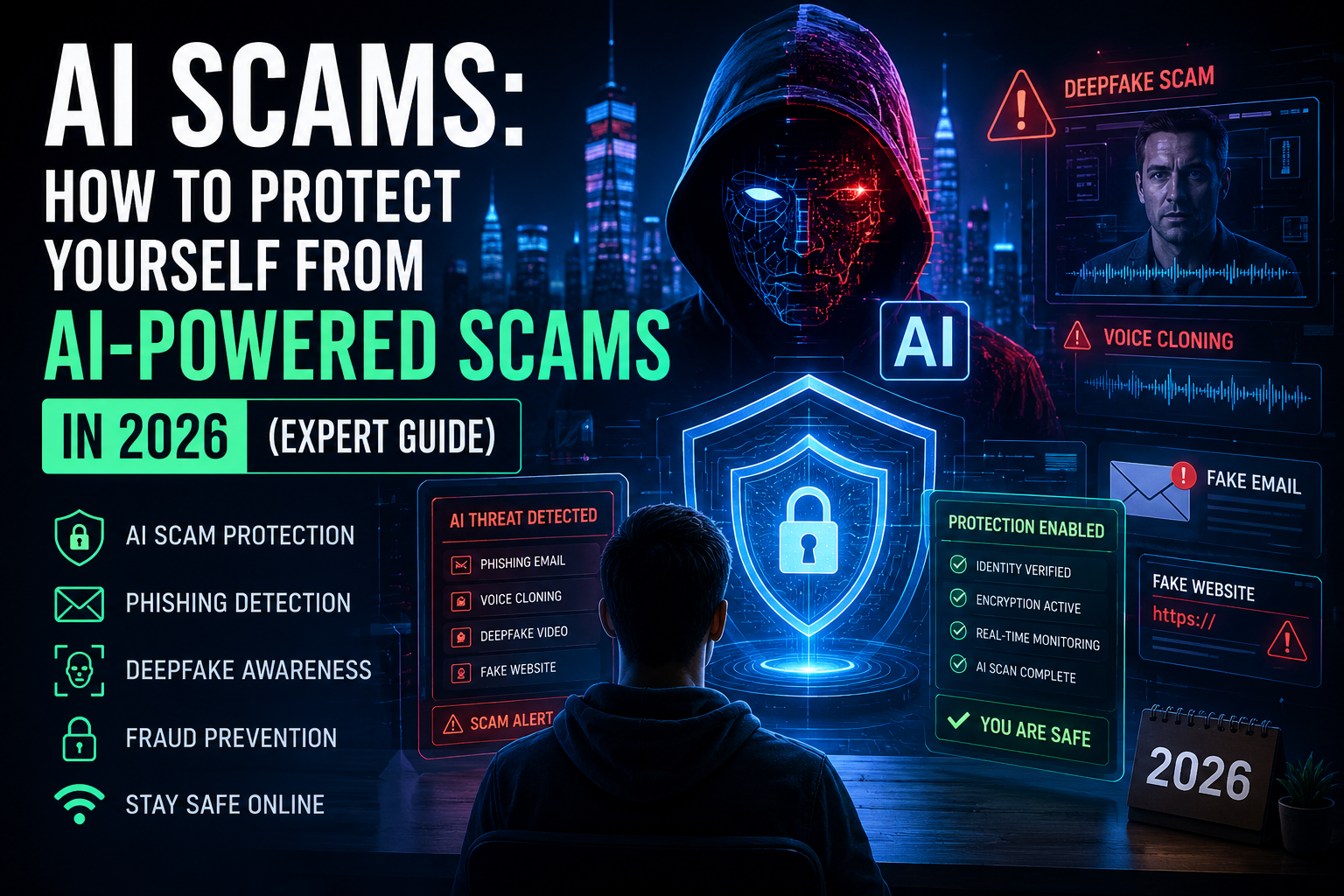
Artificial intelligence has transformed the way we work, communicate, and manage our finances. Unfortunately, cybercriminals have embraced the same technology to create more convincing AI scams than ever before. From realistic voice cloning to sophisticated AI phishing scams, today’s fraud attempts can fool even tech-savvy users.
Having spent years studying cybersecurity trends and helping people strengthen their online security, I’ve seen one pattern repeat itself: attackers always adapt faster than most people expect. The good news is that strong AI fraud prevention strategies and practical AI scam protection habits can dramatically reduce your risk.
What Are AI Scams?
AI scams are fraudulent schemes that use artificial intelligence to deceive victims. Criminals now use AI to generate convincing emails, clone voices, create realistic videos, automate fake customer support chats, and personalize attacks.
Common examples include:
- AI phishing scams
- Deepfake scams
- Voice cloning scams
- Fake investment platforms
- AI-generated romance scams
- Fake job offers
Unlike traditional scams, AI-powered attacks often feel highly personal and believable.

Why AI-Powered Scams Are Increasing
Several factors have accelerated the growth of AI scams:
- AI tools are inexpensive and widely available.
- Criminals can automate thousands of attacks daily.
- Public social media profiles provide valuable personal information.
- AI creates convincing text, audio, and video within minutes.
As a result, AI phishing scams have become more targeted and difficult to identify.
Most Common AI Scams in 2026
AI Phishing Scams
Attackers use AI to write natural emails that imitate banks, employers, and online services. Always verify links before clicking.
Deepfake Scams
Deepfake scams use AI-generated videos to impersonate executives, celebrities, or family members. Never rely solely on video as proof of identity.
Voice Clone Scams
Scammers copy someone’s voice from publicly available recordings and pretend to be a family member requesting urgent financial help.
Investment Scams
Fraudsters promote fake AI trading platforms or cryptocurrency investments promising guaranteed returns.
Fake Customer Support
Scammers build convincing AI chatbots that request passwords, payment information, or verification codes.

Traditional Online Scams vs AI-Powered Scams
| Feature | Traditional Scams | AI-Powered Scams |
|---|---|---|
| Personalization | Limited | Highly personalized |
| Technology | Manual | AI-generated |
| Voice Cloning | No | Yes |
| Deepfake Videos | Rare | Common |
| Detection | Easier | More difficult |
| Speed | Slow | Automated at scale |
| Financial Risk | Moderate | High |
| Prevention | Awareness | Awareness + AI scam protection tools |
AI Fraud Prevention Best Practices
Effective AI fraud prevention starts with everyday habits.
- Enable multi-factor authentication.
- Verify unexpected requests through a second communication channel.
- Never share one-time verification codes.
- Keep software updated.
- Limit personal information on social media.
- Use a password manager.
- Watch for urgent or emotional messages.
- Verify video or voice requests before sending money.
These practices significantly improve your AI scam protection.
Warning Signs of AI Scams
Be cautious if you notice:
- Requests for immediate payment.
- Unexpected investment opportunities.
- Poorly verified websites.
- Unusual voice or video calls.
- Pressure to keep conversations secret.
- Requests for passwords or security codes.
Even advanced AI phishing scams often rely on creating panic or urgency.
If You Become a Victim
If you suspect you’ve fallen for AI scams:
- Contact your bank immediately.
- Change affected passwords.
- Enable MFA on all important accounts.
- Report the incident to your local cybercrime authority.
- Monitor financial accounts for suspicious activity.
- Inform friends or colleagues if your identity may have been compromised.
Quick action can reduce financial losses.

Expert Tips
From years of following cybersecurity trends, one lesson stands out: technology changes quickly, but human behavior remains the primary target. Every successful AI phishing scam begins with trust. Build a habit of verifying identities before responding to urgent requests, especially those involving money or sensitive information.
Frequently Asked Questions
Can AI scams fool experienced users?
Yes. Modern AI scams use highly convincing language, voice cloning, and realistic visuals.
How can I avoid AI phishing scams?
Verify email senders, avoid unknown links, enable MFA, and confirm unusual requests through another communication method.
Are deepfake scams becoming more common?
Yes. Deepfake scams continue to grow as AI video generation becomes more accessible.
What is the best AI fraud prevention strategy?
Combine strong passwords, MFA, software updates, identity verification, and ongoing cybersecurity awareness.
Final Thoughts
Artificial intelligence offers incredible opportunities, but it also creates new security challenges. By understanding AI scams, recognizing AI phishing scams, practicing effective AI fraud prevention, staying alert to deepfake scams, and following reliable AI scam protection practices, you can dramatically reduce your risk. Stay informed, verify before you trust, and remember that a few extra seconds of caution can prevent significant financial and personal loss.
AI Fraud Prevention Best Practices: Practical Steps That Actually Reduce Your Risk
The rapid evolution of artificial intelligence has made online scams more convincing than ever. While AI-powered fraud techniques continue to improve, the most effective defense still combines awareness, good security habits, and a healthy level of skepticism. Successful AI fraud prevention isn’t about fearing new technology—it’s about understanding how attackers exploit trust and taking practical steps to stay ahead.
Verify Before You Trust
One of the most effective forms of AI scam protection is simple verification. If you receive an unexpected request involving money, sensitive information, login credentials, or account changes, pause before responding.
For example, if someone claiming to be your manager sends an urgent message asking you to purchase gift cards or transfer funds, contact them through a known phone number or company communication channel rather than replying directly to the message. Likewise, if a family member appears to call asking for emergency financial help, verify their identity through another method before taking action.
This habit alone can prevent many AI phishing scams and voice-cloning attacks.
Enable Multi-Factor Authentication Everywhere
Passwords remain important, but they should never be your only line of defense. Enable multi-factor authentication (MFA) on your email, banking, social media, cloud storage, and business accounts.
Even if attackers obtain your password through an AI-generated phishing campaign, MFA significantly reduces the likelihood that they can access your account.
Whenever possible:
- Use authenticator apps instead of SMS verification.
- Store recovery codes securely.
- Review trusted devices regularly.
- Remove devices you no longer use.
Think Carefully Before Sharing Personal Information
Many modern AI scams rely on publicly available information. Criminals can collect details from social media profiles, professional networking sites, public records, and online forums to build highly personalized attacks.
Consider limiting the amount of information you share publicly, including:
- Birthdays
- Phone numbers
- Vacation plans
- Employer details
- Family relationships
- Financial milestones
Reducing publicly available information makes personalized AI phishing scams less convincing.
Learn to Recognize Deepfake Scams
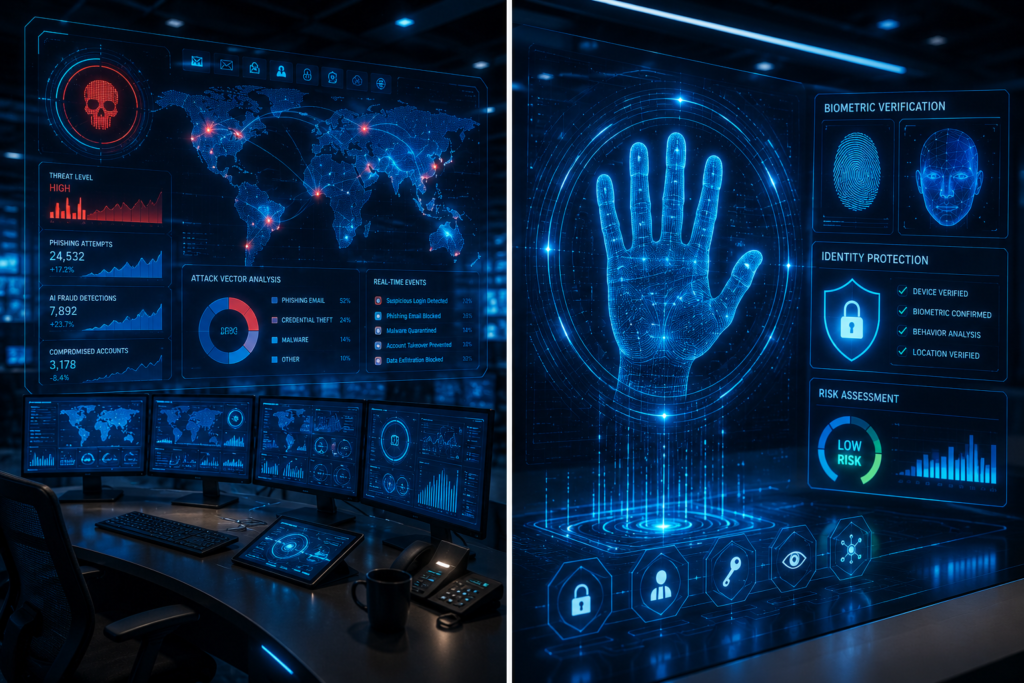
Deepfake scams are becoming increasingly sophisticated. AI can now generate realistic video and audio that imitates trusted individuals.
Warning signs include:
- Unusual facial movements or lip synchronization.
- Robotic or inconsistent speech patterns.
- Requests involving urgency or secrecy.
- Unexpected financial instructions.
- Video quality that changes during the conversation.
Never approve financial transactions solely because a caller looks or sounds familiar. Independent verification remains essential.
Keep Your Software Updated
Software updates frequently include security patches that protect against newly discovered vulnerabilities.
Maintain updates for:
- Operating systems
- Web browsers
- Antivirus software
- Password managers
- Mobile apps
- Home Wi-Fi routers
Automatic updates reduce the risk of attackers exploiting outdated software during broader cybercrime campaigns.
Use Strong Password Hygiene
Weak passwords remain one of the easiest ways for attackers to compromise accounts.
Follow these practices:
- Create unique passwords for every account.
- Use long passphrases whenever possible.
- Store passwords in a reputable password manager.
- Never reuse passwords across banking, email, and shopping websites.
If one account becomes compromised, unique passwords prevent attackers from accessing additional services.
Watch for Emotional Manipulation
Technology often receives the most attention, but psychology remains the foundation of successful scams.
Many AI scams attempt to trigger emotions such as:
- Fear
- Urgency
- Excitement
- Curiosity
- Sympathy
Whenever a message pressures you to act immediately, slow down and verify the request before making any decision.
Protect Your Financial Accounts
Banks and payment providers offer several security features that are often overlooked.
Enable:
- Transaction alerts
- Login notifications
- Spending notifications
- International payment alerts
- Temporary card locking
These features allow you to detect suspicious activity quickly and respond before significant financial losses occur.
Educate Your Family and Colleagues
Cybersecurity is strongest when everyone understands current threats. Share practical information about AI fraud prevention with family members, friends, and coworkers.
Children, older adults, and employees who regularly handle payments should know how to identify suspicious messages, verify requests, and report potential scams.
A brief conversation today may prevent a costly incident tomorrow.
Build Long-Term AI Scam Protection Habits
The threat landscape will continue to evolve as artificial intelligence becomes more capable. Instead of relying on a single security tool, develop habits that remain effective regardless of how technology changes.
Ask yourself three questions before responding to unexpected requests:
- Who is contacting me?
- Can I independently verify this request?
- Is there any reason someone would pressure me to act immediately?
These simple questions encourage thoughtful decision-making and strengthen your overall AI scam protection.
Key Takeaways
Strong AI fraud prevention doesn’t depend on expensive software alone. It comes from combining secure technology with informed decision-making. By verifying identities, enabling multi-factor authentication, recognizing deepfake scams, limiting public information, and staying alert to AI phishing scams, you can significantly reduce your exposure to online fraud.
As artificial intelligence continues to reshape the digital landscape, your greatest defense remains the same: stay informed, think critically, and never let urgency replace verification.

Conclusion
The rise of AI scams has changed the cybersecurity landscape, making online fraud more convincing and difficult to detect than ever before. From sophisticated AI phishing scams and realistic deepfake scams to AI-generated voice cloning and fake investment schemes, cybercriminals are constantly finding new ways to exploit trust and technology. However, staying informed and adopting proactive security habits can significantly reduce your risk.
The most effective AI fraud prevention strategy isn’t relying on a single security tool—it’s combining technology with smart decision-making. Verify unexpected requests, enable multi-factor authentication, use strong and unique passwords, keep your devices updated, and always think twice before sharing sensitive information or sending money. These simple yet powerful habits form the foundation of long-term AI scam protection.
As artificial intelligence continues to evolve, both the opportunities and the risks will grow. While attackers will develop more advanced techniques, cybersecurity professionals and technology companies are also creating better tools to detect and prevent AI-powered threats. Staying educated about the latest scam tactics is one of the best investments you can make in your digital safety.
Ultimately, protecting yourself from AI scams is about building awareness, practicing caution, and verifying before you trust. By applying the strategies shared in this guide, you’ll be better prepared to recognize AI phishing scams, avoid deepfake scams, strengthen your AI fraud prevention efforts, and improve your overall AI scam protection. A few extra moments of verification today can save you from significant financial loss, identity theft, and unnecessary stress in the future.
Author

razakh6402@gmail.com
Related Posts

Browser Security Extensions: Top Chrome Security Extensions & Privacy Browser Extensions You Need in 2026
- 0
- 2,358 words
best budgeting appsEvery year, browsers become smarter, websites become faster, and online services become more convenient. Unfortunately, cybercriminals evolve just as quickly....
Read out all
Passkeys: How Passwordless Authentication Is Replacing Passwords in 2026
- 0
- 2,452 words
If you’ve ever forgotten a password, reset the same account multiple times, or worried that your login credentials were exposed in a...
Read out all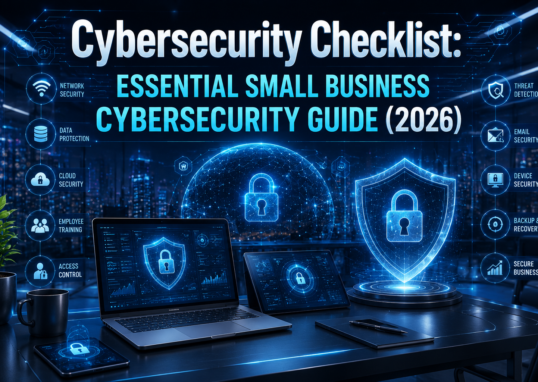
Cybersecurity Checklist: Essential Small Business Cybersecurity Guide (2026)
- 0
- 2,462 words
Cyberattacks are no longer a problem reserved for large enterprises. Over the last 15 years, I’ve worked with startups, retail stores, healthcare...

Secure Cloud Storage: Best Secure Cloud Storage Services for Business & Personal Use (2026 Guide)
- 0
- 2,443 words
Whether you’re backing up family photos, sharing confidential client documents, or managing sensitive business files, choosing the right secure cloud storage service...
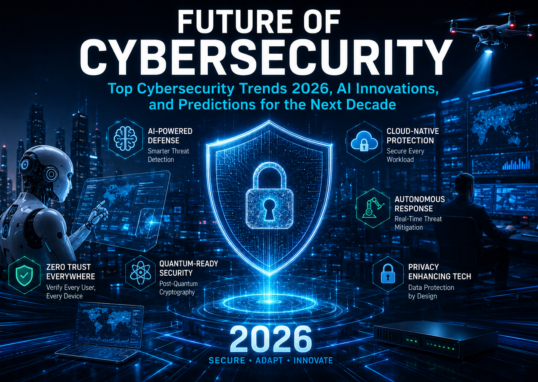
Future of Cybersecurity: Top Cybersecurity Trends 2026, AI Innovations, and Predictions for the Next Decade
- 1
- 2,173 words
Twenty-five years ago, cybersecurity focused primarily on protecting desktop computers, on-premises servers, and corporate networks. Firewalls, antivirus software, and perimeter defenses formed...

Home Network Security Guide: 25 Expert Strategies to Build a Secure Home Network in 2026
- 0
- 1,999 word
Home network security is no longer optional. https://www.effectivecpmnetwork.com/zwmk61nzik?key=c215b6a50560356c577d53e1d461ad7a Twenty-five years ago, most households connected a single desktop computer to the internet. Today,...
Read out all