
- 2
- 1,692 word
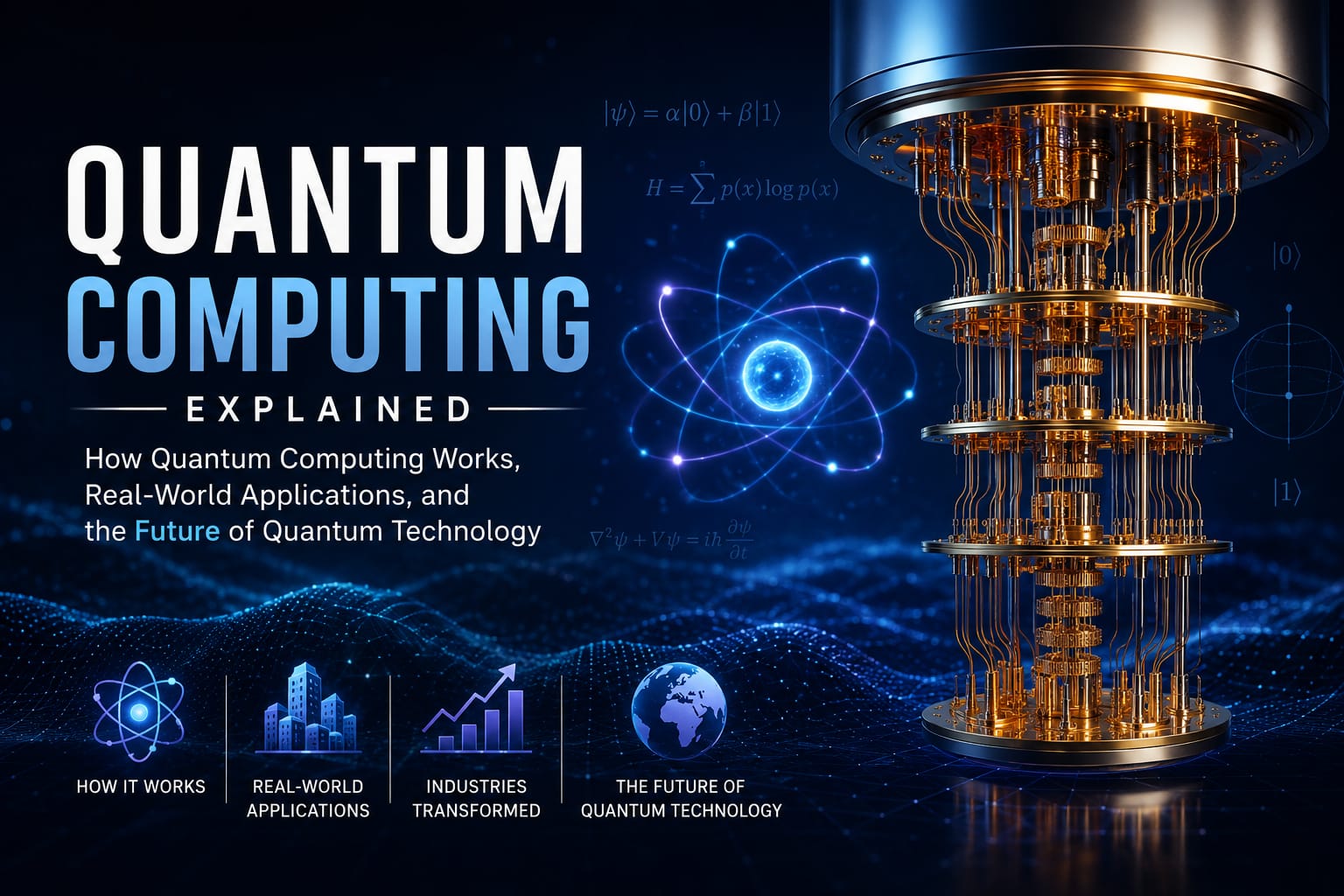
For more than two decades, I have watched quantum computing evolve from an ambitious scientific idea discussed in academic conferences into one of the most important technological revolutions of our time. I still remember attending early technology forums where researchers debated whether practical quantum machines would ever become a reality. At that time, many experts believed commercial quantum systems were decades away.
Today, governments invest billions, major technology companies race to develop increasingly powerful quantum processors, and businesses actively explore quantum technology applications that could transform industries ranging from healthcare to finance.
But despite the growing excitement, many people still ask a simple question: How quantum computing works?
Understanding the answer matters because quantum computing has the potential to solve problems that even the world’s most powerful supercomputers struggle to handle. In this guide, I will provide quantum computing explained in a beginner-friendly way while sharing practical insights gathered from years of following this fascinating field.
What Is Quantum Computing?
Quantum Computing Explained in Simple Terms
Before understanding how quantum computing works, it helps to understand how traditional computers operate.
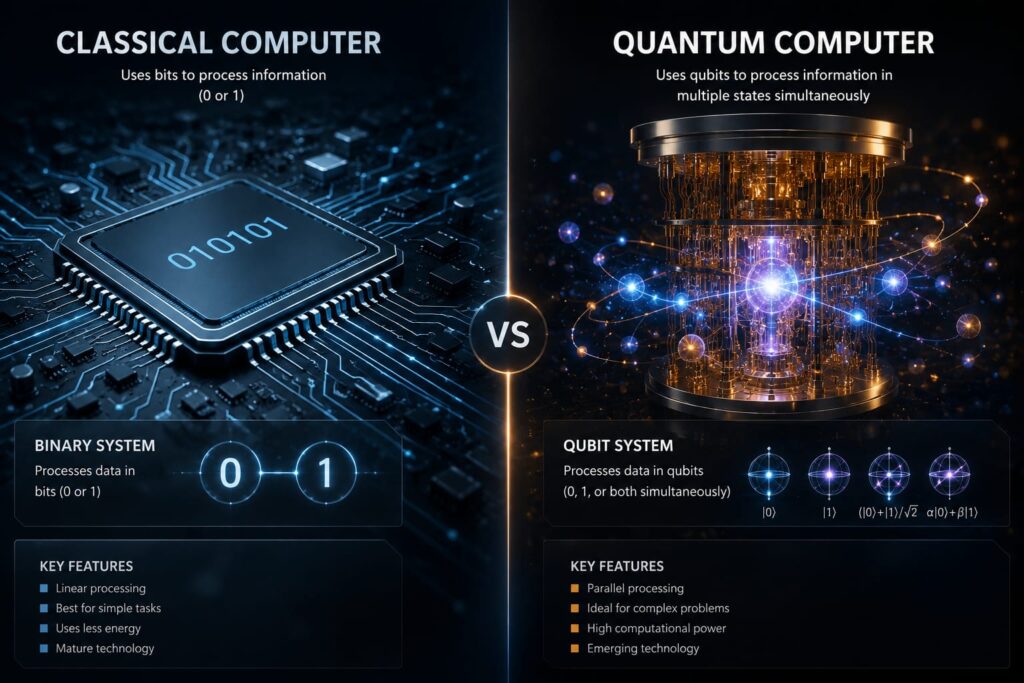
A classical computer stores information using bits. Every bit can hold only one value at a time:
- 0
- 1
Everything from websites and smartphones to artificial intelligence systems ultimately relies on billions of these binary bits.
Quantum computers take a completely different approach.
Instead of bits, they use quantum bits, known as qubits. Thanks to the laws of quantum physics, qubits can exist in multiple states simultaneously.
An analogy I often use when explaining quantum computing basics is this:
Imagine a traditional light switch. It is either ON or OFF.
A qubit behaves more like a dimmer switch that can exist in many possible states at the same time until measured.
This unique behavior allows quantum systems to process certain calculations in fundamentally different ways than classical machines.

How Quantum Computing Works
Understanding Qubits
The foundation of understanding how quantum computing works begins with qubits.
Classical bits store one value at a time.
Qubits can represent:
- 0
- 1
- Both simultaneously
This ability dramatically expands computational possibilities.
For example:
Two classical bits can represent only one combination at a time.
Two qubits can represent multiple combinations simultaneously.
As additional qubits are added, computing power grows exponentially.
This characteristic forms the basis of modern quantum computers explained by researchers worldwide.
Superposition Explained
Superposition is one of the most important concepts in quantum computing basics.
In simple terms, a qubit can exist in multiple states simultaneously until measured.
Imagine searching a giant maze.
A classical computer explores one path at a time.
A quantum computer can evaluate many possible paths simultaneously through superposition.
This capability makes certain optimization and simulation problems much faster to solve.
Quantum Entanglement
Entanglement is often described as the “magic” of quantum mechanics.
When two qubits become entangled, the state of one instantly relates to the state of the other, regardless of distance.
I remember hearing physicists debate this phenomenon during a research symposium years ago. Even among experts, entanglement remains one of the most fascinating aspects of quantum science.
Entanglement enables quantum systems to coordinate calculations in ways classical systems cannot.
Quantum Interference
Interference helps quantum computers identify the most likely correct answers.
Think of interference as a filtering mechanism.
Useful computational paths become amplified.
Incorrect paths become suppressed.
Together, superposition, entanglement, and interference explain much of how quantum computing works in practice.
Quantum Computers vs Classical Computers
| Feature | Classical Computers | Quantum Computers |
|---|---|---|
| Data Unit | Bit | Qubit |
| Processing Method | Sequential and parallel processing | Quantum parallelism |
| Speed | Fast for general tasks | Extremely fast for specific problems |
| Use Cases | Web browsing, software, gaming | Optimization, simulation, cryptography |
| Limitations | Processing complexity | Error correction and stability |
| Future Potential | Incremental improvement | Potential revolutionary breakthroughs |
Core Components of a Quantum Computer
Quantum Processors
Quantum processors serve as the brain of a quantum computer.
These specialized chips contain qubits that perform quantum calculations.
Companies such as IBM Quantum and Google Quantum AI continue pushing processor innovation forward.
Cryogenic Cooling Systems
Most quantum processors operate at temperatures colder than outer space.
Extremely low temperatures reduce environmental interference and help maintain stable quantum states.
The first time I saw images of dilution refrigerators used in quantum labs, they looked more like advanced scientific sculptures than computers.
Quantum Gates
Quantum gates manipulate qubits.
Traditional computers use logic gates.
Quantum systems use quantum gates to create and control quantum states.
Quantum Algorithms
Algorithms tell quantum computers what tasks to perform.
Examples include:
- Shor’s Algorithm
- Grover’s Algorithm
- Quantum Approximate Optimization Algorithm (QAOA)
These algorithms form a critical part of quantum computing basics and demonstrate how quantum computers explained differ from conventional systems.
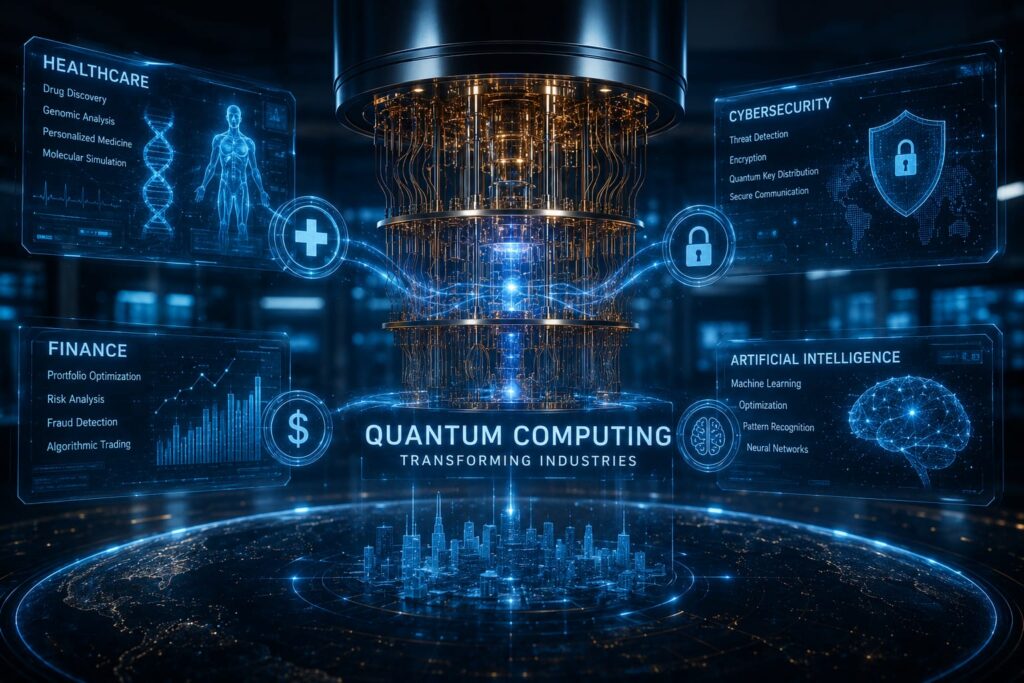
Real-World Quantum Technology Applications
Quantum technology applications continue expanding rapidly.
Healthcare and Drug Discovery
Drug development often requires simulating molecular interactions.
Quantum computers could dramatically accelerate these simulations and reduce research timelines.
Cybersecurity
Quantum systems may eventually challenge current encryption methods.
At the same time, researchers are developing quantum-safe cryptography to defend against future threats.
Financial Modeling
Banks and investment firms investigate quantum computing for:
- Portfolio optimization
- Risk analysis
- Fraud detection
Artificial Intelligence
AI systems may benefit from quantum-enhanced optimization and machine learning techniques.
Many experts believe future AI breakthroughs could involve hybrid quantum-classical systems.
Climate Research
Climate simulations involve enormous computational complexity.
Quantum computing may improve forecasting accuracy and environmental modeling.
Logistics Optimization
Shipping companies, airlines, and supply chain operators constantly solve routing challenges.
Quantum technology applications may help identify optimal solutions faster than conventional methods.
Major Challenges Facing Quantum Computing
Error Rates
Quantum systems remain extremely sensitive.
Even tiny environmental disturbances can introduce computational errors.
Hardware Complexity
Building reliable quantum hardware remains one of engineering’s greatest challenges.
Cost of Development
Quantum research requires substantial investment in facilities, talent, and specialized equipment.
Scalability Problems
While progress continues, scaling quantum systems from hundreds to millions of reliable qubits remains difficult.
Based on my observations over the years, scalability represents one of the industry’s most important hurdles.
The Biggest Quantum Computing Breakthroughs in Recent Years
Recent years have brought remarkable progress.
Key developments include:
- Larger quantum processors
- Improved error correction techniques
- Cloud-accessible quantum computing platforms
- Increased government funding
- Expanded private-sector investment
Major organizations driving innovation include:
Government initiatives across the United States, China, Europe, Canada, Japan, and other nations have accelerated research efforts significantly.
Commercial adoption remains early, but momentum continues to grow.
Will Quantum Computers Replace Traditional Computers?
The short answer is no.
Many headlines suggest quantum computers will replace today’s devices.
My assessment after years of following this industry is more balanced.
Classical computers excel at:
- Web browsing
- Gaming
- Business software
- Everyday computing
Quantum computers excel at specialized tasks involving:
- Optimization
- Simulation
- Complex mathematics
The future will likely involve hybrid systems where classical and quantum computers work together.
This partnership model appears far more realistic than complete replacement.
Future of Quantum Computing
The future of quantum computing looks extraordinarily promising.
Quantum Internet
Researchers are actively exploring quantum communication networks capable of unprecedented security.
Advanced AI Systems
Quantum-enhanced AI could tackle problems beyond today’s capabilities.
Scientific Discovery
Quantum simulation may unlock breakthroughs in chemistry, physics, and materials science.
Business Transformation
Organizations that successfully integrate quantum solutions could gain significant competitive advantages.
Expanding Quantum Technology Applications
Industries expected to benefit include:
- Healthcare
- Manufacturing
- Energy
- Finance
- Transportation
- Telecommunications
Having observed technological revolutions from the early internet era through artificial intelligence, my prediction is that quantum computing will follow a similar trajectory.
Progress may appear slow initially.
Then suddenly, breakthroughs will accelerate adoption across multiple sectors simultaneously.

Frequently Asked Questions
What is a qubit?
A qubit is the fundamental unit of information in quantum computing. Unlike classical bits, qubits can exist in multiple states simultaneously.
How quantum computing works compared to traditional computing?
Traditional computers use bits that represent either 0 or 1. Quantum computers use qubits that leverage superposition, entanglement, and interference to process information differently.
Are quantum computers available today?
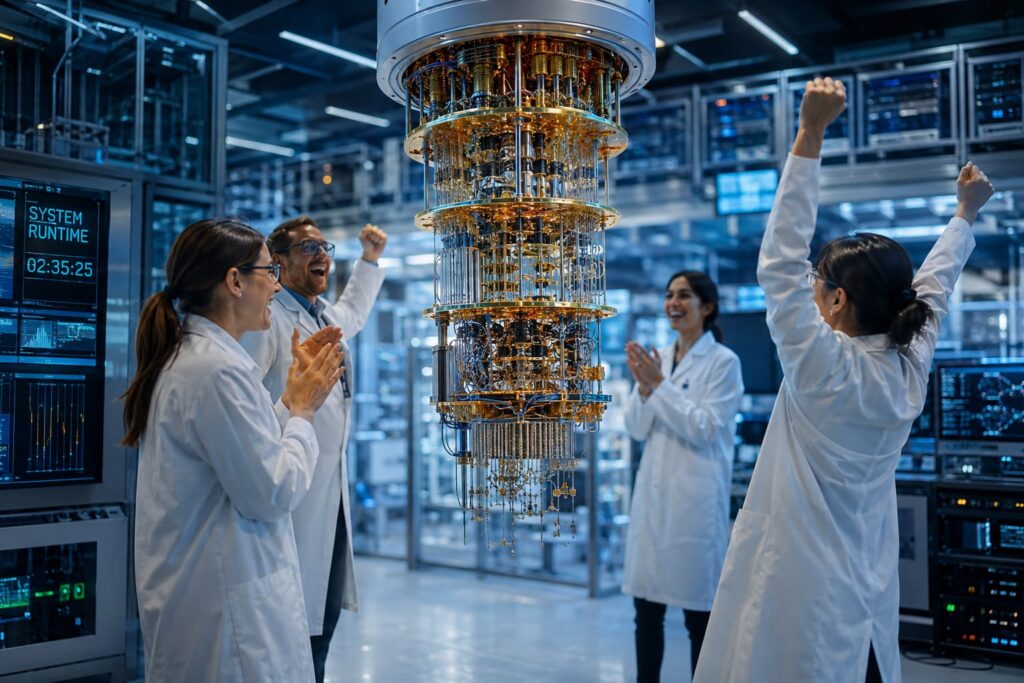
Yes. Several companies offer cloud-based access to quantum systems for research and experimentation.
What industries will benefit most from quantum computing?
Healthcare, finance, cybersecurity, logistics, artificial intelligence, and climate science are among the leading sectors.
What are the biggest quantum technology applications?
Drug discovery, optimization, secure communications, advanced simulations, machine learning, and materials science represent major quantum technology applications.
Can quantum computers break encryption?
Potentially. Some future quantum systems may threaten existing encryption methods, which is why researchers are developing post-quantum cryptography.
When will quantum computing become mainstream?
Most experts expect broader commercial adoption during the next decade as hardware reliability and scalability improve.
Final Thoughts
Understanding quantum computing explained concepts no longer belongs solely to scientists and researchers. As quantum technology advances, business leaders, developers, students, and technology enthusiasts all benefit from learning how quantum computing works.
The journey from theoretical physics to practical quantum machines has been one of the most fascinating technological stories I have witnessed over the past 25 years. While challenges remain, progress continues at a remarkable pace.
From quantum computers explained through qubits and entanglement to emerging quantum technology applications in healthcare, cybersecurity, finance, AI, and climate science, the opportunities are enormous.
The most important takeaway is simple: mastering quantum computing basics today prepares us for a future where quantum systems become an essential part of scientific discovery, business innovation, and technological advancement.
Quantum computing is not merely the next generation of computing it may become one of the defining technologies of the twenty-first century.
Author

razakh6402@gmail.com
Related Posts
Lead Generation Software: 12 Best Lead Generation Tools for B2B Sales (2026 Guide)
- 0
- 2,300 words
If someone had asked me 15 years ago what the biggest challenge in sales was, my answer would have been simple: finding...
Survey Software: 12 Best Online Survey Tools & Feedback Software for Businesses (2026 Guide)
- 0
- 1,871 word
Whether I was helping a SaaS startup validate a new feature, assisting an HR team with employee engagement, or optimizing customer experience...
Read out all
Online Course Platform: 12 Best LMS Software & eLearning Platforms for Course Creators (2026 Guide)
- 0
- 1,900 word
The online education industry has changed dramatically over the last 15 years. When I built my first digital training portal, simply uploading...

Team Communication Software: 12 Best Business Messaging Apps for Modern Workplaces in 2026 (Expert Tested)
- 0
- 2,305 words
I’ve personally tested dozens of team communication software platforms while consulting for marketing agencies, software companies, HR departments, remote development teams, and...
Invoice Software: 12 Best Invoicing Software for Small Business in 2026 (Expert Tested)
- 0
- 2,493 words
I’ve worked with freelancers chasing late payments, agencies managing hundreds of monthly invoices, startups scaling internationally, and established businesses struggling with outdated...
Generate one SEO-optimized title thatdigital asset management software
- 6
- 2,632 words
One of the most memorable projects I led involved migrating nearly half a million digital assets from a traditional file server into...
2 comments