
- 2
- 1,732 word
Twenty-five years ago, when I first began studying urban development and infrastructure modernization, city planning looked completely different from what we see today. Traffic signals operated independently, public services relied heavily on manual systems, and city authorities often lacked real-time visibility into urban challenges.
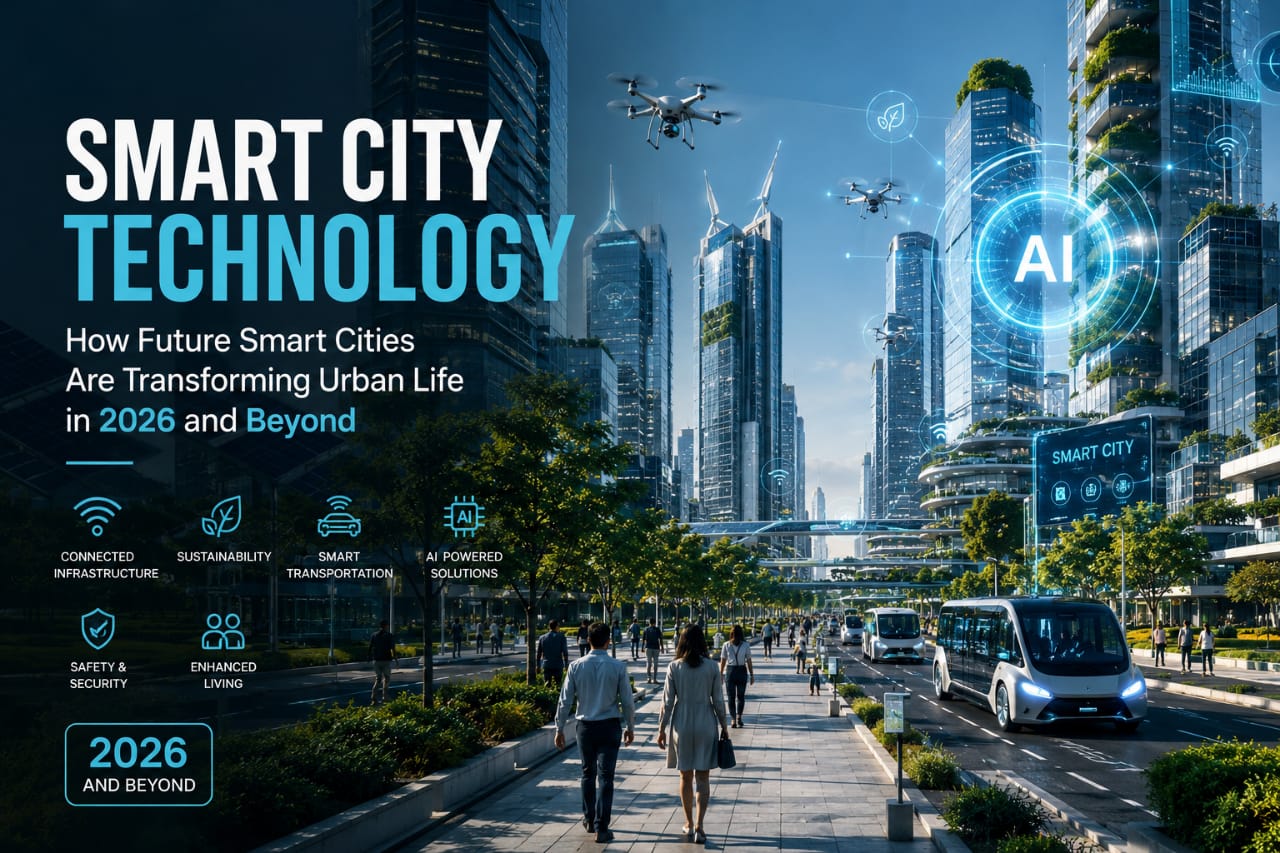
Fast forward to 2026, and cities are becoming intelligent ecosystems powered by data, connectivity, artificial intelligence, and automation. The transformation has been remarkable.
During my visits to technology conferences, infrastructure expos, and smart urban development projects across different regions, one trend became increasingly clear: smart city technology is no longer a futuristic concept. It is becoming a necessity.
Growing populations, climate concerns, resource limitations, and increasing urbanization are forcing governments and city planners to adopt smarter approaches. As a result, future smart cities are emerging as the blueprint for sustainable, efficient, and connected urban living.
From AI-powered traffic systems to intelligent energy grids, the next generation of cities promises to improve quality of life while reducing environmental impact.
What Is Smart City Technology?
Understanding Smart Cities in Simple Terms
A smart city uses digital technologies, connected devices, and data-driven systems to improve the efficiency of urban services and enhance citizens’ lives.
In simple terms, a smart city collects information from various sources including sensors, cameras, transportation networks, utilities, and public services and uses that information to make better decisions.
The goal is straightforward:
- Improve efficiency
- Reduce waste
- Enhance public safety
- Optimize transportation
- Support sustainability
- Deliver better citizen experiences
Modern smart city technology combines artificial intelligence, cloud computing, IoT sensors, and advanced analytics to create intelligent urban environments.
Governments worldwide are investing billions into these initiatives because effective urban technology solutions help cities become more resilient, sustainable, and economically competitive.
How Smart Cities Have Evolved Over the Last 25 Years
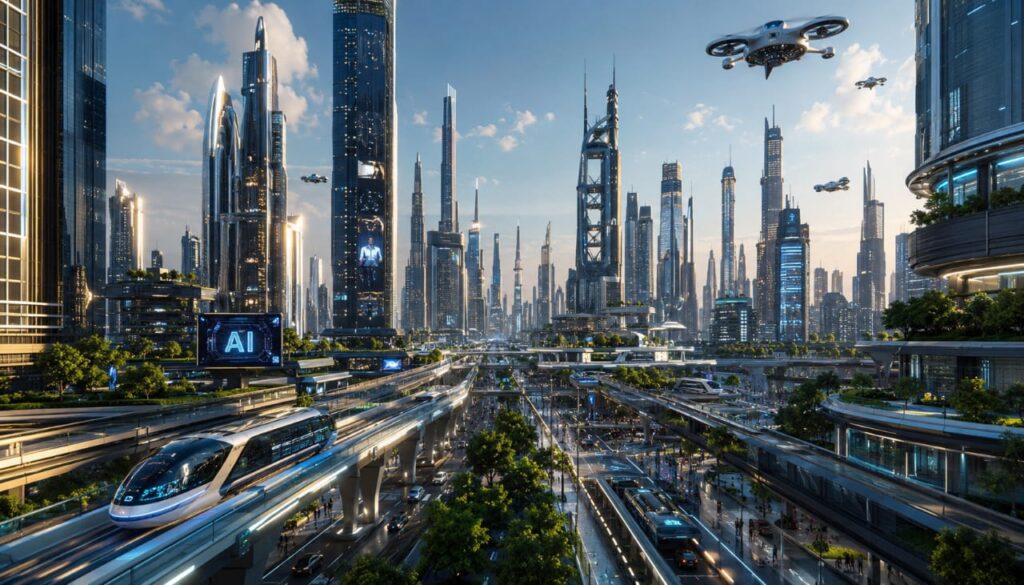
From Traditional Cities to Digital Cities
In the early 2000s, most cities focused primarily on physical infrastructure. Roads, buildings, utilities, and transportation systems operated independently with minimal digital integration.
Today, city infrastructure increasingly functions as a connected network.
The transition from traditional cities to digital cities represents one of the most significant urban transformations I have witnessed throughout my career.
The Rise of Connected Infrastructure
Over the last two decades, sensors, wireless networks, cloud platforms, and mobile technologies have created interconnected urban systems.
Traffic lights communicate with traffic management centers.
Utility providers monitor energy consumption in real time.
Public transportation systems provide live updates to commuters.
These developments laid the foundation for future smart cities.
The Role of Data and AI
Data has become the new infrastructure.
Artificial intelligence now analyzes massive amounts of urban information to predict congestion, optimize energy consumption, identify maintenance needs, and improve public services.
Many of today’s most impactful smart city innovations rely heavily on AI-driven decision-making systems.
Key Technologies Powering Future Smart Cities
Internet of Things (IoT)
IoT sensors act as the nervous system of smart cities.
They monitor:
- Traffic flow
- Air quality
- Water usage
- Energy consumption
- Parking availability
IoT remains one of the most important foundations of modern smart city technology.
Artificial Intelligence
AI transforms raw data into actionable insights.
Applications include:
- Traffic optimization
- Public safety monitoring
- Predictive maintenance
- Resource allocation
Big Data Analytics
Cities generate enormous volumes of information daily.
Big Data platforms help authorities identify trends, forecast challenges, and improve urban planning decisions.
5G and Future Connectivity
High-speed connectivity enables real-time communication between devices, vehicles, infrastructure, and public services.
Without advanced connectivity, many smart city innovations would not function effectively.
Cloud Computing
Cloud platforms provide the scalability required to process and manage urban data efficiently.
Digital Twins
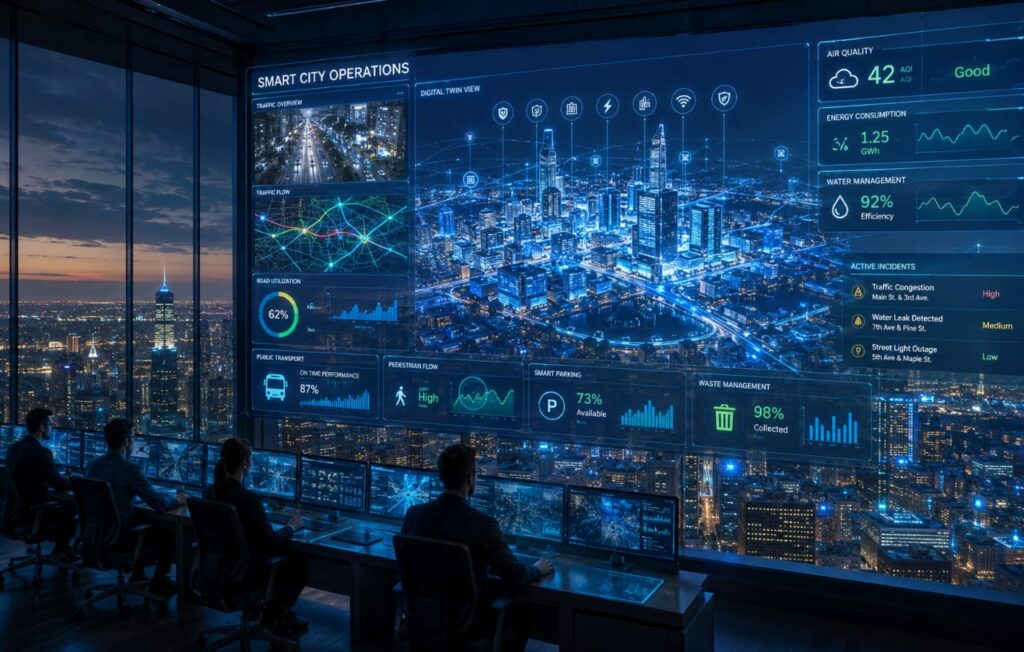
One of the most exciting developments I have observed recently is the rise of digital twins.
Digital twins are virtual replicas of cities that allow planners to simulate infrastructure changes before implementing them in the real world.
Smart Infrastructure Technology Transforming Urban Life
Intelligent Transportation Systems
Smart traffic management reduces congestion and travel times.
AI-powered traffic lights adapt dynamically based on real-time traffic conditions.
Smart Energy Grids
Modern energy systems balance electricity demand and supply more efficiently.
These systems support renewable energy integration and improve grid reliability.
Smart Water Management
Water sensors detect leaks and monitor consumption patterns.
This reduces waste and conserves valuable resources.
Connected Public Services
Digital government services improve efficiency and accessibility.
Citizens can access permits, reports, payments, and public information online.
Smart Buildings
Modern buildings increasingly utilize automation systems for:
- Energy management
- Security
- Climate control
- Occupancy optimization
These examples demonstrate how smart infrastructure technology and urban technology solutions improve everyday life.
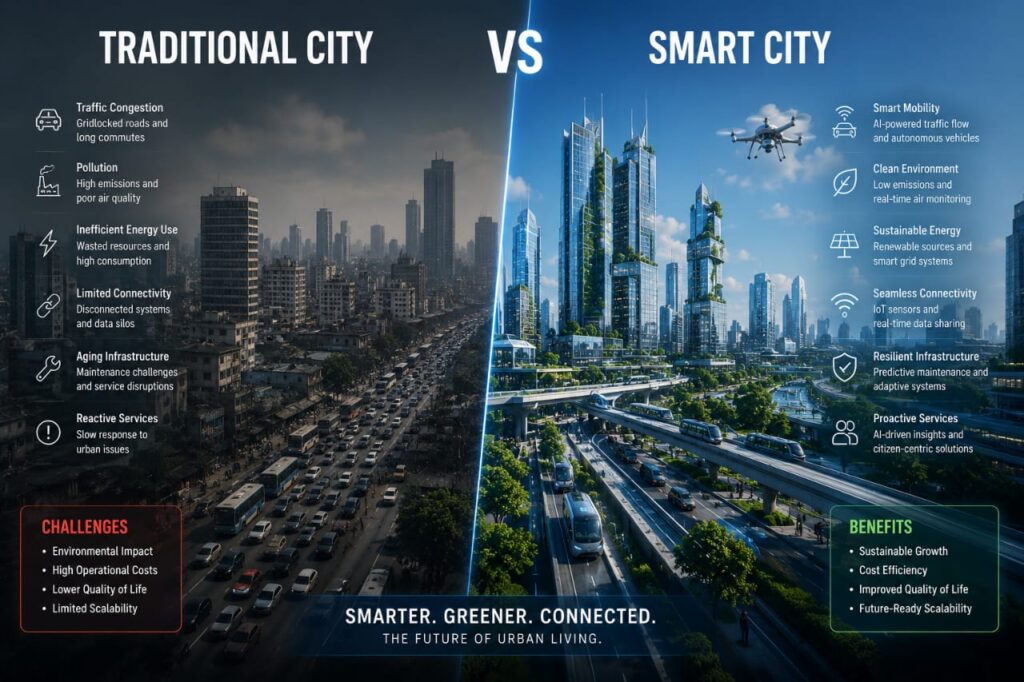
Traditional Cities vs Future Smart Cities
| Feature | Traditional Cities | Future Smart Cities |
|---|---|---|
| Transportation | Fixed traffic systems | AI-managed mobility |
| Energy Management | Manual monitoring | Smart energy grids |
| Public Safety | Reactive policing | Predictive analytics |
| Connectivity | Limited integration | Fully connected systems |
| Environmental Monitoring | Periodic assessments | Real-time monitoring |
| Resource Efficiency | Higher waste | Optimized resource use |
| Citizen Services | Paper-based processes | Digital-first services |
Real-World Smart City Innovations Around the World
Smart Transportation Networks
Cities like Singapore have implemented intelligent transportation systems that improve mobility and reduce congestion.
AI-Based Traffic Management
Advanced traffic systems analyze live data and adjust signal timing automatically.
Smart Waste Management
Sensor-equipped waste bins optimize collection schedules and reduce operational costs.
Smart Healthcare Systems
Connected healthcare platforms improve emergency response times and patient care.
Intelligent Public Safety Systems
AI-powered surveillance and predictive analytics assist law enforcement agencies in enhancing public safety.
These examples demonstrate how smart city innovations and urban technology solutions create measurable benefits for citizens.
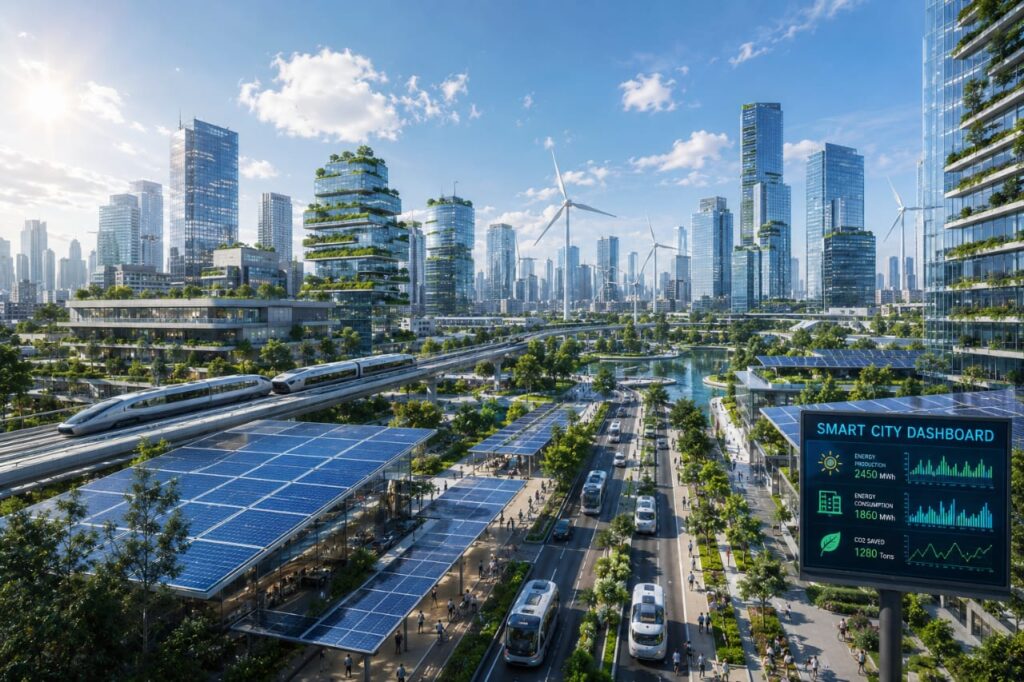
Environmental Benefits of Smart City Technology
Reduced Carbon Emissions
Optimized transportation systems reduce fuel consumption and traffic congestion.
Improved Energy Efficiency
Smart grids improve energy distribution while minimizing waste.
Sustainable Urban Development
Data-driven planning supports sustainable growth and environmental protection.
Smart Resource Management
Cities can manage water, electricity, and waste more effectively through intelligent monitoring systems.
As climate challenges intensify, future smart cities will play a crucial role in achieving global sustainability goals.
Challenges Facing Smart Cities
Data Privacy Concerns
Collecting large amounts of urban data raises legitimate privacy concerns.
Cybersecurity Risks
Connected infrastructure creates new cybersecurity challenges that cities must address proactively.
High Infrastructure Costs
Building smart city ecosystems requires significant investment.
Digital Inclusion Issues
Governments must ensure that all citizens benefit from technological advancements.
Regulatory Challenges
Policies often struggle to keep pace with rapid technological innovation.
In my experience, successful smart city projects balance innovation with governance, security, and citizen trust.
Future Smart Cities and Emerging Technologies
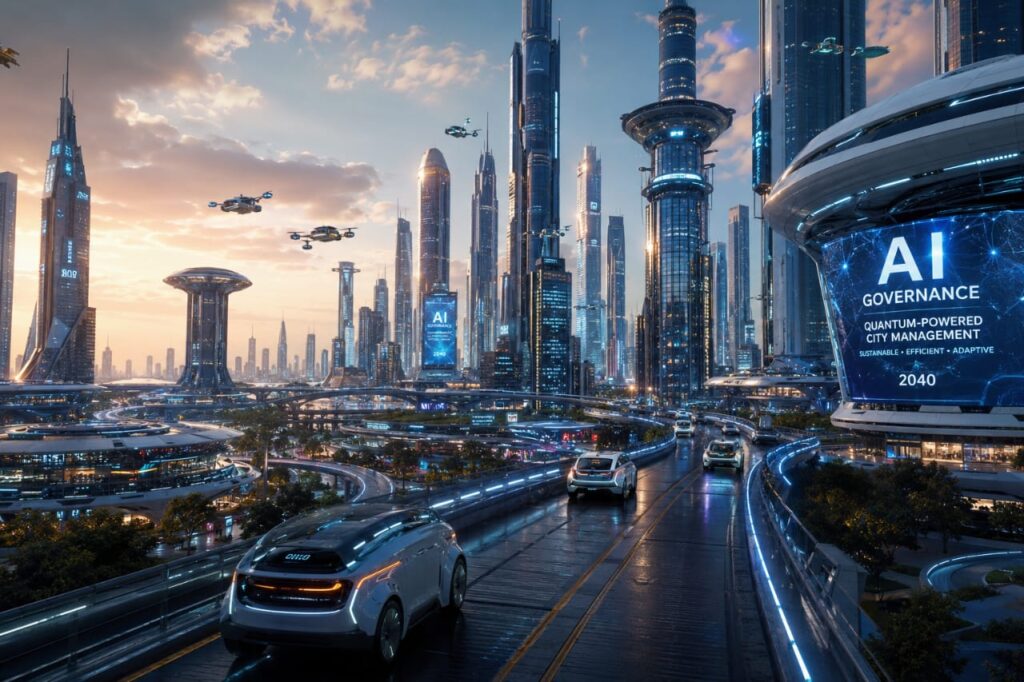
Autonomous Transportation
Self-driving vehicles may significantly reduce accidents and improve transportation efficiency.
AI-Driven Governance
AI will increasingly support government decision-making processes.
Quantum Computing Integration
Quantum computing could revolutionize urban optimization by solving highly complex planning problems.
Advanced Robotics
Robotic systems may perform maintenance, inspections, deliveries, and emergency response functions.
Smart Urban Planning
Future planners will rely heavily on predictive analytics and digital twins to design resilient cities.
The next decade could bring some of the most significant advances in smart city technology ever witnessed.
Economic Impact of Smart Infrastructure Technology
The economic implications are substantial.
Job Creation
Smart city projects create demand for:
- Data scientists
- AI engineers
- IoT specialists
- Urban planners
- Cybersecurity experts
Economic Growth
Efficient infrastructure improves productivity and attracts investment.
Business Innovation
Smart ecosystems encourage entrepreneurship and technological innovation.
Investment Opportunities
Governments and private investors continue allocating significant resources toward smart infrastructure technology and emerging smart city innovations.
Frequently Asked Questions
What is smart city technology?
Smart city technology uses digital systems, data analytics, AI, and connected infrastructure to improve urban operations and citizen services.
How do future smart cities work?
Future smart cities collect real-time data through connected devices and use advanced technologies to optimize services and infrastructure.
What are the biggest smart city innovations?
AI-powered traffic management, digital twins, smart grids, autonomous transportation, and IoT-enabled infrastructure are among the most important innovations.
Why is smart infrastructure technology important?
It improves efficiency, reduces costs, enhances sustainability, and delivers better public services.
What are urban technology solutions?
Urban technology solutions include digital tools, platforms, and systems designed to address city challenges and improve quality of life.
Are smart cities environmentally friendly?
Yes. Smart cities often reduce emissions, improve energy efficiency, and support sustainable resource management.
Which countries are leading smart city development?
Countries such as Singapore, South Korea, United Arab Emirates, Japan, and Netherlands are recognized leaders in smart city initiatives.
Will AI control future smart cities?
AI will support decision-making and automation, but human oversight will remain essential for governance and accountability.
Final Thoughts
After spending more than 25 years observing urban development, infrastructure modernization, and technological transformation, I believe we are only at the beginning of the smart city revolution.
The convergence of artificial intelligence, IoT, cloud computing, digital twins, advanced connectivity, and sustainable infrastructure is reshaping how cities operate. The most successful future smart cities will not simply deploy technology for the sake of innovation. Instead, they will use smart city technology, smart infrastructure technology, and practical urban technology solutions to solve real-world problems.
The next generation of smart city innovations will focus on creating safer, greener, more efficient, and more inclusive communities. As urban populations continue to grow, cities that embrace intelligent infrastructure and data-driven decision-making will gain significant economic, environmental, and social advantages.
Looking ahead to 2030, 2040, and beyond, one thing appears certain: smart cities will not be an exception. They will become the global standard for urban development, fundamentally changing how people live, work, travel, and interact with the world around them.
Author

razakh6402@gmail.com
Related Posts
Lead Generation Software: 12 Best Lead Generation Tools for B2B Sales (2026 Guide)
- 0
- 2,300 words
If someone had asked me 15 years ago what the biggest challenge in sales was, my answer would have been simple: finding...
Survey Software: 12 Best Online Survey Tools & Feedback Software for Businesses (2026 Guide)
- 0
- 1,871 word
Whether I was helping a SaaS startup validate a new feature, assisting an HR team with employee engagement, or optimizing customer experience...
Read out all
Online Course Platform: 12 Best LMS Software & eLearning Platforms for Course Creators (2026 Guide)
- 0
- 1,900 word
The online education industry has changed dramatically over the last 15 years. When I built my first digital training portal, simply uploading...

Team Communication Software: 12 Best Business Messaging Apps for Modern Workplaces in 2026 (Expert Tested)
- 0
- 2,305 words
I’ve personally tested dozens of team communication software platforms while consulting for marketing agencies, software companies, HR departments, remote development teams, and...

Invoice Software: 12 Best Invoicing Software for Small Business in 2026 (Expert Tested)
- 0
- 2,493 words
I’ve worked with freelancers chasing late payments, agencies managing hundreds of monthly invoices, startups scaling internationally, and established businesses struggling with outdated...

Generate one SEO-optimized title thatdigital asset management software
- 6
- 2,632 words
One of the most memorable projects I led involved migrating nearly half a million digital assets from a traditional file server into...
2 comments