- 4
- 1,639 word
During the last fifteen years of analyzing technology markets, attending innovation conferences, studying research reports, and observing digital transformation across industries, I have witnessed something remarkable: technological progress is no longer moving in a straight line it is accelerating exponentially.
When I first started covering technology, concepts like artificial intelligence creating human-like content, robots working alongside humans, quantum computers solving impossible calculations, and smart cities managing themselves through connected systems sounded like science fiction. Today, these innovations are becoming reality.
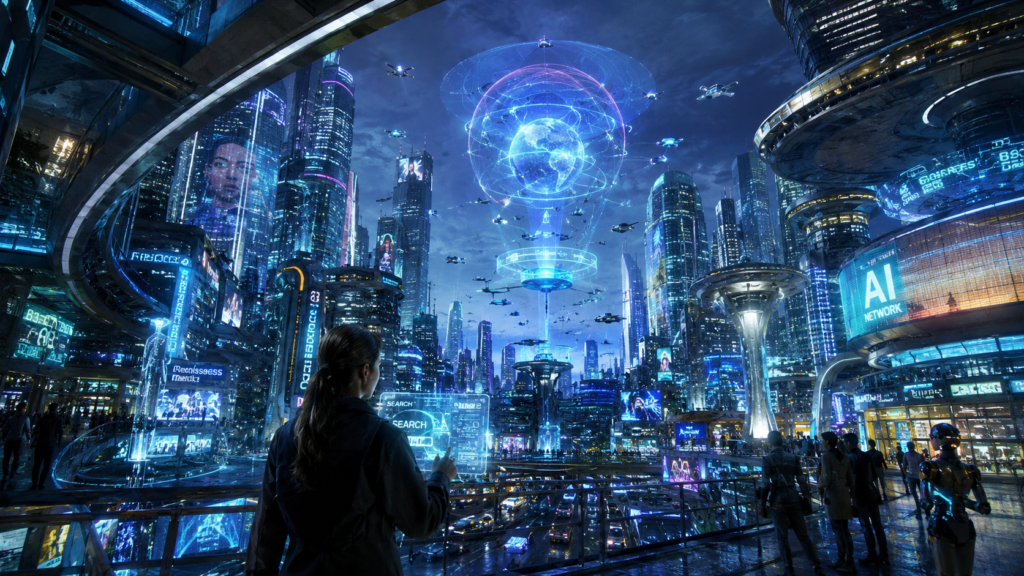
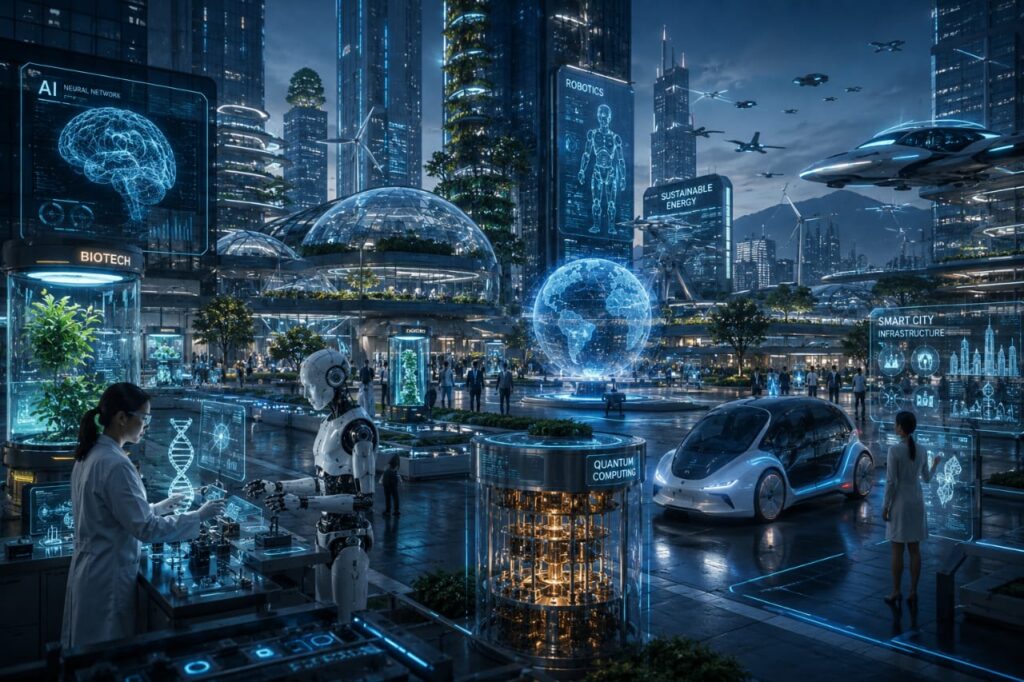
What makes the current era unique is not the emergence of a single breakthrough. Instead, multiple emerging technologies are evolving simultaneously and converging together. Artificial Intelligence is improving biotechnology. Quantum computing is enhancing scientific research. Robotics is becoming smarter because of AI. Smart cities are leveraging IoT, automation, and renewable energy technologies at the same time.
This convergence is creating unprecedented opportunities for businesses, governments, and individuals.
In my experience, the next decade will likely produce more technological transformation than the previous fifty years combined. The organizations that understand these changes early will gain significant advantages, while those that ignore them may struggle to remain competitive.
The future is not approaching it is already unfolding before us.
What Are Emerging Technologies?
Defining Emerging Technologies
Emerging technologies are innovations that are still developing but demonstrate strong potential to create substantial economic, social, or industrial impact.
These technologies typically share several characteristics:
- Rapid innovation cycles
- High uncertainty
- Significant investment activity
- Transformational potential
- Early-stage adoption
Throughout my career, I have noticed that many groundbreaking technologies initially face skepticism. Cloud computing, smartphones, and electric vehicles all experienced resistance before becoming mainstream.
The same pattern is occurring today with many future technologies.
Why Emerging Technologies Matter
Technology has always influenced human progress, but modern innovation is reshaping entire industries faster than ever before.
Emerging technologies help organizations:
- Increase productivity
- Reduce operational costs
- Improve customer experiences
- Create new business models
- Enhance decision-making
Countries investing heavily in research and innovation are also strengthening their global competitiveness.
According to reports from the World Economic Forum and McKinsey, technology-driven industries are expected to generate trillions of dollars in economic value over the next decade.
This is why governments, corporations, and investors are paying close attention to the next wave of disruptive technologies.
Artificial Intelligence Leading the Future Technologies Revolution
Generative AI
No technology has evolved faster in recent years than Artificial Intelligence.
I remember attending AI conferences in the early 2010s where experts debated whether machines could ever create meaningful content. Today, AI systems generate articles, videos, software code, music, and realistic images within seconds.
Generative AI is transforming:
- Content creation
- Marketing
- Customer service
- Research
- Software engineering
The speed of adoption has exceeded even the most optimistic forecasts.
AI Agents
One of the most exciting developments is the rise of AI agents.
Unlike traditional chatbots, AI agents can perform complex tasks independently.
These systems can:
- Schedule meetings
- Analyze business data
- Manage workflows
- Conduct research
- Execute multi-step operations
Many technology leaders believe AI agents will become digital employees within the next few years.
Autonomous Systems
Autonomous systems represent another major breakthrough.
Self-driving vehicles, automated warehouses, autonomous drones, and smart manufacturing systems are already reducing human intervention while increasing efficiency.
AI in Everyday Life
Artificial Intelligence now influences nearly every aspect of daily life.
Examples include:
- Personalized recommendations
- Fraud detection
- Medical diagnostics
- Language translation
- Smart assistants
From my observations, AI is not replacing human intelligence it is augmenting it.

Quantum Computing and the Next Big Technology Trends
What Is Quantum Computing?
Quantum computing represents one of the most fascinating scientific breakthroughs of our generation.
Unlike traditional computers that process information using bits, quantum computers use qubits capable of representing multiple states simultaneously.
This allows them to solve certain problems exponentially faster than conventional systems.
How Quantum Computing Differs from Traditional Computing
Traditional computers process calculations sequentially.
Quantum computers leverage principles such as:
- Superposition
- Entanglement
- Quantum interference
These principles enable entirely new computational capabilities.
Industries That Will Benefit
Based on industry research and my own analysis, quantum computing could transform:
Pharmaceuticals
Accelerated drug discovery and molecular simulations.
Finance
Advanced risk modeling and portfolio optimization.
Cybersecurity
Development of quantum-resistant encryption methods.
Scientific Research
Breakthroughs in chemistry, physics, and material science.
Although widespread adoption may still take years, quantum computing remains one of the most promising next big technology trends.
Biotechnology and Human Enhancement
Gene Editing
Technologies such as CRISPR are revolutionizing healthcare.
Scientists can now edit DNA with unprecedented precision, opening possibilities for treating previously incurable diseases.
Precision Medicine
Traditional medicine often applies generalized treatments.
Precision medicine uses genetics, data analytics, and AI to create personalized treatment plans.
AI-Powered Healthcare
Artificial Intelligence is helping doctors identify diseases earlier and more accurately.
AI systems can analyze medical scans, patient histories, and genetic data at remarkable speed.
Future Medical Innovations
The combination of biotechnology and AI could lead to:
- Organ regeneration
- Disease prevention
- Longer life expectancy
- Personalized therapies
Among all emerging technologies, biotechnology may have the greatest impact on human well-being.
Robotics and Intelligent Automation
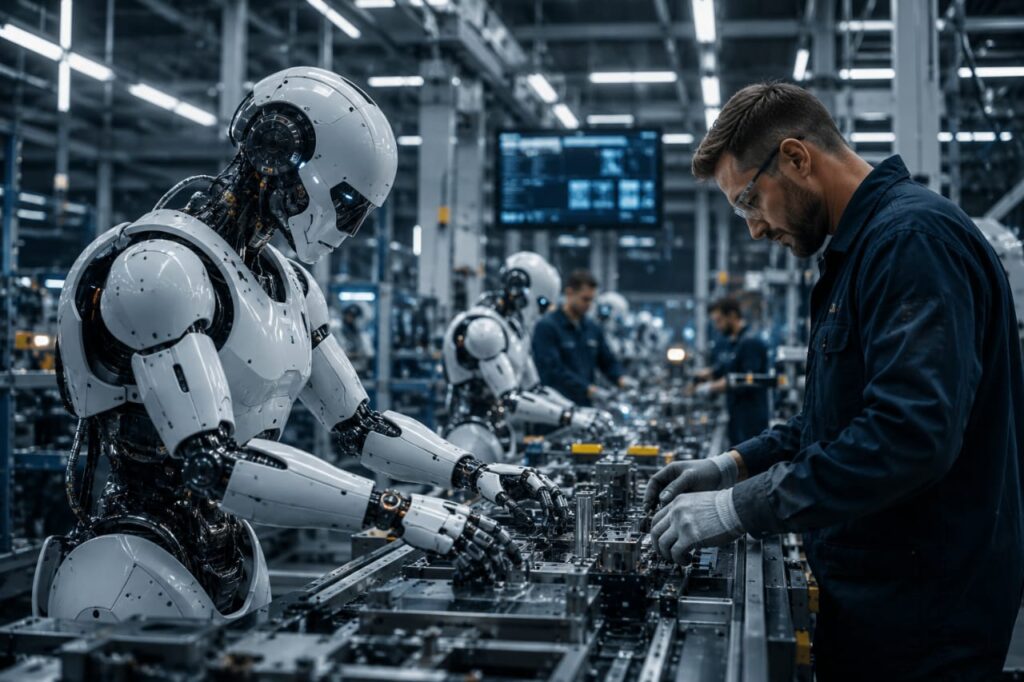
Industrial Robotics
Factories worldwide are becoming increasingly automated.
Modern robots work continuously, improve precision, and reduce operational costs.
Service Robots
Service robots are appearing in:
- Hospitals
- Hotels
- Restaurants
- Airports
These systems handle repetitive tasks while improving efficiency.
Humanoid Robots
Humanoid robotics has advanced dramatically.
Recent prototypes can walk naturally, understand language, and interact with humans.
Autonomous Machines
Autonomous machines are transforming logistics, agriculture, and manufacturing.
In my experience, robotics has quietly become one of the most practical future technologies available today.
Extended Reality (AR, VR, and Mixed Reality)
Future of AR
Augmented Reality overlays digital information onto the physical world.
Applications include:
- Navigation
- Retail
- Education
- Healthcare
Evolution of VR
Virtual Reality creates immersive digital environments.
Modern VR experiences are significantly more realistic than earlier generations.
Mixed Reality Applications
Mixed Reality combines AR and VR capabilities.
Key industries adopting XR technologies include:
- Gaming
- Healthcare
- Training
- Remote collaboration
While adoption has been slower than expected, XR remains one of the most promising disruptive technologies.
Smart Cities and Sustainable Technologies
Smart Infrastructure
Cities are becoming intelligent ecosystems powered by sensors and connected networks.
Intelligent Transportation
Smart traffic systems optimize vehicle movement and reduce congestion.
Green Energy Systems
Renewable energy technologies continue to improve efficiency and affordability.
IoT-Driven Cities
Connected devices collect and analyze data to improve urban services.
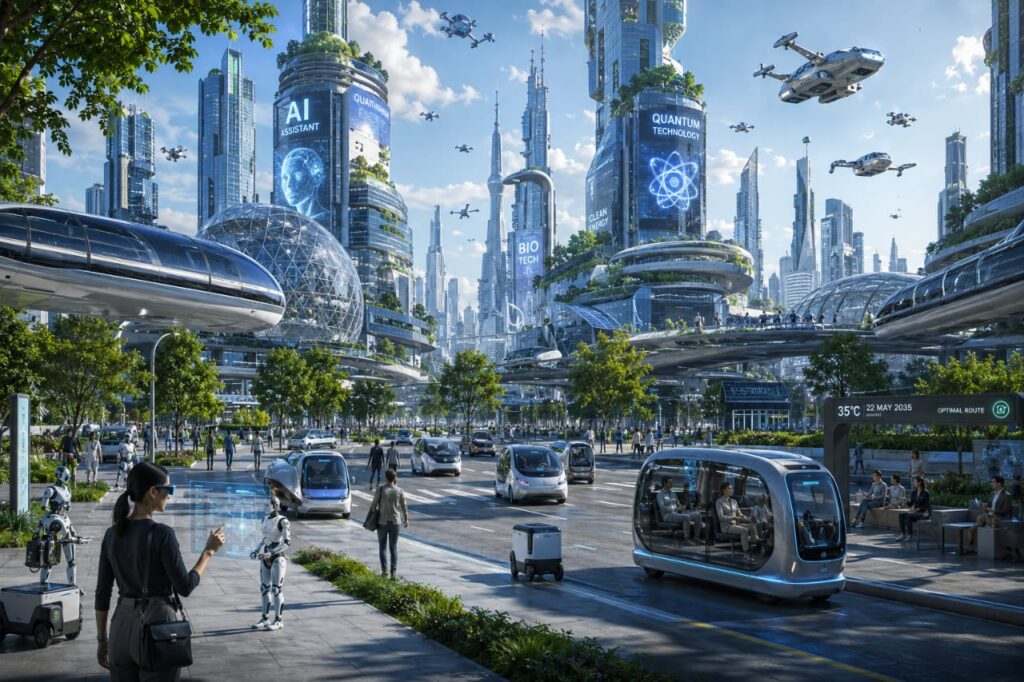
Smart cities represent the convergence of multiple innovative technologies 2026 initiatives.
Comparison Table of Emerging Technologies
| Technology | Maturity Level | Industry Impact | Adoption Speed | Investment Potential | Long-Term Outlook |
|---|---|---|---|---|---|
| Artificial Intelligence | High | Very High | Very Fast | Very High | Transformational |
| Quantum Computing | Early | High | Slow | High | Revolutionary |
| Robotics | Medium-High | High | Medium | High | Expanding |
| Biotechnology | Medium | Very High | Medium | Very High | Life-Changing |
| Extended Reality | Medium | Moderate | Medium | High | Promising |
| Smart Cities | Medium | High | Medium | Very High | Essential |
The Biggest Challenges Facing Future Technologies
Privacy Concerns
Data collection continues to raise concerns about surveillance and misuse.
Ethical AI
Organizations must address transparency, fairness, and accountability.
Cybersecurity Risks
More connected systems create larger attack surfaces.
Regulatory Challenges
Governments often struggle to regulate innovation without slowing progress.
Workforce Disruption
Automation will replace certain jobs while creating entirely new career opportunities.
The challenge is preparing workers for this transition.
Innovative Technologies 2026 and Beyond
Several technologies are likely to dominate the coming decade:
- AI Agents
- Quantum Computing
- Brain-Computer Interfaces
- Autonomous Transportation
- Advanced Robotics
- Synthetic Biology
- Fusion Energy
- Next-Generation Batteries
These technologies represent the strongest candidates for becoming the next wave of global innovation leaders.
My Expert Perspective After 15 Years in Technology
After fifteen years of studying technology markets, several lessons stand out.
Artificial Intelligence exceeded expectations.
Cloud computing transformed business faster than most analysts predicted.
Mobile ecosystems fundamentally changed consumer behavior.
At the same time, many heavily hyped technologies failed to deliver immediate value because the supporting infrastructure was not ready.
The biggest mistake investors make is confusing technological potential with commercial readiness.
The biggest mistake businesses make is waiting too long to adapt.
The future belongs to organizations willing to experiment, learn, and innovate continuously.
Final Thoughts
The rise of emerging technologies, future technologies, and disruptive technologies is creating opportunities unlike anything we have seen before.
Artificial Intelligence, biotechnology, robotics, quantum computing, and sustainable innovation will shape the next generation of economic growth.
The question is no longer whether these technologies will transform the world.
The question is how quickly businesses and individuals can adapt.
Those who stay informed, develop new skills, and embrace innovation will thrive in the technology-driven future ahead.
FAQ
What are emerging technologies?
Emerging technologies are innovative solutions still developing but expected to create major social, economic, and industrial impacts.
Which future technologies will have the biggest impact?
Artificial Intelligence, quantum computing, biotechnology, robotics, and sustainable energy technologies are expected to have the greatest impact.
How will AI affect jobs in the future?
AI will automate repetitive work while creating new opportunities in technology, analysis, management, and creative industries.
What are the most important disruptive technologies in 2026?
AI agents, advanced robotics, quantum computing, synthetic biology, and smart city technologies are among the most important disruptive technologies in 2026.
Which industries will benefit most from innovative technologies?
Healthcare, manufacturing, finance, transportation, education, energy, and retail are expected to benefit significantly from innovative technologies.
Author

razakh6402@gmail.com
Related Posts
Lead Generation Software: 12 Best Lead Generation Tools for B2B Sales (2026 Guide)
- 0
- 2,300 words
If someone had asked me 15 years ago what the biggest challenge in sales was, my answer would have been simple: finding...
Survey Software: 12 Best Online Survey Tools & Feedback Software for Businesses (2026 Guide)
- 0
- 1,871 word
Whether I was helping a SaaS startup validate a new feature, assisting an HR team with employee engagement, or optimizing customer experience...
Read out all
Online Course Platform: 12 Best LMS Software & eLearning Platforms for Course Creators (2026 Guide)
- 0
- 1,900 word
The online education industry has changed dramatically over the last 15 years. When I built my first digital training portal, simply uploading...
Team Communication Software: 12 Best Business Messaging Apps for Modern Workplaces in 2026 (Expert Tested)
- 0
- 2,305 words
I’ve personally tested dozens of team communication software platforms while consulting for marketing agencies, software companies, HR departments, remote development teams, and...
Invoice Software: 12 Best Invoicing Software for Small Business in 2026 (Expert Tested)
- 0
- 2,493 words
I’ve worked with freelancers chasing late payments, agencies managing hundreds of monthly invoices, startups scaling internationally, and established businesses struggling with outdated...
Generate one SEO-optimized title thatdigital asset management software
- 6
- 2,632 words
One of the most memorable projects I led involved migrating nearly half a million digital assets from a traditional file server into...
4 comments