
- 2
- 1,592 word
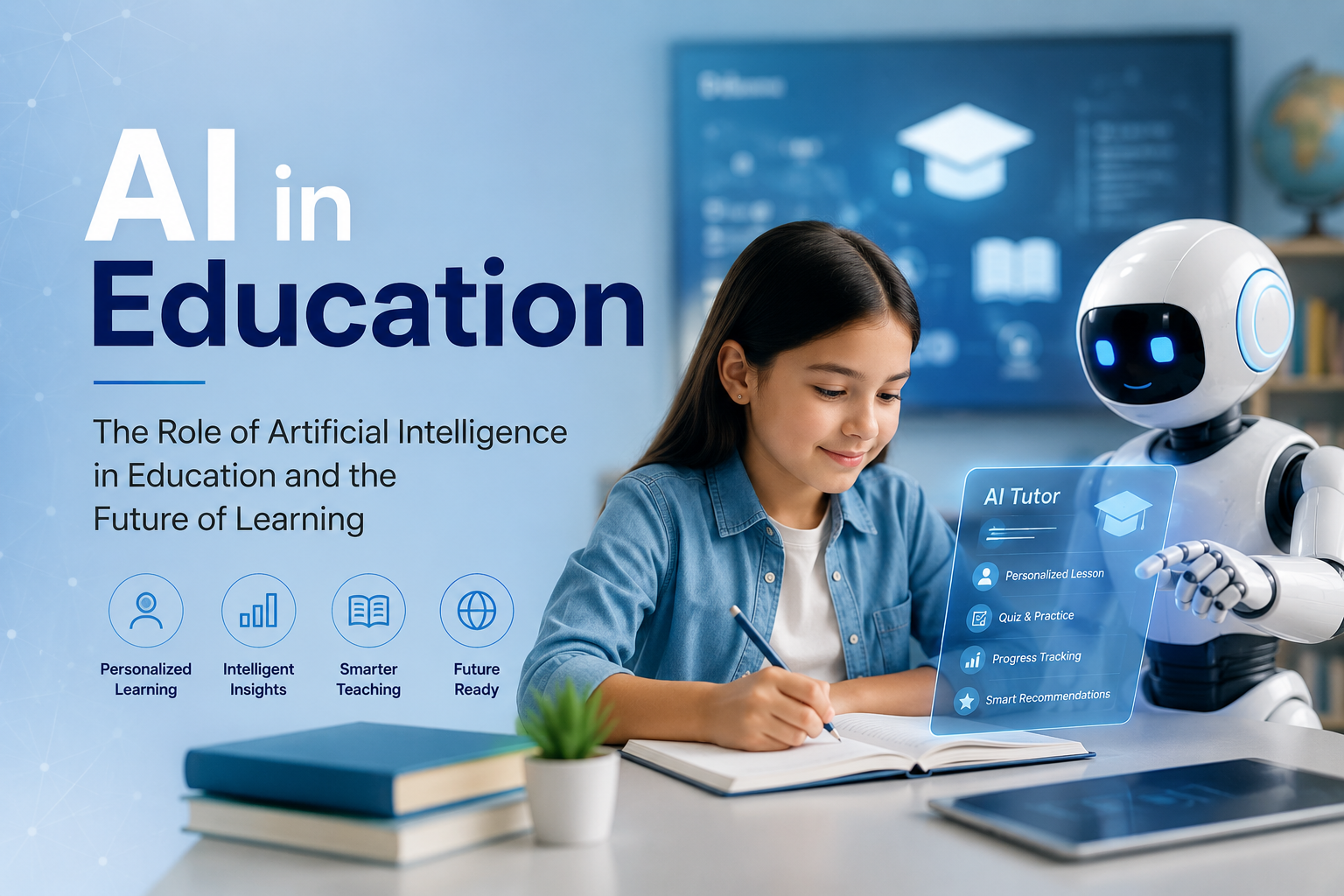
I still remember walking into a classroom almost 15 years ago where the most “advanced technology” was a projector that barely worked and a chalkboard that teachers cleaned with worn-out dusters. Fast forward to today, I’ve seen classrooms transform into intelligent learning spaces where students interact with adaptive platforms, AI tutors, and real-time feedback systems.
This shift is not just technological it is deeply educational. The rise of ai in education and artificial intelligence in education is fundamentally changing how students learn, how teachers teach, and how institutions measure success.
What fascinates me most is not the technology itself, but how naturally students have started adapting to it. The future of ai in education is no longer a concept we discuss in conferences it is already unfolding inside classrooms, universities, and even mobile apps used by millions of learners worldwide.
What Is AI in Education?
Understanding Artificial Intelligence in Education
At its core, ai in education refers to the use of intelligent systems that simulate human-like decision-making to improve learning experiences. These systems analyze student behavior, learning speed, strengths, and weaknesses to deliver personalized educational support.
From my experience working with edtech platforms, I’ve seen AI shift from being a “support tool” to becoming a central learning companion.
Artificial intelligence in education helps in:
- Personalizing lessons based on student performance
- Automating grading and feedback
- Predicting learning difficulties early
- Supporting teachers with data-driven insights
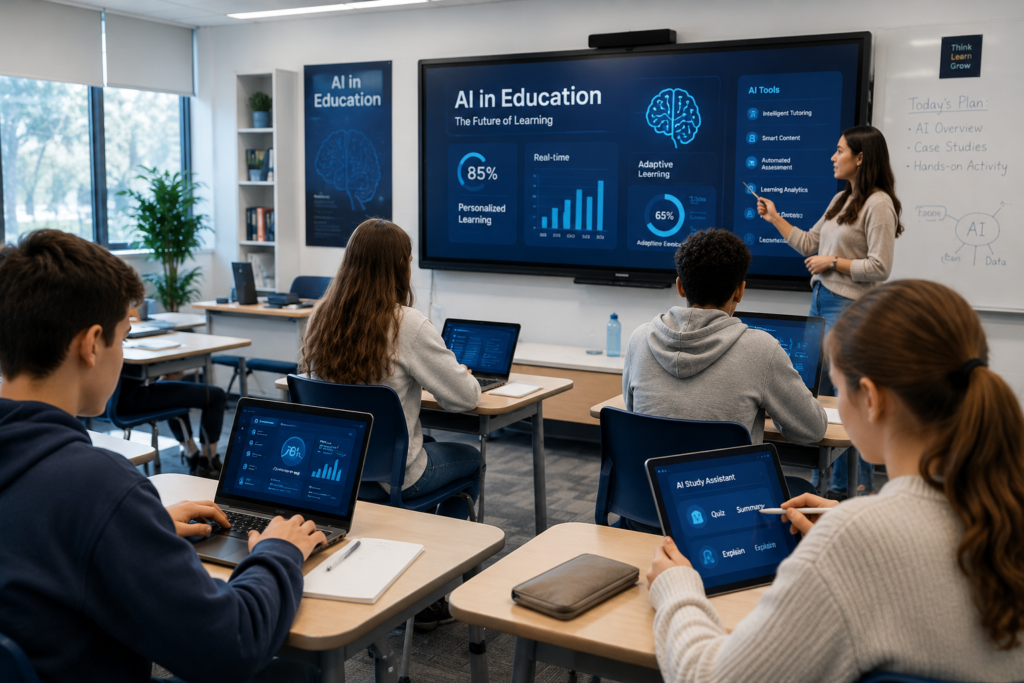
Schools and universities are adopting AI because traditional one-size-fits-all teaching models simply cannot keep up with modern learner diversity. This is where ai learning tools become essential.
How AI Is Transforming Modern Learning
Personalized Learning Experiences
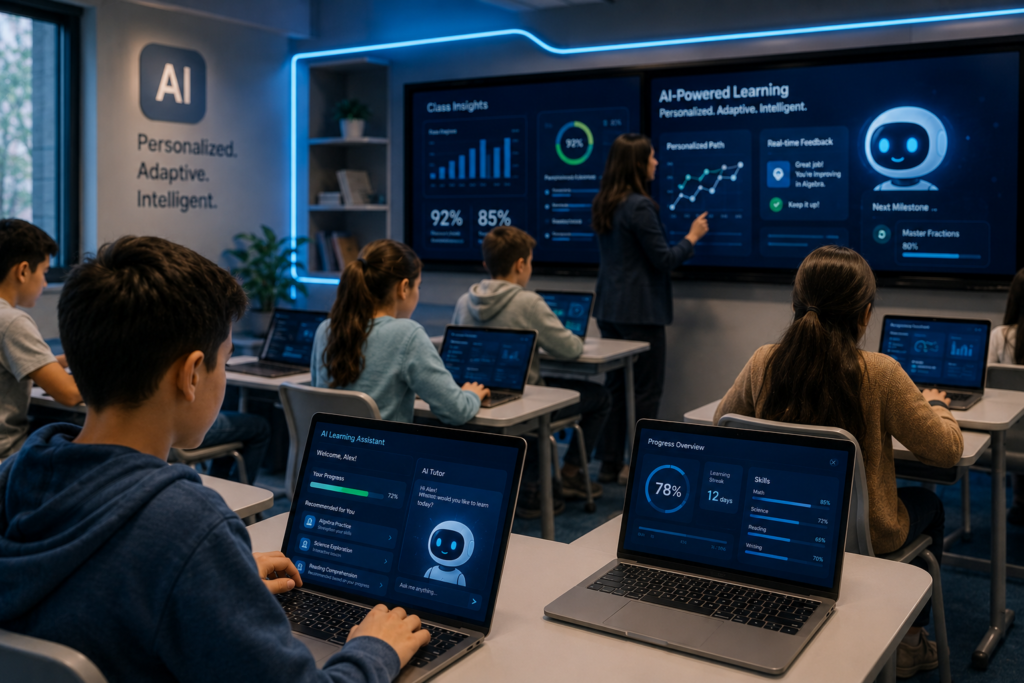
One of the biggest breakthroughs in ai in education is personalization. I’ve worked with platforms that adjust lesson difficulty in real-time based on student responses. A student struggling with algebra might receive step-by-step visual guidance, while another moves ahead to advanced concepts.
Intelligent Tutoring Systems
AI tutors are now capable of explaining complex topics in simple language, almost like a private teacher available 24/7. These systems are redefining accessibility in artificial intelligence in education.
Automated Assessments and Feedback
Teachers used to spend hours grading assignments. Now, AI systems can evaluate quizzes, essays, and even coding tasks instantly, offering detailed feedback.
Adaptive Learning Platforms
Adaptive systems like AI-driven LMS platforms continuously evolve based on learner interaction. This is one of the strongest educational technology trends shaping modern classrooms.
In real-world implementations, I’ve seen dropout rates decrease significantly when students use ai learning tools that adapt to their pace instead of forcing rigid schedules.
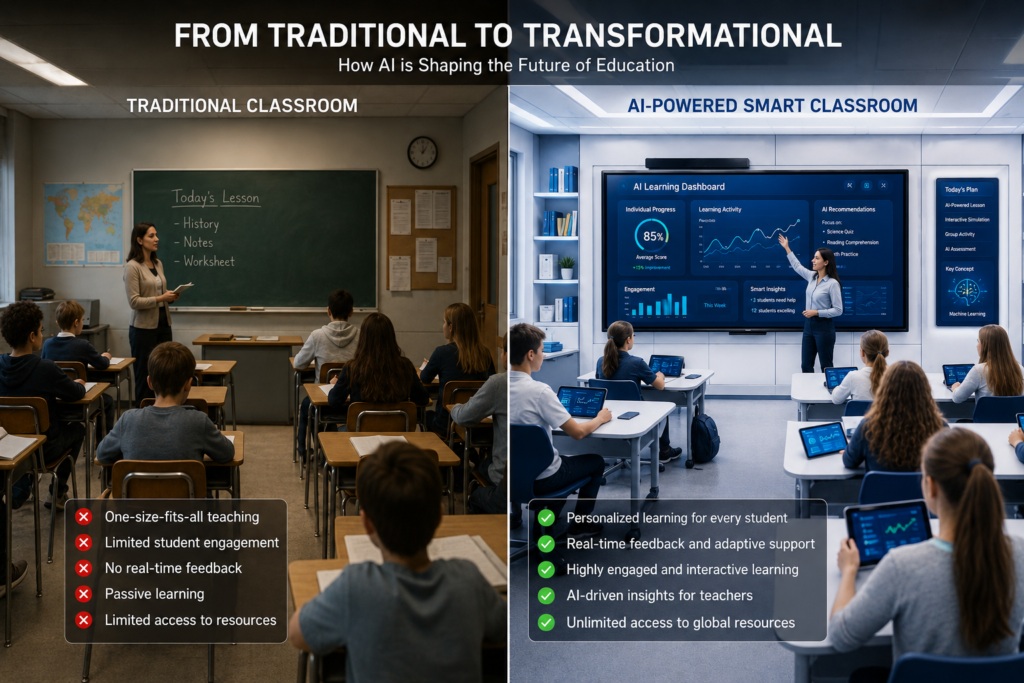
Traditional Education vs AI-Powered Education
| Feature | Traditional Education | AI-Powered Education |
|---|---|---|
| Personalization | One-size-fits-all | Fully adaptive learning paths |
| Student Assessment | Manual grading | Automated real-time feedback |
| Learning Speed | Fixed curriculum pace | Learner-controlled speed |
| Teacher Support | Limited tools | AI-assisted teaching dashboards |
| Accessibility | Classroom-bound | Anytime, anywhere learning |
| Data Insights | Minimal analytics | Deep predictive analytics |
| Student Engagement | Passive learning | Interactive AI-driven learning |
The future of ai in education clearly shows a shift toward intelligent, adaptive ecosystems rather than static classrooms.
Most Popular AI Learning Tools Shaping Education
AI Tutors
Provide one-on-one support, explaining concepts in multiple ways until students understand.
Adaptive Learning Platforms
Platforms like AI-driven LMS systems adjust difficulty dynamically.
AI Writing Assistants
Help students improve essays, grammar, and structure while teaching writing skills.
Language Learning Applications
AI-powered apps now simulate real conversations for better fluency practice.
Virtual Learning Assistants
Assist students with scheduling, reminders, and instant answers.
Intelligent Content Creation Tools
Teachers can now generate quizzes, lesson plans, and simulations in seconds using ai learning tools.
From my consulting experience, institutions that adopt these tools early gain a significant competitive advantage in student engagement.
Benefits of Artificial Intelligence in Education
Personalized Learning Paths
Every student learns differently, and AI ensures each learner gets a customized journey.
Increased Student Engagement
Gamification and interactive AI systems make learning more enjoyable.
Better Learning Outcomes
Data-driven insights improve academic performance significantly.
Improved Accessibility
Students in remote areas can access high-quality education through AI platforms.
Teacher Productivity Enhancement
Teachers spend more time teaching and less time on administrative tasks.
Data-Driven Decision Making
Institutions use analytics to improve curriculum and teaching strategies.
These improvements highlight why artificial intelligence in education is becoming a global priority in modern schooling systems.
Challenges and Risks of AI in Education
Despite its benefits, ai in education comes with challenges that must not be ignored.
Data Privacy Concerns
Student data must be protected with strict security systems.
Ethical Considerations
Who is responsible when AI makes a wrong recommendation?
Overdependence on Technology
Excessive reliance can reduce critical thinking if not balanced properly.
Digital Divide Issues
Not all students have equal access to technology.
Accuracy and Bias Concerns
AI systems can reflect bias from training data, affecting fairness.
In my experience, the biggest mistake institutions make is adopting ai learning tools without proper ethical guidelines.
The Future of AI in Education
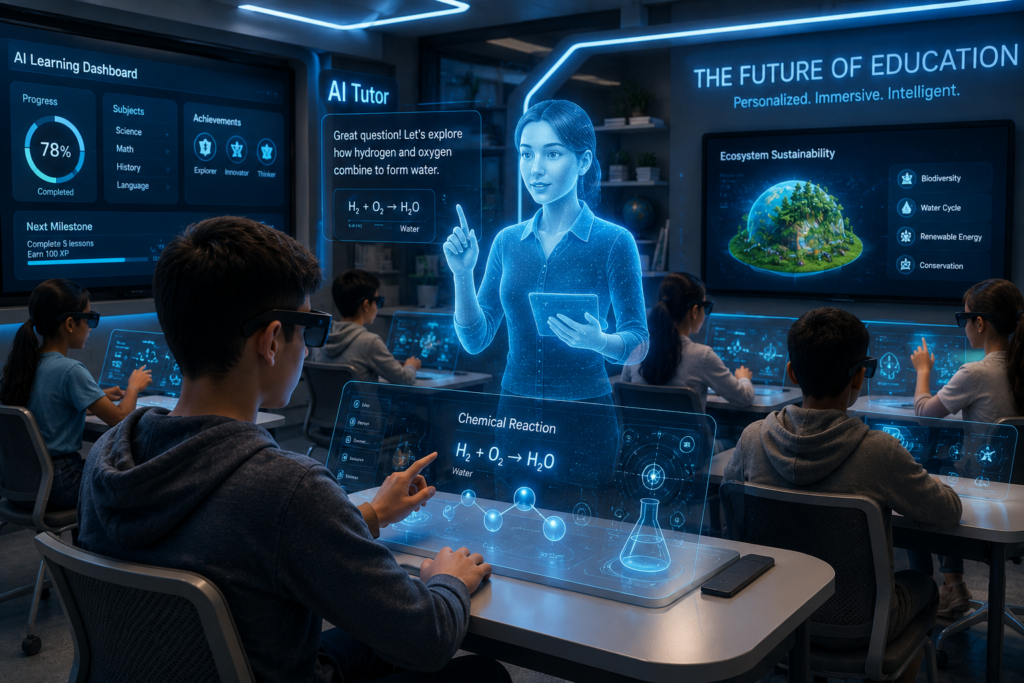
The future of ai in education is moving toward deeply immersive, intelligent ecosystems.
Hyper-Personalized Learning
Every learner will have a fully customized education path.
AI-Powered Career Guidance
AI will guide students toward careers based on skills and market demand.
Immersive Learning with AI and VR
Virtual classrooms will simulate real-world environments.
Intelligent Learning Analytics
Predictive systems will identify struggling students before failure occurs.
Global Access to Quality Education
AI will eliminate geographical barriers.
AI-Driven Lifelong Learning
Learning will not stop after graduation—it will continue throughout life.
These educational technology trends show that education will become more continuous, flexible, and intelligent.
How Teachers Will Work Alongside AI
AI as an Assistant, Not a Replacement
AI supports teachers rather than replacing them.
Enhancing Human Creativity
Teachers focus more on creativity, mentorship, and emotional intelligence.
Improving Student Relationships
Human interaction remains central to learning.
Future Skills Educators Need
Teachers must learn how to integrate ai in education effectively.
From what I’ve observed, the best classrooms are those where teachers and AI systems work together, not in competition.
Educational Technology Trends to Watch Through 2030
Generative AI in Education
AI will create personalized textbooks, quizzes, and simulations.
Predictive Learning Analytics
Systems will forecast student performance with high accuracy.
AI-Powered Assessments
Exams will become adaptive and continuous.
Smart Learning Ecosystems
Fully integrated platforms will connect students, teachers, and institutions.
AI and Extended Reality Integration
AR/VR combined with AI will transform experiential learning.
These educational technology trends will define the next decade of global education systems.

Frequently Asked Questions
What is AI in education?
AI in education refers to using intelligent systems to improve learning, teaching, and educational outcomes.
How is artificial intelligence used in education?
It is used for personalized learning, grading automation, tutoring systems, and analytics.
What are the best AI learning tools?
AI tutors, adaptive platforms, writing assistants, and virtual learning systems.
Will AI replace teachers?
No, AI supports teachers by handling repetitive tasks and enhancing learning.
What is the future of AI in education?
The future of ai in education is personalized, immersive, and globally accessible learning.
How can students benefit from AI?
Students gain personalized learning paths and instant feedback.
What are the risks of AI in education?
Privacy issues, bias, and overdependence on technology are key risks.
What educational technology trends will dominate the future?
Generative AI, predictive analytics, VR learning, and smart ecosystems.
Can AI help struggling students improve faster?
Yes. AI can quickly identify learning gaps and provide targeted lessons, practice exercises, and step-by-step explanations, helping struggling students improve at their own pace.
Is AI in education expensive for schools to implement?
It depends on the platform. Some ai learning tools are free or low-cost, while advanced systems may require investment. However, many schools find long-term savings through automation and improved efficiency.
Final Thoughts
After spending years observing the transformation of classrooms, one truth is clear: ai in education is not just a trend it is a structural shift in how humans learn.
The rise of artificial intelligence in education has already changed how teachers teach, how students engage, and how institutions operate. But what excites me most is what lies ahead.
The future of ai in education, powered by ai learning tools and evolving educational technology trends, will create a world where learning is no longer limited by time, location, or even traditional systems.
Education is becoming smarter, more human-centered, and more accessible than ever before and we are only at the beginning of this transformation.
Author

razakh6402@gmail.com
Related Posts

Lead Generation Software: 12 Best Lead Generation Tools for B2B Sales (2026 Guide)
- 0
- 2,300 words
If someone had asked me 15 years ago what the biggest challenge in sales was, my answer would have been simple: finding...
Survey Software: 12 Best Online Survey Tools & Feedback Software for Businesses (2026 Guide)
- 0
- 1,871 word
Whether I was helping a SaaS startup validate a new feature, assisting an HR team with employee engagement, or optimizing customer experience...
Read out all
Online Course Platform: 12 Best LMS Software & eLearning Platforms for Course Creators (2026 Guide)
- 0
- 1,900 word
The online education industry has changed dramatically over the last 15 years. When I built my first digital training portal, simply uploading...

Team Communication Software: 12 Best Business Messaging Apps for Modern Workplaces in 2026 (Expert Tested)
- 0
- 2,305 words
I’ve personally tested dozens of team communication software platforms while consulting for marketing agencies, software companies, HR departments, remote development teams, and...

Invoice Software: 12 Best Invoicing Software for Small Business in 2026 (Expert Tested)
- 0
- 2,493 words
I’ve worked with freelancers chasing late payments, agencies managing hundreds of monthly invoices, startups scaling internationally, and established businesses struggling with outdated...

Generate one SEO-optimized title thatdigital asset management software
- 6
- 2,632 words
One of the most memorable projects I led involved migrating nearly half a million digital assets from a traditional file server into...
2 comments