
- 0
- 1,905 word
Over the past 25 years, I have watched environmental innovation evolve from a niche concept into a global economic force. When I first worked on sustainability-focused projects in the late 1990s, many organizations viewed environmental responsibility as a compliance requirement. Today, green technology sits at the center of business strategy, energy security, industrial transformation, and long-term economic growth.
The urgency behind climate change, resource depletion, population growth, and rising energy demand has accelerated investment in sustainable technology across every major industry. Governments, corporations, and consumers now recognize that traditional systems can no longer support long-term environmental and economic goals.
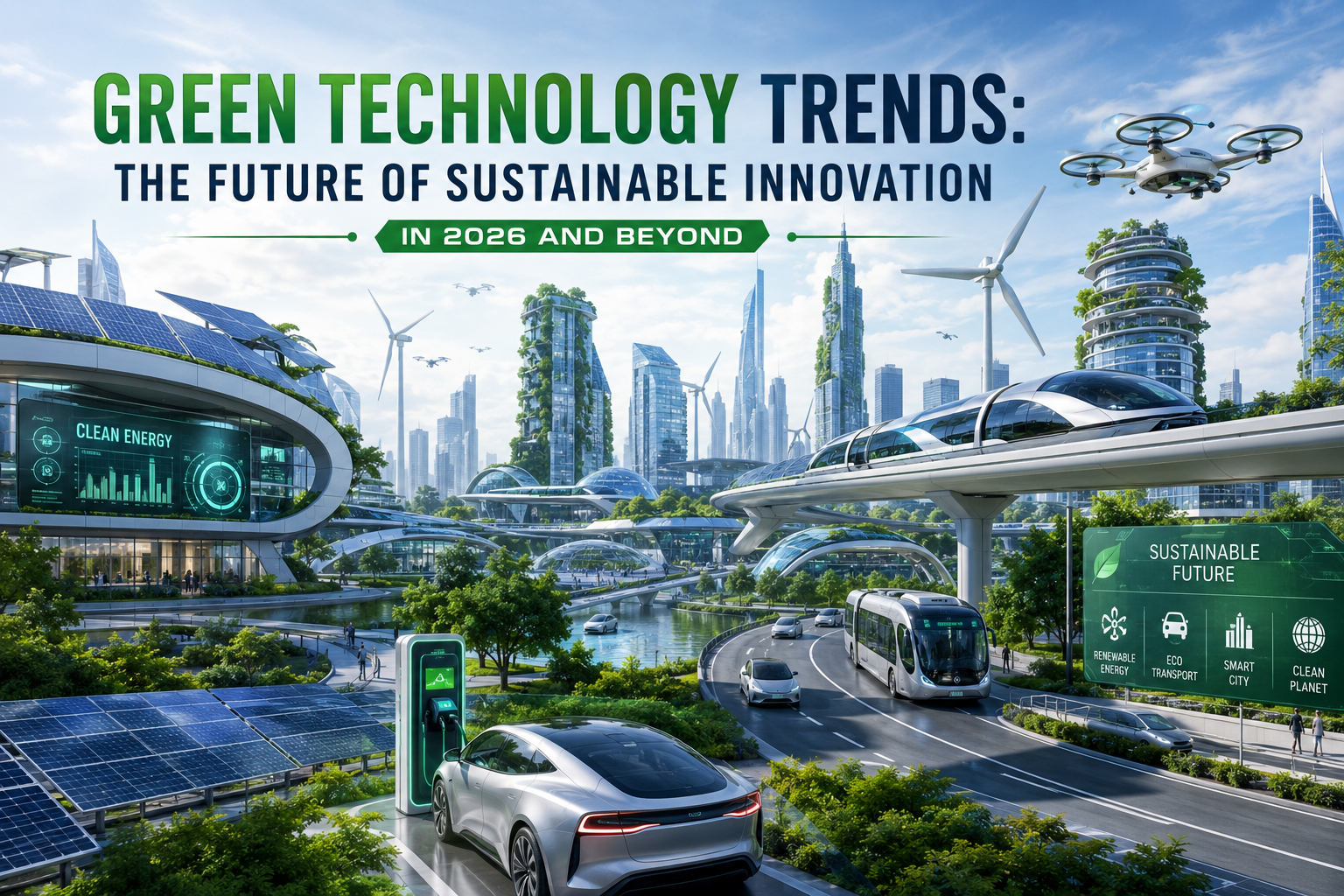
This shift has created unprecedented opportunities for eco friendly technology and clean technology innovations. From renewable energy systems and smart cities to electric transportation and AI-powered energy management, green technology trends are reshaping how we generate power, manufacture products, move goods, and manage resources.
In this article, I will share insights from decades of observing sustainability projects, emerging technologies, and industry transformations that are defining the future of green technology.
What Is Green Technology?
Green technology refers to products, systems, and processes designed to reduce environmental impact while improving efficiency, sustainability, and resource conservation.
The primary goal of green technology is to minimize pollution, lower carbon emissions, reduce waste, and promote responsible use of natural resources.
Sustainable technology often overlaps with green technology because both focus on creating long-term environmental and economic benefits. However, green technology specifically emphasizes environmental protection and ecological balance.
Common examples include:
- Solar power systems
- Wind energy farms
- Electric vehicles
- Smart energy grids
- Green building materials
- Water recycling technologies
- Carbon capture systems
From my experience, the most successful green technology solutions are those that provide both environmental and financial benefits. Businesses adopt innovations faster when sustainability aligns with profitability.

Why Green Technology Trends Are Accelerating in 2026
Climate Change Pressures
Extreme weather events, rising temperatures, and increasing environmental risks continue to drive demand for green technology. Organizations now view climate resilience as a strategic necessity rather than an optional initiative.
Government Regulations
Governments worldwide have introduced stricter emissions standards and sustainability requirements. Regulatory frameworks encourage investments in sustainable technology and accelerate adoption across industries.
ESG Investments
Environmental, Social, and Governance (ESG) investing has become a major market force. Investors increasingly favor companies implementing eco friendly technology and sustainable business practices.
Corporate Sustainability Goals
Many global organizations have committed to net-zero emissions targets. Achieving these goals requires significant investment in clean technology innovations and green technology infrastructure.
Consumer Demand
Consumers actively support environmentally responsible brands. This shift influences purchasing decisions and encourages businesses to adopt green technology solutions throughout their operations.
Top Green Technology Trends Transforming Industries
Renewable Energy Innovation
Renewable energy remains one of the most influential green technology trends.
Solar Energy
Solar panels have become more efficient and affordable than ever before. Advanced photovoltaic technologies continue improving energy generation capabilities.
Wind Energy
Modern wind turbines generate significantly more electricity than earlier designs. Offshore wind projects are expanding rapidly across Europe, Asia, and North America.
Floating Solar Farms
Floating solar installations maximize unused water surfaces while reducing land requirements. Several countries now deploy large-scale floating solar projects.
Offshore Wind Projects
Offshore wind farms benefit from stronger and more consistent wind conditions, making them a key component of sustainable technology strategies.
One trend I have observed firsthand is that renewable energy projects are no longer purely environmental initiatives. They increasingly represent sound financial investments.

AI-Powered Energy Management
Artificial intelligence has become a critical driver of green technology.
Key applications include:
- Smart grid optimization
- Energy demand forecasting
- Predictive maintenance
- Real-time energy monitoring
- Resource allocation
AI helps organizations reduce waste while maximizing operational efficiency.
Green Hydrogen Technology
Green hydrogen represents one of the most promising clean technology innovations.
Production Methods
Green hydrogen is produced using renewable electricity to split water molecules through electrolysis.
Industrial Use Cases
Industries using green hydrogen include:
- Steel manufacturing
- Chemical production
- Shipping
- Aviation
- Heavy transportation
Future Potential
Many experts expect green hydrogen to play a significant role in decarbonizing sectors where direct electrification remains difficult.
Carbon Capture Technology
Carbon capture technologies continue advancing rapidly.
Direct Air Capture
Direct air capture systems remove carbon dioxide directly from the atmosphere.
Industrial Carbon Reduction
Manufacturing facilities increasingly deploy carbon capture systems to reduce emissions.
Emerging Innovations
New materials and advanced filtration technologies improve efficiency while lowering operational costs.
Sustainable Manufacturing
Manufacturing is undergoing a major transformation.
Key trends include:
- Circular economy models
- Waste reduction systems
- Resource recovery technologies
- Renewable-powered factories
- Eco-friendly production methods
The most innovative manufacturers now design products with recycling and reuse in mind from the beginning.
Eco Friendly Technology Changing Everyday Life
Green technology is not limited to large corporations. It increasingly impacts everyday consumers.
Smart Homes
Smart home systems optimize energy consumption through:
- Automated lighting
- Intelligent thermostats
- Energy monitoring platforms
Electric Vehicles
Electric vehicles have become one of the most visible examples of eco friendly technology. Improvements in battery performance continue expanding adoption rates globally.
Energy-Efficient Buildings
Modern buildings incorporate:
- Smart HVAC systems
- High-performance insulation
- Renewable energy integration
Sustainable Agriculture
Farmers use sustainable technology such as:
- Precision irrigation
- AI-powered crop monitoring
- Smart soil analysis
Water Conservation Systems
Advanced water management systems reduce consumption while improving efficiency.
Clean Technology Innovations Reshaping Global Industries
Transportation
Electric mobility, hydrogen-powered vehicles, and smart logistics systems reduce emissions significantly.
Agriculture
Precision farming improves yields while minimizing resource consumption.
Construction
Green building materials and sustainable design principles reduce environmental impact.
Manufacturing
Smart factories optimize energy usage and reduce waste generation.
Utilities
Modern utility providers deploy smart grids and renewable energy infrastructure.
Healthcare
Hospitals increasingly implement sustainable technology through energy-efficient systems and environmentally responsible operations.
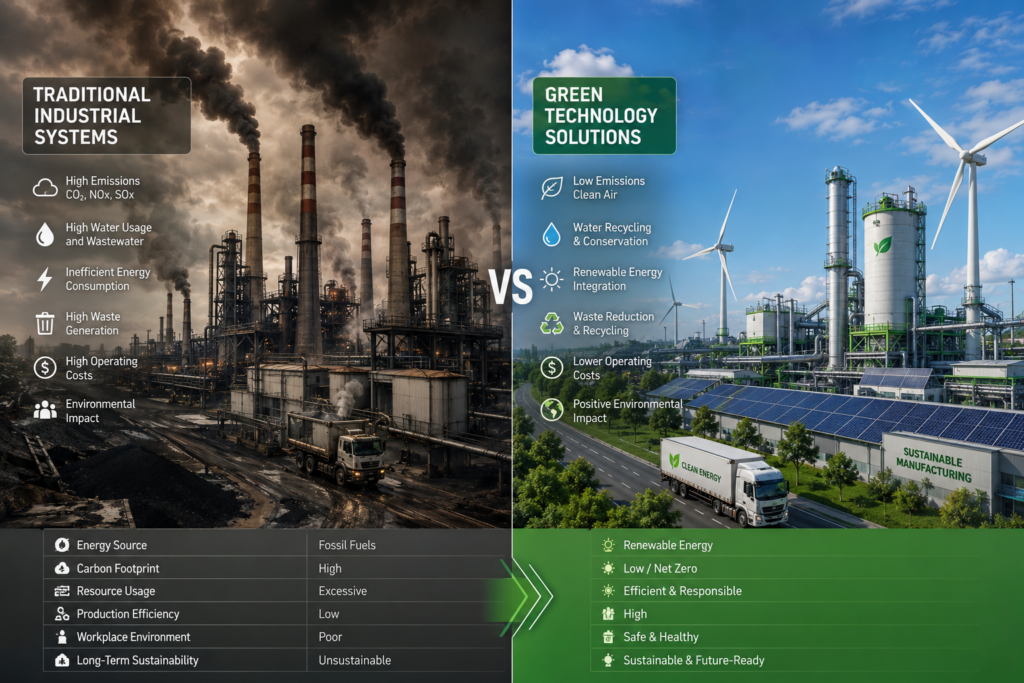
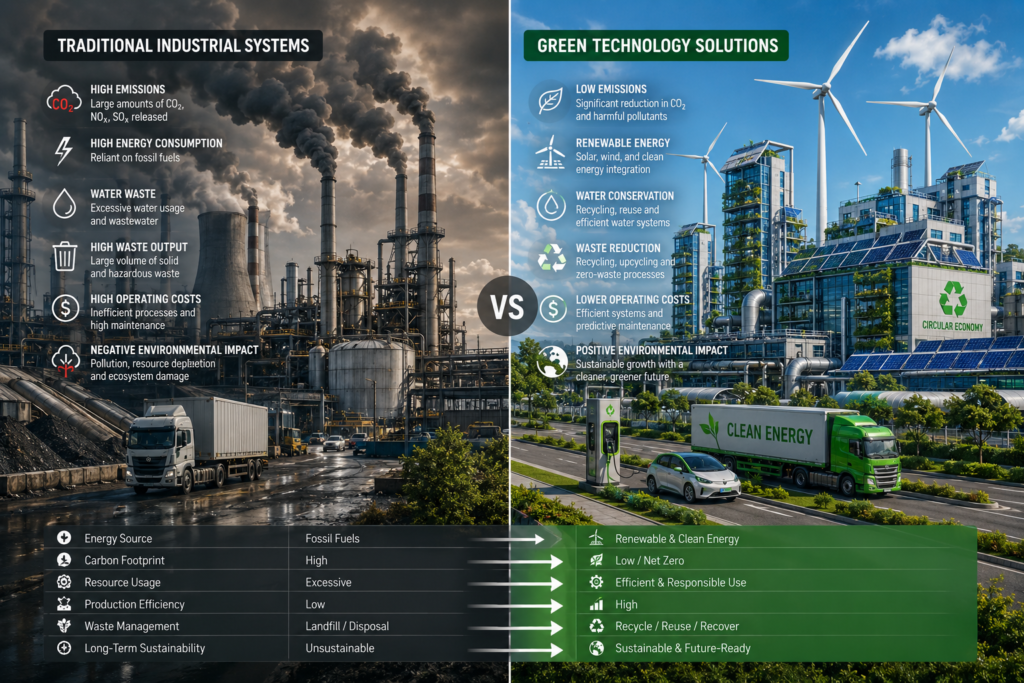
Comparison Table
Traditional Technology vs Green Technology
| Factor | Traditional Technology | Green Technology |
|---|---|---|
| Energy Efficiency | Lower efficiency | Higher efficiency |
| Carbon Emissions | High emissions | Significantly reduced emissions |
| Operating Costs | Often higher long-term costs | Lower long-term costs |
| Sustainability | Limited sustainability | Designed for sustainability |
| Waste Generation | High waste output | Reduced waste generation |
| Environmental Impact | Significant environmental burden | Reduced environmental footprint |
| Long-Term ROI | Moderate returns | Strong long-term ROI |
Industries Benefiting Most from Sustainable Technology
Energy
Renewable power generation continues transforming energy markets.
Transportation
Electric mobility and intelligent transportation systems improve efficiency.
Agriculture
Precision farming increases productivity while conserving resources.
Construction
Green buildings reduce operational costs and emissions.
Logistics
Route optimization and electrification improve sustainability.
Smart Cities
Smart cities integrate eco friendly technology into transportation, utilities, and infrastructure systems.
Manufacturing
Advanced sustainable technology enhances productivity while reducing environmental impact.
Challenges Slowing Green Technology Adoption
High Initial Investment
Many green technology projects require substantial upfront capital.
Infrastructure Limitations
Existing infrastructure often requires upgrades to support sustainable technology.
Regulatory Complexity
Organizations frequently face varying environmental regulations across regions.
Skills Shortages
Many industries lack professionals trained in emerging clean technology innovations.
Technology Integration Issues
Integrating new systems with legacy infrastructure remains challenging.
From my experience, the biggest barrier is not technology itself. It is organizational resistance to change and short-term thinking.
Green Technology Market Statistics and Growth Forecast
Market Size Estimates
Global green technology and sustainability markets are projected to exceed several trillion dollars over the next decade according to industry forecasts.
Renewable Energy Investments
According to organizations such as the International Energy Agency (IEA) and the International Renewable Energy Agency (IRENA), renewable energy investments continue reaching record levels annually.
EV Growth Statistics
Electric vehicle adoption has grown dramatically, with millions of new EVs entering roads each year worldwide.
Sustainability Spending Trends
Corporate sustainability spending continues increasing as organizations pursue carbon reduction goals.
Clean Technology Innovations Market Growth
Climate-tech startups and clean technology innovations attract significant venture capital funding globally.
For authoritative statistics and reports, readers can consult:
- International Energy Agency (IEA)
- United Nations
- World Economic Forum
- International Renewable Energy Agency (IRENA)
- U.S. Department of Energy
- World Bank
Future of Green Technology Trends Beyond 2030
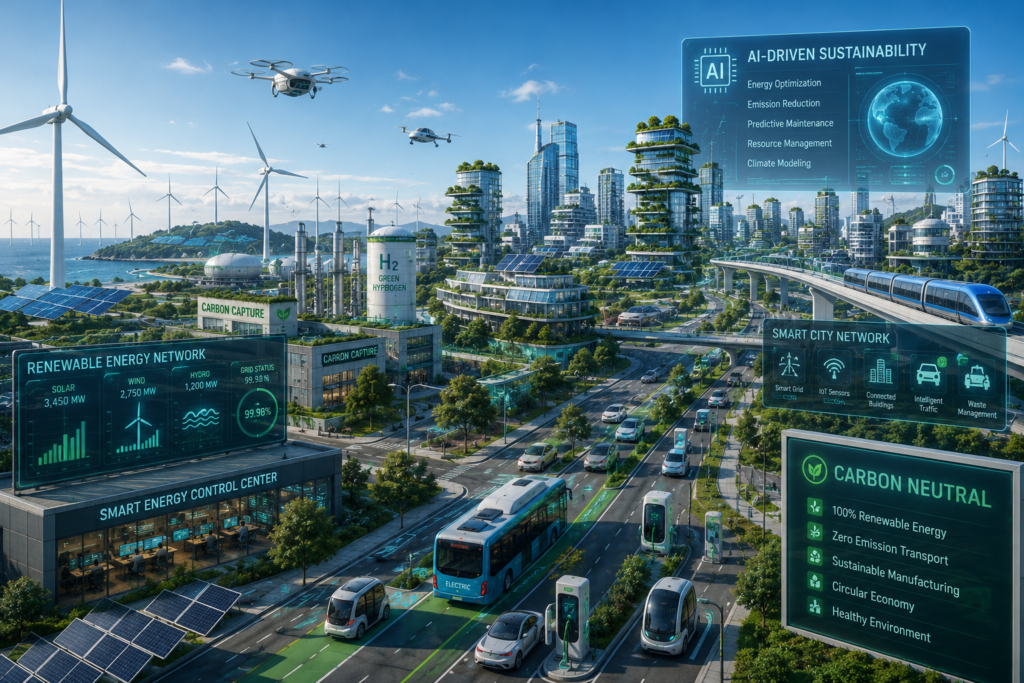
AI-Driven Sustainability
AI will continue optimizing energy systems, industrial operations, and resource management.
Carbon-Negative Technologies
Future systems will remove more carbon than they emit.
Smart Cities
Urban environments will integrate green technology across transportation, energy, and public services.
Next-Generation Batteries
Advanced batteries will improve energy storage capacity, safety, and affordability.
Fusion Energy
Fusion research continues progressing toward commercial viability.
Climate-Tech Startups
Innovation from climate-tech startups will accelerate development of sustainable technology solutions.
Based on current industry momentum, I believe the next decade will witness greater sustainability advancements than the previous fifty years combined.
Benefits of Green Technology
Green technology delivers significant advantages:
- Reduces greenhouse gas emissions
- Improves air and water quality
- Supports long-term sustainability goals
- Lowers energy consumption
- Enhances resource efficiency
- Reduces operational costs
- Creates new economic opportunities
- Strengthens energy security
- Improves corporate reputation
- Supports ESG initiatives
- Encourages innovation
- Provides long-term cost savings
- Creates competitive business advantages
- Promotes environmental stewardship
- Supports circular economy models
Frequently Asked Questions
What is green technology?
Green technology refers to environmentally responsible solutions that reduce pollution, conserve resources, and promote sustainability.
Why are green technology trends important?
Green technology trends help address climate change, resource scarcity, and environmental challenges while supporting economic growth.
What are examples of eco friendly technology?
Examples include solar panels, electric vehicles, smart grids, green buildings, and water conservation systems.
How does sustainable technology reduce emissions?
Sustainable technology improves efficiency, reduces fossil fuel dependence, and promotes renewable energy use.
What industries use green technology?
Energy, transportation, agriculture, manufacturing, healthcare, logistics, and construction all use green technology.
Is green technology expensive?
Initial costs can be higher, but long-term savings often outweigh upfront investments.
What are clean technology innovations?
Clean technology innovations include carbon capture, green hydrogen, renewable energy systems, and advanced battery technologies.
What is the future of green technology?
The future includes AI-driven sustainability, smart cities, carbon-negative systems, fusion energy, and next-generation sustainable technology solutions.
Final Thoughts
Green technology has evolved from a specialized environmental initiative into one of the most powerful drivers of global innovation. The accelerating adoption of sustainable technology, eco friendly technology, and clean technology innovations demonstrates that environmental responsibility and economic growth can work together.
Businesses that invest in green technology today position themselves for greater resilience, efficiency, and competitiveness tomorrow. Governments, investors, and consumers increasingly support solutions that reduce environmental impact while delivering measurable value.
After more than two decades of observing sustainability transformations across industries, one conclusion stands out clearly: organizations that embrace green technology trends early consistently gain strategic advantages over those that delay action.
As we move toward a more sustainable future, green technology trends will continue shaping the next generation of global innovation, creating cleaner industries, smarter cities, stronger economies, and a healthier planet for future generations.
Author

razakh6402@gmail.com
Related Posts

Lead Generation Software: 12 Best Lead Generation Tools for B2B Sales (2026 Guide)
- 0
- 2,300 words
If someone had asked me 15 years ago what the biggest challenge in sales was, my answer would have been simple: finding...

Survey Software: 12 Best Online Survey Tools & Feedback Software for Businesses (2026 Guide)
- 0
- 1,871 word
Whether I was helping a SaaS startup validate a new feature, assisting an HR team with employee engagement, or optimizing customer experience...
Read out all
Online Course Platform: 12 Best LMS Software & eLearning Platforms for Course Creators (2026 Guide)
- 0
- 1,900 word
The online education industry has changed dramatically over the last 15 years. When I built my first digital training portal, simply uploading...

Team Communication Software: 12 Best Business Messaging Apps for Modern Workplaces in 2026 (Expert Tested)
- 0
- 2,305 words
I’ve personally tested dozens of team communication software platforms while consulting for marketing agencies, software companies, HR departments, remote development teams, and...

Invoice Software: 12 Best Invoicing Software for Small Business in 2026 (Expert Tested)
- 0
- 2,493 words
I’ve worked with freelancers chasing late payments, agencies managing hundreds of monthly invoices, startups scaling internationally, and established businesses struggling with outdated...
Generate one SEO-optimized title thatdigital asset management software
- 6
- 2,632 words
One of the most memorable projects I led involved migrating nearly half a million digital assets from a traditional file server into...