- 0
- 2,507 words
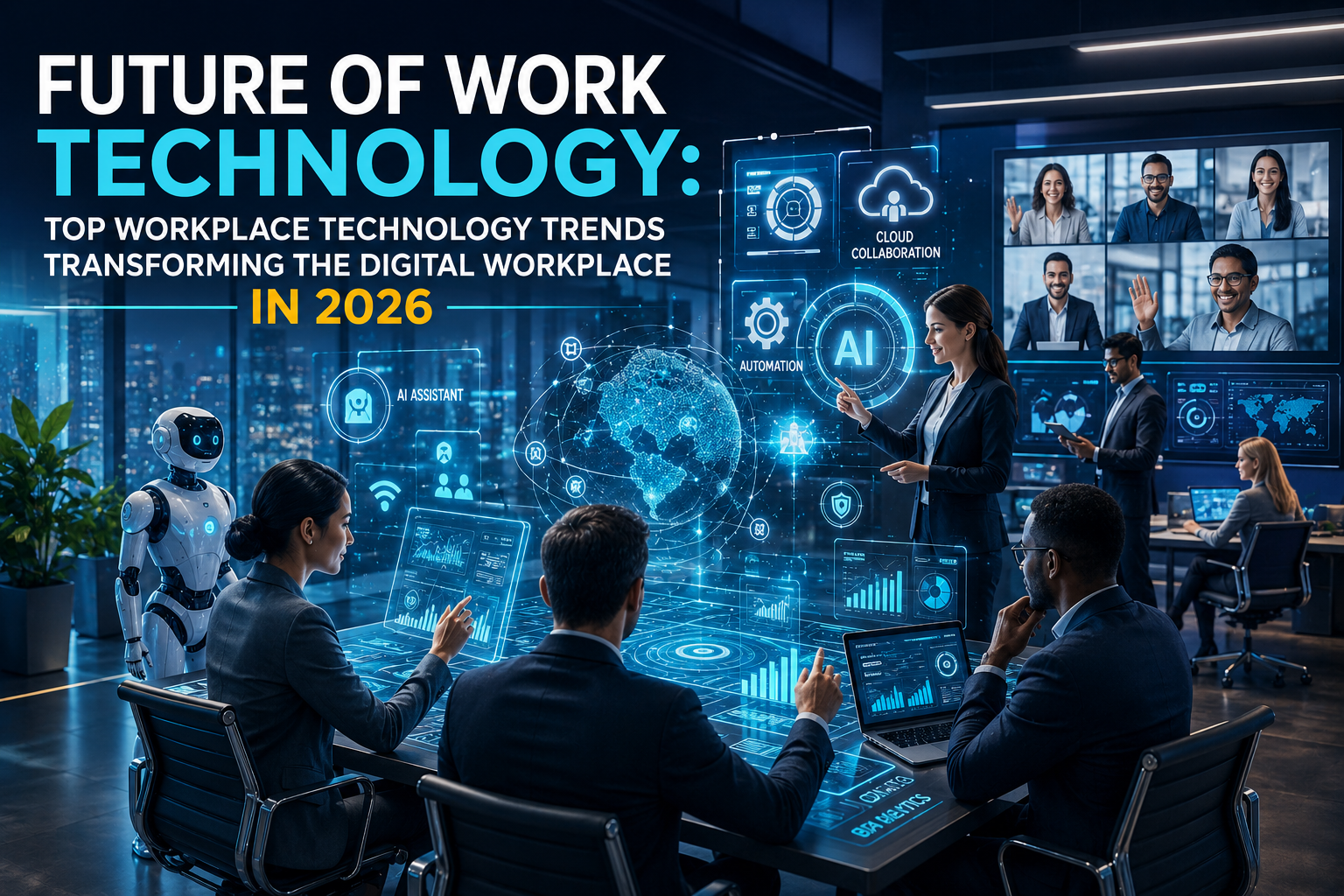
The workplace I stepped into 25 years ago looked completely different from the one I advise organizations on today. Back then, meetings meant conference rooms, paper documents filled filing cabinets, and collaboration usually happened within the same office building. Today, I regularly work with executive teams spread across multiple continents, where decisions are made through AI-powered collaboration platforms, cloud-based workspaces, and intelligent automation systems. This dramatic evolution perfectly illustrates why future of work technology has become one of the most important business discussions of our time.
The rapid rise of AI in workplace solutions, hybrid work models, and intelligent collaboration platforms has accelerated workplace innovation faster than many business leaders anticipated. Employees now expect flexible work environments, seamless communication, secure remote access, and personalized digital experiences. Organizations that fail to meet these expectations risk losing both talent and competitive advantage.
In my experience advising organizations across healthcare, finance, manufacturing, education, and technology sectors, one lesson has remained remarkably consistent: companies that invest in both technology and employee adoption outperform those that focus only on software implementation. Digital transformation succeeds when leadership, culture, and innovation evolve together.

What Is Future of Work Technology?
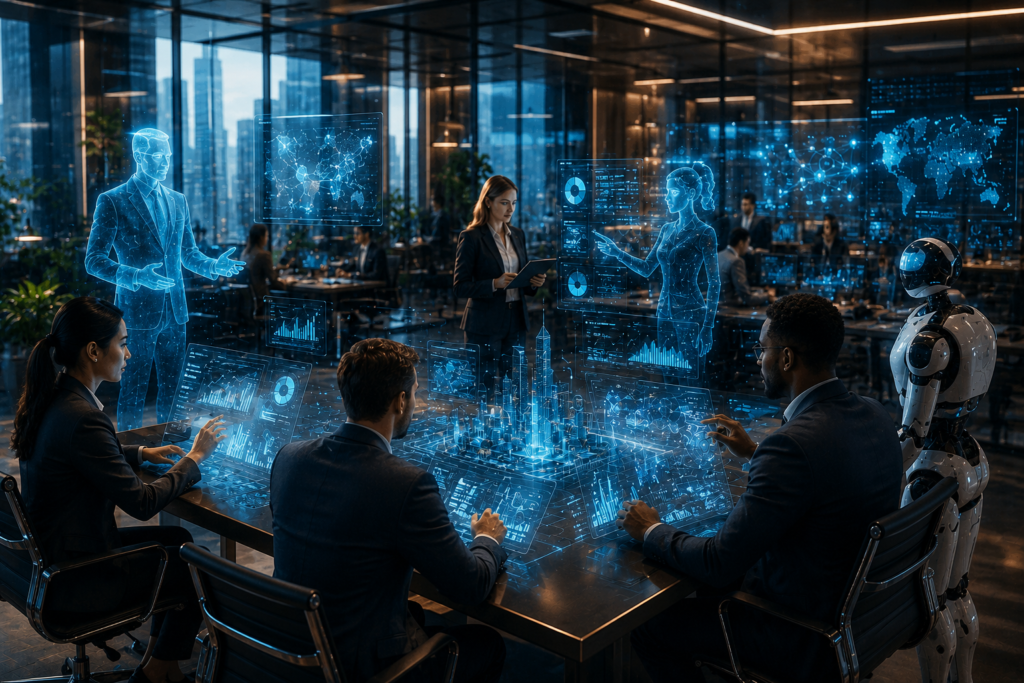
Future of work technology refers to the combination of digital tools, intelligent systems, automation platforms, and innovative workplace solutions that enable organizations to work smarter, faster, and more collaboratively. Rather than representing a single technology, it encompasses an ecosystem that includes AI in workplace applications, remote work technology, cloud computing, workflow automation, cybersecurity, digital collaboration platforms, employee experience solutions, and data-driven decision-making.

Today’s workplace technology trends also emphasize integration rather than isolated applications. Businesses increasingly connect collaboration platforms, HR systems, project management tools, customer relationship management software, knowledge management platforms, and enterprise AI into a unified digital workplace. This connected ecosystem enables employees to access information quickly, collaborate efficiently, and make informed decisions without switching endlessly between disconnected systems.
As future of work technology continues to evolve, organizations that combine intelligent automation, strong leadership, continuous learning, and employee-centric innovation will be best positioned to thrive in an increasingly digital economy.
Why Future of Work Technology Matters
After spending more than 25 years advising organizations on digital transformation, I’ve reached one clear conclusion: future of work technology is no longer an IT initiative—it is a business strategy. Companies that embrace modern workplace technology trends consistently outperform competitors in productivity, employee engagement, customer satisfaction, and innovation.
One trend I’ve consistently observed is that organizations investing in a connected digital workplace recover from market disruptions much faster than businesses relying on outdated systems. Whether it’s responding to changing customer demands, enabling hybrid work, or scaling operations globally, technology has become the backbone of business resilience.
Higher Productivity Through Intelligent Automation
One of the greatest advantages of future of work technology is its ability to eliminate repetitive work. Modern AI in workplace solutions automate scheduling, documentation, customer inquiries, reporting, and data analysis. Instead of spending hours on routine administrative tasks, employees can focus on creative thinking, strategic planning, and building stronger customer relationships.
In one enterprise transformation project I worked on, automating approval workflows reduced project turnaround times significantly while improving employee satisfaction because teams could focus on meaningful work instead of paperwork.
Better Employee Experience
Today’s workforce expects flexibility, seamless collaboration, and access to digital tools from anywhere. A well-designed digital workplace provides employees with secure access to applications, knowledge bases, communication platforms, and cloud resources without unnecessary complexity.
Companies that prioritize employee experience through remote work technology often see stronger retention rates because employees value flexibility and work-life balance alongside career growth.
Cost Reduction and Operational Efficiency
Many executives initially view digital transformation as a major expense. However, organizations adopting future of work technology strategically often reduce operational costs over time by minimizing manual processes, optimizing office space, lowering travel expenses, and improving resource utilization.
The key is implementing technology with measurable business objectives rather than simply following market trends.
Innovation and Business Agility
Innovation flourishes when employees have quick access to information, collaborative tools, and intelligent insights. Modern AI in workplace platforms help teams generate ideas, analyze market trends, summarize research, and accelerate decision-making.
Companies that adopted these strategies early are now introducing products faster, responding to customer feedback more efficiently, and maintaining stronger competitive positions.

Top Workplace Technology Trends in 2026
Artificial intelligence has become the driving force behind future of work technology. Modern organizations use AI in workplace solutions for predictive analytics, intelligent search, workflow optimization, customer engagement, and strategic decision-making.
Rather than replacing employees, AI enhances their capabilities by handling repetitive work and providing actionable insights.
AI Copilots
AI copilots are transforming daily productivity. They assist employees by drafting emails, summarizing meetings, generating reports, writing code, creating presentations, and answering business questions using organizational knowledge.
In my experience, organizations adopting AI copilots responsibly experience faster decision-making and improved employee efficiency.
Intelligent Automation
Workflow automation continues to reshape enterprise operations. Finance, HR, procurement, legal, and customer service teams increasingly automate approvals, documentation, compliance checks, and repetitive business processes.
This trend allows employees to concentrate on high-value strategic initiatives.
Remote Work Technology
The evolution of remote work technology extends far beyond video conferencing. Today’s solutions include secure cloud desktops, AI-powered meeting assistants, collaborative whiteboards, virtual project workspaces, digital document management, and integrated communication platforms.
These innovations ensure employees remain productive regardless of location.
Hybrid Work Platforms
Hybrid work has become the standard for many organizations. Intelligent scheduling systems, workspace reservation software, occupancy analytics, and AI-driven collaboration platforms create seamless experiences for employees working both remotely and in-office. Cloud Collaboration
Cloud-first infrastructure enables secure document sharing, real-time editing, project collaboration, and enterprise communication. A connected digital workplace depends heavily on cloud collaboration to maintain agility and business continuity.
Employee Experience Platforms
Organizations increasingly invest in digital employee experience platforms that integrate onboarding, learning management, internal communications, wellness initiatives, feedback systems, and career development into one unified environment.
Satisfied employees consistently contribute to stronger business outcomes.
HR Technology
Modern HR platforms now leverage AI in workplace capabilities for recruitment, skills assessment, workforce planning, performance management, and personalized employee development.
Rather than replacing HR professionals, these systems empower them to make more informed people decisions.
Cybersecurity and Zero Trust
As remote work technology expands, cybersecurity becomes even more critical. Organizations are implementing Zero Trust security models, multi-factor authentication, endpoint protection, and AI-driven threat detection to safeguard sensitive business information.
Security is no longer just an IT responsibility—it is a business priority.
Generative AI and Knowledge Management
Generative AI is revolutionizing how organizations create content, manage knowledge, and deliver customer support. Integrated knowledge management platforms ensure employees can instantly access trusted information, reducing duplication and accelerating decision-making.
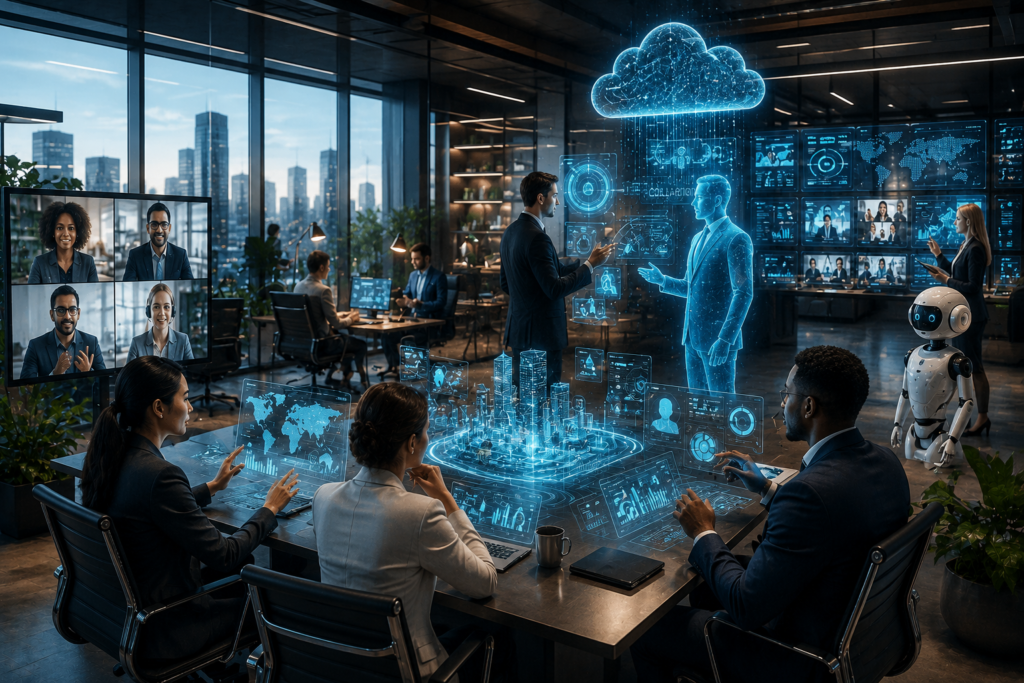
These workplace technology trends are not isolated innovations—they form the foundation of the modern digital workplace. Organizations that align future of work technology, AI in workplace, and remote work technology with clear business goals will be better equipped to adapt, innovate, and lead in the years ahead.
AI Assistants
Enterprise AI assistants have become indispensable in the modern digital workplace. They summarize lengthy reports, answer employee questions, organize calendars, draft documents, and retrieve information instantly. Employees spend less time searching for data and more time solving business problems.
In my experience, AI assistants are most effective when they integrate securely with existing business systems and provide context-aware recommendations instead of generic responses.
AI Productivity Tools
One of the fastest-growing workplace technology trends is the adoption of AI productivity tools. These platforms automate repetitive administrative tasks, generate business insights, create presentations, analyze spreadsheets, and streamline project management.
Organizations that strategically implement these tools often report faster project completion, improved collaboration, and greater operational efficiency.
AI-Powered Meetings
Meetings have evolved dramatically. AI can now record discussions, generate accurate transcripts, identify action items, summarize key decisions, and distribute follow-up notes automatically. This allows participants to remain engaged instead of focusing on note-taking.
From consulting with executive leadership teams, I have found that AI-generated meeting summaries improve accountability because every participant receives consistent documentation immediately after the meeting.
AI Writing and Content Creation
Content creation has become another major application of AI in workplace environments. Marketing teams, HR departments, customer support representatives, and business analysts increasingly use AI to draft reports, create documentation, prepare proposals, and produce internal communications.
The best organizations still maintain human review processes to ensure accuracy, consistency, and brand voice.
AI for Software Development
Developers now use AI to generate code suggestions, identify bugs, write documentation, and accelerate testing. Rather than replacing software engineers, AI enables development teams to focus on architecture, innovation, and complex problem-solving.
AI in Recruitment and Talent Management
Recruiters leverage AI to screen resumes, match candidates with job requirements, schedule interviews, and analyze workforce trends. HR professionals can dedicate more time to relationship building and strategic workforce planning instead of manual administrative work.
AI-Powered Customer Support
Customer service teams increasingly rely on intelligent virtual assistants and AI chatbots to resolve routine inquiries around the clock. Human agents can then concentrate on complex customer issues requiring empathy and critical thinking.
One lesson I’ve learned across enterprise projects is that successful AI adoption depends on governance, employee training, transparency, and responsible implementation. Technology should always empower people—not overwhelm them.
Virtual Desktop Infrastructure
Virtual desktop solutions allow employees to access secure corporate environments without storing sensitive information on personal devices. This approach improves compliance while supporting flexible work arrangements.
Unified Communication Platforms
Successful future of work technology strategies integrate messaging, video conferencing, document sharing, project management, and enterprise search into one connected platform. Employees spend less time switching between applications and more time delivering meaningful results.
Develop Digital Skills
Continuous learning has become essential. Employees need opportunities to develop AI literacy, cybersecurity awareness, data analysis skills, and digital collaboration capabilities.
Leadership Sets the Example
From consulting with executive teams, I’ve learned that transformation succeeds when leaders actively embrace new technologies themselves. Employees follow leadership behavior far more than corporate presentations.
Comparison Table: Traditional Workplace vs Digital Workplace vs Future Workplace
| Feature | Traditional Workplace | Digital Workplace | Future Workplace |
|---|---|---|---|
| Collaboration | Face-to-face meetings | Cloud collaboration | AI-powered real-time collaboration |
| Communication | Email and phone | Unified communication platforms | Intelligent AI assistants and immersive collaboration |
| Productivity | Manual workflows | Digital automation | AI-driven workflow optimization |
| Security | Office-based security | Cloud security | Zero Trust with AI threat detection |
| Flexibility | Office-only work | Hybrid work | Location-independent intelligent work |
| Employee Experience | Fixed processes | Personalized digital tools | AI-driven employee experiences |
| AI Adoption | Minimal | Departmental AI usage | Enterprise-wide AI in workplace integration |
| Cost Efficiency | High operational costs | Optimized digital operations | Automated and data-driven resource management |
| Scalability | Limited by physical offices | Cloud-based scaling | Intelligent autonomous enterprise infrastructure |
Challenges Businesses Face When Adopting Future of Work Technology
While future of work technology offers remarkable opportunities, every transformation journey comes with challenges. During the past 25 years of consulting with organizations of all sizes, I’ve learned that technology rarely fails because of the software itself—it fails because organizations underestimate the human side of change.
Employee Resistance
One mistake many organizations still make is introducing new technology without explaining why the change matters. Employees naturally resist unfamiliar systems when they don’t understand the benefits.
The solution is simple but often overlooked: involve employees early, communicate transparently, provide hands-on training, and celebrate quick wins to build confidence.
Integration Challenges
Disconnected software often creates more complexity than value. Businesses should prioritize integrated platforms that allow data to flow securely across departments instead of relying on isolated applications.
Skills Gap and Continuous Learning
Technology evolves faster than traditional training programs. Continuous learning must become part of organizational culture, enabling employees to develop skills in AI, data literacy, cybersecurity, cloud collaboration, and workflow automation.
Expert Recommendations
If I were advising an executive team beginning its digital transformation today, these would be my top recommendations.
Start with Business Outcomes
Never purchase technology simply because it’s popular. Begin by identifying the business challenges you want to solve and select tools that directly support those goals.
Put Employees First
Technology succeeds when employees embrace it. Invest in user-friendly platforms, structured onboarding, and continuous support to encourage adoption.
Build an Integrated Digital Workplace
Avoid disconnected systems. Create a unified digital workplace where communication, collaboration, HR, project management, knowledge sharing, and AI in workplace solutions work together seamlessly.
Measure Success Continuously
Track key performance indicators such as productivity, employee engagement, customer satisfaction, collaboration efficiency, and operational costs. Data-driven decisions lead to continuous improvement.
Invest in Leadership
Leaders should actively use the technologies they expect employees to adopt. Visible leadership commitment accelerates organizational change.
Treat Transformation as an Ongoing Journey
One lesson I’ve learned over the past 25 years is that digital transformation is never “finished.” The organizations that remain competitive continuously evaluate emerging workplace technology trends, refine their strategies, and adapt to changing market conditions.

Frequently Asked Questions
1. What is future of work technology?
Future of work technology refers to digital tools, AI solutions, cloud platforms, automation systems, and collaboration technologies that improve productivity, flexibility, and employee experience.
2. Why is AI important in the workplace?
AI in workplace enhances productivity by automating repetitive tasks, generating insights, improving decision-making, and allowing employees to focus on higher-value activities.
3. What is a digital workplace?
A digital workplace is an integrated environment where employees use cloud applications, collaboration tools, enterprise AI, and secure digital platforms to work efficiently from any location.
4. What are the biggest workplace technology trends in 2026?
Key workplace technology trends include AI copilots, intelligent automation, hybrid work platforms, smart offices, cloud collaboration, digital twins, employee experience platforms, and advanced cybersecurity.
Conclusion
The evolution of future of work technology is not a temporary trend—it represents a fundamental shift in how organizations create value, collaborate, and compete. Throughout my 25 years of working with enterprises across multiple industries, I’ve seen one consistent pattern: businesses that embrace innovation while prioritizing people consistently achieve the most sustainable success.
The future belongs to organizations that combine AI in workplace, remote work technology, and a connected digital workplace with visionary leadership and continuous learning. Technology alone cannot transform a business, but when paired with skilled employees, clear strategy, and a culture of innovation, it becomes a powerful catalyst for long-term growth.
As workplace technology trends continue to evolve, organizations that remain agile, invest in their workforce, and adopt intelligent solutions responsibly will define the next generation of business success.
Author

razakh6402@gmail.com
Related Posts
Lead Generation Software: 12 Best Lead Generation Tools for B2B Sales (2026 Guide)
- 0
- 2,300 words
If someone had asked me 15 years ago what the biggest challenge in sales was, my answer would have been simple: finding...
Survey Software: 12 Best Online Survey Tools & Feedback Software for Businesses (2026 Guide)
- 0
- 1,871 word
Whether I was helping a SaaS startup validate a new feature, assisting an HR team with employee engagement, or optimizing customer experience...
Read out all
Online Course Platform: 12 Best LMS Software & eLearning Platforms for Course Creators (2026 Guide)
- 0
- 1,900 word
The online education industry has changed dramatically over the last 15 years. When I built my first digital training portal, simply uploading...
Team Communication Software: 12 Best Business Messaging Apps for Modern Workplaces in 2026 (Expert Tested)
- 0
- 2,305 words
I’ve personally tested dozens of team communication software platforms while consulting for marketing agencies, software companies, HR departments, remote development teams, and...
Invoice Software: 12 Best Invoicing Software for Small Business in 2026 (Expert Tested)
- 0
- 2,493 words
I’ve worked with freelancers chasing late payments, agencies managing hundreds of monthly invoices, startups scaling internationally, and established businesses struggling with outdated...
Generate one SEO-optimized title thatdigital asset management software
- 6
- 2,632 words
One of the most memorable projects I led involved migrating nearly half a million digital assets from a traditional file server into...