- 0
- 2,607 words
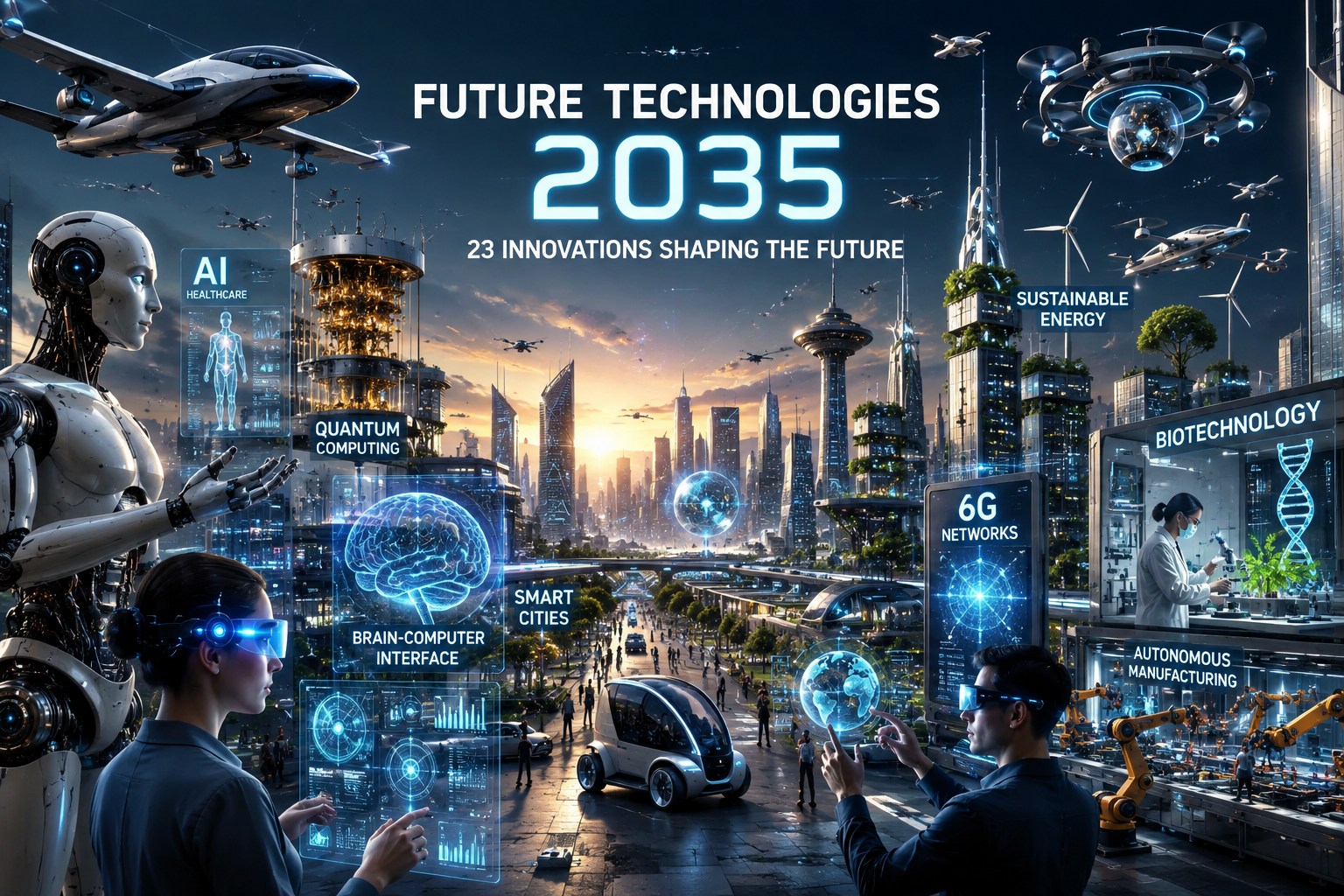
Unlike previous decades that were defined by individual innovations such as smartphones or cloud computing, the next decade will be driven by entire ecosystems of interconnected technologies. Artificial intelligence will become more capable, quantum computing will tackle problems beyond today’s computers, biotechnology will reshape healthcare, and clean energy innovations will transform industries worldwide. Together, these technologies shaping the future will redefine how people work, learn, travel, communicate, and solve global challenges.
Governments, businesses, universities, and investors are already preparing for this transformation. Organizations including the World Economic Forum, MIT Technology Review, IEEE, and leading research laboratories have repeatedly highlighted emerging technologies 2035 as one of the defining forces behind economic growth and digital transformation over the next decade.
From my own experience, one lesson stands out above all others: companies that prepare early rarely struggle to adapt later. I witnessed this during the cloud computing revolution, the rise of smartphones, and more recently with generative AI. Businesses that experimented early gained a lasting competitive advantage, while those that waited often spent years trying to catch up.
The same pattern is unfolding again.
Today’s future innovations are becoming tomorrow’s competitive necessities. Whether you’re an entrepreneur, investor, technology enthusiast, student, or business leader, understanding these next generation technologies will help you make smarter decisions for the years ahead.
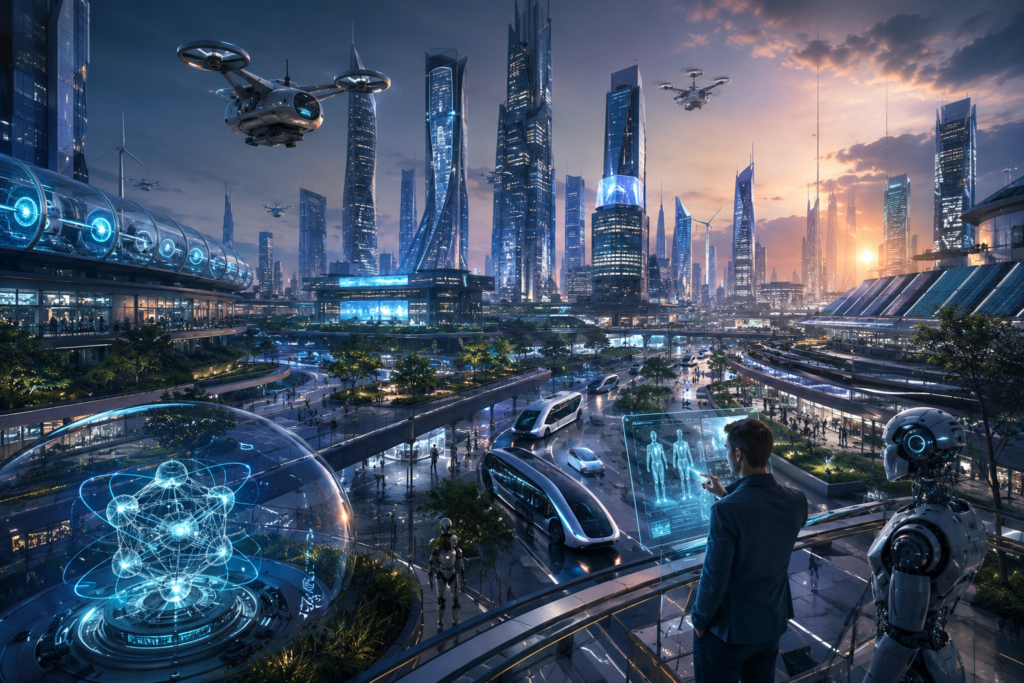
Future Technologies 2035: Why the Next Decade Will Change Everything
The coming decade represents one of the most important turning points in modern history. While previous industrial revolutions unfolded over several generations, today’s technological evolution is accelerating at an unprecedented pace.
Several powerful trends are converging simultaneously, creating an environment where innovation builds upon innovation. Artificial intelligence improves scientific research, faster networks enable smarter devices, advanced computing powers medical discoveries, and automation increases productivity across nearly every industry.
Artificial Intelligence Is Accelerating Every Industry
If there’s one technology I’ve seen evolve faster than any other, it’s artificial intelligence.
A decade ago, AI was mostly limited to research labs and niche enterprise applications. Today, it writes code, assists doctors, detects fraud, creates digital art, and powers intelligent customer service. By 2035, AI won’t simply automate repetitive tasks—it will collaborate with humans on complex decision-making.
The most exciting development isn’t AI replacing people. It’s AI amplifying human creativity, productivity, and expertise.
Businesses that integrate AI responsibly will likely outperform competitors through faster innovation, improved customer experiences, and more efficient operations.
Global Innovation Is Becoming More Collaborative
Innovation is no longer concentrated in a handful of countries.
During industry conferences over the years, one trend became increasingly clear: the best ideas often emerge from collaboration rather than competition.
By 2035, international cooperation will likely play a major role in developing sustainable energy, healthcare solutions, cybersecurity frameworks, and advanced manufacturing systems.
Digital Transformation Is Entering a New Era
Many organizations initially viewed digital transformation as moving data to the cloud or adopting remote work tools.
Today, that definition has expanded significantly.
Future enterprises will combine AI, robotics, IoT, edge computing, digital twins, blockchain, and advanced analytics into unified intelligent ecosystems.
Instead of reacting to problems, businesses will increasingly predict them before they occur.
Factories will self-monitor equipment.
Hospitals will anticipate patient risks.
Supply chains will optimize themselves in real time.
Retailers will personalize every customer interaction.
This shift represents one of the defining characteristics of future technologies 2035.

Economic Impact Will Reach Every Industry
Technology is no longer a separate sector of the economy.
It has become the foundation of nearly every business.
According to numerous industry forecasts, technologies shaping the future are expected to generate trillions of dollars in economic value over the next decade through automation, productivity improvements, healthcare innovation, clean energy, and intelligent infrastructure.
At the same time, entirely new career paths will emerge.
Roles such as AI ethics specialists, quantum software engineers, digital twin architects, robotics trainers, synthetic biology researchers, and spatial computing designers are already beginning to appear.
The workforce of 2035 will require continuous learning rather than one-time education.
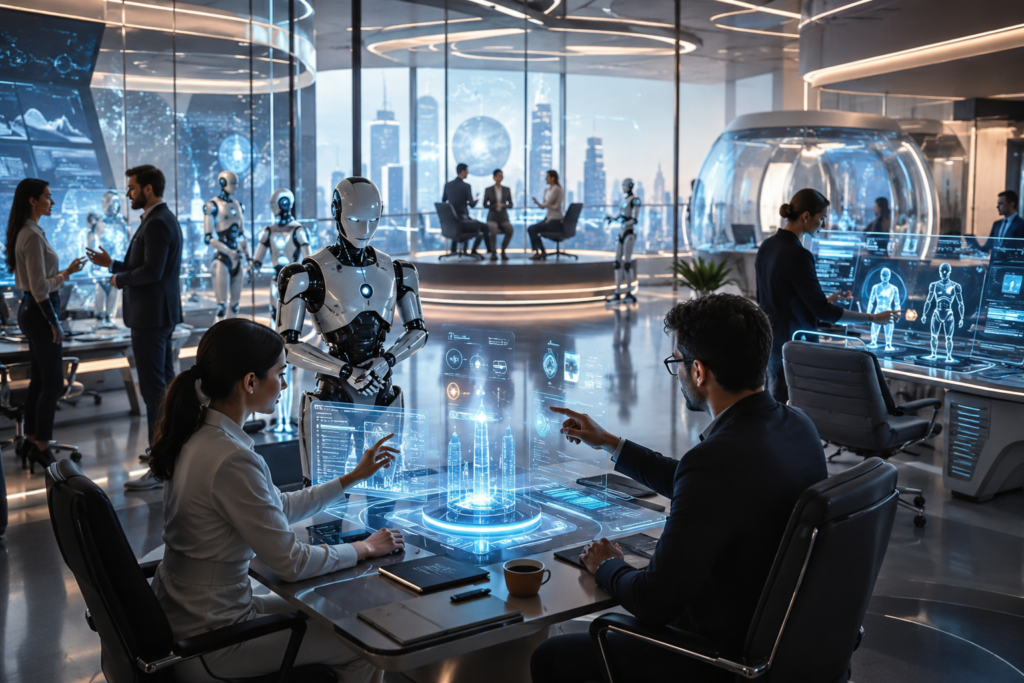
Top Technologies Shaping the Future by 2035
Artificial Intelligence (AI)
Artificial intelligence remains the driving force behind nearly every major technological breakthrough. Rather than existing as a standalone tool, AI is becoming the intelligence layer that powers healthcare, finance, education, manufacturing, cybersecurity, transportation, and scientific research.
Over the next decade, AI systems will become increasingly autonomous, capable of understanding complex business contexts, processing multimodal information, and collaborating with humans in real time. Organizations that treat AI as a strategic asset—not just another software upgrade will be better positioned to innovate faster and serve customers more effectively.
Generative AI
We’re already seeing businesses use generative AI to reduce repetitive work while allowing employees to focus on strategic thinking. As the technology matures, it will become a trusted digital collaborator rather than simply a content-generation tool.
The future belongs to organizations that combine human expertise with AI-generated insights instead of viewing the two as competitors.
Autonomous Robots
Robotics is entering a new phase where machines can perceive, learn, and adapt to changing environments.
Factories will increasingly rely on autonomous robots for precision manufacturing. Hospitals will use robotic assistants to support healthcare professionals. Warehouses, farms, construction sites, and logistics hubs will deploy intelligent machines capable of working safely alongside people.
Unlike earlier industrial robots confined to assembly lines, future robots will navigate dynamic environments and perform a broader range of tasks with greater flexibility.
Quantum Computing
Quantum computing remains one of the most promising—and misunderstood emerging technologies 2035.
Unlike traditional computers that process information as bits, quantum computers use quantum bits, or qubits, allowing them to solve certain classes of problems exponentially faster.
While widespread commercial adoption may still take time, industries such as pharmaceuticals, finance, materials science, logistics, and climate modeling stand to benefit enormously. Researchers are already exploring quantum algorithms to discover new medicines, optimize global supply chains, and improve cryptographic systems.
Businesses should monitor this space closely, even if practical deployment is still evolving.
Brain-Computer Interfaces (BCIs)
Brain-computer interfaces could fundamentally change how humans interact with technology.
Instead of relying solely on keyboards, touchscreens, or voice commands, BCIs aim to create direct communication between the human brain and digital devices.
Initially, these systems will focus on medical applications, helping individuals regain mobility, restore communication, or control prosthetic limbs. Over time, they may expand into education, productivity, gaming, and immersive computing.
Although ethical and privacy considerations remain significant, BCIs represent one of the most fascinating future innovations currently under development.
Spatial Computing
Spatial computing blends the physical and digital worlds, enabling computers to understand and interact with three-dimensional environments.
Rather than viewing information on flat screens, users will engage with digital content positioned naturally within their surroundings. Engineers will manipulate virtual machinery, architects will walk through digital buildings before construction begins, and remote teams will collaborate inside immersive workspaces.
As hardware becomes lighter and more affordable, spatial computing is expected to become a key component of next generation technologies, transforming design, collaboration, training, and entertainment.
Augmented Reality (AR)
Augmented reality overlays digital information onto the physical world, making everyday tasks more intuitive and interactive.
By 2035, AR glasses could replace many smartphone functions, providing real-time navigation, language translation, maintenance instructions, and contextual information without interrupting the user’s workflow.
In industries such as healthcare, manufacturing, retail, and field services, AR will reduce errors, improve training, and increase operational efficiency. The technology’s success will depend on seamless hardware, intuitive software, and strong privacy protections.
Edge computing processes data closer to where it’s generated instead of sending everything to distant cloud servers.
This reduces latency, improves reliability, and supports applications requiring immediate responses, including autonomous vehicles, industrial automation, robotics, healthcare monitoring, and augmented reality.
As billions of connected devices come online, edge computing will become an essential component of next generation technologies.
Internet of Things (IoT)
The Internet of Things connects billions of devices capable of collecting, sharing, and analyzing real-time information.
Smart homes, connected factories, intelligent agriculture, wearable health devices, and autonomous logistics systems all rely on IoT.
By 2035, IoT will increasingly work alongside AI, edge computing, and digital twins to create intelligent environments that continuously learn and optimize themselves.
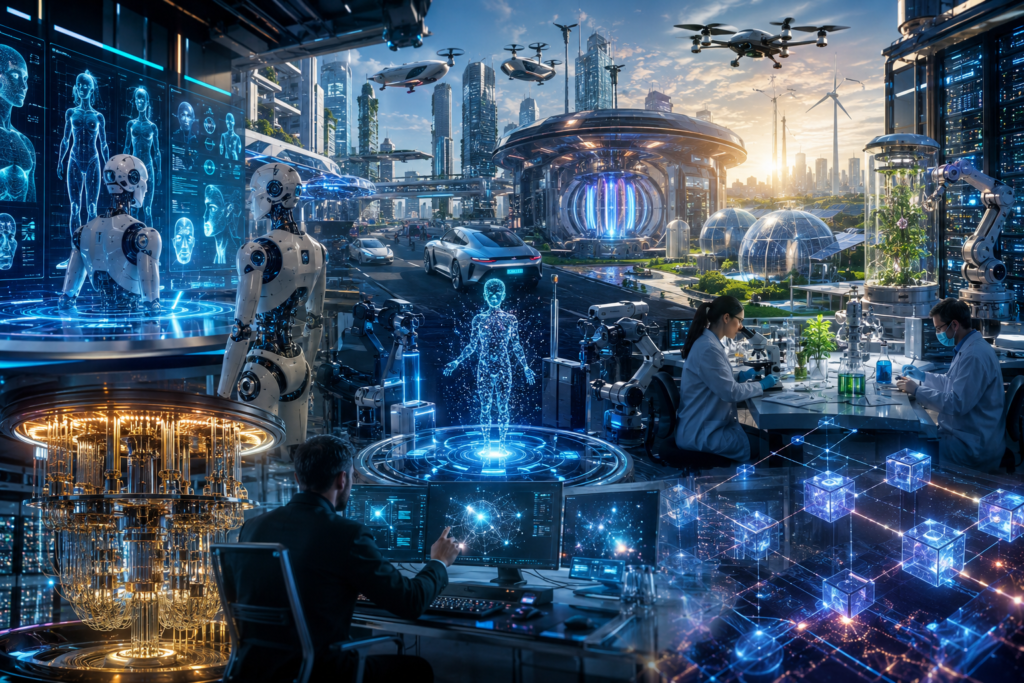
How Future Innovations Will Transform Everyday Life
The most exciting aspect of future technologies 2035 isn’t just the technology itself—it’s how seamlessly it will integrate into daily life. Many of the biggest changes will happen quietly in the background, making everyday experiences safer, faster, healthier, and more personalized.
Healthcare
AI-powered diagnostics will detect diseases earlier, wearable devices will continuously monitor vital signs, robotic surgery will become even more precise, and personalized medicine will tailor treatments to an individual’s genetic profile.
Patients will receive more preventive care instead of reactive treatment.
Education
Learning will become adaptive and personalized.
AI tutors will identify individual strengths and weaknesses, while AR and VR classrooms will provide immersive experiences that make complex subjects easier to understand.
Students will learn at their own pace with real-time feedback.
Business
Businesses will automate repetitive tasks, improve customer experiences with intelligent assistants, and make faster decisions using predictive analytics.
Rather than replacing employees, AI will increasingly handle routine work, allowing teams to focus on creativity, innovation, and strategic planning.
Manufacturing
Smart factories powered by robotics, IoT, digital twins, and predictive maintenance will improve productivity while reducing waste and downtime.
Manufacturers will design, test, and optimize products virtually before production even begins.
Finance
Financial institutions will use AI to detect fraud instantly, personalize investment strategies, automate customer service, and improve risk management.
Blockchain technologies will also simplify secure global transactions and digital identity verification.
Agriculture
Precision agriculture will help farmers produce more food with fewer resources.
AI-powered drones, autonomous tractors, connected sensors, and satellite imaging will optimize irrigation, fertilization, and crop monitoring, improving yields while reducing environmental impact.
Transportation
Transportation networks will become safer, cleaner, and more efficient.
Autonomous vehicles, intelligent traffic systems, electric mobility, high-speed connectivity, and predictive maintenance will reduce congestion and improve travel experiences.
Retail
Retail will become highly personalized.
AI shopping assistants, augmented reality product visualization, cashier-free stores, and predictive inventory systems will create smoother customer experiences both online and offline.
Entertainment
Entertainment will become increasingly immersive through spatial computing, virtual reality, AI-generated content, and interactive storytelling.
Audiences will participate in experiences rather than simply consume them.
Government
Governments will leverage AI and digital infrastructure to improve public services, streamline administrative processes, enhance emergency response, strengthen cybersecurity, and support smarter urban planning.
Digital transformation will make public services faster, more transparent, and more accessible.
Industries That Will Benefit the Most
Nearly every industry will experience disruption, but some sectors stand to gain more quickly from technologies shaping the future.
| Industry | How Future Technologies Will Transform It |
|---|---|
| Healthcare | AI diagnostics, robotic surgery, precision medicine, digital twins, wearable health monitoring |
| Manufacturing | Smart factories, autonomous robots, predictive maintenance, industrial IoT |
| Financial Services | AI risk analysis, fraud prevention, blockchain, digital identity |
| Retail & E-commerce | Personalized shopping, AI recommendations, cashier-free stores, AR product experiences |
| Agriculture | Precision farming, autonomous equipment, AI crop monitoring, IoT sensors |
| Logistics | Autonomous delivery, warehouse robotics, predictive routing, real-time tracking |
| Education | AI tutors, immersive classrooms, adaptive learning platforms |
| Energy | Fusion research, green hydrogen, AI-powered smart grids, renewable optimization |
| Construction | Digital twins, robotics, AI planning, predictive project management |
| Public Sector | Smart cities, intelligent infrastructure, digital government services, AI-assisted policy planning |
One lesson history consistently teaches is that industries embracing innovation early tend to create entirely new markets rather than simply improving existing ones. The organizations that invest strategically in these future innovations today are likely to become the market leaders of tomorrow.
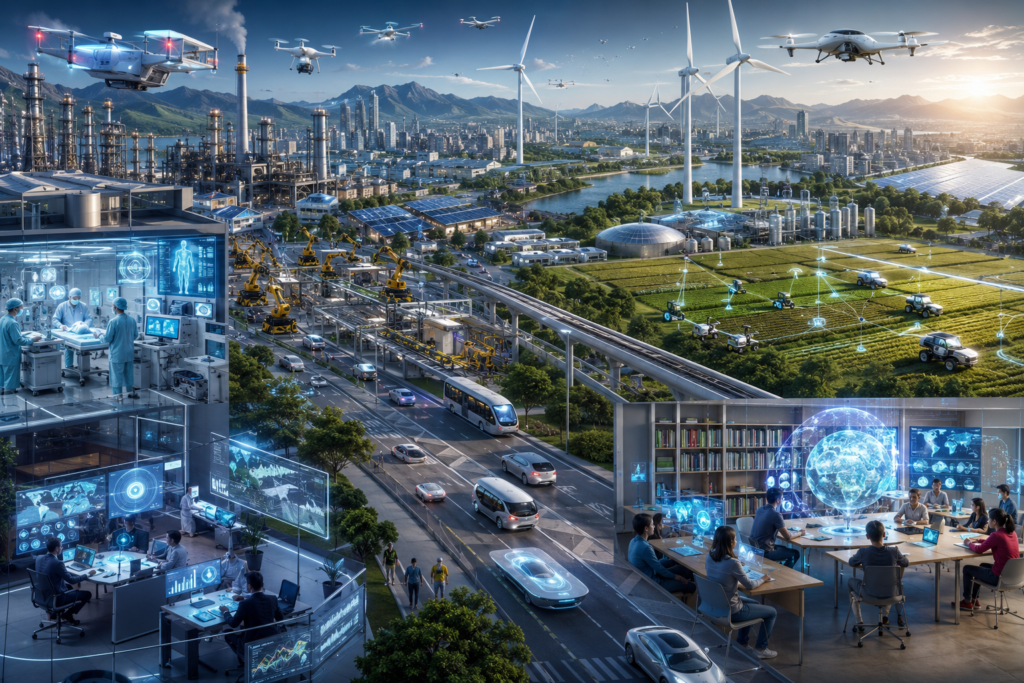
Expert Insights from 15 Years of Watching Technology Evolve
When I first started writing about technology, cloud computing was still viewed with skepticism. Many executives questioned whether businesses would ever trust critical systems outside their own data centers. A few years later, cloud became the foundation of modern digital business.
I witnessed a similar cycle with smartphones. Early devices seemed like luxury gadgets, yet they eventually transformed banking, shopping, healthcare, education, and communication.
Today, I’m seeing the same pattern with artificial intelligence.
The organizations succeeding with AI aren’t necessarily the ones spending the most money. They’re the ones solving specific business problems, measuring results, and continuously improving their systems. They understand that technology is only valuable when it delivers meaningful outcomes.
I’ve also seen companies make the opposite mistake—investing heavily in trendy technologies without a clear strategy. Whether it was blockchain during its hype cycle or early IoT deployments without security planning, those projects often struggled because they focused on technology before business value.
Another lesson that has stayed with me is that collaboration consistently outperforms isolation. Some of the most successful innovations I’ve covered emerged from partnerships between startups, universities, enterprise organizations, and government research institutions. The future belongs to ecosystems, not silos.
Looking toward future technologies 2035, I believe the biggest winners won’t necessarily invent every breakthrough. Instead, they’ll be the organizations that combine AI, robotics, cloud computing, biotechnology, and data into practical solutions that improve people’s lives.
Perhaps the most important prediction I can make is this: adaptability will become the world’s most valuable business skill. Technology will continue evolving, but organizations that foster curiosity, continuous learning, and responsible innovation will remain resilient regardless of what comes next.
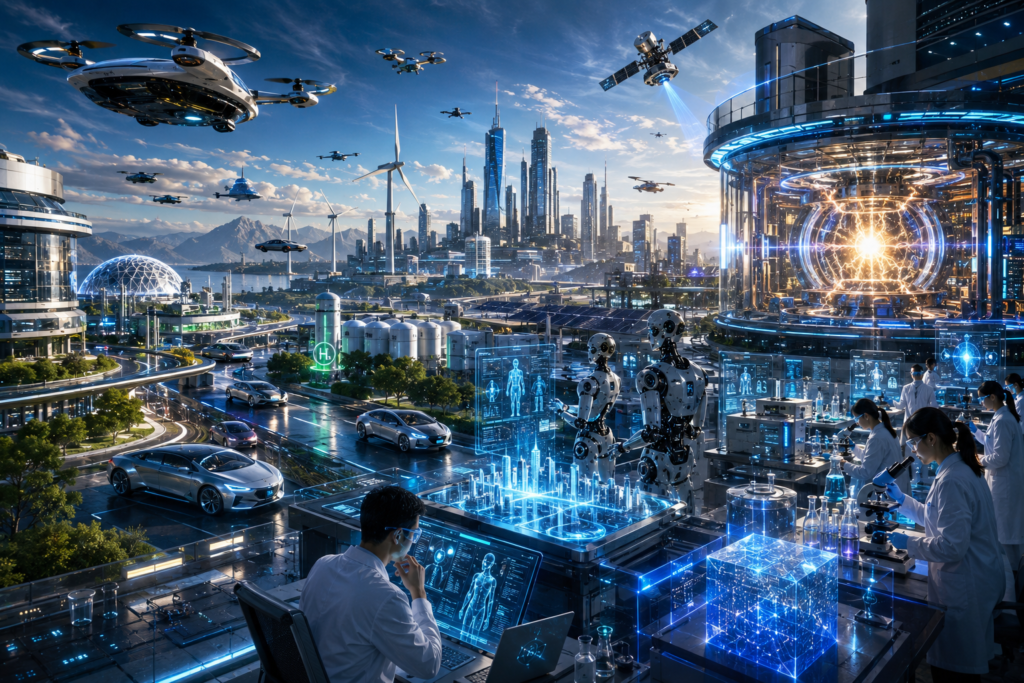
What Businesses Should Do Today
Preparing for emerging technologies 2035 doesn’t require betting everything on one innovation. It requires building a culture of continuous learning and strategic experimentation.
Here are practical steps every organization should consider:
- Develop an AI strategy that focuses on measurable business outcomes rather than following industry hype.
- Invest in cybersecurity by adopting zero-trust architectures, continuous monitoring, and employee awareness programs.
- Upskill your workforce through ongoing training in AI, cloud computing, data analytics, automation, and digital collaboration.
- Modernize your infrastructure by embracing cloud-native platforms, edge computing, and scalable digital systems.
- Experiment with emerging technologies through pilot projects before committing to large-scale deployments.
- Build strategic partnerships with universities, startups, technology vendors, and research organizations.
- Prioritize sustainability by integrating energy-efficient technologies and environmentally responsible practices into business operations.
- Establish responsible governance for AI, data privacy, and ethical technology use to build long-term trust with customers and stakeholders.
Organizations that start preparing today will be better equipped to adapt, compete, and innovate in the rapidly evolving technology landscape of 2035.
Final Thoughts
The journey toward future technologies 2035 is already underway. Artificial intelligence, quantum computing, biotechnology, robotics, spatial computing, clean energy, and intelligent connectivity are no longer distant concepts—they are active areas of investment shaping the next era of global innovation.
What makes this decade unique is not any single breakthrough but the convergence of multiple technologies shaping the future. Together, these advancements will redefine industries, transform everyday experiences, and create opportunities that were unimaginable just a few years ago.
While challenges such as cybersecurity, ethics, regulation, and digital inequality remain significant, history has repeatedly shown that responsible innovation can improve lives, strengthen economies, and solve complex global problems.
For business leaders, entrepreneurs, students, investors, and technology enthusiasts, the message is clear: the future won’t wait. The organizations and individuals who embrace learning, adapt to change, and invest in future innovations today will be best positioned to thrive in the age of next generation technologies.
Author

razakh6402@gmail.com
Related Posts
Lead Generation Software: 12 Best Lead Generation Tools for B2B Sales (2026 Guide)
- 0
- 2,300 words
If someone had asked me 15 years ago what the biggest challenge in sales was, my answer would have been simple: finding...
Survey Software: 12 Best Online Survey Tools & Feedback Software for Businesses (2026 Guide)
- 0
- 1,871 word
Whether I was helping a SaaS startup validate a new feature, assisting an HR team with employee engagement, or optimizing customer experience...
Read out all
Online Course Platform: 12 Best LMS Software & eLearning Platforms for Course Creators (2026 Guide)
- 0
- 1,900 word
The online education industry has changed dramatically over the last 15 years. When I built my first digital training portal, simply uploading...
Team Communication Software: 12 Best Business Messaging Apps for Modern Workplaces in 2026 (Expert Tested)
- 0
- 2,305 words
I’ve personally tested dozens of team communication software platforms while consulting for marketing agencies, software companies, HR departments, remote development teams, and...
Invoice Software: 12 Best Invoicing Software for Small Business in 2026 (Expert Tested)
- 0
- 2,493 words
I’ve worked with freelancers chasing late payments, agencies managing hundreds of monthly invoices, startups scaling internationally, and established businesses struggling with outdated...
Generate one SEO-optimized title thatdigital asset management software
- 6
- 2,632 words
One of the most memorable projects I led involved migrating nearly half a million digital assets from a traditional file server into...