
- 0
- 1,823 word
For more than 15 years, I’ve watched banking evolve from branch-centric services to mobile-first financial ecosystems. Early in my career, banks were cautious about sharing customer data, even securely. Today, that mindset has changed dramatically. Customers now expect their financial information to work seamlessly across budgeting apps, investment platforms, payment services, and lending solutions.
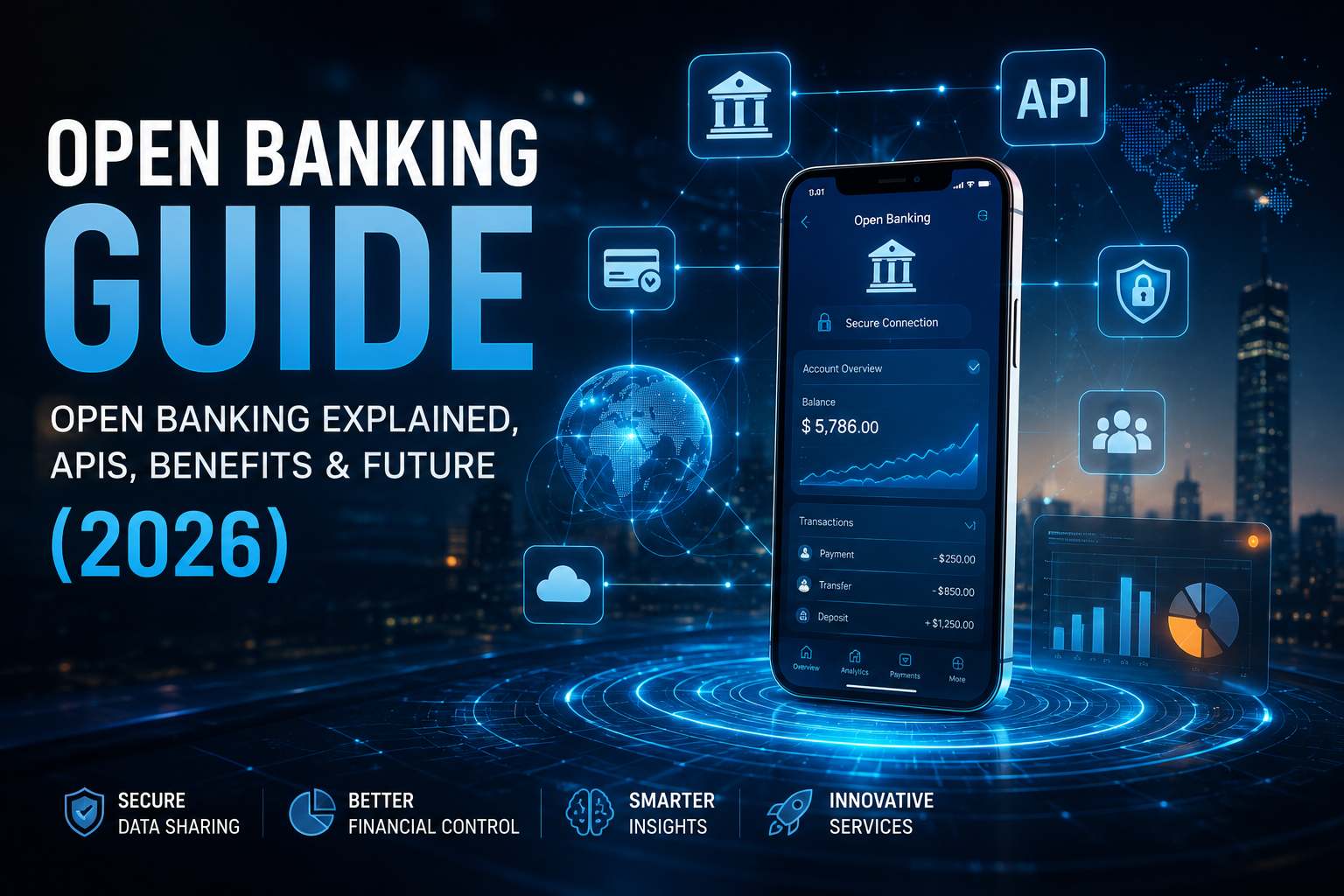
This shift is powered by open banking. If you’ve searched for what is open banking, wondered about open banking explained, or heard developers discussing an open banking API, you’re looking at one of the biggest financial innovations of the decade.
In this Open Banking Guide, I’ll explain how open banking works, why financial institutions are embracing it, how secure APIs are transforming payments, and why the open banking benefits extend far beyond convenience. Whether you’re a consumer, developer, business owner, or fintech enthusiast, understanding open banking has become essential in 2026.

What Is Open Banking?
When someone asks me what is open banking, I usually keep the explanation simple.
Open banking is a secure system that allows banks to share customer-approved financial data with licensed third-party providers using an open banking API. Instead of manually downloading statements or logging into multiple banking portals, customers can securely connect their accounts to trusted financial applications.
Why Open Banking Exists
Traditional banking often created isolated systems where financial data remained locked within individual institutions. Open banking changes this by giving customers ownership and control over their financial information.
Banking Evolution
The banking industry has evolved through several stages:
- Branch Banking
- Internet Banking
- Mobile Banking
- Digital Banking
- Open Banking
- Open Finance
- Embedded Finance
Today, open banking explained means putting customers—not banks—in control of financial data.
Open Banking Explained in Simple Terms
Imagine your bank account as a house.
Years ago, only you and the bank had the keys.
With open banking, you decide who receives temporary access to specific rooms in your house. Your budgeting app might only access spending history, while your investment app sees balances. Nobody gets unlimited access without your permission.
Step-by-Step Customer Journey
- User downloads a budgeting app.
- App requests permission.
- Customer approves access.
- Secure open banking API connects to the bank.
- Financial data transfers securely.
- Customer receives personalized insights.
This process is what people mean when they search open banking explained.
How Open Banking APIs Work
One of the most exciting innovations I’ve seen is the growth of the open banking API.
APIs (Application Programming Interfaces) act as secure bridges between banks and authorized fintech companies.
Authentication
Users verify their identity using:
- Biometrics
- Passwords
- Multi-factor authentication (MFA)
- Device verification
OAuth Authorization
Modern open banking API systems rely on OAuth authorization, allowing customers to grant limited, revocable access without sharing passwords.
Consent Management
Customers remain in control by choosing:
- Which accounts to share
- Which provider can access data
- How long access remains active
Secure Data Sharing
Only approved financial information is exchanged, protected with strong encryption and regulatory oversight.
Payment Initiation
Instead of using cards, some fintech apps initiate bank-to-bank payments directly through an open banking API, reducing costs and speeding up transactions.

Open Banking Benefits
One reason open banking has grown so quickly is the wide range of open banking benefits.
Benefits for Consumers
- Better budgeting
- Faster payments
- Personalized financial advice
- Easier loan comparisons
- Improved investment tracking
Benefits for Businesses
Businesses enjoy:
- Faster account verification
- Automated reconciliation
- Improved cash flow
- Lower payment costs
Benefits for Banks
Banks benefit from:
- Innovation partnerships
- Better customer experiences
- Digital transformation
- Expanded service ecosystems
Benefits for Fintech Companies
Fintech firms can build innovative products without becoming banks themselves.
Benefits for Developers
Developers gain standardized APIs that simplify secure financial application development.
Open Banking vs Traditional Banking
| Feature | Open Banking | Traditional Banking |
|---|---|---|
| Data Ownership | Customer controlled | Bank controlled |
| APIs | Standardized APIs | Limited integrations |
| Customer Control | High | Low |
| Innovation | Rapid | Slower |
| Payments | Real-time options | Card-centric |
| Third-Party Integration | Yes | Minimal |
| Personalization | AI-driven | Limited |
| Speed | Instant connectivity | Manual processes |
| Security | Consent-based API access | Internal systems only |

Real-Life Examples of Open Banking
Over the years, I’ve seen remarkable practical applications.
Budgeting Apps
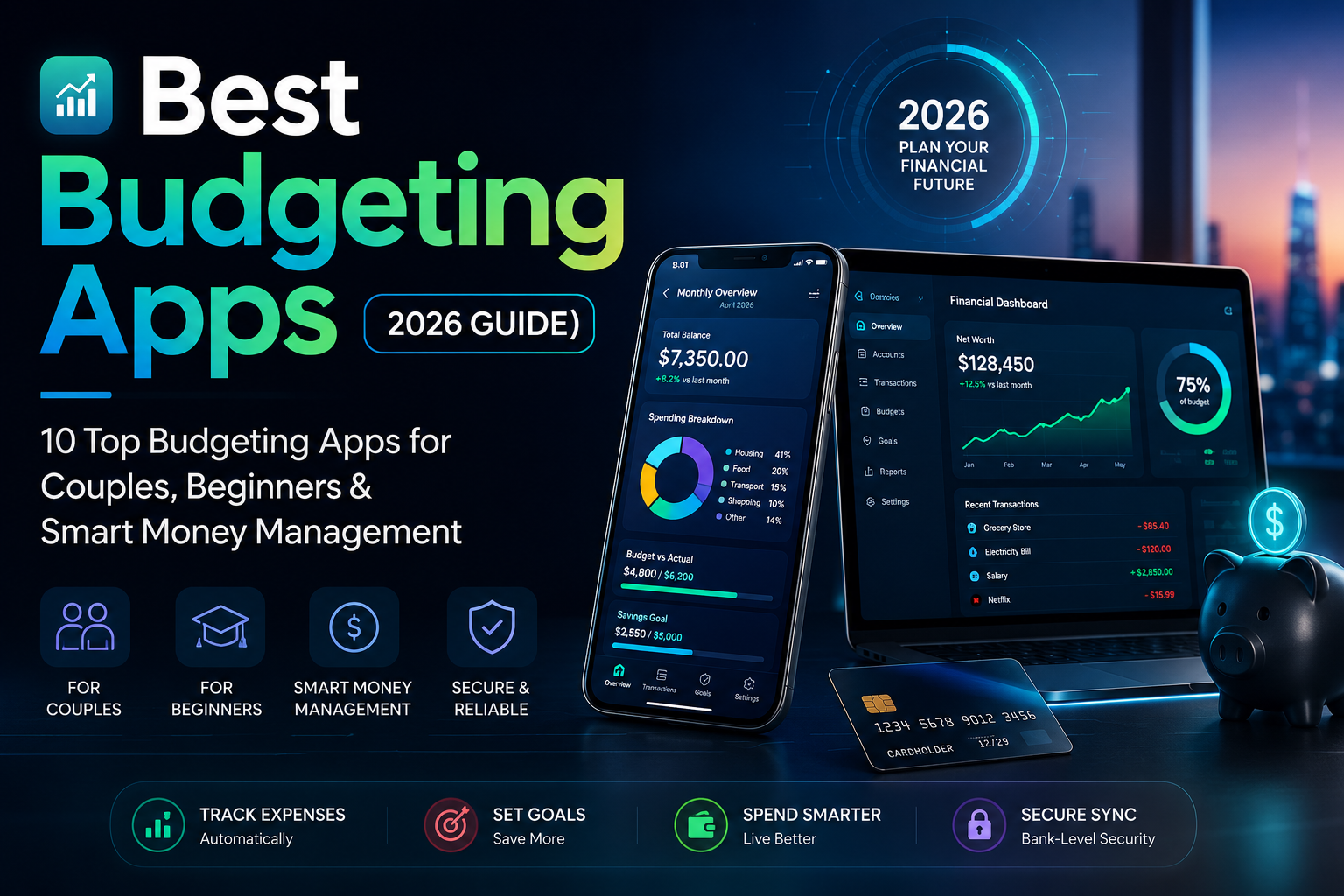
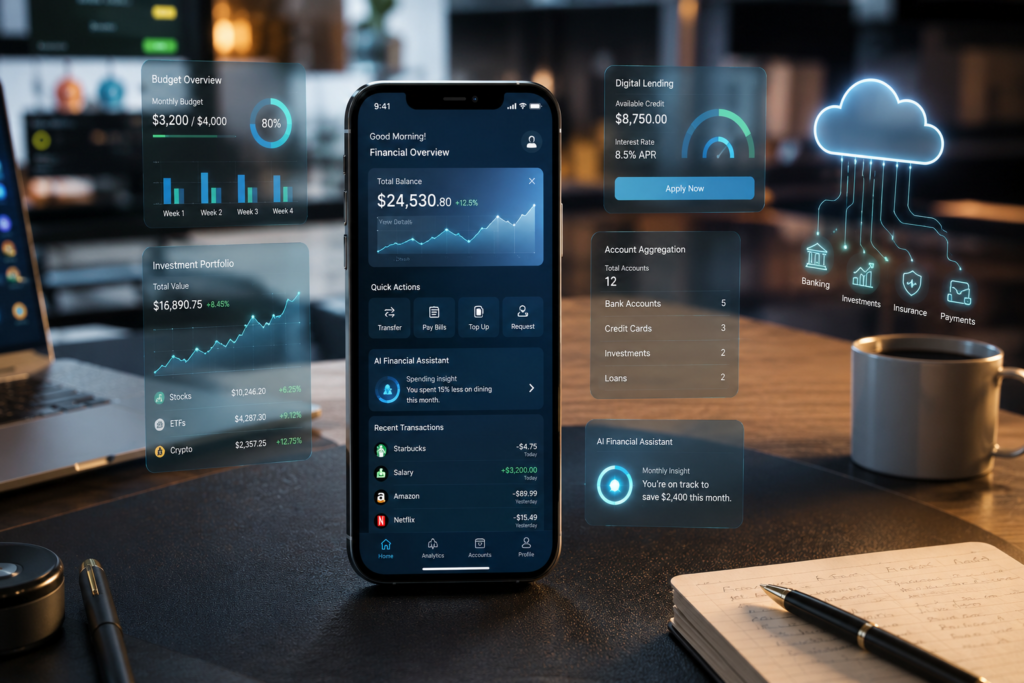
Apps automatically categorize expenses across multiple banks.
Personal Finance Apps
Users monitor savings, investments, debts, and spending in one dashboard.
Digital Lending
Lenders evaluate customer financial data instantly with consent.
Account Aggregation
Customers manage accounts from different banks within one application.
Investment Platforms
Investment apps recommend portfolios using transaction insights.
Buy Now Pay Later
BNPL providers perform affordability checks more accurately.
Payment Apps
Direct account-to-account transfers reduce card processing fees.
How Businesses Can Prepare for the Open Banking Revolution
One lesson I’ve learned from working with banks and fintech companies over the past 15 years is that open banking is no longer an optional innovation—it’s becoming a competitive necessity. Businesses that understand what is open banking today will be in a much stronger position as financial services become more connected and customer-focused.
For small businesses, adopting open banking APIs can simplify everyday financial operations. Modern accounting software can automatically sync bank transactions, reconcile invoices, monitor cash flow, and generate real-time financial reports. This reduces manual data entry, minimizes errors, and gives business owners more time to focus on growth instead of paperwork.
Large enterprises are also embracing open banking to improve payment processing, automate supplier payments, and enhance treasury management. Many organizations now use secure open banking API integrations to connect ERP systems, accounting platforms, payroll software, and banking services into a single ecosystem. The result is faster financial decision-making and greater operational efficiency.
From a developer’s perspective, I’ve seen tremendous improvements in API standards over the past few years. Building secure financial applications is now much easier thanks to standardized authentication methods, OAuth protocols, and detailed API documentation. Developers can create budgeting tools, investment platforms, payment gateways, and lending solutions while maintaining high security and regulatory compliance.
The open banking benefits extend beyond efficiency. Customers receive personalized financial recommendations, quicker loan approvals, smarter budgeting insights, and seamless payment experiences across multiple platforms. Banks, meanwhile, gain opportunities to collaborate with fintech innovators instead of competing against them, creating better products for everyone involved.
Looking ahead, open banking explained will evolve into the broader concept of Open Finance, where customers can securely share information related to insurance, pensions, investments, mortgages, and even digital identity through a unified ecosystem. As AI-powered analytics, blockchain technology, and real-time payment networks continue to mature, the future of open banking will be defined by greater transparency, stronger security, and highly personalized financial services that put customers firmly in control of their financial lives.
Security and Privacy in Open Banking
Security has improved dramatically over the last decade.
Encryption
Financial information travels through encrypted channels.
Authentication
Biometric login and MFA strengthen account protection.
PSD2
Europe’s PSD2 regulations established secure API standards that influenced banking worldwide.
GDPR
GDPR ensures customer privacy and data transparency.
Customer Consent
Customers decide who accesses their information and can revoke permission anytime.
Cybersecurity
Banks continuously monitor suspicious API activity using AI-powered fraud detection.

Challenges of Open Banking
Despite impressive growth, challenges remain.
Customer Awareness
Many people still ask, what is open banking, showing the need for better education The open banking benefits extend beyond efficiency. Customers receive personalized financial recommendations, quicker loan approvals, smarter budgeting insights, and seamless payment experiences across multiple platforms. Banks, meanwhile, gain opportunities to collaborate with fintech innovators instead of competing against them, creating better products for everyone involved.
Looking ahead, open banking explained will evolve into the broader concept of Open Finance, where customers can securely share information related to insurance, pensions, investments, mortgages, and even digital identity through a unified ecosystem. As AI-powered analytics, blockchain technology, and real-time payment networks continue to mature, the future of open banking will be defined by greater transparency, stronger security, and highly personalized financial services that put customers firmly in control of their financial lives.
API Standardization
Not every bank implements APIs consistently.
Fraud Risks
Social engineering remains a bigger risk than API technology itself.
Legacy Banking Systems
Older banking infrastructure often slows modernization.
Regulatory Compliance
Financial institutions must continuously adapt to evolving regulations.
Future of Open Banking in 2026 and Beyond
The next chapter is even more exciting.
Artificial Intelligence
AI will personalize financial advice in real time.
Embedded Finance
Banking will become invisible inside shopping apps, travel apps, and business software.
Open Finance
Data sharing will expand beyond banking into insurance, pensions, and investments.
Digital Identity
Secure digital identities will simplify verification.
CBDCs
Central Bank Digital Currencies may integrate with open banking ecosystems.
Blockchain
Blockchain will enhance payment transparency and settlement efficiency.
Personalized Banking
AI will deliver tailored recommendations based on spending behavior.
Real-Time Payments
Instant account-to-account payments will become the global standard.

Frequently Asked Questions
What is open banking?
Open banking is a secure framework that allows customers to share financial data with authorized providers through APIs after giving consent.
Is open banking safe?
Yes. Modern encryption, MFA, customer consent, and regulatory oversight make open banking highly secure.
What is an open banking API?
An open banking API securely connects banks with licensed third-party financial applications.
What are the biggest open banking benefits?
Better budgeting, faster payments, improved financial insights, personalized services, and increased competition.
Who owns banking data?
Customers own their financial data and decide who can access it.
Can I revoke API access?
Yes. Consent can usually be withdrawn at any time.
Is open banking available worldwide?
Many countries have adopted open banking regulations or similar API frameworks, with adoption expanding rapidly.
Does open banking replace traditional banks?
No. It enhances traditional banking by enabling secure collaboration with fintech providers.
Conclusion
After working alongside banks, fintech startups, payment providers, and API developers for over 15 years, I believe open banking represents one of the most important shifts in modern finance. Understanding what is open banking, how an open banking API functions, and the real open banking benefits helps consumers and businesses make smarter financial decisions.
As AI, embedded finance, blockchain, and real-time payments continue to mature, open banking explained will become less about technology and more about customer empowerment. My advice is simple: embrace trusted, regulated open banking services, stay informed about security practices, and use these innovations to gain greater control over your financial future.
Author

razakh6402@gmail.com
Related Posts
Digital Payments: Future of Digital Payments, Payment Technology & Online Payment Trends (2026 Guide)
- 0
- 2,609 words
The way we pay for goods and services has changed more in the past decade than it did in the previous fifty...
Embedded Finance Explained: Complete Guide to Embedded Banking & Banking as a Service (2026)
- 0
- 2,288 words
Over the last fifteen years, I’ve watched financial services evolve from products that required customers to visit a bank into experiences seamlessly...
Contactless Payments Explained: Complete NFC Payment & Tap to Pay Guide (2026)
- 0
- 2,193 words
Over the past fifteen years, I’ve watched payment technology evolve from magnetic stripe cards and PIN terminals to today’s seamless contactless payments...
Neobank vs Traditional Bank: Complete Digital Banking Comparison Guide (2026)
- 0
- 2,379 words
The debate around neobank vs traditional bank has become more relevant than ever as digital banking continues to reshape how people manage...

Financial Planning Software: 10 Best Personal Financial Planning Software & Wealth Management Software (2026 Guide)
- 0
- 2,621 words
Managing money has changed dramatically over the past decade. When I first began advising clients more than 15 years ago, financial planning...
Best Expense Tracking Apps: Top Expense Tracker & Best Expense Management Software (2026 Guide)
- 2
- 2,595 words
Whether you’re running a startup, managing a growing business, freelancing full-time, or simply trying to control your personal finances, one thing remains...