
- 5
- 2,501 words
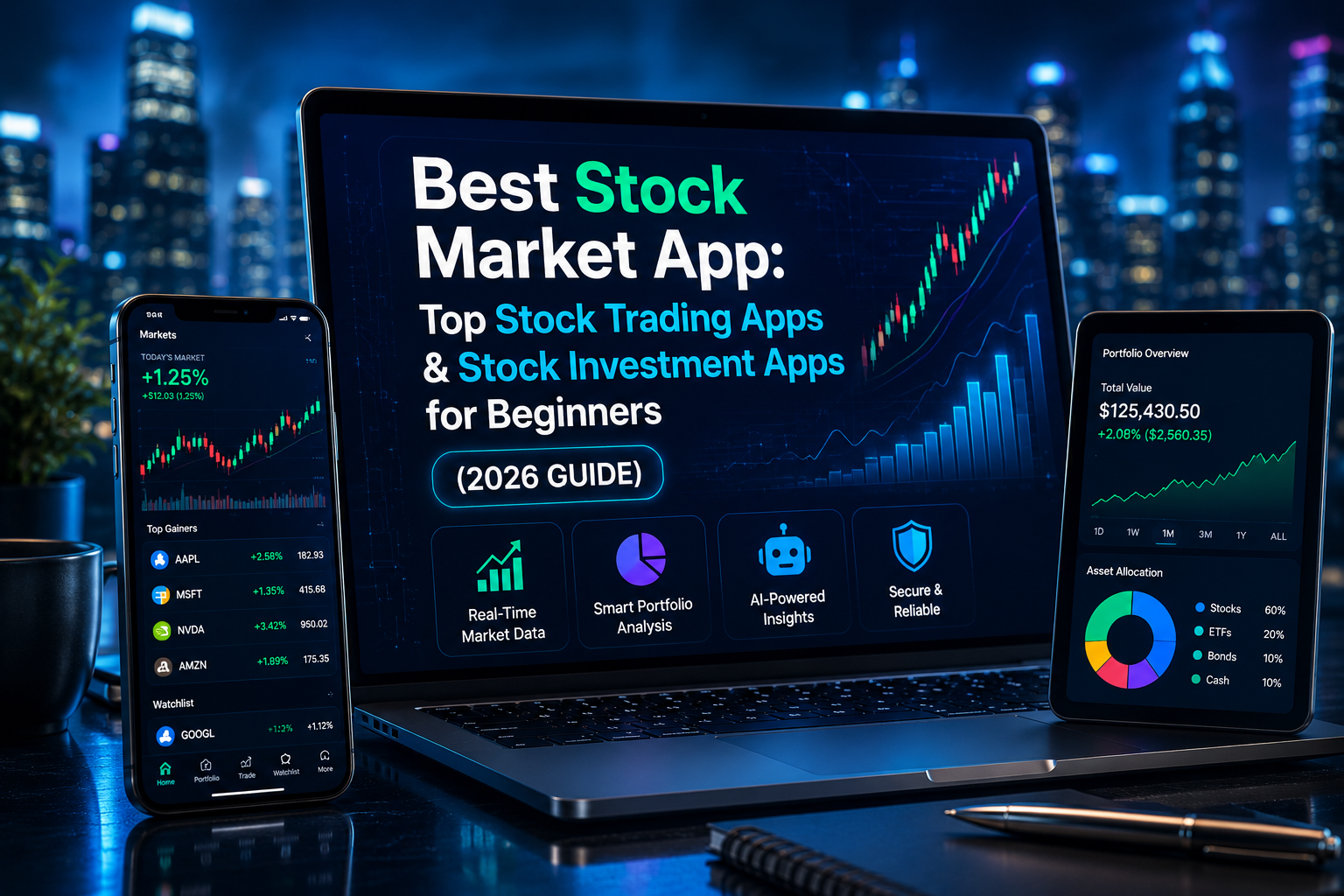
The stock market has changed dramatically over the past decade. What once required expensive brokerage accounts and desktop trading terminals can now be managed from a smartphone in seconds. Whether you’re buying your first ETF, building a retirement portfolio, or actively trading growth stocks, choosing the best stock market app has become one of the most important investment decisions you’ll make.
I’ve spent more than 15 years exploring financial markets, testing digital investment platforms, and helping new investors avoid costly mistakes. One lesson stands out above everything else: your investing success isn’t determined by the most popular platform—it depends on choosing the stock trading app that matches your investing style, financial goals, and experience level.
Today’s leading stock investment app platforms offer far more than basic trading. They provide AI-powered insights, commission-free investing, advanced charting tools, real-time alerts, portfolio analytics, educational resources, and strong security protections. Whether you’re searching for an intuitive online trading app or a feature-rich stock broker app, the right choice can make investing more efficient and less intimidating.
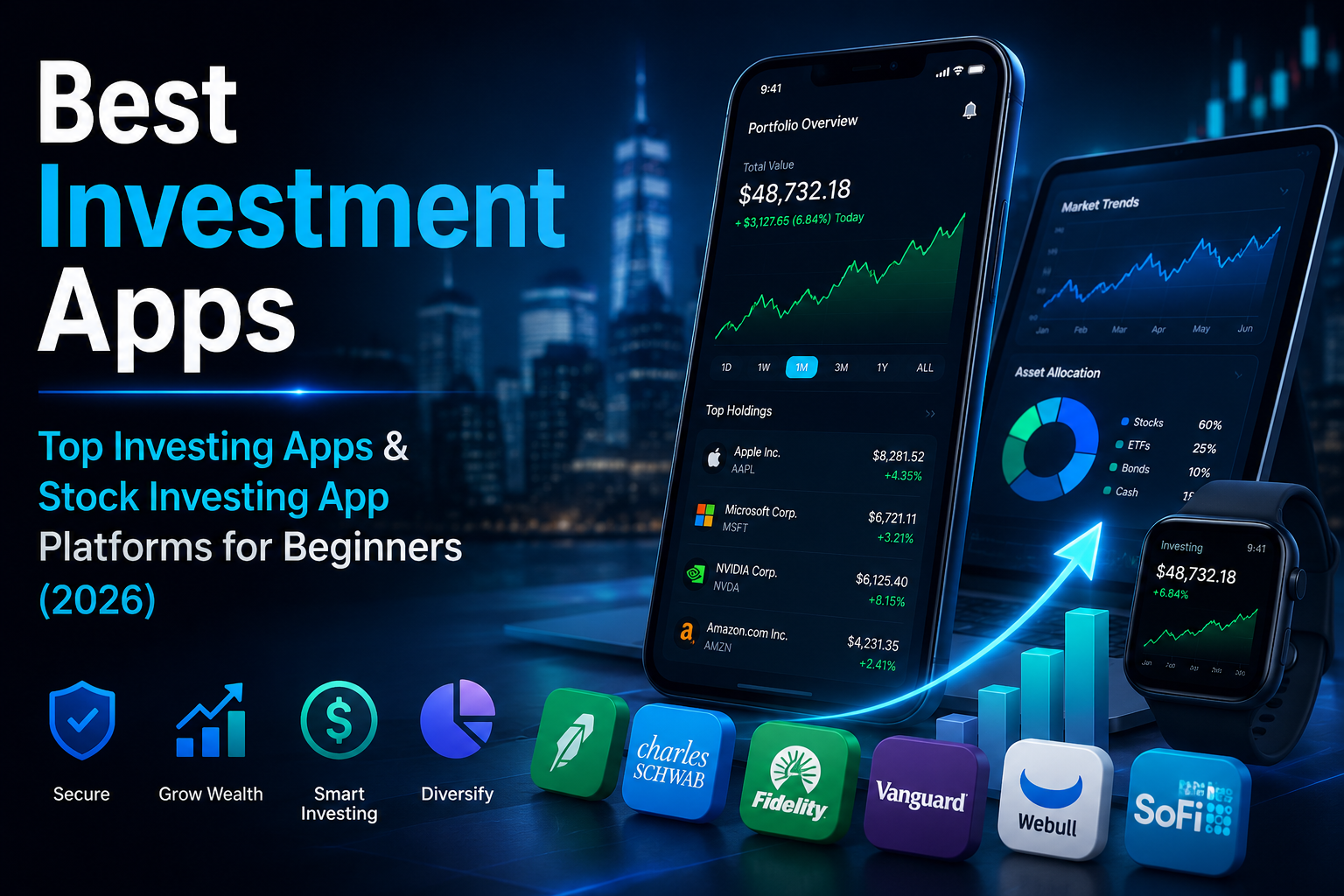
In this guide, I’ll compare the best platforms available in 2026, explain what truly matters when selecting an investing app, and share practical insights I’ve learned from years of evaluating brokerage platforms across different market conditions.

What Makes the Best Stock Market App?
Choosing the best stock market app isn’t simply about downloading the platform with the highest number of users. The best app is the one that helps you invest confidently while keeping costs low and your portfolio secure.
From testing dozens of stock broker app platforms over the years, I’ve noticed that the best-performing investors typically prioritize usability over flashy features. A clean interface, reliable execution, and transparent pricing often outperform platforms overloaded with unnecessary tools.
Several factors separate an average stock trading app from an exceptional one.
User-Friendly Design
A well-designed online trading app should make investing feel straightforward rather than overwhelming. Clear navigation, customizable dashboards, and quick order placement can save time and reduce mistakes, especially during volatile market sessions.
Reliable Order Execution
Speed matters. Even long-term investors benefit from reliable execution because price differences can affect returns over time. The best stock investment app should process trades quickly while displaying accurate market prices.
Investment Choices
A quality stock broker app should offer:
- Individual stocks
- ETFs
- Mutual funds
- Options
- Bonds
- Cryptocurrency (where supported)
- International markets
The broader your investment options, the easier it becomes to diversify your portfolio.
Low Fees
Many modern stock trading app platforms now offer commission-free stock and ETF trades. However, investors should still pay attention to:
- Options fees
- Currency conversion charges
- Margin interest
- Withdrawal fees
- Premium subscription costs
Always read the fee schedule before opening an account.
Strong Security
Security should never be overlooked.
The best stock market app typically includes:
- Two-factor authentication
- Biometric login
- Encryption
- Device management
- Fraud monitoring
- SIPC or equivalent investor protection (where applicable)
Protecting your investments is just as important as growing them.
Why More Investors Prefer Stock Trading Apps in 2026
Mobile investing has become the standard rather than the exception. According to industry trends, millions of investors now manage their portfolios almost entirely through smartphones.
The latest generation of stock trading app platforms has evolved into complete financial ecosystems.
Here are the biggest trends shaping investing in 2026.
AI-Powered Investing
Artificial intelligence now helps investors analyze companies, identify trends, summarize earnings reports, and monitor risk.
Rather than replacing investors, AI acts as a research assistant, helping users make more informed decisions.
Fractional Investing
Fractional shares have transformed investing.
Instead of waiting until you can afford an entire share of companies like Apple or NVIDIA, a stock investment app lets you purchase small portions with as little as a few dollars.
This feature is particularly valuable for beginners building diversified portfolios.
Zero-Commission Trading
Competition among brokers has dramatically reduced trading costs.
Today, many leading online trading app providers allow users to buy stocks and ETFs without paying trading commissions, making investing more accessible than ever.
Portfolio Automation
Automated investing tools continue gaining popularity.
Many platforms now provide:
- Automatic rebalancing
- Dividend reinvestment
- Goal tracking
- Risk analysis
- Portfolio health scores
These features help investors stay disciplined during changing market conditions.

Advanced Mobile Research
Modern stock broker app platforms include research tools that previously required professional software.
Investors can now access:
- Technical indicators
- Analyst ratings
- Financial statements
- Earnings calendars
- AI-generated market summaries
- Economic news
Everything is available directly from a smartphone.
Features Every Great Stock Investment App Should Offer
Choosing the right stock investment app becomes much easier when you know which features genuinely improve your investing experience.
User Interface
A clean interface reduces decision fatigue.
The best stock market app allows you to monitor watchlists, portfolios, and market news without unnecessary complexity.
Real-Time Market Data
Delayed quotes can lead to poor decisions.
Choose a stock trading app that provides live pricing, customizable watchlists, market depth (where available), and instant trade confirmations.
AI Investment Insights
Artificial intelligence has become one of the most valuable additions to modern investing platforms.
The best online trading app platforms now offer:
- Portfolio analysis
- Risk alerts
- Earnings summaries
- Market sentiment
- Personalized investment ideas
These insights save time while improving research quality.
Portfolio Tracking
A premium stock investment app should make it easy to understand your investments.
Look for:
- Performance charts
- Asset allocation
- Dividend tracking
- Profit/loss analysis
- Historical returns
Fractional Shares
Fractional investing allows users to diversify without needing thousands of dollars.
This feature is particularly useful for beginners and long-term investors following dollar-cost averaging strategies.
ETF Investing
Most experienced investors build their portfolios around ETFs because they offer instant diversification and relatively low costs.
The best stock broker app should provide access to a wide range of ETFs with powerful screening tools.
Security
Never compromise on account protection.
Essential security features include:
- Two-factor authentication
- Face ID or fingerprint login
- Login alerts
- Device authorization
- Encryption
Fees
Low-cost investing compounds over time.
Even small annual fees can significantly reduce long-term returns, so always compare pricing before choosing a stock trading app.
Customer Support
Excellent customer support becomes invaluable during periods of market volatility.
Look for platforms offering:
- Live chat
- Phone support
- Email assistance
- Knowledge bases
- Educational videos
- Community forums

Best Stock Market Apps Compared
After evaluating dozens of platforms over the years, these are the apps that consistently stand out for reliability, usability, research tools, and investor experience. While no single best stock market app is perfect for everyone, each of the following platforms excels in a specific area.
Robinhood – Best for Beginners
Robinhood remains one of the easiest platforms for first-time investors. Its clean interface, commission-free trading, and simple account setup make it an excellent stock trading app for users who want to start investing without feeling overwhelmed.
Pros
- Extremely beginner-friendly interface
- Commission-free stock and ETF trading
- Fractional share investing
- Fast account setup
- Simple recurring investments
Cons
- Limited advanced research tools
- Fewer educational resources than some competitors
In my experience helping new investors over the last 15 years, Robinhood is often the platform that removes the fear of getting started. However, as your investing knowledge grows, you may eventually want more advanced research features.
Webull – Best for Active Traders
If you’re looking for a stock broker app with professional-grade charting and technical analysis, Webull is one of the strongest choices. It combines zero-commission trading with advanced tools that appeal to experienced traders while still offering a polished mobile experience.
Pros
- Advanced charting and indicators
- Extended trading hours
- Paper trading account
- Strong mobile and desktop platforms
- Real-time market data
Cons
- Learning curve for beginners
- Interface may feel overwhelming initially
From testing dozens of online trading app platforms, I’ve found Webull particularly useful for investors who rely on technical analysis and real-time market insights.
Fidelity – Best for Long-Term Investors
If your primary goal is building long-term wealth rather than day trading, Fidelity is one of the strongest contenders for the best stock market app. It combines low costs with outstanding research tools, retirement planning resources, and excellent customer support.
In my experience, long-term investors often underestimate the value of educational content and portfolio planning. Fidelity excels in both areas.
Pros
- Commission-free stock and ETF trading
- Excellent retirement planning tools
- Comprehensive market research
- Fractional share investing
- Outstanding customer support
Cons
- Interface contains many features that may feel overwhelming initially
Charles Schwab – Best Research Tools
Charles Schwab has earned a reputation for providing professional-quality research while remaining accessible to everyday investors. If research drives your investing decisions, this stock broker app deserves serious consideration.
Pros
- Premium research reports
- Powerful stock screening tools
- Excellent ETF selection
- Reliable mobile platform
- Strong investor education
Cons
- Advanced tools require some learning
One mistake I repeatedly see beginners make is choosing a stock trading app based solely on popularity. Platforms like Charles Schwab demonstrate that research quality often matters far more than social media buzz.
Interactive Brokers – Best for Professional Traders
Interactive Brokers remains a favorite among experienced traders because of its institutional-level trading tools and access to international markets.
Pros
- Global market access
- Advanced trading platform
- Low trading costs
- Professional analytics
- Excellent order execution
Cons
- Steeper learning curve
- More complex interface
For investors who actively manage diversified portfolios across multiple countries, this online trading app provides exceptional flexibility.
eToro – Best for Social Investing
eToro introduced millions of investors to copy trading and community-based investing. If learning from experienced investors appeals to you, it stands out as an innovative stock investment app.
Pros
- Copy trading
- Social investing community
- Cryptocurrency support
- Beginner-friendly interface
- Educational resources
Cons
- Some advanced features vary by region
Trading 212 – Best for Commission-Free Investing
Trading 212 continues to attract investors looking for a clean, easy-to-use stock trading app with commission-free investing.
Pros
- No commission on eligible stock trades
- Fractional investing
- User-friendly design
- AutoInvest portfolios
- Fast account setup
Cons
- Limited research compared to larger brokers
SoFi Invest – Best All-in-One Financial Platform
If you want investing, banking, loans, and financial planning in one place, SoFi Invest is an excellent stock investment app.
Pros
- Beginner-friendly
- Automated investing
- Fractional shares
- Integrated financial services
- Educational resources
Cons
- Limited advanced charting
Public – Best for Community Learning
Public combines investing with education, making it an attractive online trading app for beginners.
Pros
- Community discussions
- Educational content
- Fractional investing
- User-friendly interface
Cons
- Smaller research library
Moomoo – Best Advanced Mobile Experience
Moomoo offers one of the most feature-rich mobile investing experiences available today.
Pros
- Professional charts
- Level 2 market data
- Paper trading
- Advanced analytics
- Fast performance
Cons
- May overwhelm beginners

Buying Guide: How to Choose the Best Stock Market App
Every investor has different goals. Rather than downloading the most popular stock trading app, focus on the features that match your investing style.
Compare Fees
Look beyond commission-free trading.
Check:
- Options fees
- Margin rates
- Currency conversion fees
- Withdrawal charges
- Premium subscriptions
Evaluate Research Tools
A quality stock broker app should provide:
- Analyst ratings
- Company financials
- Earnings calendars
- Watchlists
- Technical indicators
Prioritize Security
Choose platforms offering:
- Two-factor authentication
- Biometric login
- Encryption
- Fraud monitoring
- Device management
Consider Investment Choices
The best stock investment app should provide access to:
- Stocks
- ETFs
- Mutual funds
- Bonds
- Options
- International markets
Mobile Experience Matters
Since most investors now trade from smartphones, your online trading app should remain fast, stable, and easy to navigate.
Customer Support
Responsive customer service becomes invaluable during volatile market conditions.
Common Mistakes When Choosing a Stock Trading App
Over the years, I’ve noticed the same mistakes appear repeatedly.
Choosing Based Only on Popularity
Popularity doesn’t guarantee the best stock market app for your needs.
Ignoring Hidden Fees
Always review the pricing schedule before opening an account.
Forgetting About Security
Never compromise security for convenience.
Trading Too Frequently
Many beginners mistake activity for progress. Long-term investing often outperforms emotional trading.
Ignoring Educational Resources
A platform that teaches you investing can be far more valuable than one offering flashy features.

Frequently Asked Questions
Which is the best stock market app for beginners?
Robinhood, Fidelity, and SoFi Invest are among the easiest platforms for new investors because they combine simple interfaces with commission-free investing.
Which stock trading app has the lowest fees?
Many leading platforms now offer commission-free stock and ETF trading, but always compare options fees, margin interest, and premium features.
What should I look for in a stock investment app?
Focus on security, research tools, investment options, mobile usability, fees, customer support, and educational resources.
Is an online trading app safe?
Reputable brokers use encryption, two-factor authentication, biometric login, and regulatory protections to safeguard investor accounts.
Which stock broker app offers the best research?
Charles Schwab, Fidelity, and Interactive Brokers consistently provide excellent research tools for investors.
Can I buy fractional shares?
Yes. Most modern stock investment app platforms allow fractional investing, making diversification easier.
Are AI-powered investing tools useful?
AI tools can summarize earnings, analyze portfolios, identify risks, and suggest opportunities, but they should complement—not replace—your own research.
Should I choose a commission-free app?
Commission-free trading is beneficial, but evaluate the entire platform, including research, security, customer support, and hidden fees.
Conclusion
Finding the best stock market app isn’t about choosing the platform with the most advertisements or downloads—it’s about selecting the one that aligns with your investment goals, experience, and preferred investing style.
From testing dozens of stock broker app platforms over the years, I’ve learned that successful investors value reliability, strong research, transparent pricing, and robust security more than flashy features. Whether you’re looking for a beginner-friendly stock trading app, a feature-rich stock investment app, or a professional online trading app, the right choice should make investing simpler, safer, and more efficient.
As AI-powered investing, automated portfolio management, fractional shares, and mobile-first trading continue to evolve, today’s leading platforms offer more value than ever before. Take the time to compare features, fees, educational resources, and security before opening an account.
Author

razakh6402@gmail.com
Related Posts

Digital Payments: Future of Digital Payments, Payment Technology & Online Payment Trends (2026 Guide)
- 0
- 2,609 words
The way we pay for goods and services has changed more in the past decade than it did in the previous fifty...
Embedded Finance Explained: Complete Guide to Embedded Banking & Banking as a Service (2026)
- 0
- 2,288 words
Over the last fifteen years, I’ve watched financial services evolve from products that required customers to visit a bank into experiences seamlessly...

Contactless Payments Explained: Complete NFC Payment & Tap to Pay Guide (2026)
- 0
- 2,193 words
Over the past fifteen years, I’ve watched payment technology evolve from magnetic stripe cards and PIN terminals to today’s seamless contactless payments...
Neobank vs Traditional Bank: Complete Digital Banking Comparison Guide (2026)
- 0
- 2,379 words
The debate around neobank vs traditional bank has become more relevant than ever as digital banking continues to reshape how people manage...
Financial Planning Software: 10 Best Personal Financial Planning Software & Wealth Management Software (2026 Guide)
- 0
- 2,621 words
Managing money has changed dramatically over the past decade. When I first began advising clients more than 15 years ago, financial planning...
Best Expense Tracking Apps: Top Expense Tracker & Best Expense Management Software (2026 Guide)
- 2
- 2,595 words
Whether you’re running a startup, managing a growing business, freelancing full-time, or simply trying to control your personal finances, one thing remains...
5 comments