

- 0
- 2,726 words
The cryptocurrency market has matured far beyond simply buying Bitcoin and hoping its price rises. Today’s investors often manage assets across centralized exchanges, decentralized wallets, staking platforms, DeFi protocols, NFTs, and multiple blockchains. Keeping track of all those investments manually has become nearly impossible. That’s where a reliable crypto portfolio tracker becomes one of the most valuable tools in any investor’s toolkit.

After investing in cryptocurrency and blockchain projects for more than 15 years, I’ve learned that successful investing isn’t only about finding the next winning coin—it’s about understanding your entire portfolio. During major bull markets, investors often focus only on profits. During bear markets, they suddenly realize they don’t know where all their assets are, how much they’ve invested, or which holdings are generating the biggest losses. A good cryptocurrency portfolio app eliminates those problems by bringing every wallet, exchange, and blockchain into one easy-to-read dashboard.
Today’s leading best crypto tracker platforms do far more than display balances. They provide AI-powered analytics, real-time price alerts, DeFi monitoring, NFT tracking, tax reporting, staking insights, and portfolio diversification tools. Whether you’re looking for a bitcoin portfolio tracker to monitor long-term holdings or a comprehensive crypto asset tracker that syncs dozens of exchanges, choosing the right platform can save countless hours while helping you make smarter investment decisions.
In this guide, I’ll compare the leading crypto portfolio trackers for 2026, explain the features that truly matter, and share practical lessons I’ve learned after testing countless cryptocurrency portfolio apps across multiple market cycles.

What Is a Crypto Portfolio Tracker?
A crypto portfolio tracker is software that automatically monitors your cryptocurrency investments across multiple exchanges, wallets, and blockchain networks. Instead of checking Binance, Coinbase, MetaMask, Ledger, and DeFi protocols individually, you can view everything from one dashboard.
Modern portfolio trackers synchronize transactions automatically using secure APIs or public wallet addresses. They calculate profits and losses, monitor asset allocation, display historical performance, and often generate tax reports.

While testing dozens of cryptocurrency portfolio app platforms over the years, I’ve found that automation is their greatest advantage. Manual spreadsheets work for a handful of transactions, but once you begin trading regularly or using DeFi protocols, they quickly become outdated.
A quality bitcoin portfolio tracker should help you answer questions such as:
- What is my total portfolio value?
- Which assets are performing best?
- How diversified is my portfolio?
- What are my realized and unrealized gains?
- Which wallets hold my crypto?
- How much passive income am I earning through staking?
The best crypto asset tracker gives you these answers in real time.
Why Every Crypto Investor Needs the Best Crypto Tracker
Whether you’re a beginner with a few hundred dollars invested or an experienced trader managing six figures across multiple exchanges, portfolio tracking has become essential.
Better Investment Decisions
Without accurate portfolio data, it’s difficult to know whether you’re making progress.
The best crypto tracker helps investors monitor asset allocation, evaluate performance, and identify opportunities before making emotional decisions.
Saves Hours Every Week
One mistake I repeatedly see crypto investors make is checking multiple exchanges dozens of times each day.
Instead, a professional crypto portfolio tracker consolidates all your investments into one dashboard, saving valuable time.
Better Risk Management
Diversification is impossible without understanding your current exposure.
A reliable crypto asset tracker quickly reveals whether your portfolio is overly concentrated in Bitcoin, Ethereum, meme coins, AI tokens, or DeFi projects.
Tax Reporting
Crypto taxation has become increasingly important worldwide.
Most premium cryptocurrency portfolio app platforms automatically generate reports by importing transaction history from supported exchanges and wallets.
Real-Time Alerts
The best bitcoin portfolio tracker platforms notify investors about:
- Major price movements
- Portfolio milestones
- Large transfers
- Market volatility
- Staking rewards
- Wallet activity
These alerts help investors stay informed without constantly watching charts.
Features Every Cryptocurrency Portfolio App Should Have
Not every portfolio tracker offers the same functionality. The best platforms combine automation, analytics, security, and simplicity.
Multi-Exchange Support
Your crypto portfolio tracker should support leading exchanges such as:
- Binance
- Coinbase
- Kraken
- Bybit
- OKX
- KuCoin
- Bitstamp
- Gemini
Automatic synchronization ensures your portfolio remains updated in real time.
Wallet Integration
A professional crypto asset tracker should connect with both software and hardware wallets, including:
- MetaMask
- Trust Wallet
- Ledger
- Trezor
- Phantom
- Rabby
- Coinbase Wallet
Read-only wallet connections provide visibility without exposing private keys.
Real-Time Price Tracking
Price data should update continuously across thousands of cryptocurrencies.
A high-quality best crypto tracker should also display:
- Market capitalization
- Trading volume
- Price history
- Performance charts
- Portfolio allocation
Portfolio Analytics
After tracking crypto portfolios for more than 15 years, I’ve learned that analytics matter more than daily price movements.
Your cryptocurrency portfolio app should include:
- Daily returns
- Monthly returns
- Annual performance
- Allocation breakdown
- Historical growth
- Asset performance comparison
Profit & Loss Reports
Accurate gain and loss reporting helps investors understand performance without manually calculating transactions.
Look for:
- Realized gains
- Unrealized gains
- Average purchase price
- ROI
- Portfolio growth
Tax Reporting
Many investors underestimate how complicated crypto taxes become after hundreds of trades.
Premium crypto portfolio tracker platforms automatically organize transaction history and generate reports compatible with tax software.

DeFi Tracking
Modern investors increasingly use decentralized finance.
A complete crypto asset tracker should monitor:
- Liquidity pools
- Lending
- Borrowing
- Yield farming
- Staking rewards
NFT Tracking
NFTs remain an important part of many portfolios.
Leading platforms now display NFT collections alongside cryptocurrency holdings for a complete portfolio overview.
Security & Privacy
Security should never be compromised.
Choose a bitcoin portfolio tracker offering:
- Read-only API connections
- Encryption
- Two-factor authentication
- Biometric login
- Privacy controls
Never grant withdrawal permissions when connecting exchanges.
Mobile Apps
A premium cryptocurrency portfolio app should deliver the same functionality on smartphones as on desktop devices.
Fast synchronization and responsive design make monitoring investments much easier while traveling.
API Synchronization
Automatic synchronization eliminates manual updates.
The best best crypto tracker platforms support secure API imports, blockchain synchronization, and exchange integration with minimal setup.
Price Alerts
Price notifications help investors react without constantly monitoring markets.
Useful alerts include:
- Price targets
- Portfolio milestones
- Daily gains/losses
- Large transactions
Staking Rewards
Many investors now earn passive income through staking.
A quality crypto portfolio tracker should automatically display:
- Rewards earned
- Annual yield
- Validator performance
- Total staking balance
Performance Charts
Visual reporting makes investment analysis easier.
Professional dashboards should include:
- Portfolio growth
- Asset allocation
- Historical performance
- Risk analysis
- Diversification charts
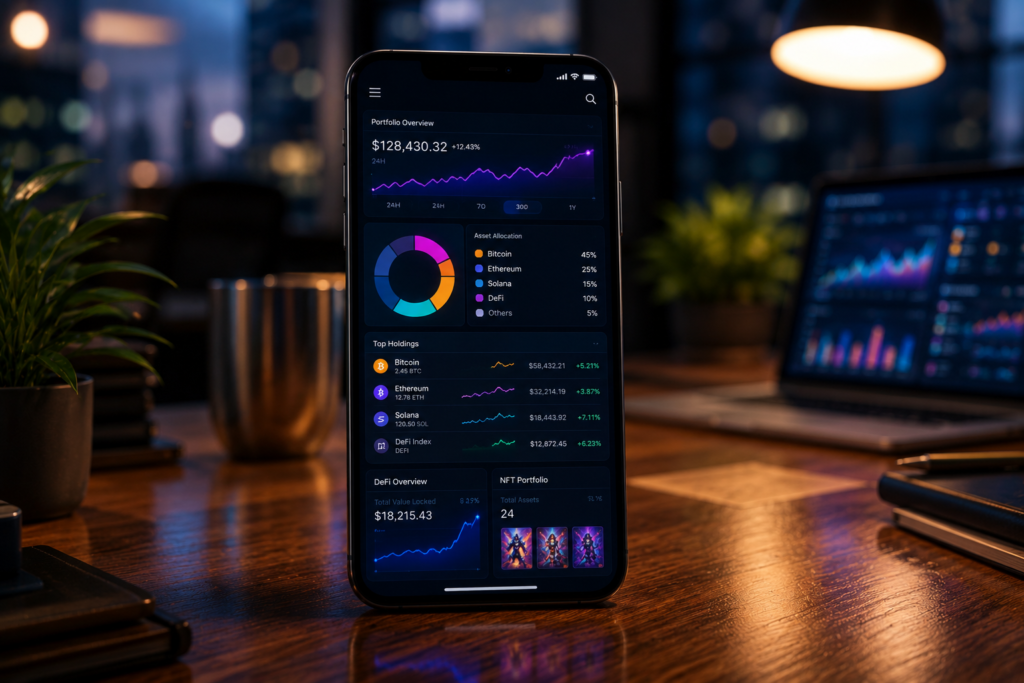
Best Crypto Portfolio Trackers Compared
After evaluating numerous cryptocurrency portfolio management tools over multiple market cycles, these platforms consistently stand out for their reliability, security, analytics, and user experience.
CoinStats – Best Overall Crypto Portfolio Tracker
CoinStats is one of the most complete crypto portfolio tracker platforms available today. It supports hundreds of exchanges, wallets, and blockchains while offering advanced portfolio analytics, DeFi tracking, NFT monitoring, and price alerts.
Best For
Investors managing assets across multiple exchanges and wallets.
Key Features
- Multi-chain support
- DeFi tracking
- NFT portfolio management
- AI-powered insights
- Portfolio analytics
- Price alerts
Pros
- Excellent user interface
- Extensive exchange support
- Powerful mobile app
- Strong analytics
Cons
- Advanced features require a premium subscription.
CoinTracker – Best for Tax Reporting
CoinTracker is a favorite among investors who want accurate tax reporting alongside portfolio tracking. It automatically imports transactions, calculates gains and losses, and simplifies tax preparation.
Best For
Crypto investors who trade frequently and need tax compliance.
Key Features
- Automated tax reports
- Exchange synchronization
- Wallet tracking
- Portfolio analytics
- Performance monitoring
Pros
- Excellent tax tools
- Easy portfolio management
- Beginner-friendly interface
Cons
- Free plan has transaction limits.
Delta Investment Tracker – Best for Multi-Asset Investing
Delta goes beyond cryptocurrency by allowing users to monitor stocks, ETFs, commodities, and digital assets within a single dashboard. This makes it an excellent choice for diversified investors.
Best For
Investors managing both traditional and cryptocurrency portfolios.
Key Features
- Multi-asset tracking
- Advanced performance analytics
- Custom alerts
- Exchange integration
- Beautiful interface
Pros
- Excellent visual reporting
- Easy portfolio analysis
- Supports traditional investments
Cons
- Some premium analytics require a paid subscription.
CoinMarketCap Portfolio – Best Free Option
CoinMarketCap Portfolio offers a simple way to monitor cryptocurrency holdings without paying for advanced software. While it lacks automated exchange synchronization, it’s a solid free bitcoin portfolio tracker for casual investors.
Pros
- Completely free
- Easy to use
- Reliable market data
- Great for beginners
Cons
- Manual transaction entry.
CoinGecko Portfolio – Best for Market Research
CoinGecko Portfolio combines extensive cryptocurrency market data with lightweight portfolio tracking. It’s ideal for investors who frequently research new projects while monitoring existing holdings.
Pros
- Free portfolio tracking
- Excellent market statistics
- Strong coin research
- User-friendly interface
Cons
- Fewer automation features than premium competitors.
Continue in Part 2 with detailed reviews of Kubera, Accointing, Koinly, Zerion, and Debank, followed by the professional comparison table, buyer’s guide, common mistakes, FAQs, conclusion, suggested external resources, and remaining image placeholders.
Kubera – Best for High-Net-Worth Investors
Kubera is more than just a crypto portfolio tracker. It is a comprehensive wealth management platform designed for investors who want to monitor cryptocurrencies alongside stocks, ETFs, real estate, bank accounts, and alternative investments.
After testing Kubera during multiple market cycles, I found it especially valuable for investors with diversified portfolios who want a complete picture of their net worth instead of tracking crypto separately.
Best For
High-net-worth investors and diversified portfolios.
Key Features
- Crypto and traditional asset tracking
- Bank account integration
- Real estate tracking
- Estate planning features
- Secure portfolio dashboard
Pros
- Complete wealth overview
- Premium user experience
- Excellent security
- Supports multiple asset classes
Cons
- No free plan
- Higher subscription cost than most competitors
Accointing – Best for Beginners
Accointing combines an intuitive interface with automated portfolio tracking and tax reporting, making it an excellent cryptocurrency portfolio app for newcomers.
Best For
New crypto investors who want simplicity.
Key Features
- Exchange synchronization
- Wallet integration
- Portfolio analytics
- Tax reporting
- Mobile app
Pros
- Easy setup
- Beginner-friendly dashboard
- Good reporting tools
Cons
- Advanced features require a premium subscription
Koinly – Best for Crypto Taxes
If tax reporting is your biggest concern, Koinly remains one of the strongest choices.
While testing dozens of cryptocurrency portfolio app platforms, Koinly consistently delivered accurate transaction imports and detailed tax reports across multiple exchanges and wallets.
Best For
Investors with large transaction histories.
Key Features
- Tax report generation
- API synchronization
- DeFi support
- NFT tracking
- Capital gains calculations
Pros
- Outstanding tax features
- Supports hundreds of exchanges
- Excellent reporting
Cons
- Premium pricing for larger portfolios
Zerion – Best for DeFi Investors
Zerion focuses on decentralized finance, making it one of the best crypto asset tracker platforms for Web3 users.
Best For
DeFi and Web3 investors.
Key Features
- Wallet connection
- DeFi monitoring
- NFT tracking
- On-chain analytics
- Multi-chain support
Pros
- Excellent DeFi integration
- Beautiful interface
- Supports multiple blockchains
Cons
- Limited centralized exchange integration
Debank – Best for On-Chain Analytics
Debank has become a favorite among serious DeFi users because of its detailed blockchain analytics.
When comparing crypto asset tracker platforms, Debank consistently provides one of the clearest views of wallet activity across multiple chains.
Best For
Advanced DeFi investors.
Key Features
- Wallet analytics
- Protocol monitoring
- Yield tracking
- NFT overview
- Multi-chain portfolio tracking
Pros
- Outstanding blockchain analytics
- Fast synchronization
- Excellent DeFi support
Cons
- Less suitable for beginners

Comparison Table: Best Crypto Portfolio Trackers
| Platform | Best For | Exchanges | Wallet Support | Tax Reports | NFT Support | Mobile App | Free Plan |
|---|---|---|---|---|---|---|---|
| CoinStats | Overall Portfolio Tracking | 300+ | ✔ | Limited | ✔ | ✔ | ✔ |
| CoinTracker | Tax Reporting | 500+ | ✔ | ✔ | ✔ | ✔ | Limited |
| Delta | Multi-Asset Investing | 300+ | ✔ | Limited | Limited | ✔ | ✔ |
| CoinMarketCap Portfolio | Beginners | Manual | Manual | ✖ | ✖ | ✔ | ✔ |
| CoinGecko Portfolio | Research | Manual | Manual | ✖ | ✖ | ✔ | ✔ |
| Kubera | Wealth Management | Multiple | ✔ | Limited | Limited | ✔ | ✖ |
| Accointing | Beginners | 300+ | ✔ | ✔ | ✔ | ✔ | Limited |
| Koinly | Crypto Taxes | 800+ | ✔ | ✔ | ✔ | ✔ | Limited |
| Zerion | DeFi | Wallet-Based | ✔ | Limited | ✔ | ✔ | ✔ |
| Debank | DeFi Analytics | Wallet-Based | ✔ | Limited | ✔ | ✔ | ✔ |
Buyer’s Guide: How to Choose the Best Crypto Portfolio Tracker
Choosing the right crypto portfolio tracker depends on your investment strategy, trading activity, and preferred ecosystem.
Ease of Use
Your dashboard should be clean, intuitive, and easy to navigate. Complicated interfaces often discourage regular portfolio reviews.
Supported Exchanges
Choose a best crypto tracker that connects to the exchanges you already use, such as Binance, Coinbase, Kraken, OKX, Bybit, or KuCoin.
Wallet Compatibility
Look for support for:
- MetaMask
- Trust Wallet
- Ledger
- Trezor
- Phantom
- Rabby
Security
Never compromise on security.
Look for:
- Read-only API keys
- Two-factor authentication
- Encrypted data
- Biometric login
API Synchronization
Automatic synchronization saves time and reduces manual errors.
Tax Reporting
Frequent traders should prioritize a cryptocurrency portfolio app with automated tax reporting.
NFT & DeFi Support
If you own NFTs or participate in DeFi, choose a tracker that supports:
- Liquidity pools
- Yield farming
- Lending
- Borrowing
- NFT collections
Price Alerts
Custom alerts help you monitor markets without checking prices constantly.
Mobile Experience
A responsive mobile app allows you to monitor investments wherever you are.
Customer Support
Reliable customer service becomes especially valuable when troubleshooting API connections or transaction imports.
Common Mistakes Crypto Investors Make
After tracking crypto portfolios for more than 15 years, I’ve seen the same mistakes repeated across every market cycle.
Tracking Everything Manually
Spreadsheets become unreliable as transaction history grows.
Ignoring Wallet Security
Never share private keys. Use read-only API connections whenever possible.
Forgetting Transaction History
Missing transactions lead to inaccurate performance reports and tax calculations.
Using Unreliable Apps
Not every crypto asset tracker offers dependable synchronization or long-term support.
Ignoring Tax Obligations
Many investors remember taxes only at the end of the financial year, creating unnecessary stress.
Poor Diversification
Avoid concentrating your portfolio entirely in one asset or one blockchain ecosystem.
Ignoring DeFi Positions
Yield farming, staking, and lending positions should be tracked alongside traditional holdings.

Frequently Asked Questions
What is the best crypto portfolio tracker?
CoinStats, CoinTracker, Delta, Koinly, and Zerion are among the best options, depending on whether your priority is analytics, taxes, or DeFi.
Is CoinTracker free?
CoinTracker offers a free plan with limited functionality. Larger portfolios and advanced tax reporting require a paid subscription.
Can I connect multiple exchanges?
Yes. Most premium crypto portfolio tracker platforms support hundreds of exchanges through secure API connections.
Which tracker supports NFTs?
CoinStats, CoinTracker, Zerion, Debank, and Koinly all support NFT portfolio tracking to varying degrees.
Which crypto tracker is best for taxes?
Koinly and CoinTracker are widely recognized for their detailed tax reporting features.
Is portfolio tracking safe?
Yes, provided you use trusted platforms with read-only API access, encryption, and two-factor authentication.
Can I track DeFi assets?
Absolutely. Platforms such as Zerion, Debank, and CoinStats provide excellent DeFi portfolio monitoring.
What is the best bitcoin portfolio tracker?
CoinStats, Delta, and CoinTracker are among the strongest choices for tracking Bitcoin alongside other cryptocurrencies and digital assets.
Conclusion
The best crypto portfolio tracker is the one that matches your investing style, portfolio size, and long-term goals—not simply the platform with the most downloads.
Over the past 15 years, I’ve learned that disciplined portfolio management consistently outperforms emotional decision-making. A reliable cryptocurrency portfolio app doesn’t just display balances—it helps you understand your exposure, monitor performance, simplify tax reporting, and make informed investment decisions.
Whether you’re looking for a lightweight bitcoin portfolio tracker, a feature-rich crypto asset tracker, or the best crypto tracker for DeFi and NFTs, today’s leading platforms provide powerful tools to manage digital assets more efficiently than ever before.
Before making your final choice, compare exchange compatibility, wallet support, security, pricing, tax features, and mobile experience. Spend some time testing free plans whenever available. The right tracker can save hours of manual work, improve your investment discipline, and give you a clearer view of your overall financial progress as the cryptocurrency market continues to evolve.
Author

razakh6402@gmail.com
Related Posts

Digital Payments: Future of Digital Payments, Payment Technology & Online Payment Trends (2026 Guide)
- 0
- 2,609 words
The way we pay for goods and services has changed more in the past decade than it did in the previous fifty...

Embedded Finance Explained: Complete Guide to Embedded Banking & Banking as a Service (2026)
- 0
- 2,288 words
Over the last fifteen years, I’ve watched financial services evolve from products that required customers to visit a bank into experiences seamlessly...

Contactless Payments Explained: Complete NFC Payment & Tap to Pay Guide (2026)
- 0
- 2,193 words
Over the past fifteen years, I’ve watched payment technology evolve from magnetic stripe cards and PIN terminals to today’s seamless contactless payments...
Neobank vs Traditional Bank: Complete Digital Banking Comparison Guide (2026)
- 0
- 2,379 words
The debate around neobank vs traditional bank has become more relevant than ever as digital banking continues to reshape how people manage...

Financial Planning Software: 10 Best Personal Financial Planning Software & Wealth Management Software (2026 Guide)
- 0
- 2,621 words
Managing money has changed dramatically over the past decade. When I first began advising clients more than 15 years ago, financial planning...
Best Expense Tracking Apps: Top Expense Tracker & Best Expense Management Software (2026 Guide)
- 2
- 2,595 words
Whether you’re running a startup, managing a growing business, freelancing full-time, or simply trying to control your personal finances, one thing remains...