- 6
- 1,998 word
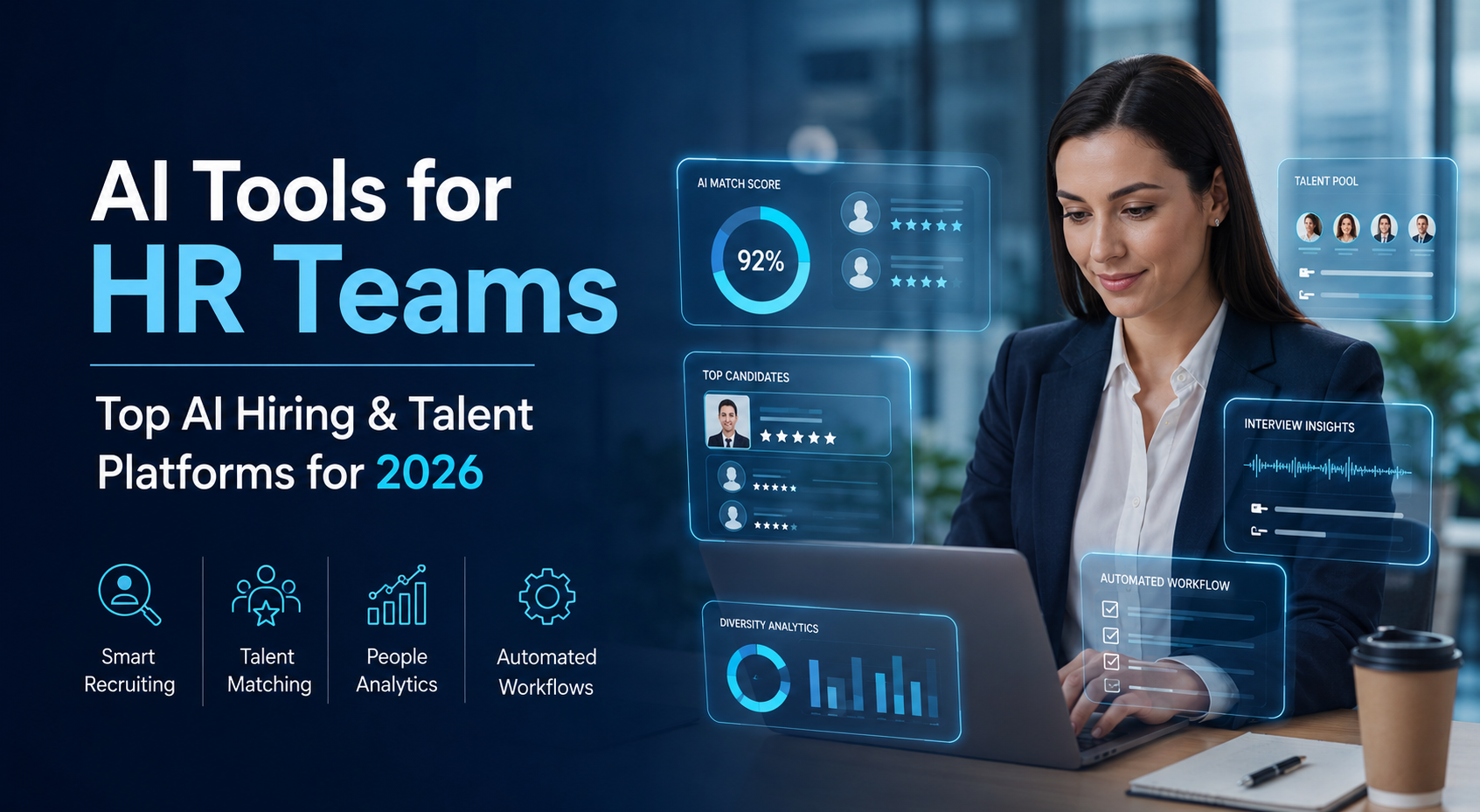
Over the last 15 years, I’ve watched HR evolve from a largely administrative function into one of the most strategic departments in modern organizations.
Today, HR leaders face unprecedented challenges:
- Global talent shortages
- Increasing hiring costs
- Candidate experience expectations
- Hybrid workforce management
- Skills gaps
- Administrative overload
At the same time, business leaders expect HR teams to hire faster, retain top performers, improve employee engagement, and make workforce decisions based on data rather than intuition.
This is exactly why AI tools for HR teams have become one of the fastest-growing categories in enterprise technology.
Organizations are increasingly investing in AI recruitment tools, intelligent workforce analytics, employee engagement platforms, and automated HR systems to eliminate repetitive work and improve decision-making.
In my consulting projects, I’ve seen AI reduce recruitment cycle times by 30–50%, significantly improve candidate quality, and free HR professionals to focus on what truly matters people.
The question is no longer whether HR should adopt AI.
The real question is which tools deliver measurable value.
Why HR Teams Need AI in 2026
Faster Recruitment
Recruiters often spend weeks sourcing, screening, and coordinating interviews.
Modern AI can:
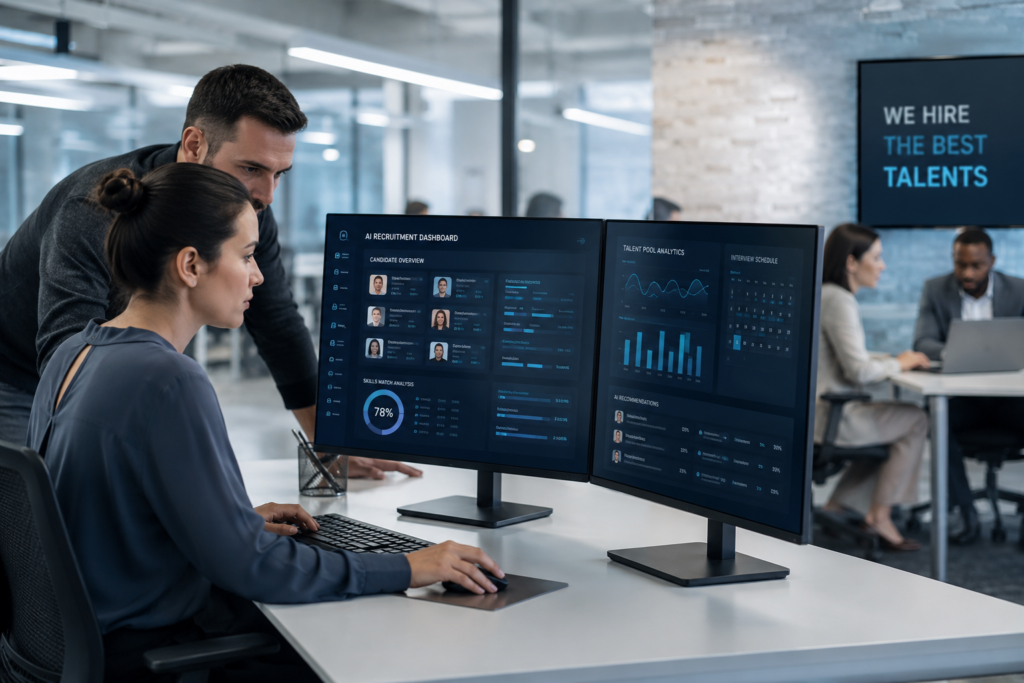
- Rank candidates automatically
- Source passive talent
- Schedule interviews
- Generate candidate summaries
Organizations using advanced ai recruitment tools frequently reduce time-to-hire by several days or even weeks.
Better Candidate Screening
One challenge I’ve repeatedly observed is resume overload.
A single role can attract hundreds of applicants.
AI helps identify:
- Relevant skills
- Experience patterns
- Qualification matches
- Potential fit indicators
This allows recruiters to spend time evaluating people rather than documents.
Reduced Administrative Work
Many HR teams spend too much time on:
- Documentation
- Compliance records
- Employee requests
- Data entry
Modern hr automation ai tools eliminate much of this burden.
Improved Employee Experience
AI-powered chatbots and employee assistants can answer common questions instantly, reducing frustration and improving responsiveness.
Smarter Talent Management
AI helps HR leaders identify:
- High-potential employees
- Promotion candidates
- Skills gaps
- Retention risks
This is where ai talent management tools are creating enormous value.
Data-Driven HR Decisions
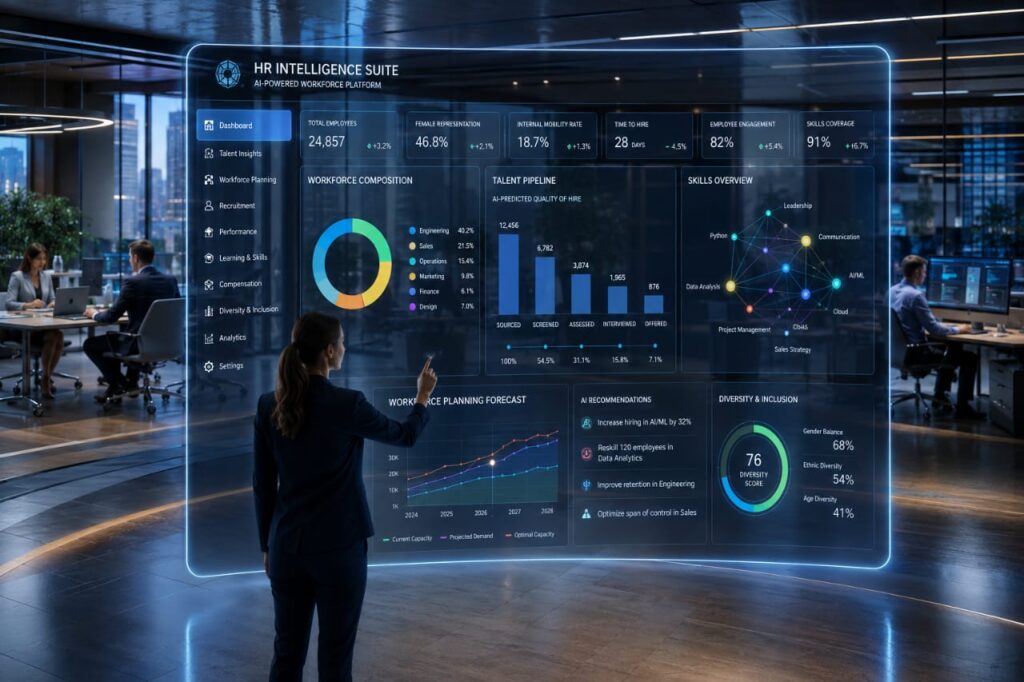
Instead of relying on assumptions, HR teams can use workforce analytics to guide hiring, retention, compensation, and succession planning.
Best AI Tools for HR Teams in 2026
ChatGPT
Overview
ChatGPT has become one of the most versatile ai tools for hr teams.
Key Features
- Job description creation
- Interview question generation
- Candidate communication drafts
- Policy writing assistance
- Learning content development
Pros
- Extremely flexible
- Fast content creation
- Easy adoption
Cons
- Requires human review
- Not a dedicated HR platform
Best For
Small businesses, startups, and HR generalists.
Pricing
Free and paid plans available.
My Experience and Insights
I’ve seen HR teams save dozens of hours monthly using ChatGPT for recruitment communications and HR documentation.
HireVue
Overview
A leading AI hiring platform focused on interviews and assessments.
Key Features
- Video interviews
- Skills assessments
- Candidate screening
Pros
- Scalable hiring
- Consistent evaluation
Cons
- Enterprise-focused pricing
Best For
High-volume recruiting.
Pricing
Custom pricing.
My Experience and Insights
Particularly effective for retail, customer service, and large-scale hiring programs.
Paradox
Overview
Paradox specializes in conversational recruitment automation.
Key Features
- AI assistant
- Scheduling automation
- Candidate engagement
Pros
- Excellent automation
- Strong candidate experience
Cons
- Best suited for large hiring teams
Best For
High-volume recruitment.
Pricing
Custom pricing.
My Experience and Insights
Scheduling bottlenecks often disappear after implementation.
Eightfold AI
Overview
One of the most advanced AI talent intelligence platforms.
Key Features
- Talent matching
- Internal mobility
- Workforce planning
Pros
- Powerful AI engine
- Deep analytics
Cons
- Learning curve
Best For
Enterprises.
Pricing
Custom.
My Experience and Insights
Exceptional for long-term talent strategy.
Workday AI
Overview
AI integrated within the Workday ecosystem.
Key Features
- Workforce analytics
- Skills intelligence
- Talent insights
Pros
- Enterprise-grade
- Strong integrations
Cons
- Requires Workday ecosystem
Best For
Large enterprises.
Pricing
Custom.
My Experience and Insights
Ideal for organizations already using Workday.
LinkedIn Recruiter AI
Overview
AI-enhanced sourcing and recruiting platform.
Key Features
- Candidate recommendations
- Talent insights
- AI-powered search
Pros
- Massive talent network
Cons
- Premium pricing
Best For
Professional recruiting.
Pricing
Custom subscription.
My Experience and Insights
Still one of the strongest sourcing tools available.
SeekOut
Overview
Specialized talent sourcing platform.
Key Features
- Talent discovery
- Diversity sourcing
- Skills matching
Pros
- Strong search capabilities
Cons
- Focused mainly on sourcing
Best For
Technical recruiting.
Pricing
Custom.
My Experience and Insights
Excellent for hard-to-fill positions.
Textio
Overview
AI-powered writing platform for recruiting content.
Key Features
- Inclusive language recommendations
- Job description optimization
- Candidate communication analysis
Pros
- Improves candidate engagement
Cons
- Narrow focus
Best For
Employer branding teams.
Pricing
Custom.
My Experience and Insights
Useful for improving response rates and application quality.
BambooHR AI Features
Overview
Popular HR platform incorporating AI capabilities.
Key Features
- HR workflows
- Reporting
- Employee management
Pros
- User-friendly
Cons
- AI functionality varies by package
Best For
SMEs.
Pricing
Custom.
My Experience and Insights
A strong all-in-one HR solution.
Zoho Recruit AI
Overview
Affordable recruitment platform with AI enhancements.
Key Features
- Resume parsing
- Candidate matching
- Workflow automation
Pros
- Cost-effective
Cons
- Less advanced than enterprise platforms
Best For
Recruitment agencies and SMEs.
Pricing
Subscription-based.
My Experience and Insights
Excellent value for growing businesses.
AI Tools Comparison Table
| Tool | Best For | Free Plan | Key AI Features | Ease of Use | Pricing | Overall Rating |
|---|---|---|---|---|---|---|
| ChatGPT | HR productivity | Yes | Content generation, HR support | Very Easy | Free/Paid | 9.5/10 |
| HireVue | Enterprise hiring | No | Interview intelligence | Medium | Custom | 9.0/10 |
| Paradox | Recruitment automation | No | Scheduling, chatbot | Easy | Custom | 9.1/10 |
| Eightfold AI | Talent intelligence | No | Skills matching | Medium | Custom | 9.4/10 |
| Workday AI | Enterprise HR | No | Workforce analytics | Medium | Custom | 9.2/10 |
| LinkedIn Recruiter AI | Talent sourcing | No | Candidate recommendations | Easy | Custom | 9.3/10 |
| SeekOut | Technical recruiting | No | Talent discovery | Medium | Custom | 9.0/10 |
| Textio | Recruiting content | No | Language optimization | Easy | Custom | 8.8/10 |
| BambooHR AI | SMB HR operations | No | HR automation | Easy | Custom | 8.9/10 |
| Zoho Recruit AI | SMEs & agencies | Limited | Resume matching | Easy | Subscription | 8.8/10 |
Best AI Recruitment Tools for Hiring Faster
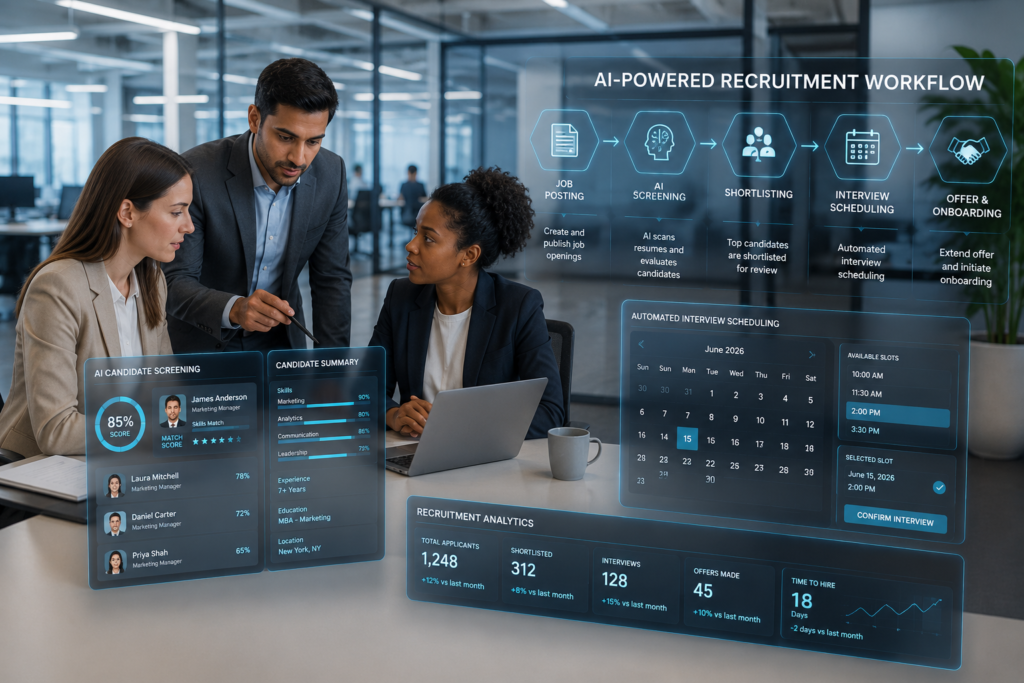
The most impactful ai recruitment tools typically focus on five areas:
Resume Screening
AI rapidly evaluates thousands of resumes and identifies qualified candidates.
Candidate Sourcing
Platforms like LinkedIn Recruiter AI and SeekOut uncover passive talent.
Talent Matching
Modern ai hiring software evaluates skills, experience, and career trajectories.
Interview Scheduling
Tools like Paradox automate scheduling and reminders.
Candidate Engagement
AI chatbots maintain communication and reduce drop-off rates.
In one enterprise project, automated scheduling alone reduced recruiter workload by nearly 40%.
HR Automation AI Tools That Save Time
Employee Onboarding
Modern hr automation ai tools guide employees through onboarding workflows automatically.
HR Documentation
AI generates:
- Offer letters
- Policies
- Employee communications
Policy Management
AI helps maintain updated documentation and employee access.
Employee Queries
HR chatbots answer routine questions instantly.
Internal Communication
AI improves communication consistency and personalization.
Compliance Support
Many hr automation ai tools assist with documentation tracking and regulatory processes.
AI Talent Management Tools for Workforce Growth
Performance Management
AI identifies performance trends and coaching opportunities.
Employee Development
Personalized learning recommendations improve growth.
Learning Recommendations
Leading ai talent management tools recommend courses based on skills gaps.
Succession Planning
Organizations can identify future leaders earlier.
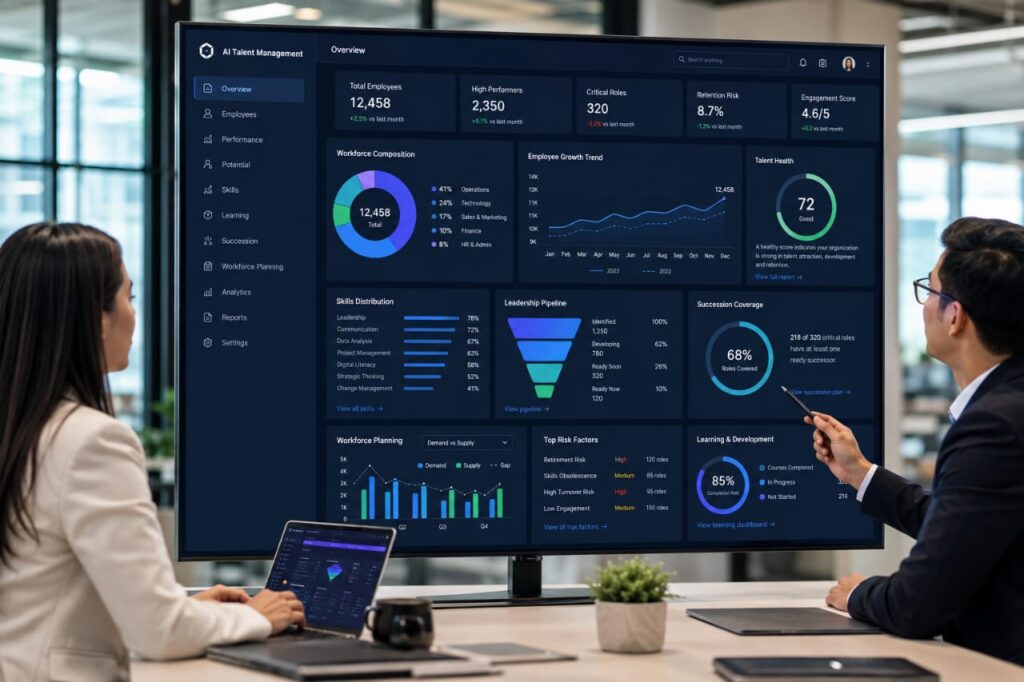
Workforce Analytics
AI uncovers trends hidden within workforce data.
Retention Strategies
Predictive analytics can flag potential turnover risks.
I’ve seen ai talent management tools help companies reduce regrettable attrition significantly by identifying employee disengagement early.
Emerging HR AI Trends in 2026
Predictive Hiring
AI predicts hiring success based on historical outcomes.
Skills-Based Recruitment
Skills increasingly matter more than degrees.
AI Career Pathing
Employees receive personalized career recommendations.
Internal Talent Marketplaces
Organizations match internal talent to opportunities.
Employee Sentiment Analysis
AI analyzes surveys and feedback to identify morale trends.
Generative AI for HR
Generative AI creates policies, communications, and training materials.
AI-Powered Workforce Planning
Advanced forecasting improves workforce readiness.
Research from SHRM, Gartner HR research, Deloitte Human Capital reports, and McKinsey workforce studies consistently highlights skills intelligence and workforce analytics as major priorities for leading organizations.
Benefits and Limitations of AI in HR
Benefits
- Faster hiring
- Better candidate matching
- Reduced workload
- Improved employee engagement
- Increased efficiency
- Better decision-making
Limitations
- Potential bias concerns
- Privacy challenges
- Poor data quality impacts results
- Risk of excessive automation
- Human oversight remains essential
The most successful HR teams treat AI as an advisor not a replacement for professional judgment.
How to Choose the Best AI Tools for HR Teams
Small Businesses
Choose:
- ChatGPT
- BambooHR AI
- Zoho Recruit AI
Startups
Focus on affordable ai tools for hr teams with strong automation.
Recruitment Agencies
Prioritize:
- SeekOut
- LinkedIn Recruiter AI
- Zoho Recruit AI
Mid-Sized Companies
Combine:
- BambooHR AI
- Paradox
- ChatGPT
Large Enterprises
Invest in:
- Eightfold AI
- Workday AI
- HireVue
Organizations seeking advanced workforce planning should prioritize ai talent management tools alongside recruiting platforms.
Frequently Asked Questions
What are the best AI tools for HR teams?
ChatGPT, Eightfold AI, Workday AI, LinkedIn Recruiter AI, HireVue, and Paradox are among the leading options in 2026.
Which AI recruitment tools are free?
ChatGPT offers a free version. Some recruiting platforms provide limited trials.
Can AI improve hiring decisions?
Yes. AI improves sourcing, screening, and candidate matching when used responsibly.
What is the best AI hiring software?
For enterprises, HireVue and Eightfold AI stand out. For smaller businesses, Zoho Recruit AI and ChatGPT offer excellent value.
Are AI recruitment tools accurate?
Most modern platforms are highly accurate when trained on quality data and monitored properly.
What are HR automation AI tools?
They automate onboarding, documentation, scheduling, employee support, and compliance-related tasks.
How do AI talent management tools work?
They analyze workforce data to support development, succession planning, retention, and skills management.
Is AI replacing HR professionals?
No. AI enhances HR capabilities but cannot replace human judgment, empathy, coaching, or relationship building.
What are the latest HR AI trends in 2026?
Predictive hiring, skills-based recruitment, workforce analytics, AI career pathing, and generative AI are leading trends.
Which AI tools help with employee retention?
Eightfold AI, Workday AI, and advanced workforce analytics platforms provide strong retention insights.

Conclusion
After working with HR departments across startups, recruitment agencies, mid-sized businesses, and global enterprises for more than 15 years, one conclusion is clear: AI is no longer a competitive advantage it is rapidly becoming a business necessity.
The most effective AI tools for HR teams are not simply automating tasks. They are transforming how organizations hire, develop, engage, and retain talent. For recruiting, platforms like HireVue, LinkedIn Recruiter AI, SeekOut, and Paradox help organizations attract and hire talent faster. For workforce planning and development, Eightfold AI and Workday AI lead the market in talent intelligence and analytics. For smaller organizations, ChatGPT, BambooHR AI, and Zoho Recruit AI provide exceptional value with lower complexity.
The future of HR will be shaped by predictive hiring, skills-based workforce planning, internal talent marketplaces, employee sentiment analysis, and increasingly sophisticated AI talent management tools. However, the most successful organizations will balance automation with human judgment, empathy, ethics, and transparency.
My strongest recommendation for 2026 is to start with a clearly defined HR challenge whether hiring speed, employee retention, onboarding efficiency, or workforce planning and then select AI solutions that directly address that objective. Organizations that adopt AI thoughtfully and responsibly will build more agile, productive, and resilient workforces for years to come.
Author

razakh6402@gmail.com
Related Posts
Document Management Software: Top Document Management Software Compared (2026 Guide)
- 0
- 1,895 word
Not long ago, managing business documents meant overflowing filing cabinets, misplaced contracts, and countless hours spent searching for the right file. Even...
Read out all
AI Website Builder: Best AI Website Builders Compared (2026 Guide)
- 0
- 2,412 words
A decade ago, building a professional website meant writing HTML, CSS, JavaScript, and often PHP from scratch. Later, drag-and-drop builders like WordPress...
Read out all
AI vs Human Creativity: Can AI Replace Creative Jobs in 2026? (Expert Analysis)
- 0
- 2,449 words
The conversation around AI vs human creativity has become one of the most fascinating and controversial topics in technology. Every week, new...
AI Course Creator: Top AI Tools for Online Courses in 2026 (Expert-Tested Guide)
- 0
- 1,935 word
I’ve spent years researching instructional design, evaluating learning platforms, and following the evolution of educational technology. One trend has become impossible to...
Read out all
AI Browser Extensions: Best AI Chrome Extensions for Productivity in 2026 (Expert-Tested Guide)
- 0
- 2,414 words
Artificial intelligence has quietly become one of the biggest productivity upgrades I’ve experienced during my career. Over the past 15 years of...
Read out all
AI Agents in 2026: How AI Agents for Work Are Transforming Everyday Productivity
- 2
- 2,405 words
A few years ago, most businesses viewed artificial intelligence as a helpful assistant for answering questions or generating content. Today, the conversation...
Read out all
6 comments