
- 0
- 2,712 words
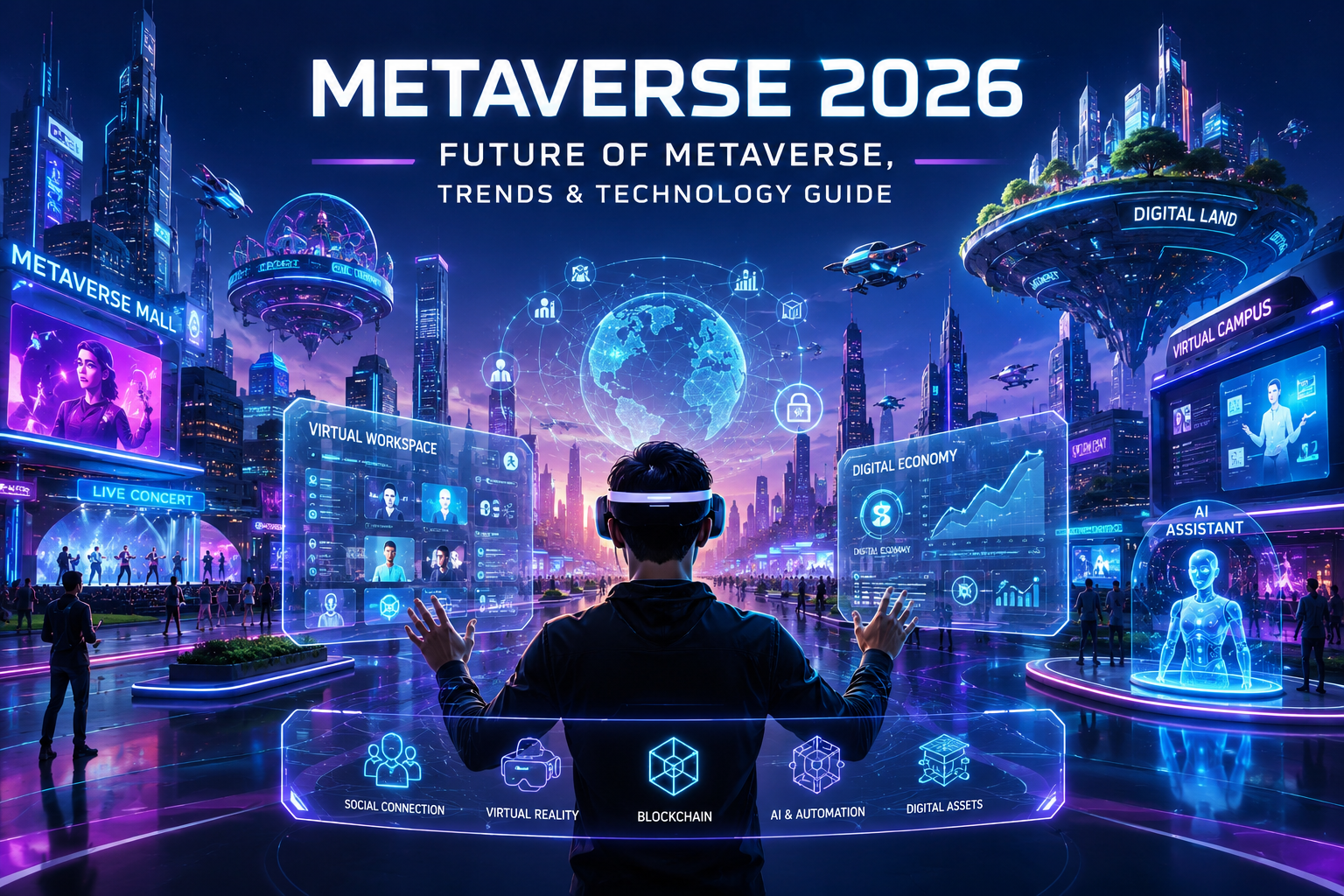
The conversation around Metaverse 2026 has changed dramatically compared to just a few years ago. In the early days, many people viewed the metaverse as a futuristic gaming concept or a marketing buzzword. Today, that perception has shifted. Businesses, educators, healthcare providers, manufacturers, and governments are exploring practical ways to integrate metaverse technology into their daily operations. As someone who has closely followed the evolution of immersive technologies for many years, I’ve noticed that the biggest transformation isn’t the technology itself—it’s how organizations are finding real business value beyond the hype.
Instead of asking whether the metaverse will succeed, companies are now asking how they can use metaverse applications to improve collaboration, employee training, customer experiences, and product development. This shift marks an important milestone in the future of metaverse, making Metaverse 2026 one of the most exciting topics in the technology industry.

Metaverse 2026: Why Everyone Is Talking About It
One of the biggest metaverse trends in recent years is the move from entertainment-focused virtual worlds to enterprise solutions. Organizations are investing in immersive collaboration platforms, AI-powered digital workspaces, and digital twins that replicate factories, offices, and even entire cities.
What makes Metaverse 2026 different is that the supporting technologies have matured. Artificial intelligence now creates intelligent virtual assistants, spatial computing delivers realistic interactions, and faster internet connectivity enables seamless virtual collaboration. Together, these innovations are accelerating the future of metaverse across multiple industries.
Businesses no longer view the metaverse as a single virtual world. Instead, they see it as a combination of metaverse technology, AI, cloud computing, blockchain, XR devices, and digital identity systems working together. This integrated approach is opening new opportunities for innovation while making metaverse applications more practical and scalable than ever before.
From my observations of the technology sector, organizations that focus on solving real business problems with immersive technologies consistently achieve better outcomes than those chasing trends. That’s why today’s metaverse trends emphasize measurable productivity, efficiency, and customer engagement rather than flashy virtual experiences alone.
What Has Changed Since the Early Metaverse Boom?
The initial excitement surrounding the metaverse created unrealistic expectations. Many companies invested heavily without clear business objectives, while consumers expected fully immersive digital worlds overnight. As the market matured, businesses realized that sustainable growth requires practical solutions rather than hype.
Today’s Metaverse 2026 landscape reflects those lessons. Instead of promising a complete replacement for the internet, technology leaders are building specialized metaverse applications for industries such as healthcare, education, manufacturing, engineering, and retail.
Lessons Learned from Previous Years
The biggest lesson from the past decade is that technology adoption succeeds when it solves genuine problems. Companies that invested in immersive employee training, remote collaboration, product visualization, and digital twins often achieved stronger returns than those pursuing purely promotional projects.
Another important lesson is that user experience matters as much as technology. Even the most advanced metaverse technology cannot succeed if it is difficult to use or fails to deliver meaningful value. As organizations continue shaping the future of metaverse, simplicity, accessibility, and security have become top priorities.
These lessons are driving the latest metaverse trends, where innovation focuses less on hype and more on creating scalable, secure, and practical metaverse applications that improve how people work, learn, collaborate, and interact in both digital and physical environments.

Core Metaverse Technologies in 2026
The success of Metaverse 2026 isn’t built on a single innovation. Instead, it combines multiple advanced technologies that work together to create immersive, intelligent, and interactive digital experiences. Understanding these technologies helps explain why the future of metaverse looks far more promising today than it did just a few years ago.
Artificial Intelligence (AI)
Artificial Intelligence has become the driving force behind modern metaverse technology. AI no longer supports only chatbots or recommendation engines—it now creates realistic virtual environments, intelligent digital assistants, personalized avatars, and automated content generation.
One of the most exciting metaverse trends is the use of generative AI to design virtual buildings, landscapes, digital products, and interactive experiences in minutes instead of weeks. Businesses can rapidly prototype virtual stores, training environments, and collaborative workspaces without starting from scratch.
AI also improves communication inside virtual worlds through real-time language translation, speech recognition, and intelligent automation. These capabilities make metaverse applications more accessible for global teams and international organizations.
Virtual Reality (VR)
Virtual Reality remains one of the most recognizable components of Metaverse 2026. Modern VR headsets now offer higher resolution, lighter designs, wider fields of view, and improved comfort, making extended use more practical.
Organizations increasingly use VR for employee training, engineering simulations, medical education, architecture, and virtual meetings. Instead of reading manuals or watching videos, employees can practice real-world scenarios inside immersive digital environments.
This practical adoption demonstrates how the future of metaverse is shifting toward measurable business outcomes rather than entertainment alone.
Augmented Reality (AR)
While VR creates fully immersive environments, Augmented Reality enhances the physical world with digital information. AR smart glasses and mobile devices allow users to interact with virtual content while remaining aware of their surroundings.
Retailers use AR for virtual product demonstrations, manufacturers provide interactive repair instructions, and healthcare professionals visualize patient data during procedures. These practical metaverse applications continue to expand as AR hardware becomes more affordable and powerful.
Many analysts believe AR will become one of the fastest-growing metaverse trends because it integrates naturally into everyday life.
Spatial Computing
Spatial computing is transforming how people interact with digital information. Instead of using traditional screens, users manipulate virtual objects using natural hand movements, eye tracking, voice commands, and gesture recognition.
This technology creates a seamless blend between physical and digital environments, allowing architects, engineers, designers, and healthcare professionals to visualize complex projects in three-dimensional space.
As spatial computing continues to evolve, it will play a critical role in shaping Metaverse 2026 and expanding professional metaverse applications across multiple industries.
Digital Identity
Identity management has become one of the most critical aspects of the future of metaverse. Users expect secure authentication while maintaining control over their personal information.
Modern digital identity systems increasingly rely on decentralized identity frameworks, biometric authentication, and multi-factor security. These technologies help reduce fraud while giving users greater ownership of their digital presence.
For businesses, trusted digital identities simplify customer onboarding, employee verification, and secure access to virtual workplaces, making them an essential component of modern metaverse applications.
Why These Technologies Matter Together
The real strength of Metaverse 2026 lies in how these technologies work together. Artificial Intelligence provides intelligence, Virtual Reality creates immersion, Augmented Reality connects digital content with the real world, Spatial Computing enables natural interaction, Blockchain establishes trust, Digital Identity ensures security, and Digital Assets power virtual economies.
Rather than replacing the internet, this ecosystem enhances how people collaborate, learn, shop, design, and innovate. Businesses that strategically adopt these technologies are likely to gain competitive advantages as metaverse trends continue to mature over the coming years.
The next phase of growth won’t be driven by hype—it will be driven by practical, scalable, and user-focused metaverse applications that deliver measurable value across industries. That is why Metaverse 2026 represents a turning point in the evolution of immersive digital experiences and why the future of metaverse is attracting attention from technology leaders, enterprises, and investors worldwide.

Biggest Metaverse Trends in 2026
The conversation around Metaverse 2026 has matured significantly. Businesses are no longer asking whether the metaverse is real—they’re asking how to implement it effectively. The latest metaverse trends show a clear shift toward enterprise adoption, AI integration, and industry-specific solutions that generate measurable value.
AI-Powered Virtual Worlds
Artificial Intelligence is transforming metaverse technology faster than any other innovation. Instead of manually building virtual environments, organizations now use AI to generate interactive spaces, realistic digital humans, multilingual virtual assistants, and personalized user experiences.
For example, customer service teams can deploy AI-powered virtual representatives that understand natural language, answer complex questions, and assist customers inside immersive digital environments. This significantly reduces operational costs while improving customer satisfaction.
Enterprise Metaverse
Large organizations are investing heavily in enterprise-focused metaverse applications. Instead of creating gaming experiences, companies are building secure virtual workplaces where global teams collaborate in real time.
Engineers review 3D product designs, architects conduct virtual site inspections, and executives hold immersive strategy meetings without international travel. These practical applications demonstrate how the future of metaverse is becoming a productivity platform rather than simply a digital entertainment space.
Industrial Metaverse and Digital Twins
Manufacturing is one of the biggest beneficiaries of Metaverse 2026. Digital twins—virtual replicas of machines, factories, and production lines—allow organizations to monitor equipment, predict failures, optimize operations, and reduce downtime.
By combining AI, IoT sensors, and metaverse technology, engineers can test production changes virtually before implementing them in the real world. This reduces costs, improves efficiency, and minimizes operational risks.
Virtual Collaboration
Remote work continues to evolve beyond traditional video conferencing. Immersive collaboration platforms enable employees to interact with digital whiteboards, 3D models, and virtual workspaces as if they were physically together.
This represents one of the fastest-growing metaverse trends, particularly among multinational companies seeking more engaging ways to connect distributed teams.
Education and Professional Training
Educational institutions are adopting metaverse applications to create interactive classrooms, science laboratories, engineering simulations, and historical recreations.
Medical students can practice surgeries in realistic virtual environments without risk to patients, while engineering students can operate industrial equipment before entering real manufacturing facilities.
These innovations demonstrate how Metaverse 2026 is improving learning outcomes through immersive education.
Healthcare Innovation
Healthcare organizations are using metaverse technology for surgical planning, rehabilitation programs, mental health therapy, and remote patient consultations.
Doctors can collaborate across continents using shared 3D medical models, while therapists use virtual environments to treat anxiety disorders and PTSD through controlled exposure therapy.
The healthcare sector continues to be one of the strongest examples of meaningful metaverse applications delivering real societal benefits.
Retail and Customer Experience
Retailers are creating immersive shopping experiences where customers can explore virtual stores, interact with products, and receive personalized recommendations from AI-powered assistants.
Luxury brands, furniture companies, and automotive manufacturers increasingly use virtual showrooms, allowing customers to visualize products before making purchasing decisions.
This customer-centric approach reflects the growing future of metaverse in digital commerce.
Entertainment and Smart Cities
Entertainment companies continue expanding virtual concerts, sporting events, and interactive experiences. At the same time, urban planners are using digital twins to design smarter, safer, and more sustainable cities.
Smart city planners simulate traffic patterns, emergency response strategies, and energy consumption using metaverse technology, helping governments make better infrastructure decisions.
Top Metaverse Applications Across Industries
One reason Metaverse 2026 has gained credibility is the diversity of practical use cases across multiple industries.
| Industry | Practical Metaverse Applications |
|---|---|
| Healthcare | Surgical simulations, rehabilitation, medical training |
| Education | Virtual classrooms, STEM learning, immersive laboratories |
| Manufacturing | Digital twins, predictive maintenance, factory optimization |
| Retail | Virtual stores, product visualization, AI shopping assistants |
| Real Estate | Interactive property tours, architectural visualization |
| Automotive | Vehicle design collaboration, virtual testing environments |
| Finance | Virtual banking, financial education, secure digital identity |
| Tourism | Virtual destination experiences and travel planning |
Organizations are increasingly recognizing that successful metaverse applications improve efficiency, reduce costs, and create more engaging customer experiences.
Benefits of Metaverse Technology
The rapid adoption of metaverse technology isn’t driven by hype alone. Organizations are investing because immersive technologies solve real business challenges.
Some of the most significant benefits include:
- Enhanced global collaboration through immersive virtual workspaces.
- Faster product design using digital twins and 3D visualization.
- Reduced travel costs for international meetings and training.
- Improved employee learning through realistic simulations.
- Better customer engagement with interactive digital experiences.
- Increased operational efficiency through AI-powered automation.
- Safer industrial testing before physical deployment.
- More personalized digital services powered by Artificial Intelligence.
These advantages explain why experts believe the future of metaverse will become increasingly integrated with everyday business operations rather than existing as a separate digital world.
As metaverse trends continue evolving, organizations that strategically invest in scalable solutions are likely to gain long-term competitive advantages while delivering better experiences for employees, customers, and business partners.

Challenges Facing the Future of Metaverse
While Metaverse 2026 has made remarkable progress, several challenges still need to be addressed before immersive digital environments become mainstream.
Privacy and Data Security
The metaverse collects significantly more user data than traditional websites, including eye movements, facial expressions, voice interactions, hand gestures, and location data. Protecting this information should remain a top priority. Companies must implement robust encryption, transparent privacy policies, and user-controlled permissions to build trust.
Digital Identity and Ownership
As metaverse technology evolves, users need secure digital identities that work across multiple platforms. Standardized identity systems and decentralized authentication can reduce fraud while giving users greater control over their personal information.
Hardware Costs
Although VR headsets and AR glasses are becoming more affordable, high-quality immersive devices remain expensive for many consumers and businesses. Continued innovation and competition will gradually lower costs, making metaverse applications more accessible worldwide.
Regulations and Ethical Concerns
Governments are developing regulations related to digital assets, AI, online safety, intellectual property, and virtual economies. Clear legal frameworks will play a crucial role in shaping the future of metaverse while protecting both businesses and consumers.
Interoperability
Today’s metaverse platforms often operate independently. Achieving seamless interoperability—where users, digital assets, and identities move freely between platforms—remains one of the biggest metaverse trends for the coming years.
Expert Insights
After closely following immersive technologies for many years, one trend has become increasingly clear: successful metaverse applications focus on solving real-world problems instead of creating unnecessary virtual experiences.
Earlier discussions often centered on hype and speculation. Today, organizations prioritize measurable outcomes such as improved collaboration, faster product development, better employee training, and enhanced customer engagement.
Another important observation is that Artificial Intelligence has become the catalyst accelerating the future of metaverse. AI-generated environments, intelligent assistants, automated content creation, and personalized user experiences are making immersive platforms far more practical than previous generations.
Looking ahead, organizations that integrate AI, cloud computing, digital twins, cybersecurity, and immersive technologies into cohesive business strategies will likely gain the greatest competitive advantage.
Frequently Asked Questions
1. What is Metaverse 2026?
Metaverse 2026 refers to the next generation of immersive digital environments powered by AI, virtual reality, augmented reality, blockchain, and spatial computing.
2. What are the biggest metaverse trends in 2026?
The leading metaverse trends include AI-powered virtual worlds, enterprise collaboration, industrial digital twins, immersive education, healthcare innovation, and smart city development.
3. How is metaverse technology used today?
Metaverse technology supports virtual meetings, employee training, product design, manufacturing simulations, retail experiences, medical education, and digital collaboration.
4. Which industries benefit most from metaverse applications?
Healthcare, education, manufacturing, automotive, retail, architecture, finance, entertainment, and real estate are among the leading adopters of metaverse applications.
5. Is the future of metaverse promising?
Yes. The future of metaverse looks increasingly practical as AI, spatial computing, and enterprise solutions continue to mature.
6. Will AI play a major role in Metaverse 2026?
Absolutely. AI powers intelligent avatars, virtual assistants, automated content creation, multilingual communication, and personalized immersive experiences.

Final Thoughts
The story of Metaverse 2026 is no longer about futuristic promises—it is about practical innovation. Organizations across healthcare, manufacturing, education, finance, retail, and entertainment are already using metaverse technology to improve productivity, collaboration, and customer experiences.
The future of metaverse will depend on responsible innovation, strong cybersecurity, interoperable platforms, and user-focused design. As metaverse trends continue evolving, businesses that embrace immersive technologies strategically—not simply because they are fashionable—will be better positioned for long-term success.
Whether you are a developer, entrepreneur, investor, student, or business leader, now is the ideal time to understand how metaverse applications are transforming industries and shaping the next era of digital innovation.
Author

razakh6402@gmail.com
Related Posts
Lead Generation Software: 12 Best Lead Generation Tools for B2B Sales (2026 Guide)
- 0
- 2,300 words
If someone had asked me 15 years ago what the biggest challenge in sales was, my answer would have been simple: finding...
Survey Software: 12 Best Online Survey Tools & Feedback Software for Businesses (2026 Guide)
- 0
- 1,871 word
Whether I was helping a SaaS startup validate a new feature, assisting an HR team with employee engagement, or optimizing customer experience...
Read out all
Online Course Platform: 12 Best LMS Software & eLearning Platforms for Course Creators (2026 Guide)
- 0
- 1,900 word
The online education industry has changed dramatically over the last 15 years. When I built my first digital training portal, simply uploading...

Team Communication Software: 12 Best Business Messaging Apps for Modern Workplaces in 2026 (Expert Tested)
- 0
- 2,305 words
I’ve personally tested dozens of team communication software platforms while consulting for marketing agencies, software companies, HR departments, remote development teams, and...

Invoice Software: 12 Best Invoicing Software for Small Business in 2026 (Expert Tested)
- 0
- 2,493 words
I’ve worked with freelancers chasing late payments, agencies managing hundreds of monthly invoices, startups scaling internationally, and established businesses struggling with outdated...
Generate one SEO-optimized title thatdigital asset management software
- 6
- 2,632 words
One of the most memorable projects I led involved migrating nearly half a million digital assets from a traditional file server into...