
- 1
- 1,647 word
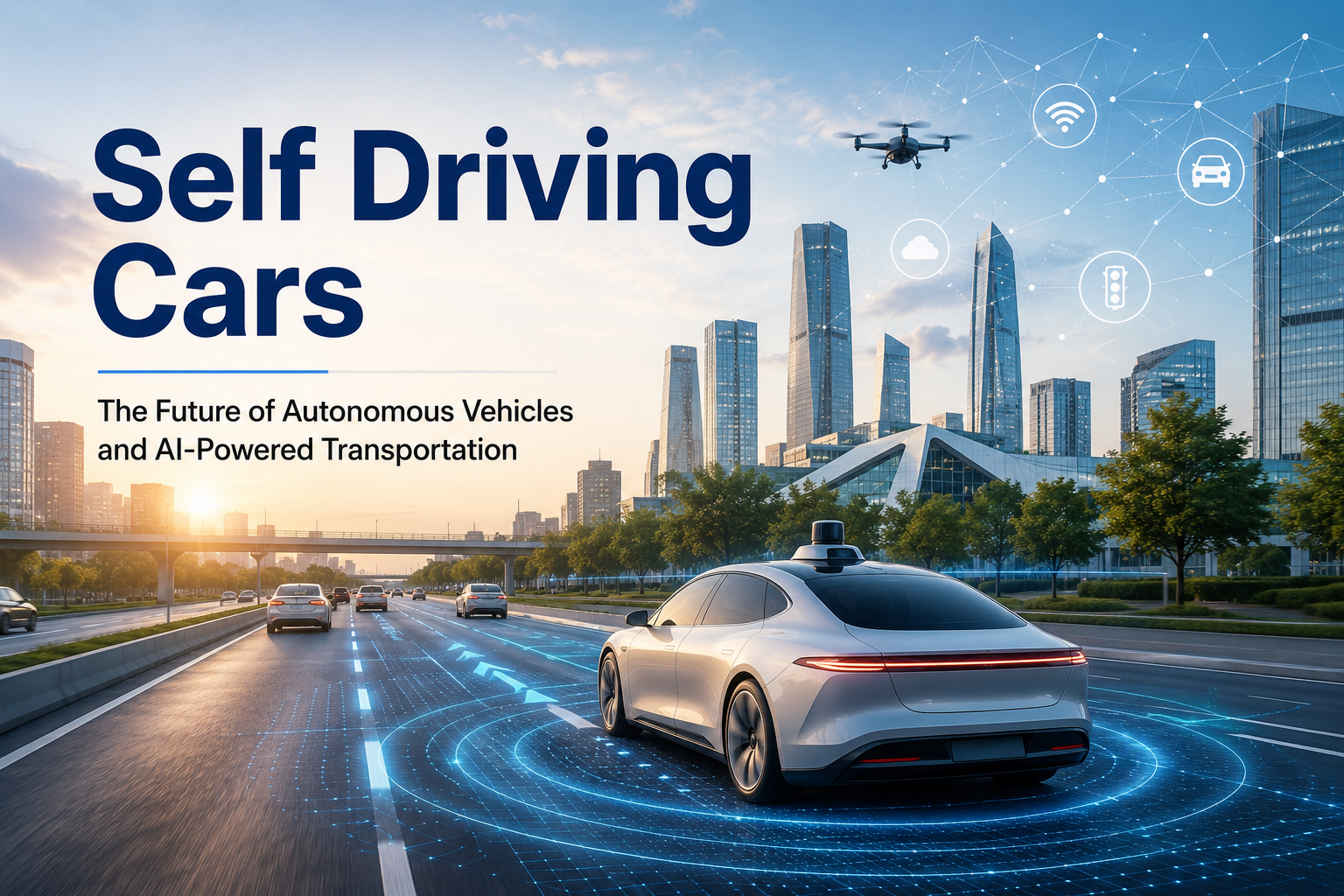
The idea of self driving cars once belonged to science fiction. Today, it is one of the most transformative technologies reshaping transportation, urban planning, logistics, and personal mobility. Over the last fifteen years, I have closely followed the rapid evolution of autonomous vehicles from early experimental prototypes operating in controlled environments to sophisticated AI-powered systems navigating real-world roads.
What makes self driving cars so fascinating is not simply their ability to move without human intervention. The real breakthrough lies in how these vehicles perceive their surroundings, learn from experience, communicate with infrastructure, and make split-second decisions using advanced artificial intelligence.
As autonomous driving technology continues to mature, governments, automakers, technology companies, and mobility providers are investing billions into creating safer, smarter, and more efficient transportation systems. The future of autonomous vehicles is no longer a distant dream; it is gradually becoming a reality.
From my observations at automotive technology conferences, mobility summits, and autonomous vehicle demonstrations, one thing has become increasingly clear: we are witnessing a transportation revolution comparable to the introduction of the internet or smartphones.
Understanding Autonomous Driving Technology
How Self Driving Cars Work
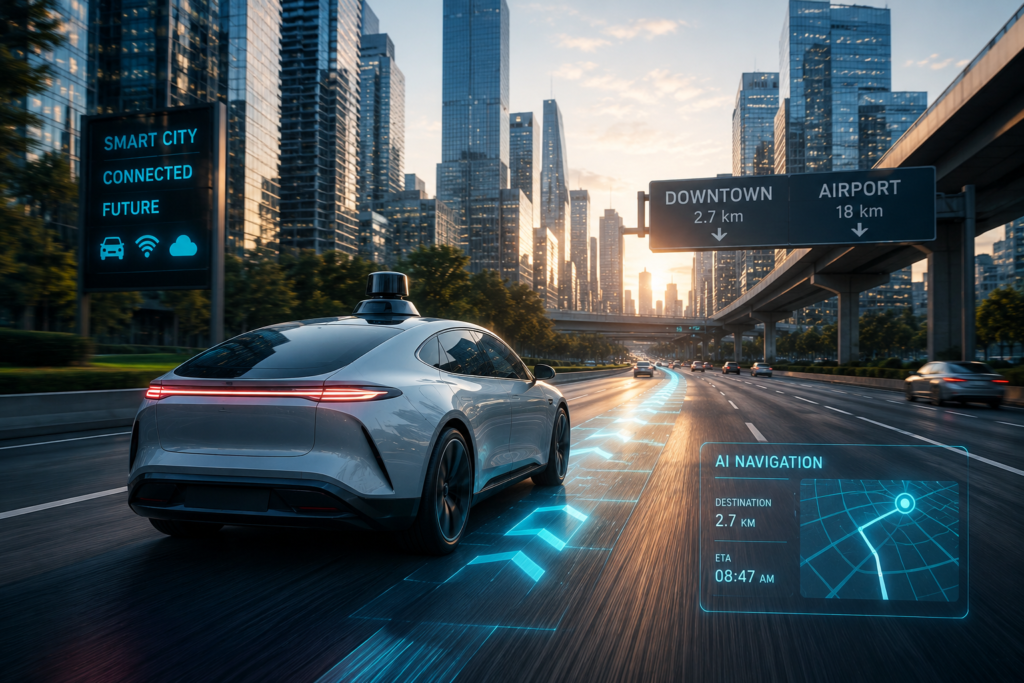
At the heart of self driving cars lies a complex combination of hardware and software working together in real time.
Sensors
Sensors continuously collect environmental data, helping the vehicle detect nearby objects, road conditions, and obstacles.
Cameras
Multiple cameras provide a 360-degree visual understanding of the surroundings. These cameras identify traffic signs, lane markings, pedestrians, and other vehicles.
LiDAR
Light Detection and Ranging (LiDAR) systems create highly detailed three-dimensional maps of the environment by emitting laser pulses and measuring their reflections.
Radar
Radar helps vehicles detect the speed, distance, and movement of surrounding objects, particularly in poor weather conditions.
AI Systems
Artificial intelligence processes enormous amounts of sensor data, enabling vehicles to interpret situations and make driving decisions.
Machine Learning
Machine learning allows AI self driving cars to improve performance over time by learning from millions of miles of driving data.
Levels of Vehicle Autonomy
The automotive industry commonly follows the classification framework developed by the organization SAE International.
| Level | Description | Human Involvement |
|---|---|---|
| Level 0 | No automation | Full driver control |
| Level 1 | Driver assistance | Driver remains responsible |
| Level 2 | Partial automation | Human supervision required |
| Level 3 | Conditional automation | Vehicle drives under specific conditions |
| Level 4 | High automation | Limited human intervention |
| Level 5 | Full automation | No driver required |
Today, most commercially available vehicles operate between Levels 2 and 3, while several experimental systems are targeting Level 4 deployment.
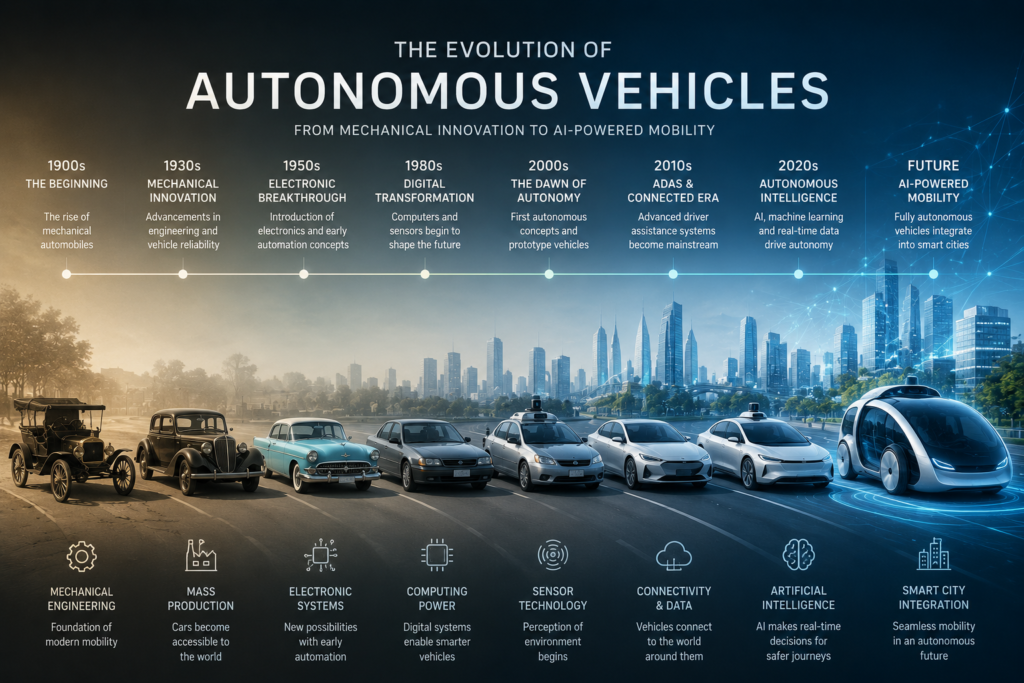
Evolution of Self Driving Cars
The journey toward autonomous transportation has been remarkable.
In the early 2000s, autonomous driving projects were largely confined to research laboratories and government-sponsored competitions. Vehicles struggled with basic navigation and obstacle detection.
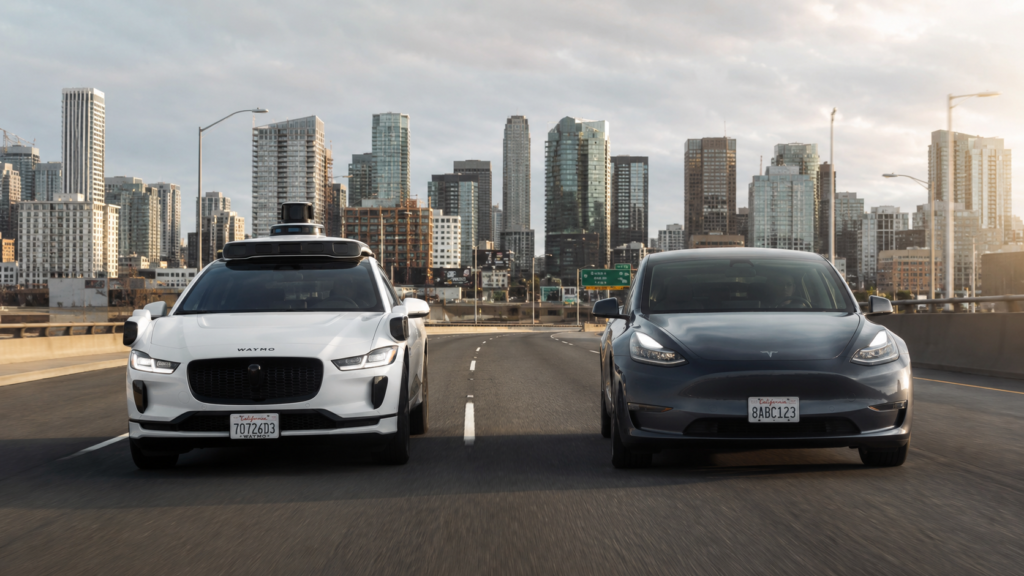
The turning point arrived when advances in computing power, cloud infrastructure, AI algorithms, and sensor technology converged. Companies such as Tesla, Waymo, and NVIDIA Autonomous Vehicles accelerated innovation across the industry.
One of my strongest observations during this period was how quickly machine learning transformed autonomous systems. Early vehicles relied heavily on predefined rules. Modern AI self driving cars learn from vast datasets and adapt to complex driving scenarios far more effectively.
Major milestones included:
- Advanced lane-centering systems
- Highway autopilot functions
- Autonomous parking
- Robotaxi pilot programs
- AI-powered perception systems
- Vehicle-to-everything (V2X) communication
These breakthroughs have moved driverless car technology from experimental research into practical deployment.
Future of Autonomous Vehicles
AI Self Driving Cars Becoming Smarter
Artificial intelligence will remain the driving force behind future mobility.
Deep Learning
Future systems will use more sophisticated neural networks capable of understanding highly complex environments.
Computer Vision
Advanced computer vision will improve object recognition accuracy, helping vehicles better interpret road conditions and human behavior.
Predictive Driving
Rather than simply reacting, future autonomous vehicles will anticipate potential hazards before they occur.
Edge Computing
Edge computing will reduce latency by processing data directly inside the vehicle, enabling faster decision-making.
Based on current industry trends, I expect AI-powered driving systems to become significantly more capable during the next decade, particularly in urban environments where decision-making complexity is highest.
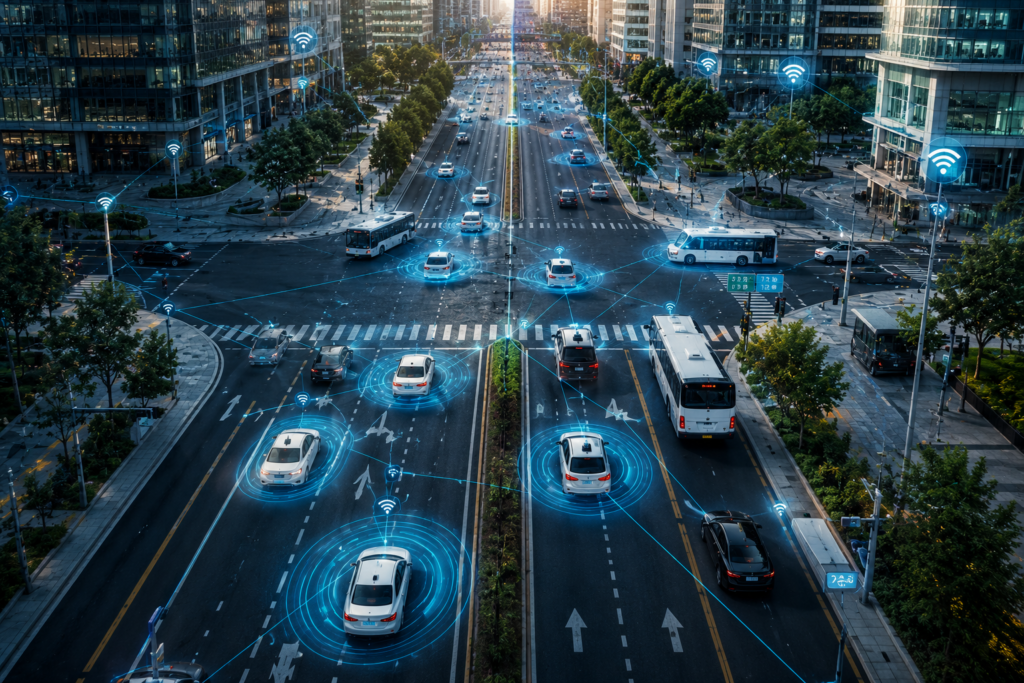
Autonomous Vehicle Networks
Future transportation will not depend solely on individual vehicles.
Vehicle-to-Vehicle Communication
Cars will share information regarding speed, road conditions, and hazards.
Vehicle-to-Infrastructure Communication
Traffic lights, road sensors, and transportation systems will communicate directly with vehicles.
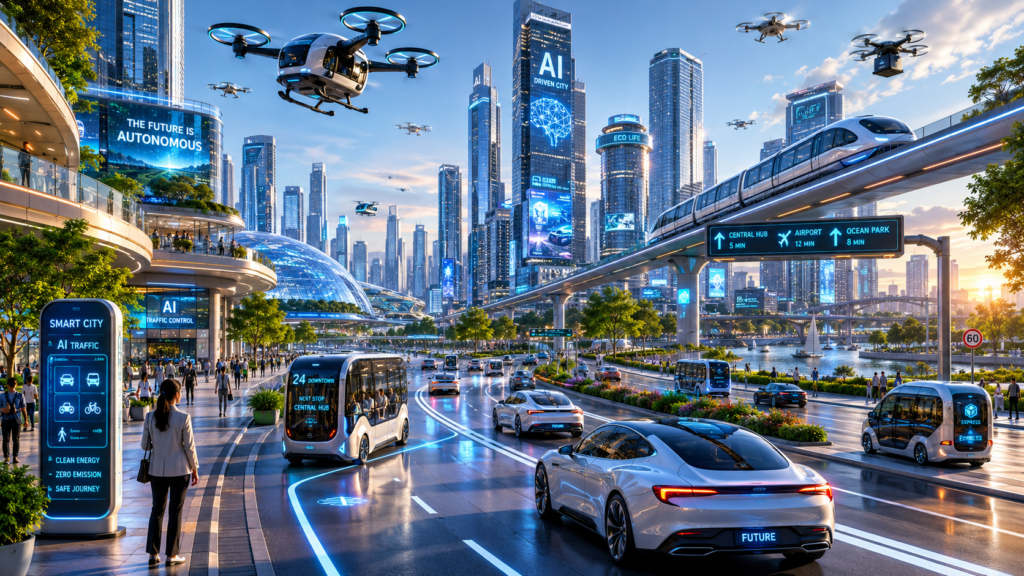
Smart Cities Integration
Smart cities will become essential components of autonomous transportation ecosystems, enabling seamless mobility and improved traffic management.
Benefits of Driverless Car Technology
The potential benefits of self driving cars extend far beyond convenience.
Road Safety Improvements
Human error contributes to the majority of traffic accidents worldwide. Autonomous systems can reduce distracted driving, fatigue, and impaired driving incidents.
Reduced Accidents
Continuous monitoring and rapid response capabilities enable autonomous vehicles to react faster than humans in many situations.
Improved Mobility
Elderly individuals and people with disabilities could gain unprecedented transportation independence.
Reduced Traffic Congestion
Connected autonomous fleets can optimize traffic flow and reduce bottlenecks.
Fuel Efficiency
Smarter driving patterns reduce unnecessary acceleration and braking.
Environmental Benefits
Improved efficiency and increased adoption of electric vehicles may significantly lower transportation-related emissions.
Accessibility
Driverless car technology can provide transportation access to millions of people currently limited by age or physical ability.
Challenges Facing Self Driving Cars
Despite remarkable progress, significant challenges remain.
Regulatory Challenges
Governments worldwide continue developing legal frameworks for autonomous vehicle deployment. Regulations vary significantly across regions, creating complexity for manufacturers.
Safety Concerns
Rare but highly publicized incidents involving autonomous systems continue to influence public perception and regulatory scrutiny.
Ethical Decision Making
Autonomous systems may encounter situations requiring complex ethical judgments, raising important questions regarding accountability.
Cybersecurity Risks
Connected vehicles create potential attack surfaces for malicious actors. Robust cybersecurity frameworks will remain essential.
Public Trust Issues
In my experience attending industry events, technological capability often advances faster than public confidence. Building trust may ultimately prove as important as improving technology itself.
Many consumers remain hesitant to relinquish control, even when data suggests autonomous systems can improve safety.
Self Driving Cars vs Traditional Vehicles
| Feature | Self Driving Cars | Traditional Cars |
|---|---|---|
| Safety | AI-assisted monitoring and rapid response | Dependent on driver skill |
| Convenience | High automation | Manual operation |
| Fuel Efficiency | Optimized driving behavior | Varies by driver |
| AI Integration | Extensive | Limited |
| Human Error | Significantly reduced | Major accident factor |
| Traffic Management | Connected and coordinated | Independent operation |
| Cost | Higher initially | Lower upfront cost |
| Future Potential | Extremely high | Limited innovation potential |
Industries That Will Benefit Most
Logistics
Autonomous trucking could transform freight transportation through increased efficiency and reduced operating costs.
Ride Sharing
Robotaxi services may fundamentally change urban transportation models.
Public Transportation
Autonomous buses and shuttles could improve accessibility while reducing operational expenses.
Healthcare Transport
Medical transportation services may become more reliable and accessible.
Smart Cities
Connected transportation systems will support more efficient urban development.
Delivery Services
Autonomous delivery vehicles and robotic systems can accelerate last-mile logistics.
Many industry analysts now view logistics and delivery services as the earliest large-scale beneficiaries of autonomous driving technology.
Expert Predictions for the Next Decade
Having followed this sector for more than fifteen years, I believe several developments are likely by 2035.
AI Advancements
Autonomous systems will become significantly more reliable through next-generation AI models and real-world learning.
Regulatory Progress
Governments will establish clearer regulatory frameworks supporting broader deployment.
Robotaxis
Commercial robotaxi fleets will expand across major metropolitan areas.
Autonomous Trucking
Long-haul freight routes will increasingly incorporate autonomous operations.
Smart Infrastructure
Cities will deploy intelligent infrastructure designed specifically for connected vehicles.
Connected Mobility Ecosystems
Transportation will evolve into an integrated network where vehicles, infrastructure, public transit, and digital platforms work together seamlessly.
The most successful regions will be those that combine advanced AI systems with supportive infrastructure and forward-thinking policies.
Final Thoughts
The future of self driving cars represents one of the most significant technological transformations of the 21st century. While challenges related to regulation, cybersecurity, ethics, and public trust remain, the overall direction of the industry is unmistakable.
After observing autonomous vehicle development for more than fifteen years, I have seen technologies once considered impossible become increasingly practical. The pace of innovation continues to accelerate, driven by advances in artificial intelligence, machine learning, computing power, and connectivity.
The future of autonomous vehicles will not arrive overnight. Instead, it will unfold gradually through incremental improvements, pilot programs, smart infrastructure investments, and evolving public acceptance.
For businesses, governments, and consumers, the opportunities are enormous. Safer roads, greater accessibility, reduced congestion, and more sustainable transportation systems are all within reach.
The road ahead will undoubtedly present challenges, but the long-term potential of autonomous driving technology makes it one of the most exciting innovations shaping the future of mobility.
Frequently Asked Questions (FAQ)
1. What are self driving cars?
Self driving cars are vehicles that use sensors, cameras, AI systems, radar, and software to navigate and operate with limited or no human intervention.
2. When will fully autonomous vehicles become common?
Widespread Level 5 autonomy may still take years, but Level 4 autonomous services are expected to expand significantly during the next decade.
3. Are self driving cars safer than human drivers?
Many studies suggest autonomous systems can reduce accidents caused by human error, though ongoing testing and validation remain necessary.
4. Which companies are leading autonomous vehicle development?
Major innovators include Tesla, Waymo, NVIDIA, traditional automakers, and numerous AI mobility startups.
5. How will autonomous vehicles impact jobs?
Some transportation roles may change, but new opportunities will emerge in AI development, fleet management, cybersecurity, infrastructure, and mobility services.
Author

razakh6402@gmail.com
Related Posts

Lead Generation Software: 12 Best Lead Generation Tools for B2B Sales (2026 Guide)
- 0
- 2,300 words
If someone had asked me 15 years ago what the biggest challenge in sales was, my answer would have been simple: finding...

Survey Software: 12 Best Online Survey Tools & Feedback Software for Businesses (2026 Guide)
- 0
- 1,871 word
Whether I was helping a SaaS startup validate a new feature, assisting an HR team with employee engagement, or optimizing customer experience...
Read out all
Online Course Platform: 12 Best LMS Software & eLearning Platforms for Course Creators (2026 Guide)
- 0
- 1,900 word
The online education industry has changed dramatically over the last 15 years. When I built my first digital training portal, simply uploading...

Team Communication Software: 12 Best Business Messaging Apps for Modern Workplaces in 2026 (Expert Tested)
- 0
- 2,305 words
I’ve personally tested dozens of team communication software platforms while consulting for marketing agencies, software companies, HR departments, remote development teams, and...

Invoice Software: 12 Best Invoicing Software for Small Business in 2026 (Expert Tested)
- 0
- 2,493 words
I’ve worked with freelancers chasing late payments, agencies managing hundreds of monthly invoices, startups scaling internationally, and established businesses struggling with outdated...

Generate one SEO-optimized title thatdigital asset management software
- 6
- 2,632 words
One of the most memorable projects I led involved migrating nearly half a million digital assets from a traditional file server into...
1 comment