- 5
- 1,813 word
Twenty-five years ago, I walked through hospitals where patient histories lived inside paper folders stacked from floor to ceiling. Doctors spent valuable time searching for records, nurses manually updated charts, and administrators relied on disconnected systems that rarely communicated with each other.
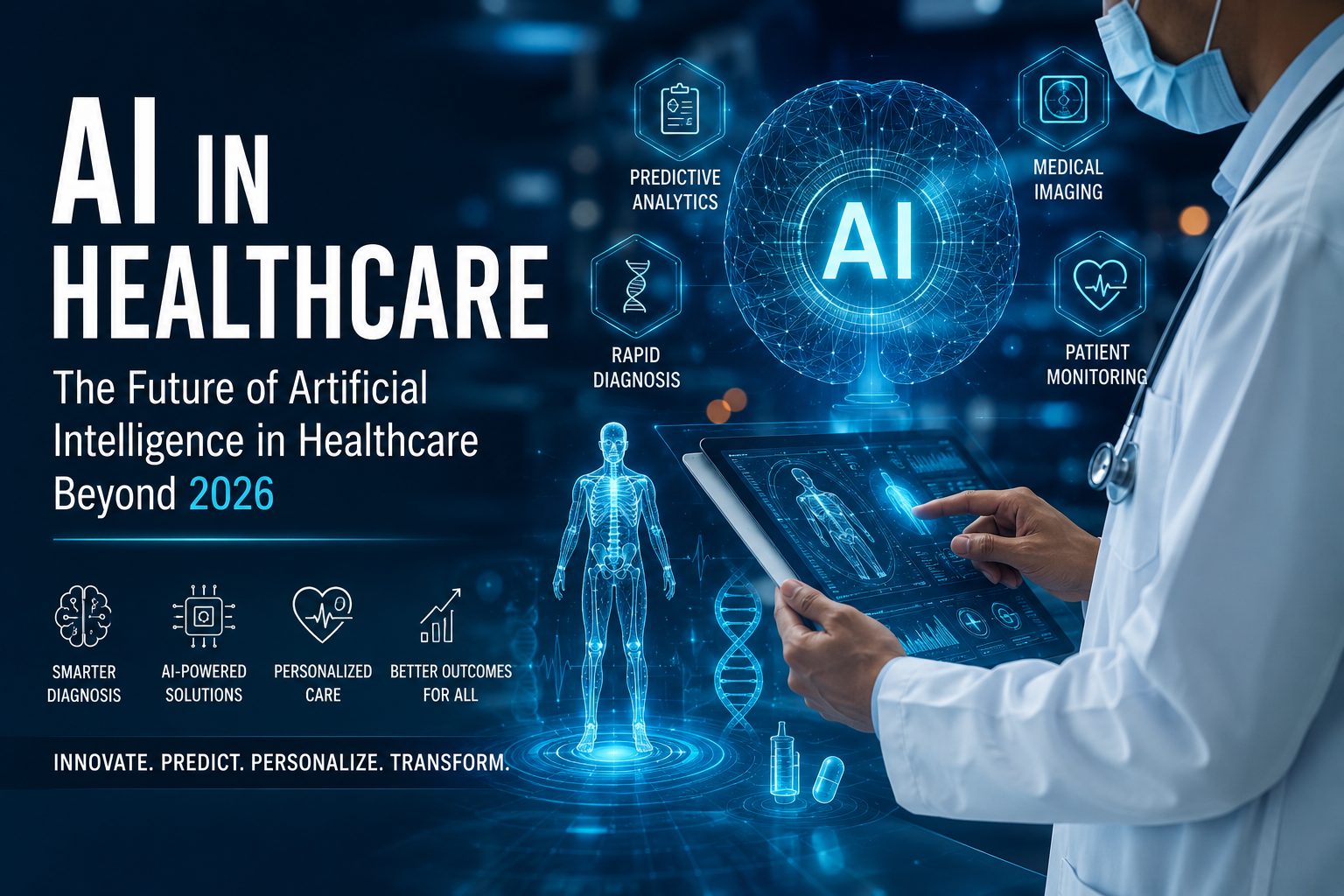
Today, healthcare operates in a completely different environment. Electronic health records, cloud-based platforms, predictive analytics, and intelligent automation have transformed the foundation of medicine. Yet, despite all these advances, nothing has accelerated healthcare innovation as dramatically as AI in healthcare.
The conversation around artificial intelligence in healthcare is no longer theoretical. AI is actively helping radiologists detect diseases earlier, supporting clinicians in treatment planning, accelerating drug discovery, improving hospital efficiency, and enabling personalized patient care at a scale previously impossible.
From my experience working alongside healthcare organizations during multiple waves of digital transformation, the most significant shift isn’t that machines are becoming smarter. It’s that healthcare systems are finally gaining the ability to learn from vast amounts of clinical data in real time.
The next decade will redefine how healthcare is delivered, and AI will sit at the center of that transformation.

Why AI Is Transforming Healthcare Faster Than Ever
Healthcare has reached a critical turning point.
Several challenges have converged simultaneously:
- Aging populations
- Rising healthcare costs
- Physician shortages
- Increasing chronic diseases
- Growing administrative burdens
- Massive healthcare data growth
During the early 2000s, healthcare organizations focused primarily on digitizing records. Today, the challenge is no longer collecting data. The challenge is understanding it.
Hospitals generate enormous volumes of information every day:
- Medical images
- Lab reports
- Clinical notes
- Wearable device data
- Genomic information
- Real-time monitoring streams
Human teams simply cannot analyze all this information efficiently.
This reality explains why AI in healthcare adoption has accelerated dramatically over recent years.
Organizations increasingly recognize that intelligent systems can assist clinicians by identifying patterns, predicting risks, and supporting faster decision-making.
The result is a healthcare environment where technology acts as a force multiplier rather than merely a record-keeping tool.
Understanding Artificial Intelligence in Healthcare
What Is Healthcare AI?
Healthcare AI refers to computer systems designed to perform tasks that traditionally require human intelligence in medical settings.
These systems can:
- Analyze patient data
- Detect patterns
- Predict outcomes
- Support diagnoses
- Automate workflows
- Assist treatment planning
Unlike traditional software, AI continuously improves as it processes more data.
How AI Works in Modern Medicine
Modern healthcare AI systems learn from enormous datasets.
For example, an AI-powered diagnostic platform may analyze millions of medical images to identify abnormalities associated with specific diseases.
When presented with a new image, the system compares patterns against learned examples and provides clinical insights.
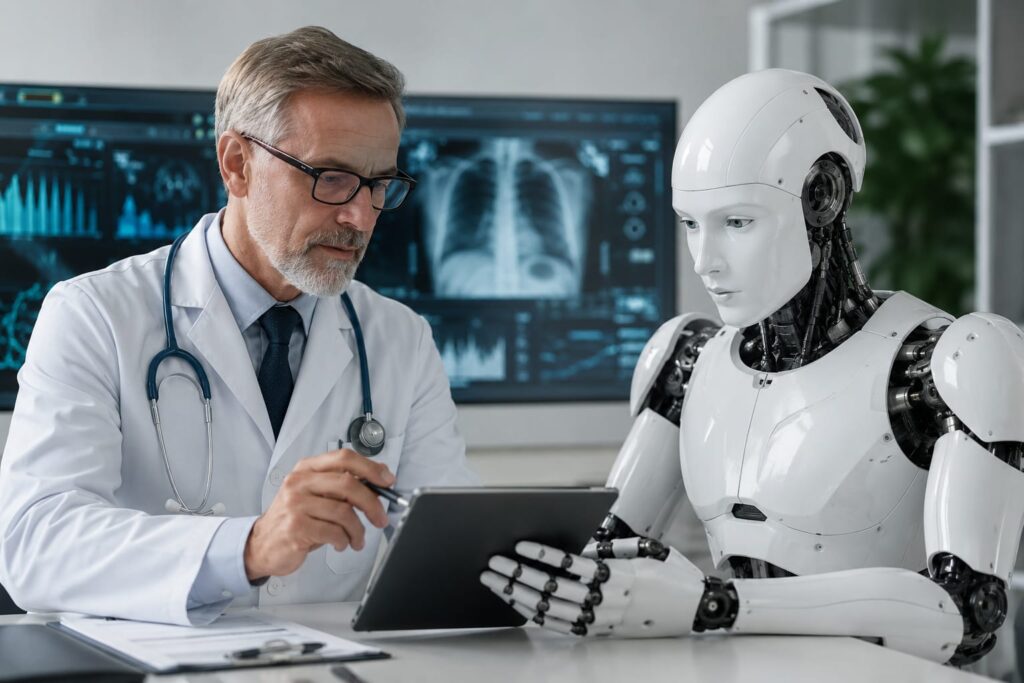
Healthcare professionals remain responsible for final decisions, but AI significantly improves efficiency and accuracy.
Key Technologies Behind Healthcare AI
Machine Learning
Machine learning enables systems to identify patterns and improve predictions over time.
Deep Learning
Deep learning powers advanced image recognition capabilities used in radiology and pathology.
Natural Language Processing
NLP allows systems to understand physician notes, clinical records, and medical literature.
Computer Vision
Computer vision helps AI interpret medical images such as CT scans, MRIs, and X-rays.
Predictive Analytics
Predictive healthcare analytics identifies patients at risk before symptoms become severe.
AI in Healthcare Comparison Table
| AI Application | Primary Use | Benefits | Current Adoption Level |
|---|---|---|---|
| Medical Imaging AI | Image Analysis | Faster diagnosis, improved accuracy | High |
| Predictive Analytics | Risk Prediction | Early intervention | High |
| Virtual Health Assistants | Patient Support | Better engagement | Moderate |
| Drug Discovery AI | Research Acceleration | Reduced development time | Growing |
| Robotic Surgery | Surgical Assistance | Greater precision | Moderate |
| Remote Monitoring | Continuous Care | Improved patient outcomes | High |
| Clinical Documentation AI | Administrative Support | Reduced physician workload | Rapidly Growing |
Most Powerful Healthcare AI Applications in 2026
The most impactful healthcare AI applications are those solving real operational and clinical challenges.
AI-Powered Medical Imaging
Medical imaging represents one of the most mature AI success stories.
AI can identify:
- Tumors
- Fractures
- Lung abnormalities
- Cardiovascular risks
In many cases, systems detect subtle patterns that clinicians might overlook during high-volume workloads.
Clinical Decision Support Systems
These platforms provide evidence-based recommendations during patient care.
They help clinicians:
- Review treatment options
- Identify potential drug interactions
- Assess risks
Predictive Patient Analytics
Predictive systems analyze patient histories and identify future risks.
Applications include:
- Sepsis prediction
- Readmission prevention
- Chronic disease management
AI Virtual Health Assistants
Virtual assistants improve patient communication through:
- Appointment scheduling
- Medication reminders
- Symptom assessment
- Care coordination
Robotic Surgery
Robotic-assisted surgery enhances precision during complex procedures.
Benefits include:
- Smaller incisions
- Reduced complications
- Faster recovery
Personalized Treatment Planning
AI analyzes patient-specific data to recommend individualized treatments.
Drug Discovery and Research
Traditional drug development often takes over a decade.
AI reduces research timelines by identifying promising compounds much faster.
Among all healthcare AI applications, drug discovery may generate some of the most transformative long-term impacts.

How AI Is Improving Patient Outcomes
Faster Diagnosis
AI dramatically reduces analysis time for medical imaging and clinical data.
Early Disease Detection
Early identification remains one of healthcare’s greatest opportunities.
AI helps detect:
- Cancer
- Heart disease
- Neurological disorders
- Diabetes complications
Earlier intervention often leads to better outcomes and lower costs.
Reduced Medical Errors
Decision-support systems help clinicians identify potential issues before they affect patients.
Better Treatment Recommendations
AI-assisted diagnosis supports more informed treatment decisions.
Personalized Medicine
Personalized medicine uses patient-specific characteristics to tailor therapies.
This approach improves effectiveness while reducing unnecessary interventions.
AI in Hospitals and Clinical Operations
Administrative Automation
Healthcare professionals spend substantial time on paperwork.
AI automates repetitive administrative tasks, freeing clinicians for patient care.
Smart Scheduling Systems
Intelligent scheduling improves resource utilization while reducing wait times.
Clinical Documentation
Documentation AI automatically generates summaries from clinician interactions.
Hospital Resource Management
AI optimizes:
- Bed allocation
- Equipment usage
- Supply chain management
Predictive Staffing
Hospitals use forecasting models to predict patient demand and staffing requirements.
This improves operational efficiency and reduces burnout.

Future of AI in Healthcare – What Comes Next?
The future of AI in healthcare extends far beyond automation.
AI-Powered Preventive Healthcare
Healthcare is shifting from reactive treatment toward prevention.
AI will continuously analyze health data to identify risks before illness develops.
Digital Twins for Patients
Digital twins create virtual representations of patients.
Clinicians may eventually test treatments digitally before applying them in real life.
Autonomous Diagnostic Systems
Future diagnostic platforms will become increasingly sophisticated and autonomous.
AI Drug Development
AI will significantly shorten drug discovery cycles.
Precision Medicine
Precision medicine will become increasingly personalized through genomic analysis and predictive models.
Generative AI in Healthcare
Generative AI can summarize records, assist documentation, and support clinical communication.
AI-Powered Telemedicine
Virtual healthcare experiences will become smarter, faster, and more personalized.
The future of AI in healthcare will likely involve continuous monitoring, predictive intervention, and personalized treatment pathways.
By 2030, many healthcare organizations may rely on AI as extensively as they currently rely on electronic health records.
AI Healthcare Technology Trends Shaping the Next Decade
Several AI healthcare technology trends will influence healthcare innovation through 2035.
Generative AI
Generative AI will transform administrative workflows and knowledge management.
Edge AI in Medical Devices
Medical devices increasingly process information locally, reducing latency and improving privacy.
Wearable Health Intelligence
Smart wearables will evolve from fitness trackers into predictive health platforms.
AI and Genomics
AI will accelerate genomic analysis and personalized medicine.
Real-Time Patient Monitoring
Continuous monitoring systems will identify risks before emergencies occur.
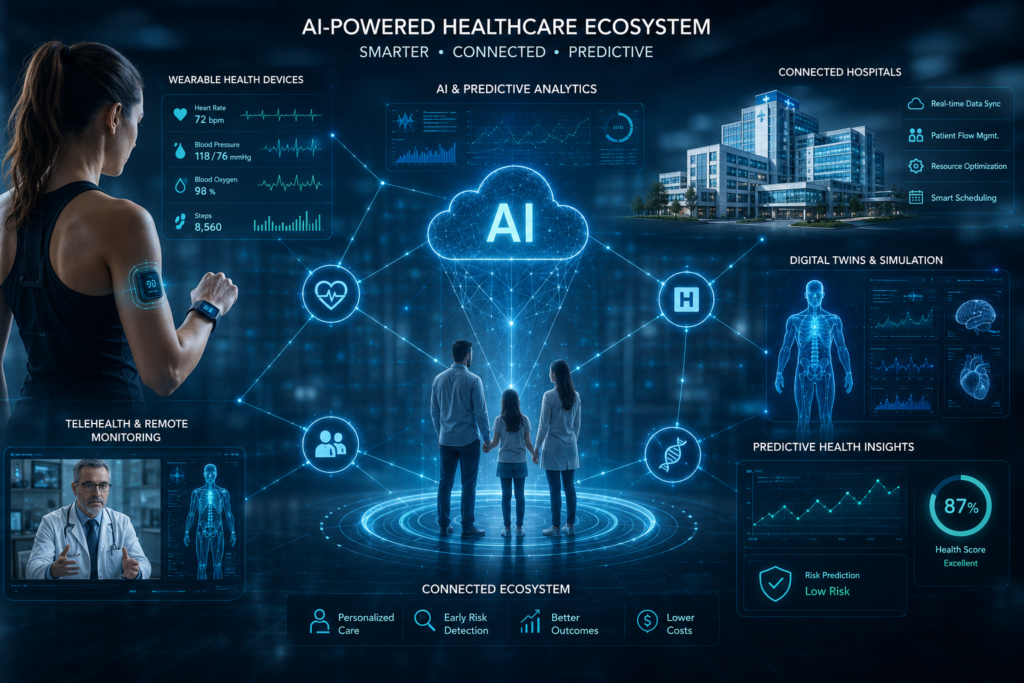
Smart Healthcare Ecosystems
Connected healthcare ecosystems will integrate hospitals, clinics, wearable devices, pharmacies, and home care services.
These AI healthcare technology trends represent a shift toward proactive and data-driven healthcare.
Challenges and Risks of Artificial Intelligence in Healthcare
Data Privacy Concerns
Healthcare data remains one of the most sensitive categories of information.
Regulatory Compliance
Regulatory frameworks continue evolving alongside AI innovation.
AI Bias
Poor-quality training data can introduce bias into healthcare systems.
Ethical Issues
Questions regarding accountability, transparency, and informed consent remain important.
Security Risks
Healthcare organizations remain frequent cybersecurity targets.
Human Oversight Requirements
AI should augment clinical expertise rather than replace it.
Human judgment remains essential for safe patient care.
Benefits vs Challenges of AI in Healthcare
| Benefits | Challenges |
|---|---|
| Faster Diagnosis | Privacy Concerns |
| Better Accuracy | Regulatory Barriers |
| Reduced Costs | AI Bias |
| Improved Efficiency | Cybersecurity Risks |
| Personalized Care | Ethical Concerns |
Real-World Lessons From 25 Years of Healthcare Technology Evolution
After observing healthcare transformation for over two decades, several lessons stand out.
First, technology alone never solves healthcare problems.
Organizations achieve success when they redesign workflows alongside technology adoption.
Second, clinician engagement matters more than software features.
Many digital transformation projects failed because healthcare professionals weren’t involved early enough.
Third, interoperability remains essential.
Disconnected systems create inefficiencies regardless of how advanced individual technologies become.
Finally, healthcare leaders must focus on outcomes rather than innovation for its own sake.
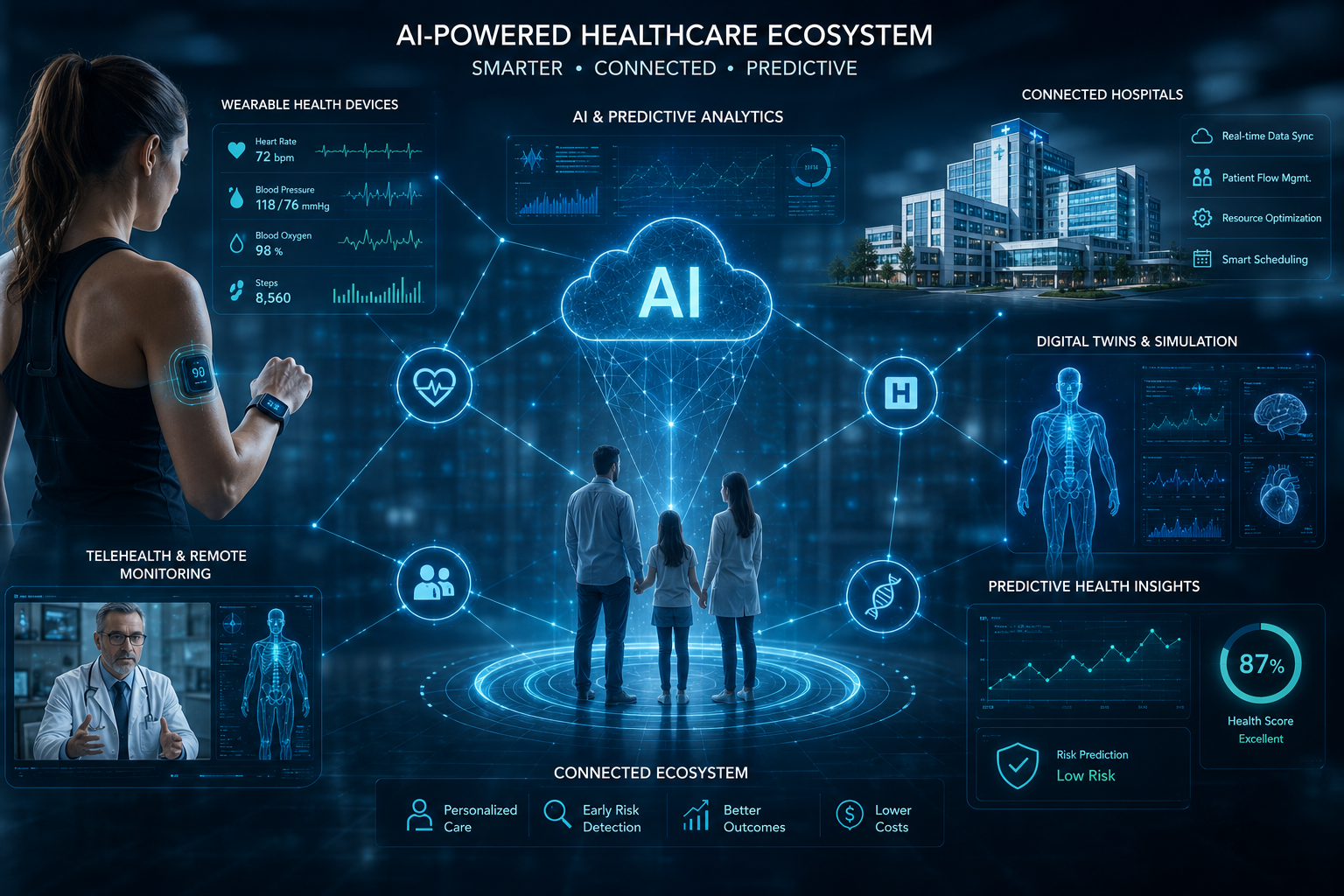
The most successful organizations use technology to improve patient experiences, clinical outcomes, and operational performance simultaneously.
The next phase of healthcare transformation will reward organizations that balance innovation with practicality.
Final Verdict – The Future of AI in Healthcare
Biggest Opportunities
The greatest opportunities include:
- Early disease detection
- Personalized medicine
- Preventive healthcare
- Operational efficiency
- Accelerated research
Most Promising Healthcare AI Applications
The most impactful healthcare AI applications include:
- Medical imaging AI
- Predictive analytics
- Clinical decision support
- Drug discovery platforms
- Remote patient monitoring
Key AI Healthcare Technology Trends
Organizations should closely monitor:
- Generative AI
- Digital twins
- Genomics-powered precision medicine
- Smart healthcare ecosystems
- Autonomous diagnostics
What Healthcare Organizations Should Do Next
Healthcare leaders should:
- Build strong data foundations
- Invest in AI governance
- Prioritize cybersecurity
- Train clinical teams
- Focus on measurable outcomes
Conclusion
The story of AI in healthcare is not about replacing doctors. It is about creating a healthcare system that becomes smarter, faster, more predictive, and more patient-centered.
Having witnessed the journey from paper records to intelligent healthcare platforms, I believe the next decade will bring changes that surpass anything we’ve seen so far. The organizations that embrace artificial intelligence in healthcare responsibly will deliver better care, reduce costs, improve clinician experiences, and achieve outcomes once considered impossible.
The future of AI in healthcare belongs to healthcare systems that combine human expertise with intelligent technology. Those that strike this balance will define the next era of medicine.
Author

razakh6402@gmail.com
Related Posts
Lead Generation Software: 12 Best Lead Generation Tools for B2B Sales (2026 Guide)
- 0
- 2,300 words
If someone had asked me 15 years ago what the biggest challenge in sales was, my answer would have been simple: finding...
Survey Software: 12 Best Online Survey Tools & Feedback Software for Businesses (2026 Guide)
- 0
- 1,871 word
Whether I was helping a SaaS startup validate a new feature, assisting an HR team with employee engagement, or optimizing customer experience...
Read out all
Online Course Platform: 12 Best LMS Software & eLearning Platforms for Course Creators (2026 Guide)
- 0
- 1,900 word
The online education industry has changed dramatically over the last 15 years. When I built my first digital training portal, simply uploading...

Team Communication Software: 12 Best Business Messaging Apps for Modern Workplaces in 2026 (Expert Tested)
- 0
- 2,305 words
I’ve personally tested dozens of team communication software platforms while consulting for marketing agencies, software companies, HR departments, remote development teams, and...
Invoice Software: 12 Best Invoicing Software for Small Business in 2026 (Expert Tested)
- 0
- 2,493 words
I’ve worked with freelancers chasing late payments, agencies managing hundreds of monthly invoices, startups scaling internationally, and established businesses struggling with outdated...

Generate one SEO-optimized title thatdigital asset management software
- 6
- 2,632 words
One of the most memorable projects I led involved migrating nearly half a million digital assets from a traditional file server into...
5 comments