
- 0
- 1,833 word
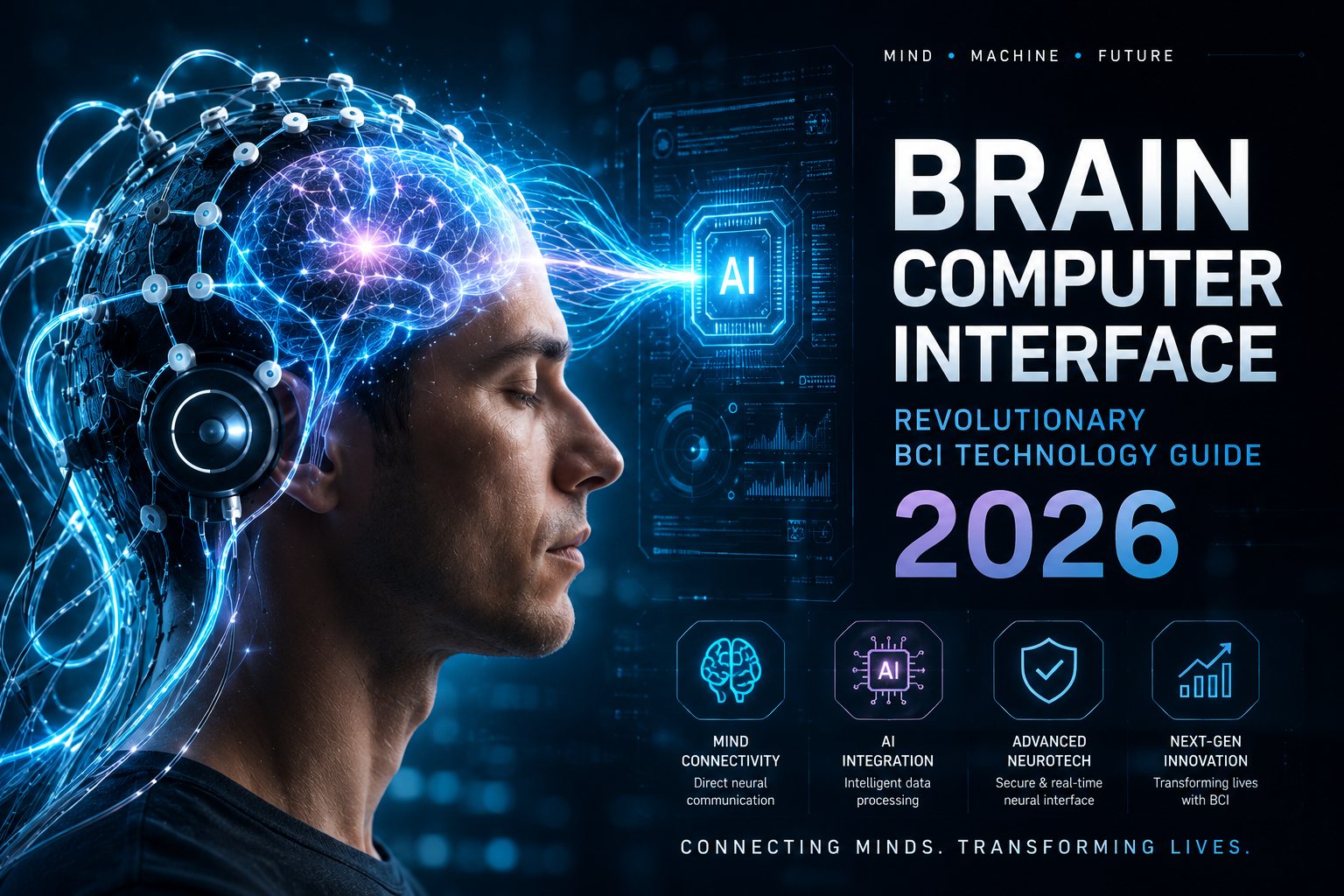
Few technologies have captured the imagination of scientists, engineers, healthcare professionals, and futurists quite like the brain computer interface.
For more than 25 years working across neuroscience, biomedical engineering, artificial intelligence, and human-machine interaction, I have watched a concept that once seemed like science fiction evolve into one of the most promising fields in modern technology.
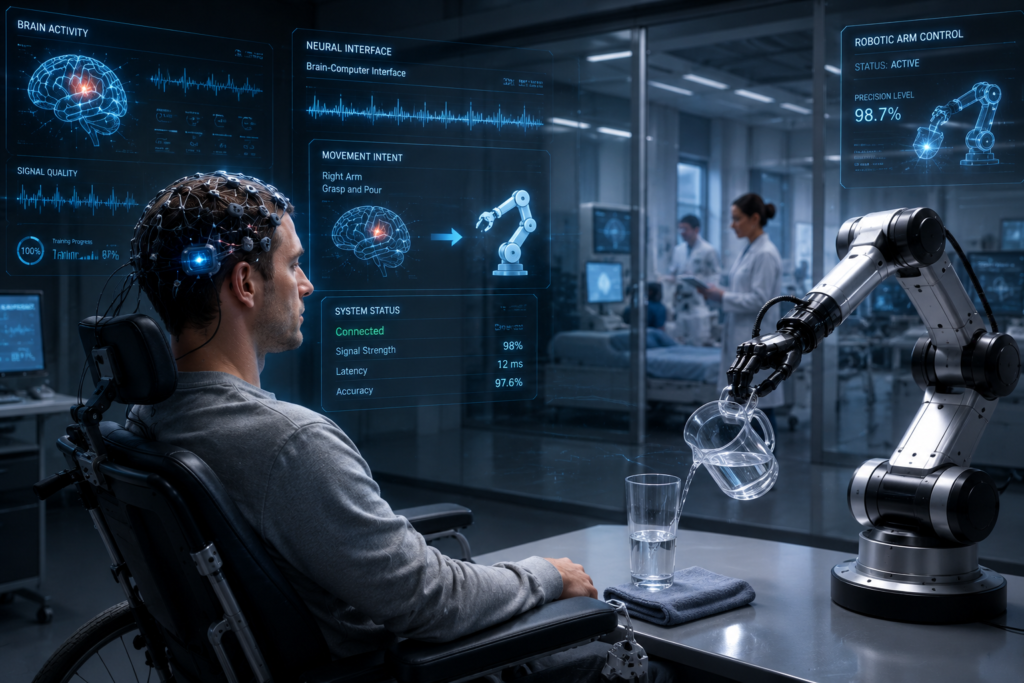
Today, BCI technology is helping individuals with paralysis communicate, enabling robotic limbs to move through thought alone, and creating entirely new pathways between the human brain and digital systems.
What makes this particularly exciting is that we are still in the early stages.
Advances in artificial intelligence, machine learning, neural decoding, sensors, and computational neuroscience are accelerating the evolution of neural interface technology at an unprecedented pace.
Whether you’re a researcher, healthcare professional, investor, student, technology enthusiast, or business leader, understanding the future of brain machine interface systems is becoming increasingly important.
The next decade may fundamentally change how humans interact with computers.
What Is Brain Computer Interface?
A brain computer interface (BCI) is a system that creates a direct communication pathway between the brain and an external device.
Instead of using traditional input methods such as:
- Keyboards
- Mice
- Touchscreens
- Voice commands
A BCI translates neural activity into digital commands.
Simple Definition
What is brain computer interface?
A brain computer interface is a technology that detects brain signals, interprets them using software and AI, and converts them into actions that control computers, devices, or machines.
History of Brain Computer Interfaces
The foundations of modern BCI research emerged in the 1970s when researchers began exploring how electrical brain signals could be measured and interpreted.
Major milestones include:
- 1924: Hans Berger records first human EEG signals.
- 1973: The term “Brain-Computer Interface” is formally introduced.
- 1990s: Early patient communication systems emerge.
- 2000s: Brain-controlled robotic devices become feasible.
- 2010s: AI significantly improves neural decoding.
- 2020s: Commercial neurotechnology companies accelerate innovation.
Evolution of Neural Interface Technology
The field has evolved from simple EEG experiments into sophisticated systems capable of:
- Controlling robotic arms
- Restoring communication
- Assisting mobility
- Supporting neurorehabilitation
- Interacting with AI systems
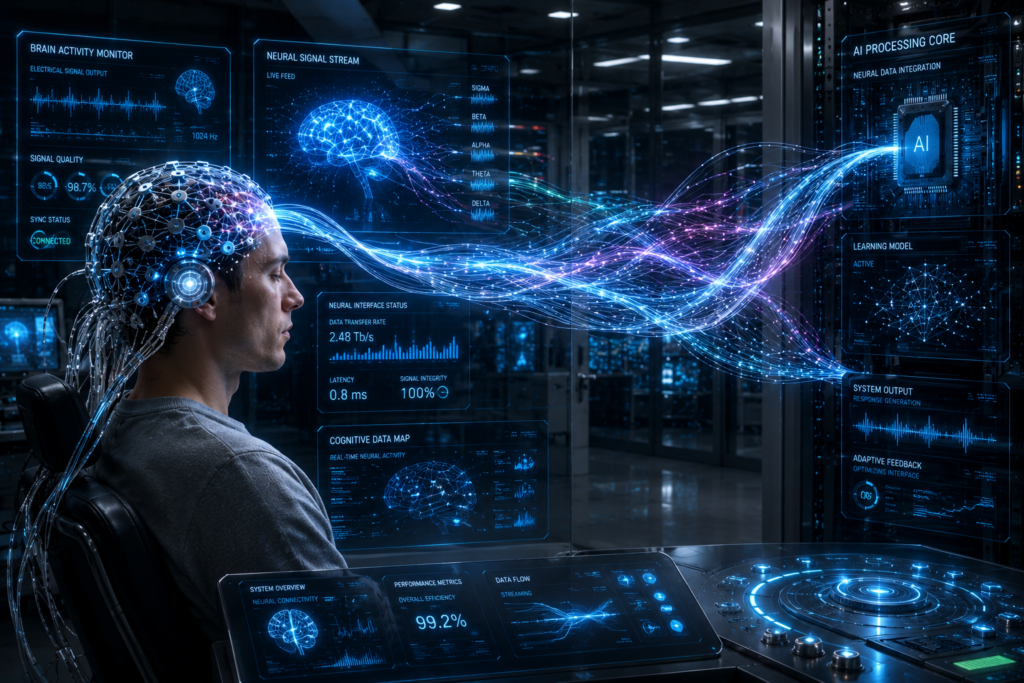
How Brain Computer Interfaces Work
Every BCI system follows four primary stages.
Signal Acquisition
The first step involves capturing neural activity.
Common methods include:
- Electroencephalography (EEG)
- Electrocorticography (ECoG)
- Implanted electrodes
- Neural implants
The brain continuously generates electrical signals that reflect thoughts, intentions, and sensory processing.
Signal Processing
Raw neural signals are noisy.
Signal processing removes interference and isolates meaningful neural patterns.
This stage often includes:
- Filtering
- Feature extraction
- Pattern recognition
Machine Learning and AI
Modern BCI technology increasingly depends on artificial intelligence.
Machine learning algorithms identify patterns associated with:
- Movement intentions
- Speech
- Attention
- Emotions
- Cognitive states
AI dramatically improves decoding accuracy.
Output and Device Control
Once interpreted, the signals control external devices.
Examples include:
- Computer cursors
- Wheelchairs
- Prosthetic limbs
- Communication systems
- Smart home devices
Types of BCI Technology
Invasive Brain Computer Interface
Invasive systems require surgical implantation directly into brain tissue.
Advantages:
- Highest signal quality
- Fast response times
- Precise neural decoding
Limitations:
- Surgery required
- Infection risk
- Higher costs
Partially Invasive BCI Technology
These devices sit inside the skull but outside brain tissue.
Advantages:
- Better signals than EEG
- Lower risks than fully invasive systems
Limitations:
- Still requires surgery
Non-Invasive Brain Computer Interface
Non-invasive systems use external sensors.
Examples:
- EEG headsets
- Wearable neurotechnology devices
Advantages:
- Safe
- Affordable
- Easy to use
Limitations:
- Lower signal quality
- Reduced precision
Real-World Applications of Brain Machine Interface
Healthcare
Healthcare remains the largest application area.
BCIs support:
- Stroke rehabilitation
- Motor recovery
- Neurological monitoring
Paralysis Treatment
Individuals with severe paralysis can regain communication and control capabilities.
Several patients have successfully used BCIs to type messages through thought alone.
Neuroprosthetics
Advanced prosthetic limbs now respond to neural signals.
Users can perform increasingly natural movements.
Communication Assistance
Patients with ALS and locked-in syndrome benefit tremendously from communication BCIs.
Gaming
Emerging gaming systems use neural feedback to create immersive experiences.
Education
Future educational systems may monitor attention and personalize learning.
Military Research
Organizations such as DARPA continue exploring brain-machine collaboration.
Smart Devices
Thought-controlled smart homes are becoming increasingly realistic.
Robotics
BCIs enable intuitive robotic control in industrial and medical environments.
Virtual Reality and Augmented Reality
Future VR systems may combine eye tracking, neural signals, and AI for unprecedented immersion.
Brain Computer Interface vs Traditional Human Computer Interaction
| Feature | Brain Computer Interface | Traditional Interface |
|---|---|---|
| Input Method | Neural Signals | Keyboard, Mouse, Touch |
| Speed | Potentially Instant | Physical Interaction Required |
| Accessibility | Exceptional | Limited for Some Users |
| Learning Curve | Moderate to High | Generally Low |
| Applications | Healthcare, Robotics, AI | General Computing |
| Hardware Requirements | Sensors or Implants | Standard Devices |
| Future Potential | Extremely High | Mature Technology |
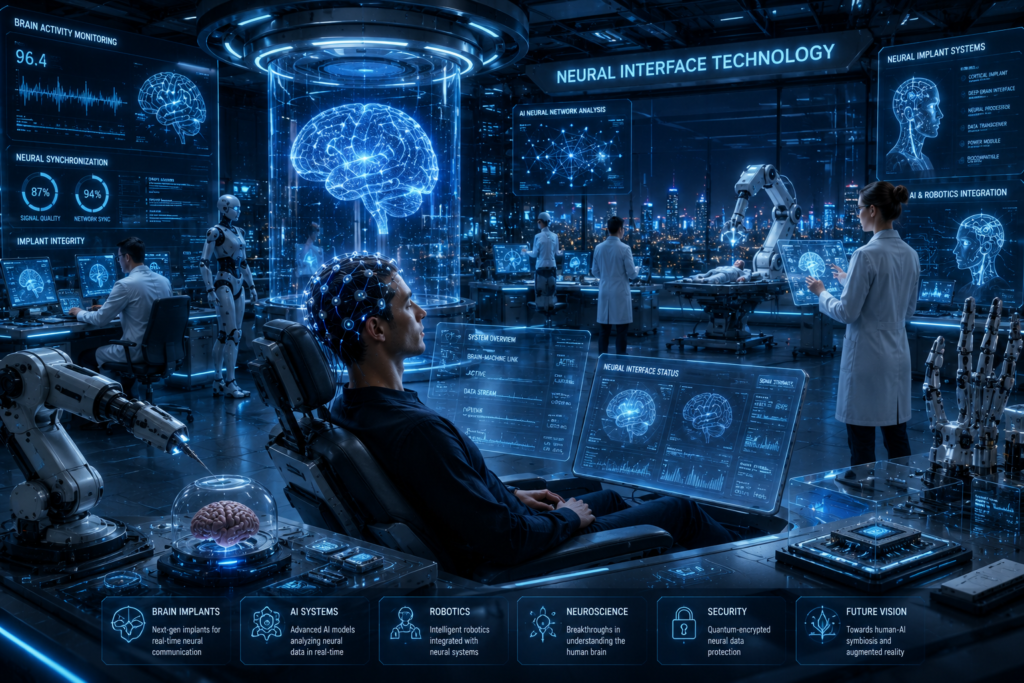
Major Companies and Research Institutions Leading BCI Technology
Neuralink
Founded by Elon Musk, Neuralink is developing high-bandwidth implanted BCIs designed to restore communication and mobility.
Synchron
Synchron focuses on minimally invasive neural implants delivered through blood vessels.
Blackrock Neurotech
One of the pioneers in clinical-grade neural interface systems.
Meta Research
Meta continues investing heavily in neural interaction technologies and future human-computer interfaces.
DARPA
The Defense Advanced Research Projects Agency has funded groundbreaking neurotechnology initiatives.
MIT
Researchers at MIT continue advancing neural decoding and cognitive computing.
Stanford University
Stanford has produced several major breakthroughs in speech decoding and neuroprosthetics.
Global Research Programs
Universities worldwide are accelerating research into:
- Neural implants
- Brain decoding
- AI-enhanced BCIs
- Neurorehabilitation
Benefits of Brain Computer Interface Technology
Accessibility
BCIs create opportunities for individuals with disabilities.
Healthcare Advancement
New therapies become possible through direct neural interaction.
Human Augmentation
Future systems may enhance memory, attention, and productivity.
Communication Improvement
Patients previously unable to communicate can regain a voice.
Productivity Enhancement
Hands-free computing could transform workflows.
Greater Independence
Assistive technologies provide autonomy for millions worldwide.
Challenges and Ethical Concerns
Privacy Risks
Brain data represents perhaps the most sensitive information humans possess.
Data Security
Neural information requires unprecedented cybersecurity protections.
Cost Barriers
Advanced implants remain expensive.
Medical Risks
Surgical systems introduce clinical risks.
Ethical Concerns
Questions include:
- Cognitive freedom
- Consent
- Human enhancement
- Digital inequality
Regulation Challenges
Governments are still developing frameworks for neurotechnology governance.
Future of Brain Computer Interfaces
The next decade could redefine the relationship between humans and machines.
AI Integration
AI will dramatically improve neural signal interpretation.
Real-Time Neural Decoding
Researchers are approaching near real-time thought translation.
Consumer BCI Devices
Wearable BCIs may become mainstream.
Digital Telepathy Concepts
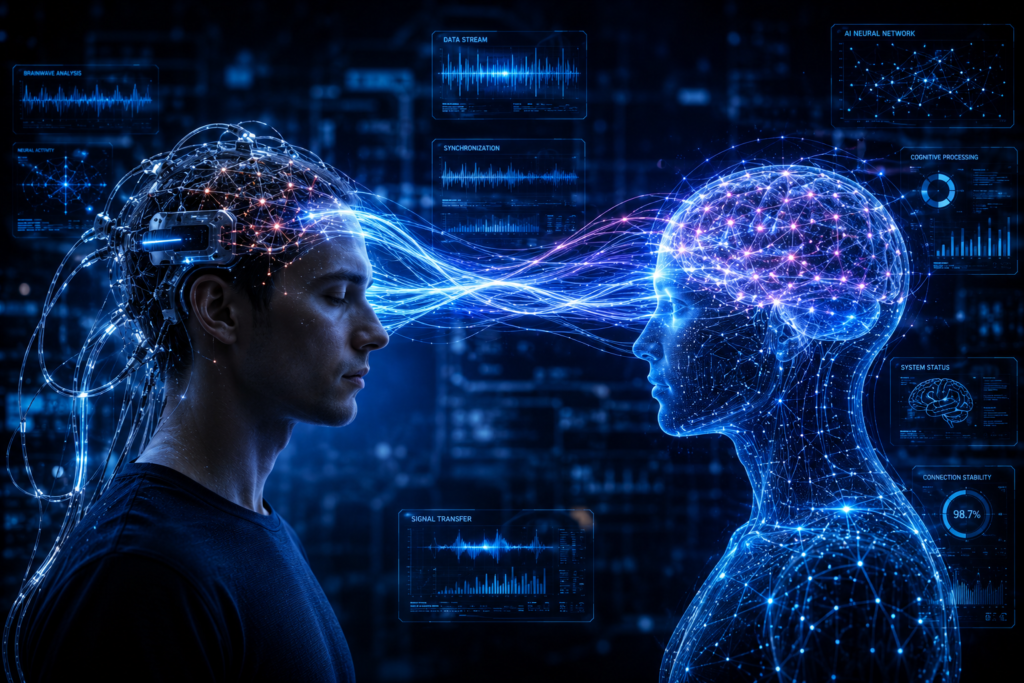
Scientists are exploring brain-to-brain communication frameworks.
Smart Homes Controlled by Thought
Users may operate connected environments through neural commands.
Brain-Controlled Robotics
Industrial and personal robotics will become more intuitive.
Healthcare Transformation
Neurological disorders may be diagnosed earlier through continuous neural monitoring.
Human Enhancement
Future BCIs may expand cognitive capabilities rather than simply restore lost functions.
Expert Perspective
Based on my experience in neurotechnology, the biggest breakthrough won’t come from hardware alone.
The true revolution will emerge from the convergence of:
- Artificial intelligence
- Neuroscience
- Cloud computing
- Wearable technology
- Neural interface technology
Together, these technologies will create entirely new forms of interaction.
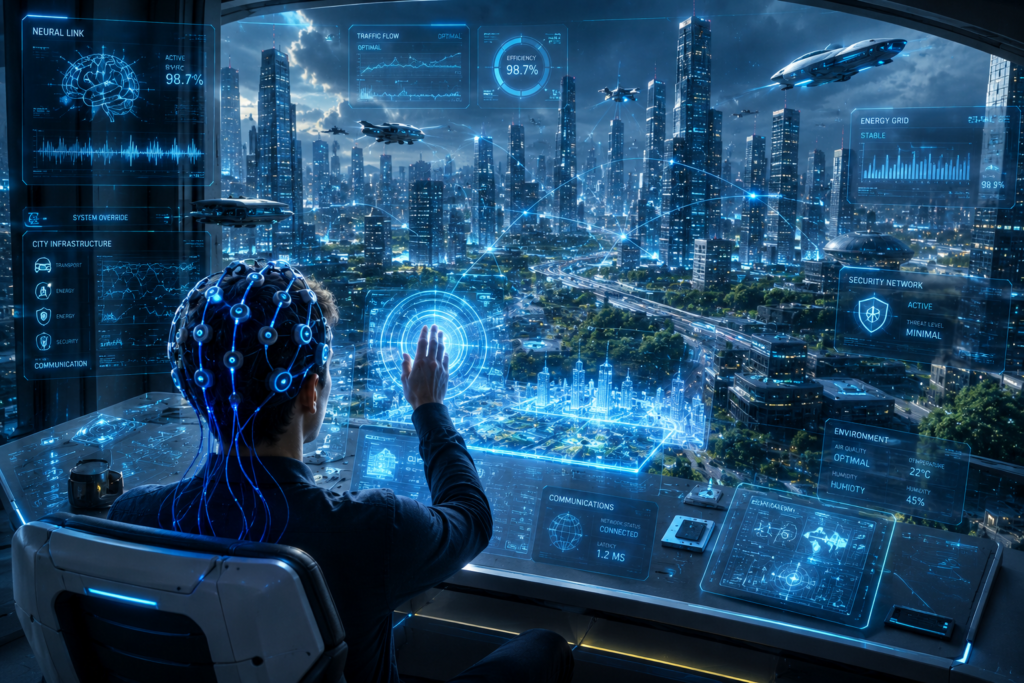
Brain Computer Interface Market Statistics and Growth Trends
Industry momentum continues accelerating.
Recent estimates suggest:
- Global BCI market valued at several billion dollars.
- Forecast CAGR often exceeds 15–20% through the next decade.
- Healthcare remains the dominant market segment.
- Neurotechnology investment continues reaching record levels.
- Government research funding is expanding globally.
Key growth drivers include:
- Aging populations
- Neurological disease prevalence
- AI advancements
- Wearable devices
- Human augmentation research
The long-term market opportunity may rival major sectors of medical technology and consumer electronics.
Frequently Asked Questions (FAQs)
What is brain computer interface?
A brain computer interface is a system that translates brain activity into commands that control digital devices without requiring physical movement.
How does BCI technology work?
BCI technology captures neural signals, processes them with software and AI, and converts them into actionable outputs.
Is brain machine interface safe?
Safety depends on the type. Non-invasive systems are generally very safe, while invasive implants involve surgical risks.
Can healthy people use brain computer interfaces?
Yes. Many emerging applications target healthy users for productivity, gaming, and human-computer interaction.
What are the benefits of neural interface technology?
Benefits include improved accessibility, communication, healthcare outcomes, and future cognitive enhancement.
Can brain computer interfaces read thoughts?
Current systems cannot fully read thoughts. They detect specific neural patterns associated with intentions or actions.
How expensive are BCI devices?
Costs range from a few hundred dollars for consumer EEG devices to hundreds of thousands for advanced clinical systems.
What industries will benefit most from BCI technology?
Healthcare, robotics, defense, gaming, education, and AI industries are expected to see significant benefits.
What is the future of brain computer interface technology?
Future systems will become more accurate, affordable, AI-powered, and integrated into daily life.
Will brain computer interfaces replace keyboards?
Not entirely. BCIs will likely complement rather than completely replace traditional interfaces.
Conclusion
The brain computer interface is no longer confined to science fiction or research laboratories. It has evolved into one of the most transformative technologies of the 21st century, with the potential to reshape healthcare, communication, accessibility, robotics, and human-computer interaction.
Today’s BCI technology already enables individuals with paralysis to communicate, control prosthetic limbs, and interact with digital environments using neural activity alone. At the same time, advances in artificial intelligence, machine learning, and sensor design are accelerating the development of increasingly capable brain machine interface systems.
Despite significant challenges involving privacy, ethics, regulation, and cost, the momentum behind neural interface technology continues to grow. Major investments from governments, universities, healthcare institutions, and private companies suggest that brain-computer interfaces will become a foundational technology over the coming decades.
From my perspective after more than 25 years working across neuroscience, neuroengineering, AI, and emerging technologies, we are approaching a pivotal moment. The next generation of brain computer interface systems will not simply help people interact with machines—they will fundamentally redefine the relationship between human intelligence and digital intelligence.
The future of BCI technology is not just about connecting brains to computers. It is about expanding human capability, restoring lost functions, unlocking new forms of communication, and creating possibilities that were unimaginable only a generation ago.
Author

razakh6402@gmail.com
Related Posts
Lead Generation Software: 12 Best Lead Generation Tools for B2B Sales (2026 Guide)
- 0
- 2,300 words
If someone had asked me 15 years ago what the biggest challenge in sales was, my answer would have been simple: finding...
Survey Software: 12 Best Online Survey Tools & Feedback Software for Businesses (2026 Guide)
- 0
- 1,871 word
Whether I was helping a SaaS startup validate a new feature, assisting an HR team with employee engagement, or optimizing customer experience...
Read out all
Online Course Platform: 12 Best LMS Software & eLearning Platforms for Course Creators (2026 Guide)
- 0
- 1,900 word
The online education industry has changed dramatically over the last 15 years. When I built my first digital training portal, simply uploading...

Team Communication Software: 12 Best Business Messaging Apps for Modern Workplaces in 2026 (Expert Tested)
- 0
- 2,305 words
I’ve personally tested dozens of team communication software platforms while consulting for marketing agencies, software companies, HR departments, remote development teams, and...
Invoice Software: 12 Best Invoicing Software for Small Business in 2026 (Expert Tested)
- 0
- 2,493 words
I’ve worked with freelancers chasing late payments, agencies managing hundreds of monthly invoices, startups scaling internationally, and established businesses struggling with outdated...
Generate one SEO-optimized title thatdigital asset management software
- 6
- 2,632 words
One of the most memorable projects I led involved migrating nearly half a million digital assets from a traditional file server into...