- 0
- 2,274 words
The future of biotechnology has never looked more promising. After spending more than 25 years working across biotechnology research, pharmaceutical development, genomics, regenerative medicine, and healthcare innovation, I can confidently say that we are entering a golden age of scientific advancement.
Today’s biotech innovations are solving problems that once seemed impossible. Scientists are editing genes with remarkable precision, developing personalized treatments for cancer patients, engineering sustainable crops, creating lab-grown tissues, and using artificial intelligence to accelerate drug discovery. These biotechnology trends are not merely scientific achievements they are reshaping healthcare, agriculture, environmental sustainability, and industrial manufacturing.
Emerging biotechnology is attracting unprecedented investment from governments, venture capital firms, multinational corporations, and research institutions worldwide. The biotechnology industry is becoming a critical driver of economic growth, healthcare transformation, and global sustainability initiatives.
Whether you are an investor seeking the next major opportunity, a student exploring future career paths, a researcher pursuing scientific breakthroughs, or a business leader preparing for future healthcare technologies, understanding the biotechnology future is essential.
The convergence of CRISPR gene editing, synthetic biology, bioinformatics, AI in biotechnology, regenerative medicine, and precision healthcare is creating opportunities that were unimaginable just a decade ago. The next ten years may redefine how humanity treats disease, produces food, protects the environment, and even extends healthy lifespan.
What Is Biotechnology and Why Does It Matter Today?
Biotechnology is the application of biological systems, living organisms, and biological processes to develop products and technologies that improve human life.
At its core, biotechnology combines biology, chemistry, engineering, computer science, and medicine to solve real-world challenges.
Examples include:
- Developing life-saving vaccines
- Producing insulin through genetically engineered bacteria
- Creating drought-resistant crops
- Designing personalized cancer therapies
- Manufacturing sustainable biofuels
The scientific importance of biotechnology cannot be overstated. Modern healthcare depends heavily on biotechnology research to develop treatments for infectious diseases, genetic disorders, and chronic illnesses.
Economically, the biotechnology industry contributes hundreds of billions of dollars annually to global economies. According to leading industry analyses, biotechnology market growth continues to outpace many traditional sectors due to rising healthcare demand, aging populations, and technological innovation.
The global significance of biotechnology extends beyond healthcare. Agricultural biotechnology helps address food security concerns, while environmental biotechnology supports sustainability goals through carbon reduction, waste management, and renewable energy production.
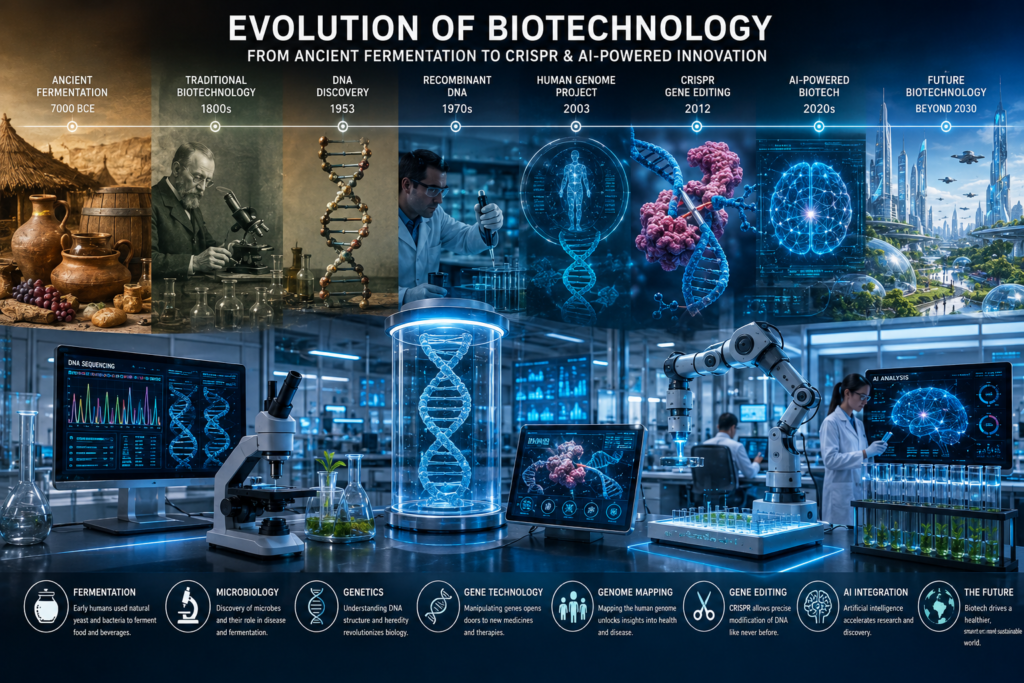
The Evolution of Biotechnology
Traditional Biotechnology
Biotechnology did not begin in modern laboratories.
Thousands of years ago, humans used fermentation to produce bread, yogurt, cheese, and beverages. Farmers practiced selective breeding to improve crops and livestock long before understanding genetics.
Ancient civilizations unknowingly applied biological principles to enhance food production and quality.
These early applications laid the foundation for today’s biotechnology future.
Modern Biotechnology
The discovery of DNA transformed science forever.
The identification of DNA structure opened new possibilities for understanding heredity and disease. Recombinant DNA technology emerged during the 1970s, allowing scientists to insert genes into organisms.
This breakthrough enabled:
- Production of human insulin
- Development of recombinant vaccines
- Creation of genetically modified crops
- Advancement of gene therapy research
Genetic engineering became one of the most influential technologies in modern science.
Emerging Biotechnology Revolution
Today, we are witnessing an unprecedented wave of emerging biotechnology innovations.
Major breakthroughs include:
- CRISPR gene editing
- Synthetic biology platforms
- Advanced DNA sequencing
- AI-powered biotechnology research
- Precision medicine solutions
- Computational genomics
These technologies are dramatically reducing research timelines while improving scientific accuracy and scalability.
Top Biotechnology Trends Shaping the Future
CRISPR Gene Editing
CRISPR gene editing allows scientists to modify DNA with unprecedented precision.
Current applications include:
- Rare disease treatment
- Cancer therapy development
- Agricultural improvement
- Genetic disorder correction
As regulations mature, CRISPR technology will likely become a cornerstone of future healthcare technologies.
Personalized Medicine
Personalized medicine uses genomic information to tailor treatments for individual patients.
Instead of one-size-fits-all therapies, doctors can develop targeted treatment plans based on a patient’s genetic profile.
Benefits include:
- Better outcomes
- Fewer side effects
- Earlier disease detection
- Improved drug effectiveness
AI in Biotechnology
Artificial intelligence is revolutionizing biotechnology research.
AI systems can:
- Analyze genomic datasets
- Predict protein structures
- Identify drug candidates
- Optimize clinical trials
In my experience, AI-driven platforms are reducing years of research into months.
Synthetic Biology
Synthetic biology combines engineering principles with biology.
Scientists can design biological systems capable of producing:
- Medicines
- Sustainable materials
- Biofuels
- Industrial enzymes
This field is rapidly becoming one of the most exciting biotech innovations sectors.
Regenerative Medicine
Regenerative medicine focuses on repairing damaged tissues and organs.
Key technologies include:
- Stem cell therapy
- Tissue engineering
- Organ regeneration
- Cellular therapies
The potential impact on chronic diseases and aging is enormous.
Digital Bioinformatics
Bioinformatics transforms biological data into actionable insights.
Modern genomics generates massive datasets that require advanced computational analysis.
Bioinformatics supports:
- Drug discovery
- Precision healthcare
- Disease prediction
- Population health research
Most Important Biotech Innovations to Watch
Several biotech innovations stand out as transformational technologies.
Gene Therapy
Gene therapy directly addresses disease-causing genetic mutations.
Researchers are already achieving success against inherited disorders that previously lacked effective treatments.
Lab-Grown Organs
Scientists are developing functional tissues and organs using stem cells and bioprinting technologies.
This innovation could significantly reduce transplant shortages.
Advanced Vaccines
The rapid development of mRNA vaccines demonstrated biotechnology’s power.
Future vaccines may target:
- Cancer
- Autoimmune diseases
- Emerging pathogens
DNA Data Storage
DNA molecules can store enormous amounts of digital information.
Future data centers may rely on biological storage systems.
Smart Biomaterials
Engineered materials capable of responding to biological signals are improving medical devices and implants.
Engineered Microbes
Scientists are redesigning microorganisms to manufacture medicines, chemicals, and sustainable materials.
Bioprinting
3D bioprinting enables creation of biological structures layer by layer.
Potential applications include:
- Skin replacement
- Organ models
- Personalized implants
Future of Biotechnology in Healthcare
Precision Healthcare
Precision healthcare uses genetic, environmental, and lifestyle data to personalize treatment.
This approach improves outcomes while reducing unnecessary interventions.
Cancer Treatment Innovation
Cancer therapies are becoming increasingly targeted.
Technologies include:
- CAR-T cell therapy
- Precision oncology
- Gene editing
- Personalized vaccines
These advancements are transforming cancer treatment outcomes.
Rare Disease Therapies
Many rare diseases have genetic origins.
Emerging biotechnology is enabling treatments that target root causes rather than symptoms.
Regenerative Medicine
Stem cell therapy and tissue engineering are creating new possibilities for restoring damaged organs and tissues.
AI Drug Discovery
Traditional drug development often requires more than a decade.
AI-powered systems can identify promising drug candidates far more efficiently.
This may dramatically lower development costs and accelerate innovation.
Future of Biotechnology in Agriculture
Climate-Resistant Crops
Climate change threatens global food production.
Genetic engineering helps create crops resistant to:
- Drought
- Heat
- Flooding
- Pests
Sustainable Farming
Agricultural biotechnology supports sustainable production by improving efficiency and reducing resource consumption.
Reduced Chemical Dependency
Gene-edited crops may require fewer pesticides and fertilizers.
This benefits both farmers and the environment.
Food Security
Growing populations increase demand for reliable food supplies.
Biotechnology solutions help improve yields while preserving resources.
Gene-Edited Crops
CRISPR technology enables precise crop improvements without introducing foreign DNA.
This may increase public acceptance and regulatory flexibility.
Emerging Biotechnology and Environmental Sustainability
Carbon Capture
Engineered microorganisms can absorb carbon dioxide more efficiently than traditional methods.
Biodegradable Materials
Biotechnology companies are developing sustainable alternatives to conventional plastics.
Biofuels
Advanced biofuels offer renewable energy options with lower environmental impact.
Plastic Waste Reduction
Biological recycling technologies can break down plastic waste into reusable components.
Green Manufacturing
Industrial biotechnology reduces energy consumption and environmental footprints.
These innovations demonstrate how biotechnology trends contribute directly to sustainability goals.
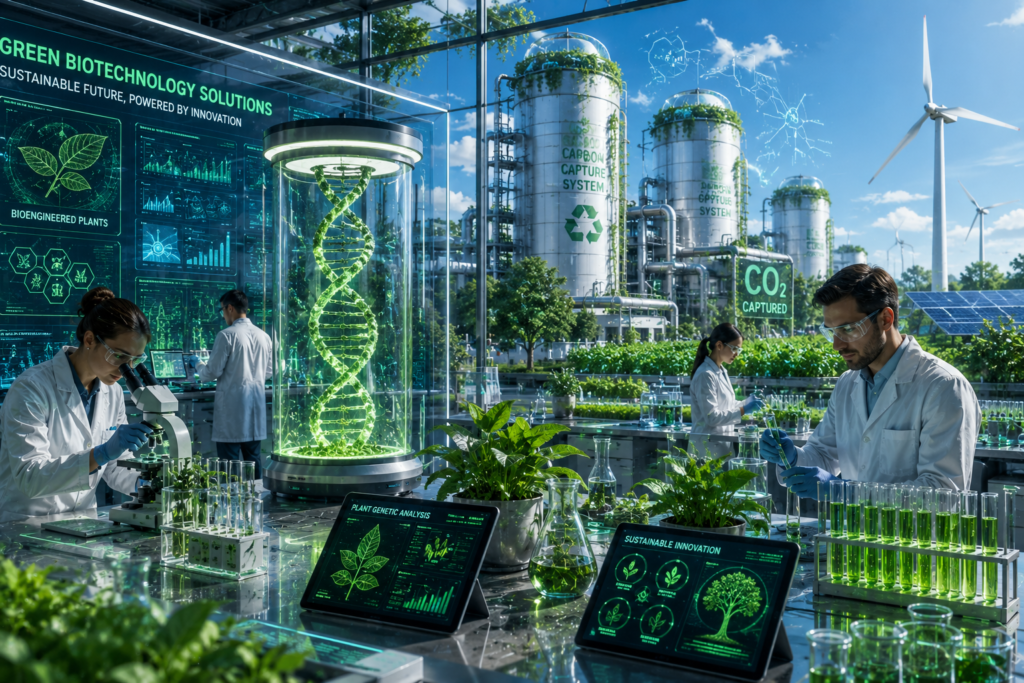
Biotechnology Future vs Traditional Scientific Approaches
| Feature | Traditional Methods | Biotechnology Solutions |
|---|---|---|
| Disease Treatment | Symptom management | Root-cause intervention |
| Agricultural Productivity | Conventional breeding | Gene-edited precision improvement |
| Research Speed | Years of experimentation | AI-accelerated discovery |
| Precision | Broad approaches | Highly targeted solutions |
| Sustainability | Resource intensive | Environmentally optimized |
| Scalability | Limited efficiency | Industrial-scale production |
| Long-Term Impact | Incremental progress | Transformational innovation |
Expert Analysis
Biotechnology solutions consistently outperform traditional methods in precision, efficiency, and scalability.
The integration of genomics, AI, synthetic biology, and gene editing enables scientists to solve problems at the molecular level rather than simply managing outcomes.
Challenges Facing the Future of Biotechnology
Ethical Concerns
Gene editing raises important ethical questions regarding human enhancement and germline modifications.
Genetic Privacy
As DNA sequencing becomes widespread, protecting personal genetic information remains critical.
Regulation
Regulatory agencies must balance innovation with public safety.
Cost Challenges
Many advanced therapies remain expensive.
Public Trust
Transparent communication is essential to maintaining confidence in biotechnology research.
Accessibility
Ensuring global access to innovations remains a major challenge.
Balanced governance will be essential for sustainable biotechnology growth.
Biotechnology Industry Statistics and Market Growth
Recent industry reports from organizations such as the WHO, NIH, FDA, and Biotechnology Innovation Organization indicate strong long-term growth.
Key trends include:
- Global biotechnology market valued in the hundreds of billions of dollars
- Forecast CAGR commonly estimated in double digits through the next decade
- Record venture capital investment in biotech startups
- Rapid expansion of AI biotechnology companies
- Growing adoption of gene therapy and personalized medicine
- Increased public-private research partnerships
The biotechnology future remains one of the fastest-growing innovation sectors globally.
Investment Opportunities in the Biotechnology Future
Biotech Startups
Startups often drive breakthrough innovation.
Gene Editing Companies
CRISPR-focused firms continue attracting significant investment.
Synthetic Biology Firms
Synthetic biology platforms are expanding rapidly.
AI Biotechnology Companies
AI-driven discovery companies represent a high-growth segment.
Healthcare Innovation Leaders
Established biotechnology companies continue investing heavily in next-generation technologies.
Investors should evaluate scientific validity, intellectual property strength, regulatory strategy, and commercialization potential.
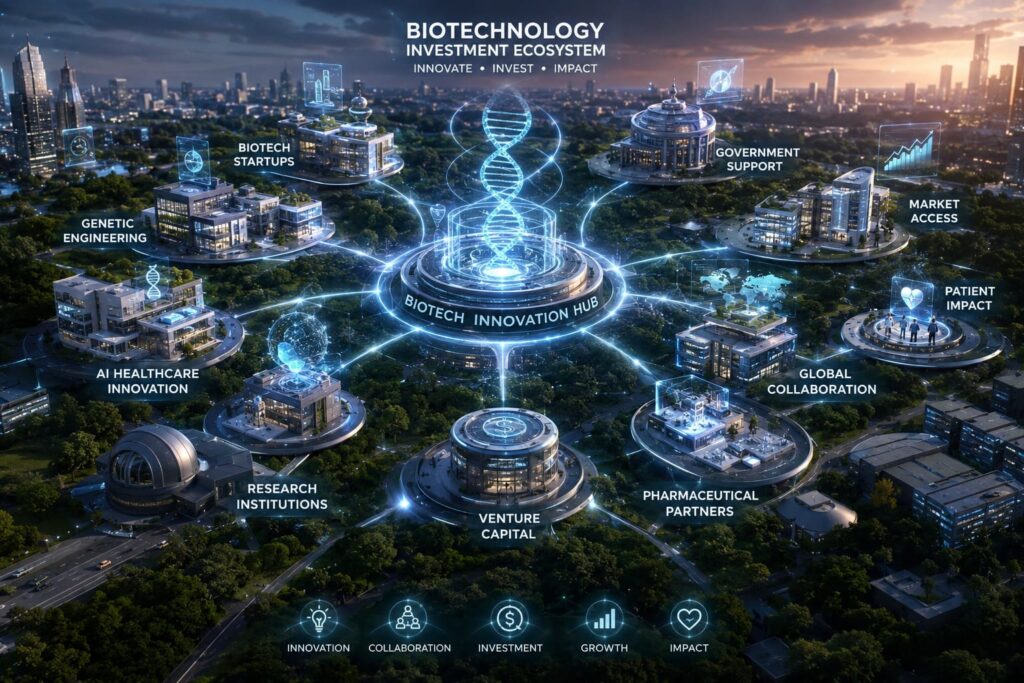
My 25-Year Perspective on the Future of Biotechnology
Having worked across multiple biotechnology disciplines, I have witnessed extraordinary changes.
Twenty-five years ago, sequencing a genome required enormous resources. Today, DNA sequencing is faster, cheaper, and more accessible.
The biggest shifts I have observed include:
- Convergence of biology and computing
- Rise of precision medicine
- Growth of synthetic biology
- Expansion of AI-driven research
- Acceleration of translational science
My predictions through 2035:
- Gene therapies will become routine.
- AI will dominate drug discovery.
- Personalized medicine will become standard care.
- Lab-grown tissues will enter mainstream healthcare.
- Synthetic biology will transform manufacturing.
- Agricultural biotechnology will improve climate resilience.
- Biological computing may emerge as a new technology frontier.
The pace of innovation continues to exceed expectations.
Frequently Asked Questions
What is the future of biotechnology?
The future of biotechnology involves advanced gene editing, AI-powered research, regenerative medicine, personalized healthcare, and sustainable biological manufacturing.
Why is biotechnology important?
Biotechnology improves healthcare, food production, environmental sustainability, and industrial efficiency.
What are the biggest biotech innovations today?
CRISPR gene editing, synthetic biology, AI drug discovery, gene therapy, and regenerative medicine are among the most significant innovations.
How does CRISPR work?
CRISPR acts like molecular scissors that allow scientists to precisely modify DNA sequences.
What is personalized medicine?
Personalized medicine tailors treatments based on an individual’s genetic profile and health characteristics.
How is AI used in biotechnology?
AI analyzes biological data, predicts protein structures, discovers drug candidates, and accelerates research.
What is synthetic biology?
Synthetic biology designs and engineers biological systems to perform useful functions.
Can biotechnology help climate change?
Yes. Biotechnology supports carbon capture, sustainable agriculture, biodegradable materials, and renewable biofuels.
What is regenerative medicine?
Regenerative medicine repairs or replaces damaged tissues and organs using biological therapies.
Is biotechnology a good investment sector?
Many experts consider biotechnology a high-growth sector due to healthcare demand and scientific innovation.
What role does genomics play in biotechnology?
Genomics helps identify disease mechanisms and supports precision medicine development.
What industries benefit from biotechnology?
Healthcare, agriculture, manufacturing, energy, environmental management, and food production all benefit significantly.
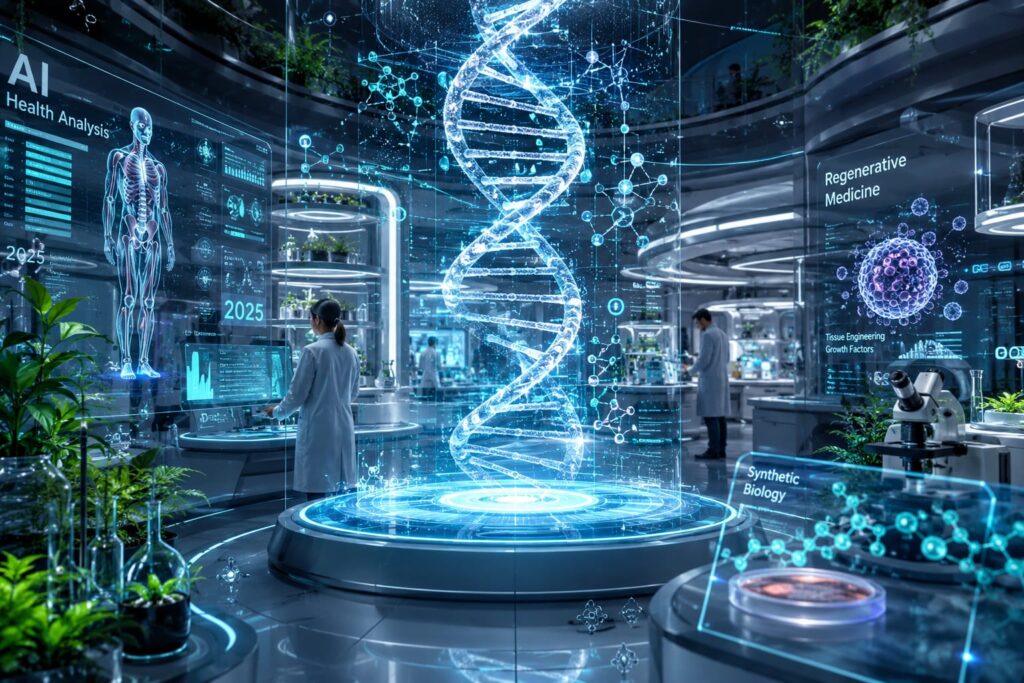
Key Takeaways
- Biotechnology is entering a period of unprecedented innovation.
- CRISPR, AI, synthetic biology, and regenerative medicine are driving transformation.
- Precision healthcare will redefine medical treatment.
- Agricultural biotechnology will improve food security and sustainability.
- Environmental biotechnology will support climate goals.
- Investment and research activity continue accelerating worldwide.
- The biotechnology future will reshape nearly every major industry.
Expert Insights
The most important lesson from decades in biotechnology is that transformative breakthroughs often arrive faster than expected once enabling technologies converge. Today, genomics, artificial intelligence, bioinformatics, gene editing, and synthetic biology are converging simultaneously. This convergence creates a powerful innovation engine that will likely generate solutions to some of humanity’s most pressing challenges.
Conclusion
The future of biotechnology is not a distant vision—it is unfolding today. From CRISPR gene editing and synthetic biology to regenerative medicine, AI in biotechnology, and precision healthcare, the latest biotech innovations are transforming how we diagnose disease, produce food, manufacture materials, and protect the planet.
As biotechnology trends continue accelerating, organizations, investors, researchers, and policymakers must prepare for a world where biological engineering becomes as influential as digital technology. The next decade will likely deliver breakthroughs that redefine healthcare, sustainability, and human potential.
The biotechnology future belongs to those who understand, embrace, and responsibly guide these extraordinary scientific advances.
Author

razakh6402@gmail.com
Related Posts

Lead Generation Software: 12 Best Lead Generation Tools for B2B Sales (2026 Guide)
- 0
- 2,300 words
If someone had asked me 15 years ago what the biggest challenge in sales was, my answer would have been simple: finding...

Survey Software: 12 Best Online Survey Tools & Feedback Software for Businesses (2026 Guide)
- 0
- 1,871 word
Whether I was helping a SaaS startup validate a new feature, assisting an HR team with employee engagement, or optimizing customer experience...
Read out all
Online Course Platform: 12 Best LMS Software & eLearning Platforms for Course Creators (2026 Guide)
- 0
- 1,900 word
The online education industry has changed dramatically over the last 15 years. When I built my first digital training portal, simply uploading...

Team Communication Software: 12 Best Business Messaging Apps for Modern Workplaces in 2026 (Expert Tested)
- 0
- 2,305 words
I’ve personally tested dozens of team communication software platforms while consulting for marketing agencies, software companies, HR departments, remote development teams, and...

Invoice Software: 12 Best Invoicing Software for Small Business in 2026 (Expert Tested)
- 0
- 2,493 words
I’ve worked with freelancers chasing late payments, agencies managing hundreds of monthly invoices, startups scaling internationally, and established businesses struggling with outdated...
Generate one SEO-optimized title thatdigital asset management software
- 6
- 2,632 words
One of the most memorable projects I led involved migrating nearly half a million digital assets from a traditional file server into...