
- 2
- 1,901 word
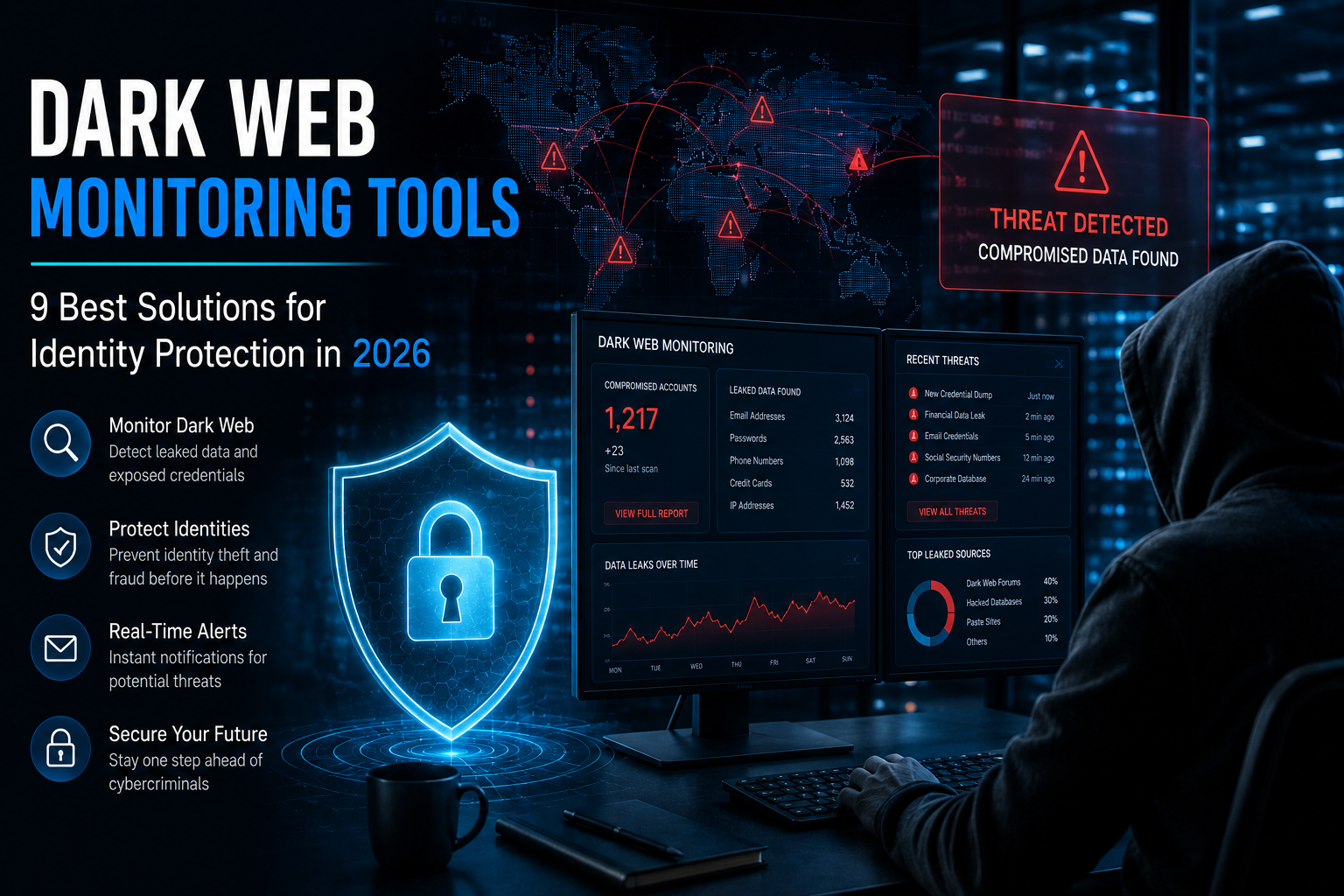
Dark web monitoring has evolved from a niche cybersecurity capability into an essential security practice for both individuals and organizations. Every day, cybercriminals buy, sell, and trade stolen credentials, personal information, financial records, and corporate data across hidden marketplaces, encrypted forums, and underground communities.
During more than two decades of cybersecurity investigations, I have repeatedly seen victims learn about a compromise months after their data was exposed. In many cases, attackers obtained access through previously leaked passwords that users didn’t even realize had been compromised.
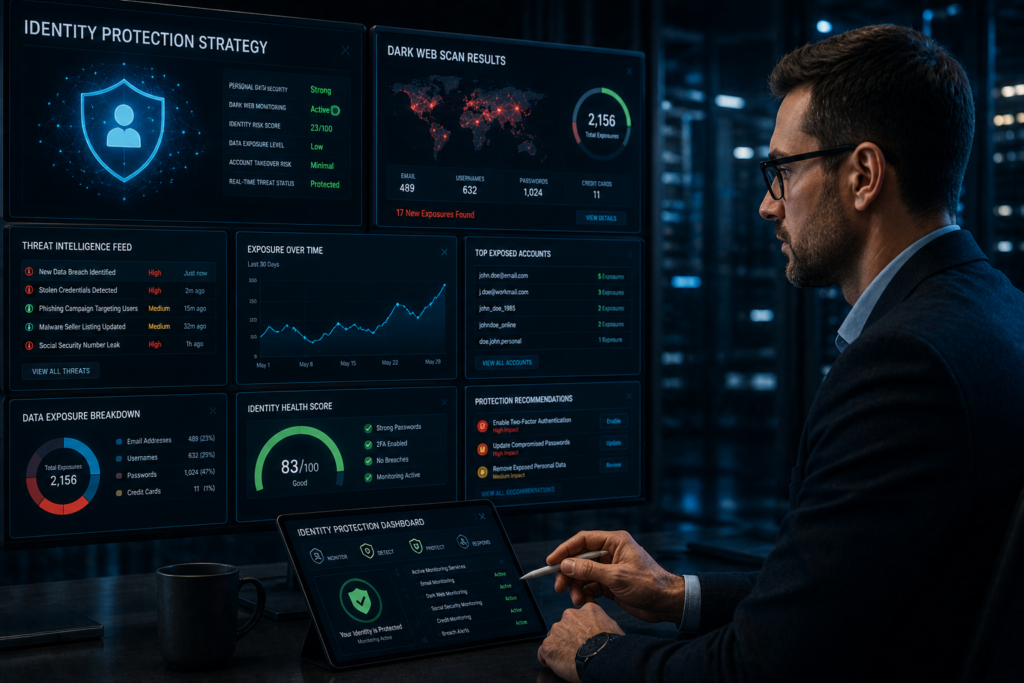
This growing threat landscape explains why dark web monitoring tools, dark web scanner platforms, identity monitoring tools, and dark web protection services have become increasingly important. These solutions help detect stolen credentials, monitor personal data exposure, identify breach-related risks, and provide early warnings before cybercriminals can exploit exposed information.
Whether you want identity theft protection for yourself or cyber threat intelligence for your organization, understanding how dark web monitoring works is the first step toward reducing digital risk.
What Is Dark Web Monitoring?
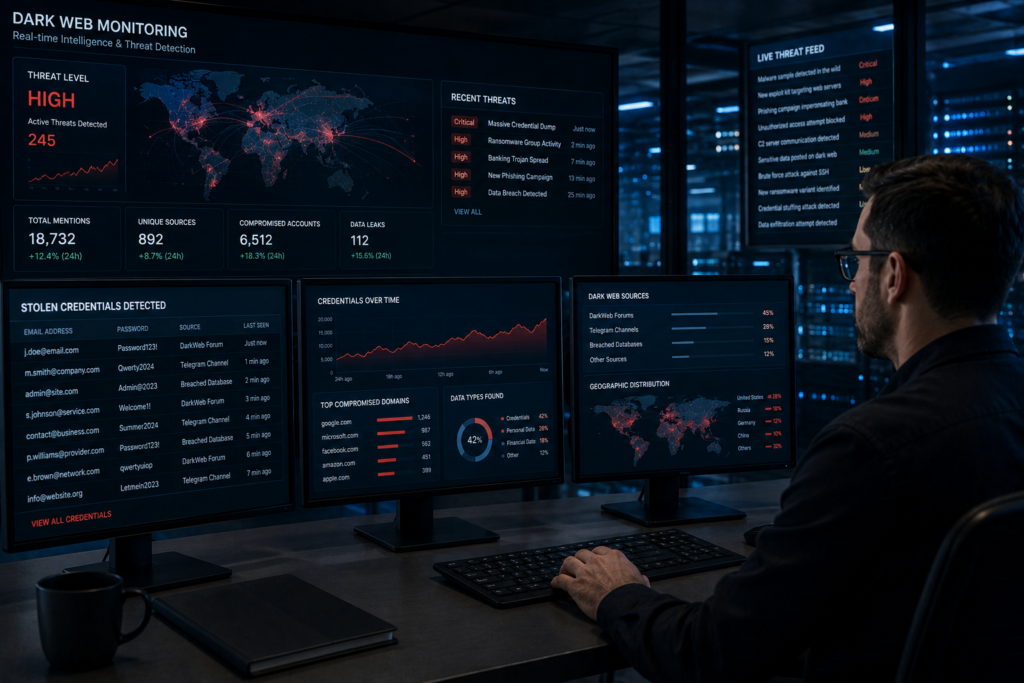
Dark web monitoring refers to the continuous process of scanning dark web marketplaces, hacker forums, breach databases, criminal communication channels, and underground communities for exposed information linked to individuals or organizations.
How the Dark Web Works
The dark web consists of websites and services that require specialized software such as Tor Browser Project for access. Unlike traditional websites indexed by search engines, dark web content remains hidden from conventional browsing methods.
Criminals often use these anonymous environments to exchange stolen credentials, payment card information, malware, and access to compromised systems.
Why Stolen Data Appears on the Dark Web
Most exposed information originates from:
- Corporate data breaches
- Phishing campaigns
- Malware infections
- Infostealer malware
- Credential stuffing attacks
- Supply chain compromises
Attackers monetize stolen information by selling it to other cybercriminals.
Types of Data Criminals Sell
Common data categories include:
- Email addresses
- Passwords
- Banking details
- Social Security numbers
- Passport information
- Medical records
- Corporate credentials
- Cryptocurrency wallet data
Who Needs Dark Web Monitoring?
Dark web monitoring benefits:
- Individuals protecting personal accounts
- Families concerned about identity theft
- Small businesses with limited security resources
- Enterprises managing thousands of employee accounts
- Executives and high-profile professionals
- Remote workers handling sensitive data
Why Dark Web Monitoring Matters in 2026
Rising Data Breaches
Data breaches continue to expose billions of records annually. Attackers increasingly target cloud services, SaaS platforms, healthcare providers, and financial institutions.
Credential Stuffing Attacks
Credential monitoring helps prevent one of today’s most common attack methods. Criminals use stolen username-password combinations across multiple websites, exploiting password reuse.
Identity Theft Risks
Identity fraud remains one of the fastest-growing cybercrime categories worldwide. A single exposed identity can enable:
- Credit fraud
- Tax fraud
- Loan fraud
- Insurance fraud
Business Email Compromise
Business Email Compromise (BEC) attacks frequently begin with stolen credentials discovered through breach monitoring.
Financial Fraud
Cybercriminals increasingly combine leaked password monitoring with social engineering to access financial accounts.
How Dark Web Monitoring Tools Work
Modern security monitoring software uses multiple intelligence sources to identify risks.
Breach Database Scanning
Tools continuously scan massive breach repositories containing billions of exposed records.
Credential Leak Detection
Advanced platforms identify:
- Stolen credentials
- Password reuse exposure
- Corporate account compromises
- Employee credential leaks
Email Monitoring
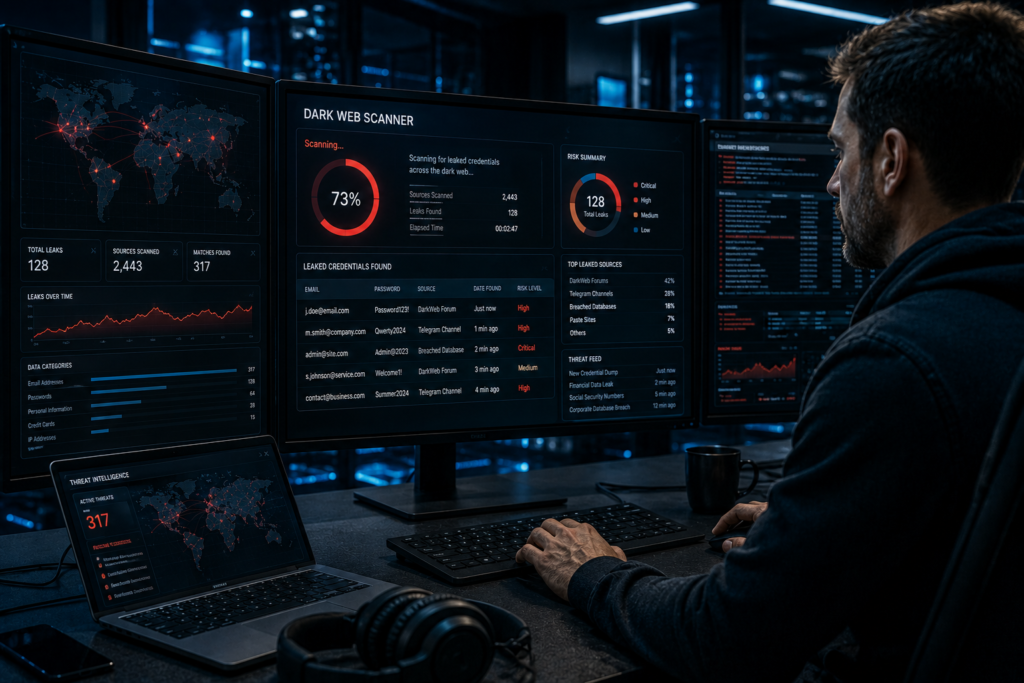
Many services function as sophisticated email breach checkers that monitor addresses across underground sources.
Threat Intelligence Feeds
Enterprise platforms integrate cyber threat intelligence feeds from:
- Criminal forums
- Paste sites
- Dark web marketplaces
- Telegram groups
- Threat actor communities
Real-Time Alerts
Users receive data breach alerts when new exposures appear.
Incident Response Recommendations
Leading platforms provide actionable remediation guidance rather than simply reporting risks.
Best Dark Web Monitoring Tools in 2026
Aura
Key Features
- Dark web monitoring
- Identity theft insurance
- Credit monitoring
- Financial fraud alerts
Pros
- Excellent user experience
- Strong family protection plans
Cons
- Premium pricing
Pricing Overview
Subscription-based consumer plans.
Best For
Families and individuals.
Professional Assessment
One of the strongest all-around identity monitoring tools currently available.
LifeLock
Key Features
- Identity theft protection
- Dark web alerts
- Credit monitoring
Pros
- Trusted brand
- Comprehensive protection
Cons
- Higher-tier plans required for advanced features
Pricing Overview
Multiple subscription levels.
Best For
Consumers seeking complete identity protection.
Professional Assessment
Strong protection backed by extensive monitoring infrastructure.
Identity Guard
Key Features
- AI-driven monitoring
- Identity theft alerts
- Credit protection
Pros
- Excellent alerting capabilities
Cons
- Limited enterprise functionality
Best For
Individuals.
Professional Assessment
Reliable option for personal identity monitoring.
Malwarebytes Digital Footprint Scan
Key Features
- Free dark web scanner
- Exposure checks
- Email monitoring
Pros
- Easy to use
Cons
- Less comprehensive than paid services
Best For
Initial exposure assessments.
Professional Assessment
Excellent entry-level tool.
Norton Dark Web Monitoring
Key Features
- Identity monitoring
- Dark web scanning
- Security ecosystem integration
Pros
- Strong consumer protection
Cons
- Some features locked behind premium plans
Best For
Existing Norton users.
Professional Assessment
Solid consumer-focused solution.
SpyCloud
Key Features
- Enterprise credential monitoring
- Threat intelligence
- Account takeover prevention
Pros
- Exceptional credential intelligence
Cons
- Enterprise pricing
Best For
Organizations.
Professional Assessment
One of the most respected breach monitoring platforms.
CrowdStrike Falcon Identity Protection
Key Features
- Identity threat detection
- Real-time protection
- Enterprise integrations
Pros
- Advanced detection capabilities
Cons
- Enterprise-focused
Best For
Large organizations.
Professional Assessment
Excellent for modern identity-centric security programs.
Constella Intelligence
Key Features
- Deep web monitoring
- Executive protection
- Threat intelligence
Pros
- Extensive intelligence coverage
Cons
- Higher cost
Best For
High-risk users and enterprises.
Professional Assessment
Outstanding visibility into underground ecosystems.
Flare
Key Features
- Continuous monitoring
- Threat intelligence
- Brand protection
Pros
- Excellent automation
Cons
- Learning curve
Best For
Security teams.
Professional Assessment
One of the most innovative cybercrime monitoring platforms available.
Comparison Table – Best Dark Web Monitoring Tools
| Tool | Dark Web Monitoring | Real-Time Alerts | Identity Protection | Business Use | Overall Rating |
|---|---|---|---|---|---|
| Aura | Yes | Yes | Excellent | Limited | 9.4/10 |
| LifeLock | Yes | Yes | Excellent | Limited | 9.2/10 |
| Identity Guard | Yes | Yes | Strong | Limited | 8.9/10 |
| Malwarebytes | Basic | Yes | Moderate | Limited | 8.4/10 |
| Norton | Yes | Yes | Strong | Limited | 8.8/10 |
| SpyCloud | Advanced | Yes | Enterprise | Excellent | 9.6/10 |
| CrowdStrike | Advanced | Yes | Enterprise | Excellent | 9.7/10 |
| Constella | Advanced | Yes | Strong | Excellent | 9.5/10 |
| Flare | Advanced | Yes | Moderate | Excellent | 9.5/10 |
Dark Web Scanner vs Identity Monitoring Tools
| Feature | Dark Web Scanner | Identity Monitoring Tools |
|---|---|---|
| Monitoring Scope | Dark web exposure only | Broad identity ecosystem |
| Alerts | Exposure alerts | Exposure plus fraud alerts |
| Identity Protection | Limited | Extensive |
| Financial Monitoring | Usually absent | Often included |
| Breach Detection | Strong | Strong |
| Best Users | Basic monitoring | Comprehensive protection |
Dark web scanners focus primarily on identifying exposed information, while identity monitoring tools provide broader digital identity protection.
Best Dark Web Protection Services for Different Users
Individuals
Aura and LifeLock.
Families
Aura Family Plan.
Small Businesses
SpyCloud and Flare.
Enterprises
CrowdStrike Falcon Identity Protection.
Remote Workers
Identity Guard.
High-Risk Professionals
Constella Intelligence.
Warning Signs Your Information May Be on the Dark Web
Unusual Login Attempts
Repeated login notifications from unknown locations.
Password Reset Emails
Unexpected reset requests often indicate stolen credentials.
Unauthorized Transactions
Unknown purchases or transfers.
Identity Theft Indicators
Unexpected loans or credit inquiries.
Account Lockouts
Sudden lockouts may indicate account takeover attempts.
What To Do If Your Data Appears on the Dark Web
Change Passwords Immediately
Use unique passwords for every account.
Enable MFA
Implement multi-factor authentication everywhere possible.
Freeze Credit Reports
Prevent fraudulent account creation.
Monitor Financial Accounts
Review transactions frequently.
Notify Relevant Parties
Inform employers, banks, and service providers.
Common Mistakes People Make with Dark Web Monitoring
Assuming Monitoring Prevents Breaches
Monitoring provides visibility, not prevention.
Ignoring Security Alerts
Many victims receive warnings but fail to act.
Reusing Passwords
Password reuse remains a leading cause of account compromise.
Delaying MFA Setup
Attackers exploit this gap quickly.
Not Monitoring Multiple Accounts
Monitor personal and professional accounts simultaneously.
Future Trends in Dark Web Monitoring
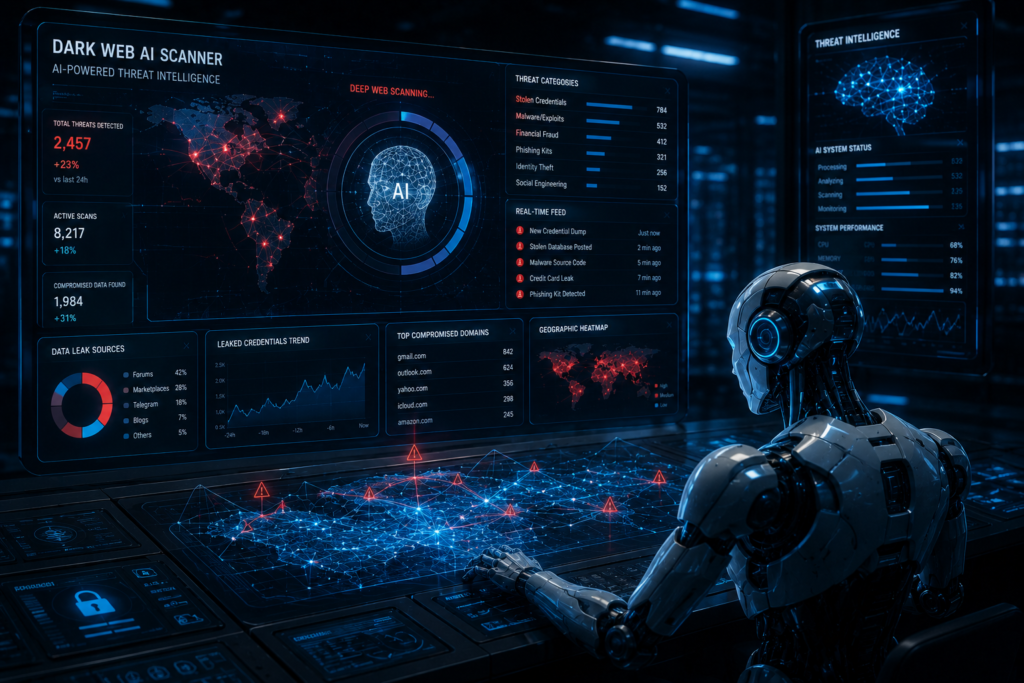
AI-Powered Threat Intelligence
AI accelerates threat discovery and prioritization.
Predictive Risk Analysis
Platforms increasingly forecast future risks.
Automated Identity Protection
Automated remediation will become standard.
Deep and Dark Web Intelligence Expansion
More intelligence sources will improve visibility.
Real-Time Breach Correlation
Platforms will connect breach events instantly.
Dark Web and Identity Theft Statistics
Recent industry research from organizations such as Verizon Data Breach Investigations Report, IBM Security X-Force, and Identity Theft Resource Center consistently shows:
- Millions of credentials exposed annually
- Account takeover attacks continue increasing
- Business email compromise remains highly profitable
- Ransomware groups increasingly leak stolen data
- Identity fraud costs victims billions of dollars annually
These trends reinforce the need for continuous breach monitoring and credential monitoring.
Frequently Asked Questions
What is dark web monitoring?
A service that scans hidden online sources for exposed personal or business data.
How does a dark web scanner work?
It searches breach databases, forums, and marketplaces for monitored information.
Can dark web monitoring remove my data?
No. It detects exposure but typically cannot remove already leaked information.
What is the best dark web monitoring tool?
For consumers, Aura. For enterprises, CrowdStrike and SpyCloud.
Is dark web monitoring worth paying for?
Yes, especially if you store sensitive information online.
Can businesses benefit from dark web monitoring?
Absolutely. It helps detect credential theft before attackers exploit accounts.
How often should I check for data breaches?
Continuously through automated monitoring.
What should I do after receiving a dark web alert?
Change passwords, enable MFA, and review affected accounts.
Does dark web monitoring prevent identity theft?
It reduces risk through early detection but cannot guarantee prevention.
Are free dark web scanners effective?
They provide useful visibility but lack comprehensive monitoring capabilities.
Final Verdict
After 25 years investigating cybercrime, credential theft, and identity fraud cases, one lesson remains consistent: early detection dramatically reduces damage.
For individuals, Aura offers the best balance of dark web monitoring, identity theft protection, and usability.
For families, Aura Family Plans provide strong coverage across multiple identities.
For small businesses, Flare and SpyCloud deliver excellent credential monitoring and account takeover prevention capabilities.
For enterprises, CrowdStrike Falcon Identity Protection provides enterprise-grade visibility and identity security.
For high-risk professionals, executives, and public figures, Constella Intelligence offers exceptional deep and dark web intelligence coverage.
The most important step readers can take today is simple:
- Audit all accounts.
- Enable MFA everywhere.
- Replace reused passwords.
- Subscribe to a reputable dark web monitoring service.
- Continuously monitor data breach alerts.
In today’s threat landscape, dark web monitoring is no longer optional—it is a fundamental component of modern digital identity protection.
Author

razakh6402@gmail.com
Related Posts
Browser Security Extensions: Top Chrome Security Extensions & Privacy Browser Extensions You Need in 2026
- 0
- 2,358 words
best budgeting appsEvery year, browsers become smarter, websites become faster, and online services become more convenient. Unfortunately, cybercriminals evolve just as quickly....
Read out all
Passkeys: How Passwordless Authentication Is Replacing Passwords in 2026
- 0
- 2,452 words
If you’ve ever forgotten a password, reset the same account multiple times, or worried that your login credentials were exposed in a...
Read out all
Cybersecurity Checklist: Essential Small Business Cybersecurity Guide (2026)
- 0
- 2,462 words
Cyberattacks are no longer a problem reserved for large enterprises. Over the last 15 years, I’ve worked with startups, retail stores, healthcare...

Secure Cloud Storage: Best Secure Cloud Storage Services for Business & Personal Use (2026 Guide)
- 0
- 2,443 words
Whether you’re backing up family photos, sharing confidential client documents, or managing sensitive business files, choosing the right secure cloud storage service...
AI Scams: How to Protect Yourself from AI-Powered Scams in 2026 (Expert Guide)
- 0
- 1,918 word
Artificial intelligence has transformed the way we work, communicate, and manage our finances. Unfortunately, cybercriminals have embraced the same technology to create...
Read out all
Future of Cybersecurity: Top Cybersecurity Trends 2026, AI Innovations, and Predictions for the Next Decade
- 1
- 2,173 words
Twenty-five years ago, cybersecurity focused primarily on protecting desktop computers, on-premises servers, and corporate networks. Firewalls, antivirus software, and perimeter defenses formed...
2 comments