
- 2
- 2,405 words
A few years ago, most businesses viewed artificial intelligence as a helpful assistant for answering questions or generating content. Today, the conversation has completely changed. In 2026, AI agents are no longer just assistants—they’re becoming autonomous digital coworkers capable of planning, reasoning, executing complex workflows, and collaborating with humans.
Having spent the past 15 years helping organizations adopt new technologies—from cloud computing and robotic process automation (RPA) to modern AI-powered business systems—I’ve rarely seen a shift as significant as this one. Every major technological leap has promised higher productivity, but AI agents for work are delivering something different: they don’t just automate repetitive tasks; they actively participate in decision-making, project execution, and workflow optimization.
During the last year alone, I’ve worked with marketing teams using AI workplace automation to streamline campaign planning, software developers accelerating releases with coding agents, and customer support departments reducing response times through autonomous AI assistants. The productivity gains have been impressive, but perhaps even more valuable is how these tools free people to focus on strategic thinking, creativity, and customer relationships.
However, one lesson stands out from my experience: successful AI adoption isn’t about replacing employees. It’s about creating effective collaboration between humans and autonomous AI agents, where each complements the other’s strengths.
In this guide, I’ll explain what AI agents are, how they work, which platforms are leading the market in 2026, and how businesses can successfully implement AI workplace automation without common pitfalls.

What Are AI Agents?
Unlike traditional AI chatbots that simply respond to prompts, AI agents are intelligent software systems capable of understanding goals, planning multiple steps, making decisions, interacting with digital tools, and completing tasks with minimal human intervention.
Think of them as highly capable digital teammates rather than simple assistants.
An advanced AI agent can:
- Analyze large amounts of information
- Break complex projects into smaller tasks
- Use external tools and APIs
- Browse the web
- Generate reports
- Write and debug code
- Schedule meetings
- Automate repetitive workflows
- Collaborate with other AI systems
- Learn from previous interactions
This ability to reason and execute makes AI agents for work fundamentally different from earlier generations of AI assistants.
AI Agents vs Traditional AI Tools
Many people still confuse AI chatbots with autonomous AI agents, but the distinction is important.
Traditional AI tools typically wait for instructions. They answer questions, summarize documents, or generate text before stopping.
In contrast, autonomous AI agents continue working until a defined objective is achieved. They can plan multiple actions, gather additional information, interact with applications, revise outputs, and adapt their approach based on new data.
For example:
A traditional chatbot might write a marketing email.
An AI agent can:
- Research competitors
- Analyze customer data
- Draft multiple email variations
- Schedule campaigns
- Monitor performance
- Recommend improvements
- Generate follow-up reports
This shift from simple responses to autonomous execution is why AI workplace automation has become one of the fastest-growing technology trends in 2026.
How AI Agents Work
Although the underlying technology is complex, the overall process follows a logical workflow.
- Goal Understanding – The AI interprets the user’s objective.
- Planning – It creates a step-by-step strategy.
- Tool Selection – It chooses the appropriate applications or APIs.
- Execution – It performs tasks independently.
- Evaluation – It checks whether the objective has been met.
- Iteration – If necessary, it refines its approach and continues working.
This ability to think in sequences instead of isolated prompts is what makes modern AI agents so powerful.
Why AI Agents Are Transforming Everyday Work
After evaluating dozens of enterprise AI implementations, I’ve noticed that organizations rarely adopt AI productivity tools because they’re trendy. They invest because the measurable business value is impossible to ignore.
Here are the biggest reasons why AI agents for work are reshaping modern workplaces.
Smarter Decision-Making
Business leaders make hundreds of decisions every week.
Instead of manually gathering information from multiple dashboards, AI agents can consolidate reports, identify trends, highlight anomalies, and recommend actions within minutes.
In one consulting engagement, a retail company reduced weekly reporting time from several hours to less than thirty minutes by implementing AI-powered reporting agents.
The management team spent less time collecting data and more time making strategic decisions.
Workflow Automation Beyond Simple Tasks
Traditional automation worked well for repetitive processes with fixed rules.
Today’s AI workplace automation goes much further.
Modern autonomous AI agents can:
- Manage multi-step business processes
- Coordinate between departments
- Monitor project progress
- Send reminders
- Generate documentation
- Create presentations
- Analyze customer feedback
- Produce executive summaries
Instead of replacing individual tasks, AI now automates entire workflows.
Higher Employee Productivity
One misconception I frequently hear is that AI agents reduce the need for skilled professionals.
My experience has shown the opposite.
The highest-performing teams don’t replace experts—they empower them.
Developers spend less time debugging repetitive issues.
Marketers spend less time gathering research.
Sales teams spend less time updating CRM systems.
Consultants spend less time formatting reports.
By eliminating routine administrative work, AI productivity tools allow professionals to focus on high-value activities that require creativity, communication, and critical thinking.
H3: Better Collaboration Across Teams
One of the most exciting developments in 2026 is collaborative AI.
Instead of using isolated assistants, businesses now deploy multiple specialized AI agents that work together.
For example:
- One agent gathers customer insights.
- Another analyzes sales data.
- A third prepares presentations.
- A fourth drafts executive reports.
Together, these AI agents for work create a seamless workflow that previously required several employees working across different departments.

Best AI Agents for Work in 2026
Choosing the right AI agent depends on your industry, business size, and workflow requirements.
After testing these platforms across content creation, software development, research, and enterprise automation projects, these are the tools I recommend most often.
1. ChatGPT Agent
ChatGPT Agent has evolved from a conversational assistant into one of the most capable AI agents for work available today.
Its ability to reason through complex tasks, interact with external tools, browse the web, analyze files, and automate research makes it a versatile solution for professionals across industries.
Best For
- Content creators
- SEO professionals
- Researchers
- Entrepreneurs
- Business consultants
- Project managers
Strengths
- Excellent reasoning
- Strong research capabilities
- Document analysis
- Workflow planning
- Coding assistance
- High-quality writing
My Experience
ChatGPT Agent has become my primary digital assistant. Whether I’m preparing SEO strategies, analyzing competitors, outlining articles, or organizing client projects, it consistently saves several hours each week by handling repetitive planning and research tasks while allowing me to focus on strategic decision-making.
2. Microsoft Copilot
Microsoft Copilot has become one of the most practical AI productivity tools for organizations already using Microsoft 365.
Its deep integration with Word, Excel, PowerPoint, Outlook, Teams, and enterprise data makes it particularly valuable for corporate environments.
Best For
- Enterprise businesses
- Office productivity
- Reporting
- Team collaboration
- Financial analysis
Strengths
- Native Microsoft integration
- Excellent spreadsheet analysis
- Presentation generation
- Email automation
- Meeting summaries
- Business reporting
My Experience
Several clients I’ve worked with have significantly reduced administrative workloads after deploying Microsoft Copilot. Routine tasks such as meeting summaries, report drafting, and spreadsheet analysis are now completed in minutes instead of hours, making it one of the strongest choices for AI workplace automation in enterprise settings.
Google Gemini
Google Gemini has rapidly matured into a highly capable AI agent with strong multimodal capabilities and deep integration across Google’s productivity ecosystem.
Its ability to combine search, reasoning, images, documents, and workspace collaboration makes it especially valuable for knowledge workers.
Best For
- Google Workspace users
- Researchers
- Students
- Marketing teams
- Small businesses
Strengths
- Excellent search integration
- Strong multimodal understanding
- Workspace collaboration
- Fast information retrieval
- Productivity assistance
My Experience
When working on collaborative projects that rely heavily on Google Docs, Sheets, Drive, and Gmail, Gemini provides a smooth experience. Its tight integration with Google’s ecosystem helps teams organize information, summarize documents, and accelerate day-to-day collaboration without constantly switching between applications.
Claude
Claude has become one of the most reliable AI agents for professionals who regularly work with long documents, strategic planning, policy writing, legal research, and business analysis.
Unlike many conversational assistants, Claude excels at maintaining context across lengthy conversations, making it an outstanding choice for enterprise knowledge work.
Best For
- Business consultants
- Researchers
- Legal teams
- Writers
- Executives
Strengths
- Excellent long-context reasoning
- Detailed document analysis
- High-quality writing
- Strategic planning
- Thoughtful responses
My Experience
When reviewing lengthy client proposals, market research reports, or technical documentation, Claude consistently produces organized summaries that preserve nuance. For professionals handling large volumes of information, it’s one of the most dependable AI agents for work available today.
H3: 5. Salesforce Agentforce
Salesforce Agentforce represents the next generation of enterprise AI workplace automation, enabling businesses to automate sales, customer support, CRM updates, and workflow orchestration.
Best For
- Sales teams
- Customer support
- CRM automation
- Enterprise organizations
Strengths
- CRM integration
- Sales automation
- Customer service workflows
- Lead management
- Enterprise scalability
My Experience
Organizations with mature Salesforce deployments often see immediate productivity gains because Agentforce works directly within existing customer data. It reduces manual CRM updates while helping sales representatives spend more time building customer relationships.
Amazon Q
Amazon Q focuses on enterprise knowledge management, software development, cloud operations, and AWS environments.
Best For
- AWS users
- Cloud engineers
- IT teams
- Enterprise developers
Strengths
- AWS integration
- Technical documentation
- Infrastructure support
- Security guidance
- Enterprise knowledge retrieval
My Experience
Teams already operating in AWS environments appreciate Amazon Q because it reduces the time spent searching documentation and troubleshooting infrastructure issues. It fits naturally into cloud-first organizations.
Devin AI
Devin AI has attracted significant attention because it functions as an autonomous software engineering assistant capable of planning, coding, testing, and debugging with minimal supervision.
Best For
- Software developers
- Engineering teams
- Startups
- Technical product teams
Strengths
- Autonomous coding
- Debugging
- Testing
- Documentation
- Software planning
My Experience
While I still believe experienced developers should review all production code, Devin AI dramatically speeds up repetitive development work. It handles boilerplate code, debugging, and documentation efficiently, allowing engineers to focus on architecture and complex problem-solving.
AutoGen
AutoGen enables multiple autonomous AI agents to collaborate on solving complex tasks.
Instead of relying on one assistant, several specialized agents communicate, divide responsibilities, and work toward a shared objective.
Best For
- AI research
- Workflow automation
- Multi-agent systems
- Advanced enterprise projects
Strengths
- Multi-agent collaboration
- Flexible workflows
- Custom automation
- Research projects
- Advanced orchestration
My Experience
For organizations exploring sophisticated automation, AutoGen demonstrates where enterprise AI is heading. Multi-agent collaboration can manage complex projects that would previously have required several different software systems.

Benefits of AI Workplace Automation
The rapid adoption of AI workplace automation is driven by measurable business outcomes rather than hype.
H3: Increased Productivity
The biggest advantage I’ve observed is time savings. Tasks that once required several hours—research, meeting summaries, report preparation, or documentation—can now be completed in minutes using modern AI productivity tools.
H3: Better Decision Support
AI agents analyze large datasets quickly, helping managers identify trends, forecast outcomes, and make informed decisions faster.
H3: Reduced Administrative Work
Routine activities such as scheduling meetings, updating CRM records, organizing files, and generating reports are increasingly handled by AI agents for work, allowing employees to focus on creative and strategic responsibilities.

Challenges and Limitations
Despite their capabilities, AI agents are not a complete replacement for human expertise.
Some challenges remain:
- AI-generated outputs still require human review.
- Sensitive business data demands strong governance.
- Employees need training to use AI effectively.
- Automation should support people—not eliminate thoughtful decision-making.
- Regulatory and privacy requirements vary across industries.
One of the most common implementation mistakes I’ve seen is expecting AI to solve broken business processes. Before introducing AI workplace automation, organizations should first simplify and standardize their workflows.
Future of Autonomous AI Agents
Looking ahead, I expect autonomous AI agents to become significantly more collaborative.
Instead of isolated assistants performing individual tasks, businesses will deploy networks of specialized AI agents that communicate with one another, share information, and coordinate complex projects across departments.
We’re already seeing early examples of this shift:
- AI project managers coordinating deadlines
- AI research assistants gathering competitive intelligence
- AI finance agents producing forecasts
- AI marketing agents optimizing campaigns
- AI customer support agents resolving routine inquiries
Over the next few years, these systems will become an essential part of everyday work rather than optional productivity tools.
Which AI Agent Is Best?
The best solution depends on your goals.
- Best overall: ChatGPT Agent
- Best for enterprise productivity: Microsoft Copilot
- Best for Google Workspace: Google Gemini
- Best for writing and document analysis: Claude
- Best for CRM automation: Salesforce Agentforce
- Best for AWS environments: Amazon Q
- Best for software development: Devin AI
- Best for advanced multi-agent workflows: AutoGen
In my own workflow, I rarely rely on just one platform. Combining specialized AI agents delivers the strongest results because each excels in different areas.

Conclusion
The evolution of AI agents marks one of the most significant changes in workplace technology since the rise of cloud computing. Over the past 15 years of working with automation, enterprise software, and digital transformation initiatives, I’ve seen many innovations promise dramatic productivity gains. Few have delivered as consistently as today’s generation of AI agents for work.
The greatest value of AI workplace automation isn’t simply completing tasks faster—it’s enabling professionals to spend more time solving meaningful problems, serving customers, and driving innovation. Organizations that treat AI as a collaborative partner rather than a replacement for human expertise are already seeing better outcomes in productivity, employee satisfaction, and business performance.
Looking ahead, autonomous AI agents will become more capable, more connected, and more deeply integrated into everyday workflows. Businesses that invest in thoughtful implementation, employee training, and responsible AI governance will be best positioned to benefit from this transformation.
My recommendation is straightforward: start with a focused use case, measure the results, involve your teams early, and scale gradually. When implemented strategically, AI productivity tools and intelligent agents don’t just improve efficiency—they fundamentally reshape how modern work gets done.
2 comments
Leave a Reply
Author

razakh6402@gmail.com
Related Posts
Document Management Software: Top Document Management Software Compared (2026 Guide)
- 0
- 1,895 word
Not long ago, managing business documents meant overflowing filing cabinets, misplaced contracts, and countless hours spent searching for the right file. Even...
Read out all
AI Website Builder: Best AI Website Builders Compared (2026 Guide)
- 0
- 2,412 words
A decade ago, building a professional website meant writing HTML, CSS, JavaScript, and often PHP from scratch. Later, drag-and-drop builders like WordPress...
Read out all
AI vs Human Creativity: Can AI Replace Creative Jobs in 2026? (Expert Analysis)
- 0
- 2,449 words
The conversation around AI vs human creativity has become one of the most fascinating and controversial topics in technology. Every week, new...
AI Course Creator: Top AI Tools for Online Courses in 2026 (Expert-Tested Guide)
- 0
- 1,935 word
I’ve spent years researching instructional design, evaluating learning platforms, and following the evolution of educational technology. One trend has become impossible to...
Read out all
AI Browser Extensions: Best AI Chrome Extensions for Productivity in 2026 (Expert-Tested Guide)
- 0
- 2,414 words
Artificial intelligence has quietly become one of the biggest productivity upgrades I’ve experienced during my career. Over the past 15 years of...
Read out all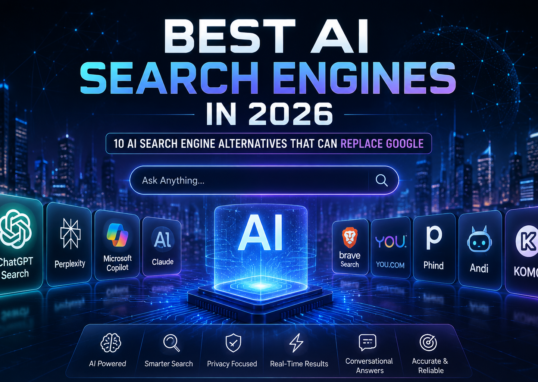
Best AI Search Engines in 2026: 10 AI Search Engine Alternatives That Can Replace Google
- 2
- 2,337 words
Google has dominated online search for more than two decades, and for many people, typing a query into Google has become second...
Read out all
Для лучшей эффективности требуется свежие базы для хрумера https://www.olx.ua/d/uk/obyavlenie/progon-hrumerom-dr-50-po-ahrefs-uvelichu-reyting-domena-IDXnHrG.html, обновляемые регулярно.