
- 0
- 1,696 word
In my 25 years working in cybersecurity, one lesson has remained constant: organizations rarely believe a serious data breach will happen to them until it does.
I have assisted businesses after ransomware attacks locked critical systems, investigated insider incidents involving stolen customer databases, and helped companies recover from cloud security misconfigurations that exposed sensitive information to the public internet. The financial impact was significant, but the damage to customer trust was often far worse.
Today, protecting business data is no longer just an IT responsibility. It is a business survival strategy.
Modern organizations face increasingly sophisticated threats, including ransomware, phishing campaigns, insider threats, cloud vulnerabilities, supply chain attacks, and AI-powered cybercrime. Whether you operate a startup, an e-commerce store, a professional services firm, or a multinational enterprise, implementing strong business data security measures is essential.
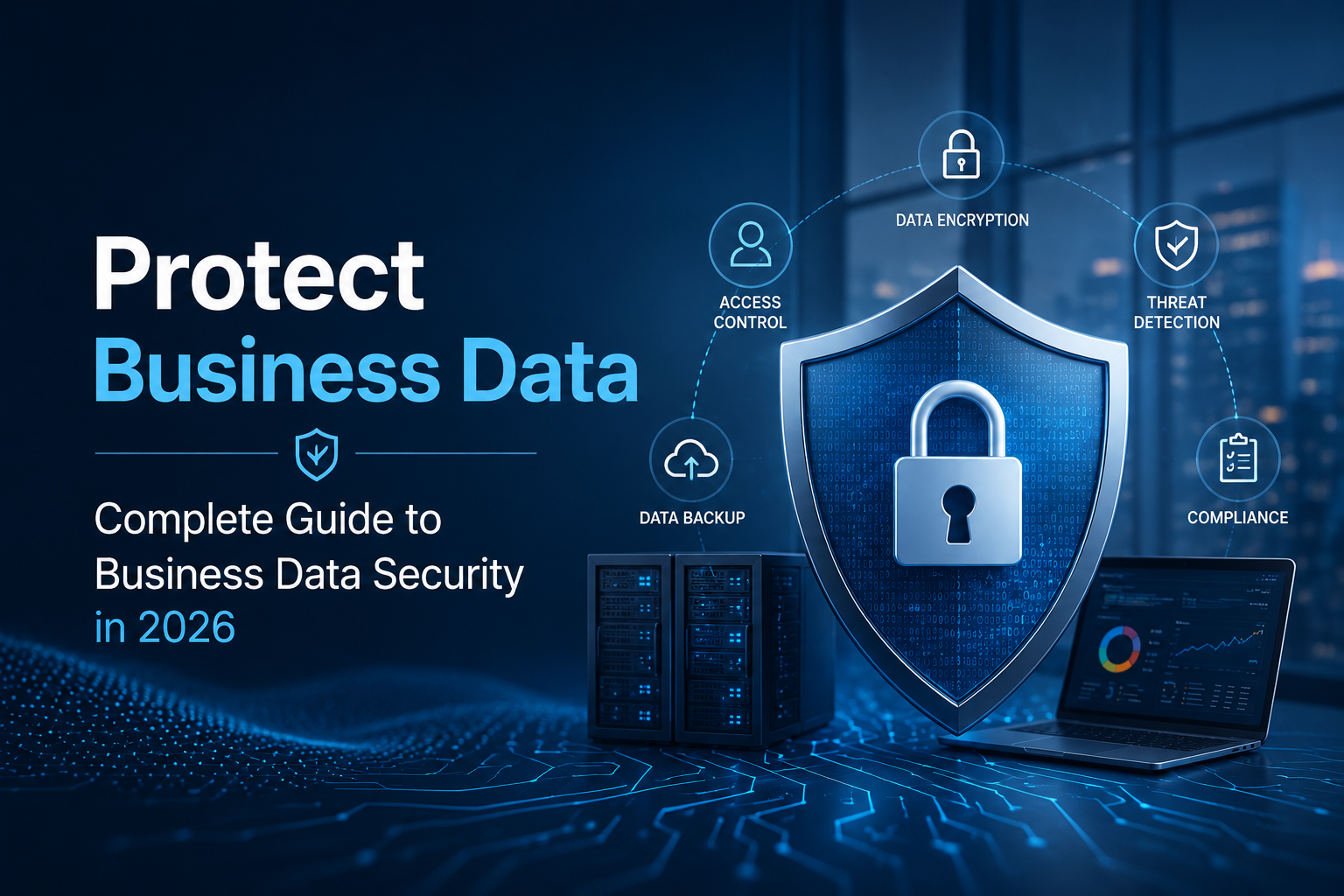
This guide explains how to protect business data effectively, shares practical insights from real-world security engagements, and outlines the business cybersecurity best practices every company should implement in 2026.
Why Businesses Must Protect Business Data
Organizations store enormous amounts of valuable information. Criminals understand this, which is why business data has become one of the world’s most targeted assets.
Rising Cost of Data Breaches
Over the past decade, I have observed a dramatic increase in breach costs. Organizations are no longer dealing solely with technical recovery expenses. They must also manage legal fees, regulatory penalties, customer notifications, forensic investigations, and operational disruptions.
A single ransomware incident can halt operations for days or weeks.
Financial Consequences
When businesses fail to secure business information, financial losses can occur through:
- Fraudulent transactions
- Business interruption
- Regulatory fines
- Recovery costs
- Lost revenue
- Legal settlements
Many small businesses underestimate these risks until they experience them firsthand.
Reputation Damage
Customers expect organizations to protect their personal information.
Once trust is broken, rebuilding it can take years.
I have worked with companies whose customer acquisition costs doubled following a public breach because prospects became hesitant to share information.
Legal and Compliance Risks
Modern privacy regulations require businesses to implement appropriate security controls.
Failure to maintain proper business data security may result in:
- Regulatory investigations
- Compliance violations
- Contractual penalties
- Civil lawsuits
Customer Trust Issues
Trust remains one of the most valuable business assets.
Organizations that consistently protect business data demonstrate reliability, professionalism, and accountability.

Most Common Threats to Business Data in 2026
Cyber threats continue evolving rapidly.
Ransomware Attacks
Ransomware remains one of the most destructive threats.
I have seen attackers encrypt entire environments within hours after gaining access through a single compromised account.
Modern ransomware groups often steal data before encryption, creating double-extortion scenarios.
Phishing Scams
Phishing continues to be the leading cause of security incidents.
Even highly trained employees occasionally click convincing malicious links.
Organizations should assume phishing attempts will occur daily.
Insider Threats
Not all threats originate externally.
Insider risks may involve:
- Malicious employees
- Negligent staff
- Third-party contractors
Many serious breaches involve excessive access permissions.
Cloud Misconfigurations
As businesses move to cloud platforms, configuration mistakes remain common.
Examples include:
- Public storage buckets
- Excessive permissions
- Unsecured APIs
- Poor identity management
Supply Chain Attacks
Attackers increasingly target vendors and software providers.
Compromising a trusted supplier often provides access to multiple organizations simultaneously.
AI-Powered Cyber Threats
Artificial intelligence has improved both defensive and offensive capabilities.
Attackers now use AI to:
- Create realistic phishing messages
- Automate reconnaissance
- Generate malware variations
- Conduct social engineering campaigns
Businesses must adapt their business cybersecurity best practices accordingly.
Business Cybersecurity Best Practices Every Company Should Follow
The following controls consistently deliver the highest security value.
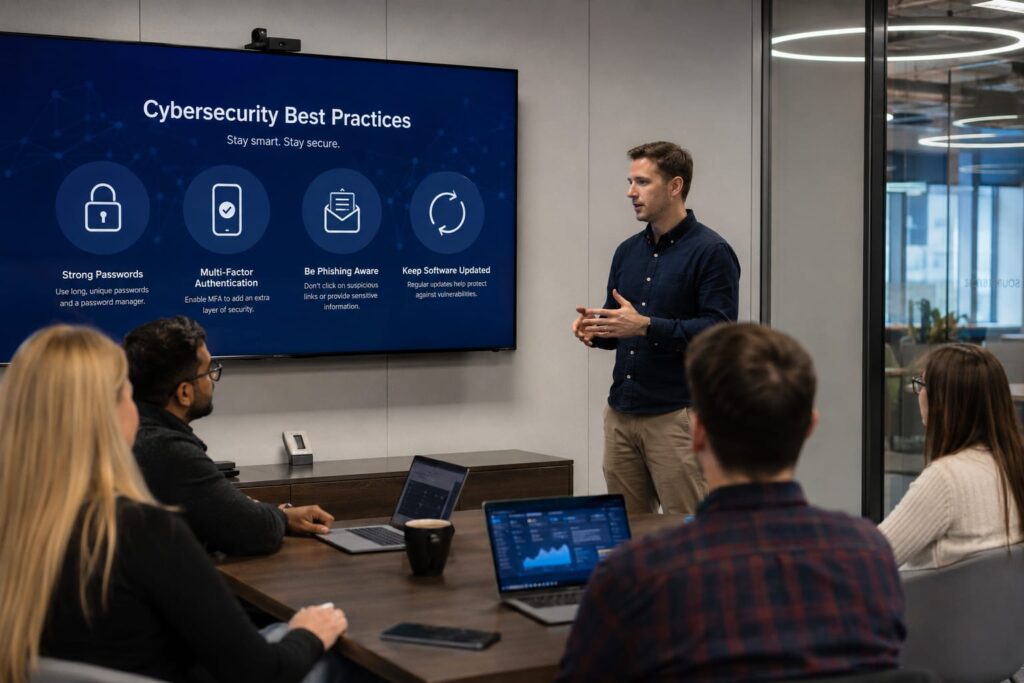
Strong Password Policies
Require:
- Long passphrases
- Password managers
- Unique credentials
Avoid password reuse across systems.
Multi-Factor Authentication
MFA remains one of the most effective security controls.
In many investigations, compromised accounts could have been prevented through MFA implementation.
Enable MFA for:
- Email accounts
- Cloud platforms
- VPN access
- Administrative systems
Employee Security Awareness Training
Technology alone cannot stop every attack.
Employees should learn:
- Phishing identification
- Social engineering awareness
- Safe browsing habits
- Incident reporting procedures
Endpoint Protection
Modern endpoint protection platforms provide:
- Malware detection
- Behavioral analysis
- Threat prevention
- Automated response
Patch Management
Attackers frequently exploit known vulnerabilities.
Establish a formal process to:
- Track updates
- Test patches
- Deploy fixes quickly
Secure Remote Work Policies
Remote work introduces additional risks.
Implement:
- VPN usage
- Device encryption
- Secure Wi-Fi practices
- Endpoint monitoring
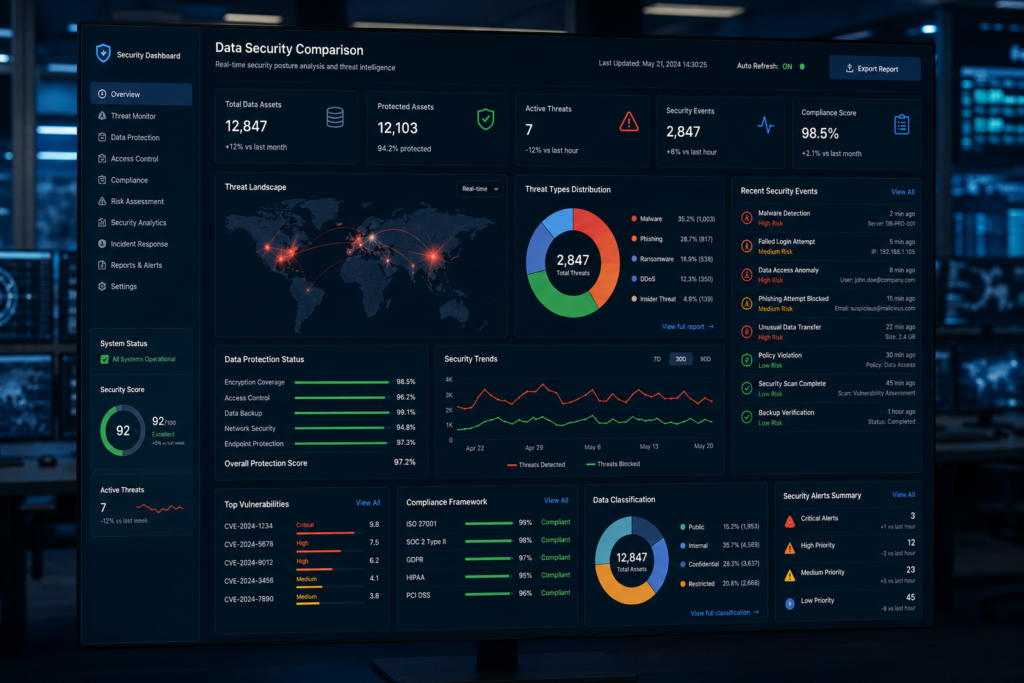
Data Classification
Not all information requires equal protection.
Classify data according to sensitivity levels:
- Public
- Internal
- Confidential
- Restricted
Access Control
Adopt the principle of least privilege.
Users should only access information necessary for their responsibilities.
Data Protection for Small Business – Essential Security Measures
Many small businesses assume attackers only target large enterprises.
That assumption is dangerous.
In reality, cybercriminals often view small organizations as easier targets.
Security on a Limited Budget
Prioritize:
- MFA deployment
- Security awareness training
- Endpoint protection
- Cloud security controls
- Backup solutions
These measures provide substantial risk reduction.
Cloud Security Recommendations
Follow guidance from:
Enable security monitoring and review permissions regularly.
Secure Backups
Maintain:
- Local backups
- Cloud backups
- Offline backups
Test recovery procedures regularly.
Vendor Risk Management
Evaluate vendors before sharing sensitive data.
Review:
- Security certifications
- Compliance reports
- Incident history
- Access controls
Cyber Insurance
Cyber insurance should complement not replace strong business data security controls.
Policies can help mitigate financial losses following major incidents.
Comparison Table – Basic Security vs Advanced Business Data Security
| Security Area | Basic Protection | Advanced Protection |
|---|---|---|
| Password Security | Strong passwords | Password manager + passphrases + monitoring |
| Authentication | Single-factor login | MFA everywhere |
| Backups | Daily backups | Immutable, encrypted, tested backups |
| Monitoring | Basic logs | 24/7 threat monitoring and SIEM |
| Employee Training | Annual training | Continuous simulations and awareness programs |
| Incident Response | Informal process | Documented response plan with testing |
| Data Encryption | Partial encryption | End-to-end encryption strategy |
| Access Control | Role-based access | Least privilege + Zero Trust controls |
How to Secure Business Information in Cloud Environments
Cloud adoption continues to accelerate, but security responsibilities remain shared.
Cloud Security Risks
Common risks include:
- Misconfigured storage
- Weak identities
- Unsecured APIs
- Excessive permissions
Encryption Strategies
Encrypt:
- Data at rest
- Data in transit
- Sensitive backups
Use cloud-native encryption capabilities whenever possible.
Identity and Access Management
Implement:
- MFA
- Conditional access policies
- Privileged access controls
- Role-based permissions
Secure SaaS Usage
Review application permissions regularly.
Remove unused accounts immediately.
Cloud Backup Strategies
Maintain independent backups separate from production environments.
Guidance from Microsoft Security and Google Cloud Security consistently emphasizes resilient backup strategies.
Creating a Business Data Protection Strategy
A proactive strategy is the foundation of effective data protection for small business and enterprise environments alike.
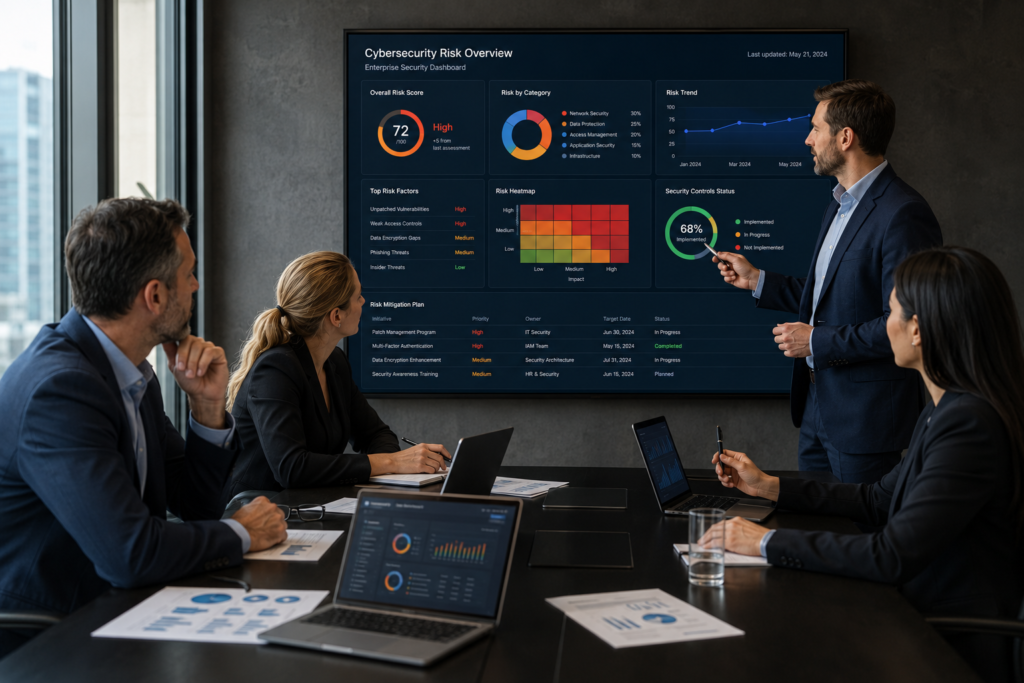
Risk Assessment
Identify:
- Critical assets
- Threats
- Vulnerabilities
- Potential impacts
Security Policies
Document policies covering:
- Acceptable use
- Password management
- Data handling
- Remote access
Incident Response Plan
Every organization should know:
- Who responds
- What actions occur first
- How communication is managed
- How evidence is preserved
Disaster Recovery Planning
Prepare for:
- Ransomware
- System failures
- Natural disasters
- Cloud outages
Continuous Monitoring
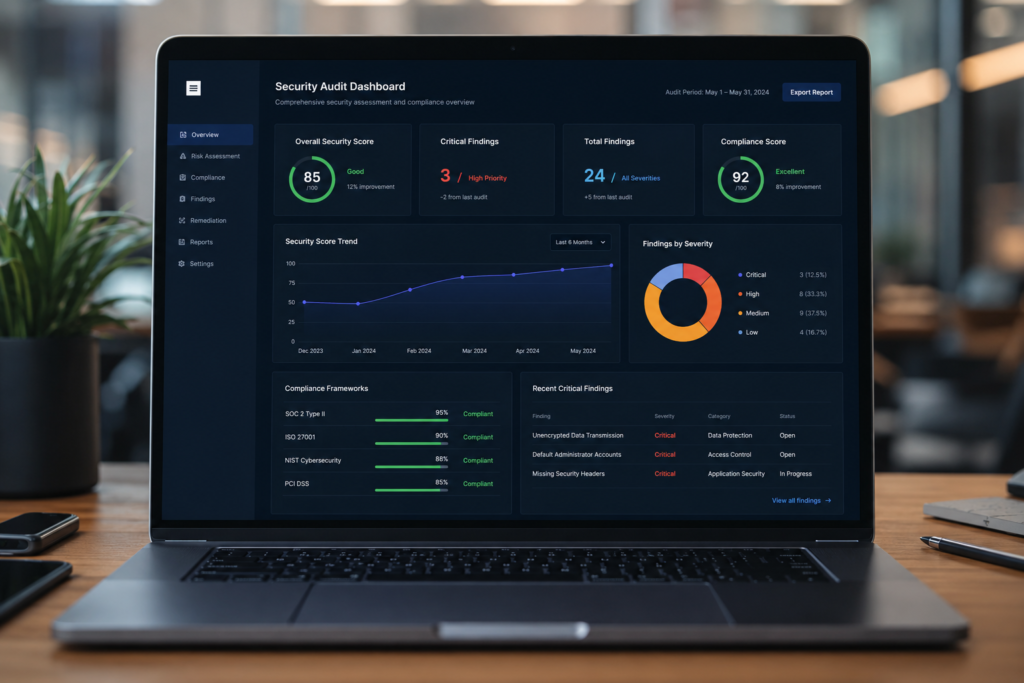
Use monitoring tools to detect suspicious activity before it becomes a major incident.
Organizations that detect threats early typically experience significantly lower recovery costs.
Future of Business Data Security
The next generation of business data security will rely heavily on automation and intelligence.
AI-Driven Defense Systems
AI will increasingly identify suspicious behavior before human analysts notice anomalies.
Zero Trust Architecture
Zero Trust assumes no user or device should be trusted automatically.
This model is rapidly becoming a standard recommendation from organizations such as CIS Controls and government security agencies.
Behavioral Analytics
Future systems will focus on behavior rather than signatures alone.
Automated Threat Detection
Security platforms will automate:
- Alert triage
- Threat hunting
- Incident response
- Risk prioritization
Security Automation Trends
Organizations adopting automation today are already improving detection speed and reducing operational costs.
Based on industry trends, I expect AI-enhanced security operations and Zero Trust implementations to become mainstream across organizations of all sizes by the end of this decade.
FAQ Section
1. What is the best way to protect business data?
The most effective approach combines MFA, encryption, employee training, secure backups, endpoint protection, and continuous monitoring.
2. Why is business data security important?
Business data security protects sensitive information, prevents financial losses, maintains customer trust, and supports regulatory compliance.
3. What are the biggest threats to business data in 2026?
Ransomware, phishing attacks, insider threats, cloud misconfigurations, supply chain compromises, and AI-powered cyberattacks are among the most significant threats.
4. How can small businesses secure business information on a budget?
Small businesses should prioritize MFA, cloud security controls, employee awareness training, secure backups, and endpoint protection.
5. How often should a business conduct security assessments?
Most organizations should perform risk assessments annually and review critical controls quarterly.
Conclusion
The organizations that successfully protect business data are not necessarily those with the largest cybersecurity budgets. They are the ones that consistently apply proven business cybersecurity best practices, build security into daily operations, and continuously adapt to evolving threats.
Effective business data security requires a combination of technology, processes, employee awareness, and leadership commitment. Whether you operate a startup or a global enterprise, the fundamentals remain the same: secure business information, control access, encrypt sensitive data, train employees, monitor continuously, and prepare for incidents before they occur.
As cyber threats continue to evolve in 2026 and beyond, proactive data protection for small business and enterprise environments will become a key competitive advantage.
Start today. Review your security posture, identify weaknesses, strengthen your controls, and make protecting your business data a strategic priority not an afterthought.
Author

razakh6402@gmail.com
Related Posts

Browser Security Extensions: Top Chrome Security Extensions & Privacy Browser Extensions You Need in 2026
- 0
- 2,358 words
best budgeting appsEvery year, browsers become smarter, websites become faster, and online services become more convenient. Unfortunately, cybercriminals evolve just as quickly....
Read out all
Passkeys: How Passwordless Authentication Is Replacing Passwords in 2026
- 0
- 2,452 words
If you’ve ever forgotten a password, reset the same account multiple times, or worried that your login credentials were exposed in a...
Read out all
Cybersecurity Checklist: Essential Small Business Cybersecurity Guide (2026)
- 0
- 2,462 words
Cyberattacks are no longer a problem reserved for large enterprises. Over the last 15 years, I’ve worked with startups, retail stores, healthcare...
Secure Cloud Storage: Best Secure Cloud Storage Services for Business & Personal Use (2026 Guide)
- 0
- 2,443 words
Whether you’re backing up family photos, sharing confidential client documents, or managing sensitive business files, choosing the right secure cloud storage service...

AI Scams: How to Protect Yourself from AI-Powered Scams in 2026 (Expert Guide)
- 0
- 1,918 word
Artificial intelligence has transformed the way we work, communicate, and manage our finances. Unfortunately, cybercriminals have embraced the same technology to create...
Read out all
Future of Cybersecurity: Top Cybersecurity Trends 2026, AI Innovations, and Predictions for the Next Decade
- 1
- 2,173 words
Twenty-five years ago, cybersecurity focused primarily on protecting desktop computers, on-premises servers, and corporate networks. Firewalls, antivirus software, and perimeter defenses formed...