
- 4
- 1,858 word
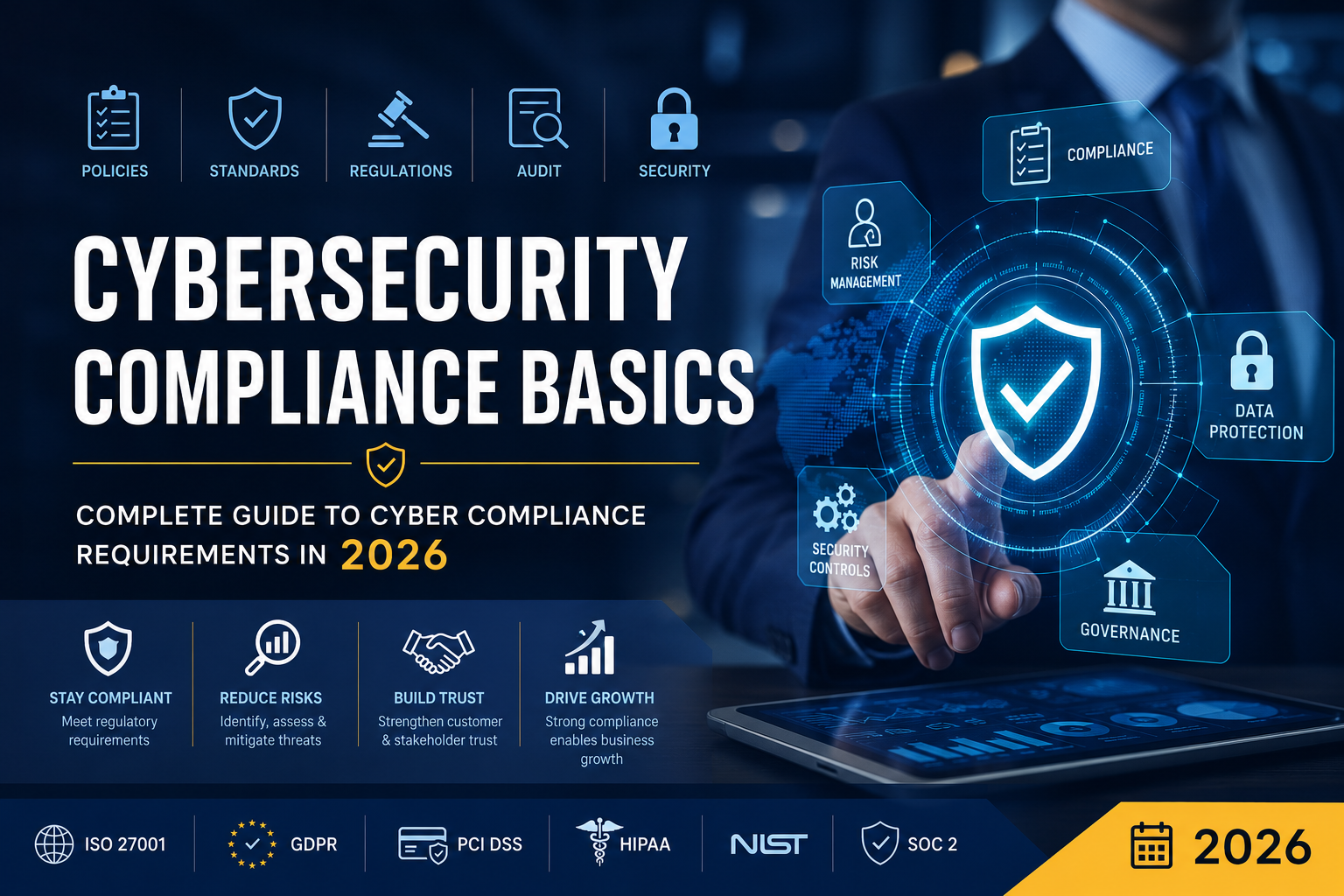
Learn cybersecurity compliance basics, cyber compliance requirements, security compliance checklist essentials, and key cybersecurity regulations for 2026.
Over the last 25 years, I have helped organizations prepare for regulatory audits, recover from compliance failures, implement security frameworks, and build sustainable governance programs. One lesson has remained consistent throughout every industry and every technology shift: organizations that treat cybersecurity compliance as a business priority experience fewer security incidents, lower regulatory risks, and greater customer trust.
Today, cybersecurity compliance matters more than ever. Regulators across the world continue to strengthen cybersecurity regulations, while cybercriminals constantly develop more sophisticated attack techniques. Data breaches now result in significant financial losses, legal penalties, operational disruption, and long-term reputational damage.
In my early consulting years, compliance assessments focused primarily on documentation. Today, auditors expect organizations to demonstrate operational effectiveness, continuous monitoring, and measurable security outcomes. Simply having policies is no longer enough.
Cybersecurity compliance serves as the foundation for protecting sensitive information, reducing cyber risks, and demonstrating accountability to customers, partners, regulators, and stakeholders.
Organizations that understand compliance cybersecurity principles gain a competitive advantage because they can confidently prove that security controls work as intended.
What Is Cybersecurity Compliance?
Definition and Importance
Cybersecurity compliance refers to the process of meeting legal, regulatory, contractual, and industry-specific security requirements designed to protect information systems and sensitive data.
These cyber compliance requirements typically require organizations to implement safeguards such as:
- Risk assessments
- Access controls
- Data protection measures
- Security monitoring
- Incident response procedures
- Employee security awareness training
The primary purpose of cybersecurity compliance is to establish minimum security standards that reduce organizational risk.
In practical terms, cybersecurity compliance helps organizations:
- Protect customer data
- Reduce legal exposure
- Improve operational resilience
- Strengthen stakeholder trust
- Prepare for audits and assessments
Throughout my consulting career, organizations with mature compliance cybersecurity programs consistently responded faster to security incidents and recovered more efficiently from disruptions.
Compliance vs Security
One of the biggest misconceptions I encounter during audits is the belief that compliance automatically equals security.
It does not.
Compliance establishes a baseline. Security requires continuous improvement.
For example, an organization may technically satisfy cyber compliance requirements by implementing password policies. However, if users create weak passwords and the organization lacks multi-factor authentication, actual security remains weak despite compliance.
The most successful organizations adopt a security-first mindset and use cybersecurity compliance as a framework for achieving broader security goals.

Why Cybersecurity Regulations Matter
Cybersecurity regulations exist because organizations handle increasingly sensitive data while facing growing cyber threats.
Modern regulations focus on four key objectives:
- Protecting personal information
- Reducing organizational risk
- Improving accountability
- Enhancing incident reporting
Examples of Major Regulations and Frameworks
GDPR
The General Data Protection Regulation establishes strict privacy and security requirements for organizations handling personal data.
HIPAA
Healthcare organizations use HIPAA requirements to protect patient information and ensure confidentiality.
PCI DSS
Organizations processing payment card information must follow PCI DSS standards to reduce fraud and protect financial data.
ISO 27001
ISO 27001 provides an internationally recognized framework for establishing and maintaining information security management systems.
SOC 2
SOC 2 focuses on security controls within service organizations, particularly cloud and technology providers.
NIST Cybersecurity Framework
The NIST Cybersecurity Framework offers a risk-based approach to identifying, protecting, detecting, responding to, and recovering from cyber threats.
Over the years, cybersecurity regulations have evolved significantly. Earlier frameworks emphasized policy development. Modern regulations increasingly focus on evidence, effectiveness, risk management, and continuous monitoring.
Key Cyber Compliance Requirements Every Business Should Know
Regardless of industry, most cyber compliance requirements include several core security practices.
Risk Assessments
Risk assessments identify threats, vulnerabilities, and business impacts.
Organizations should perform formal assessments at least annually and after significant technology changes.
Security Policies
Documented policies establish governance expectations and security responsibilities.
Policies should address:
- Access management
- Data protection
- Incident response
- Acceptable use
- Vendor management
Access Controls
Access should follow the principle of least privilege.
Users should only access systems and data necessary for their job functions.
Data Encryption
Encryption protects sensitive information during storage and transmission.
Organizations should encrypt:
- Customer information
- Financial records
- Healthcare data
- Intellectual property
Incident Response Planning
Every organization needs a tested incident response plan.
The best plans clearly define:
- Roles and responsibilities
- Escalation procedures
- Communication workflows
- Recovery processes
Vulnerability Management
Regular vulnerability scanning and remediation reduce attack opportunities.
Successful programs prioritize risks based on severity and business impact.
Employee Security Training
Human error remains one of the leading causes of security incidents.
Security awareness training should cover:
- Phishing attacks
- Password security
- Data handling procedures
- Social engineering threats
Vendor Risk Management
Third-party providers often introduce significant compliance risks.
Organizations should evaluate vendor security practices before sharing sensitive information.

Common Cybersecurity Compliance Frameworks
NIST Cybersecurity Framework
Purpose: Risk-based cybersecurity management.
Best For: Government agencies, critical infrastructure, and private-sector organizations.
Benefits:
- Flexible implementation
- Strong risk focus
- Widely recognized
Challenges:
- Requires organizational maturity
- Demands ongoing monitoring
ISO 27001
Purpose: Information Security Management System (ISMS).
Best For: Organizations seeking international recognition.
Benefits:
- Globally accepted
- Certification available
- Strong governance structure
Challenges:
- Documentation intensive
- Requires significant commitment
SOC 2
Purpose: Demonstrate security controls for service organizations.
Best For: SaaS providers and cloud service companies.
Benefits:
- Builds customer trust
- Supports vendor assessments
Challenges:
- Continuous evidence collection
- Ongoing audit preparation
PCI DSS
Purpose: Payment card security.
Best For: Organizations processing cardholder data.
Benefits:
- Reduces payment fraud
- Protects customer financial information
Challenges:
- Strict technical requirements
- Frequent assessments
HIPAA
Purpose: Healthcare data protection.
Best For: Healthcare providers and related organizations.
Benefits:
- Protects patient privacy
- Improves healthcare security posture
Challenges:
- Complex compliance obligations
- Extensive documentation
CIS Controls
Purpose: Prioritized cybersecurity controls.
Best For: Organizations seeking practical security improvements.
Benefits:
- Actionable guidance
- Easier implementation
Challenges:
- Requires ongoing maintenance
- Must align with broader governance requirements
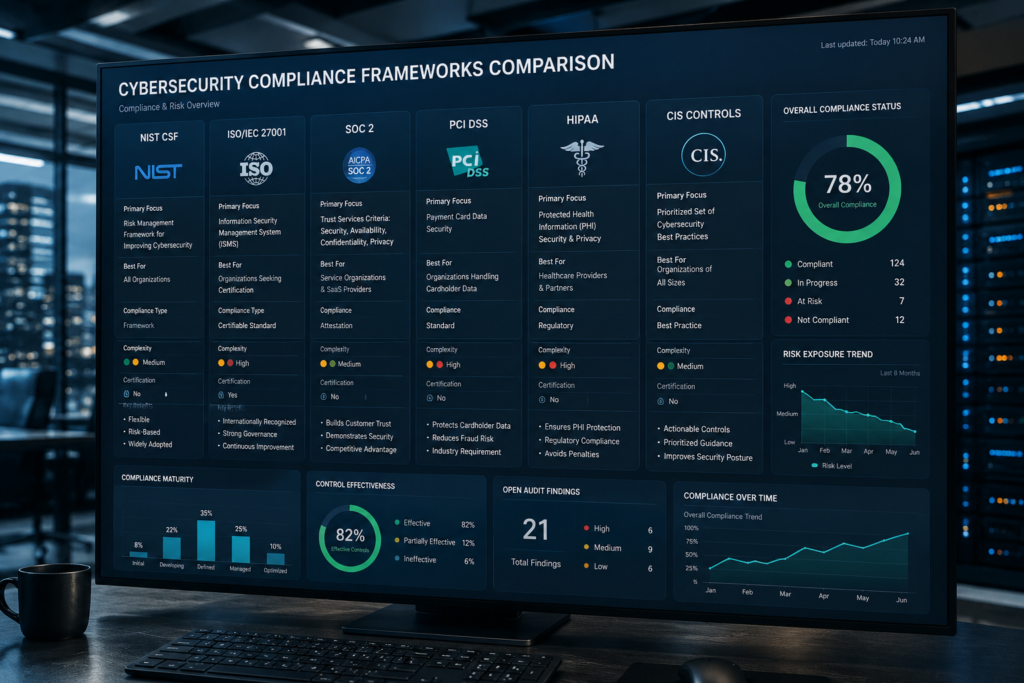
Comparison Table – Major Cybersecurity Compliance Frameworks
| Framework | Best For | Main Focus | Complexity | Certification Available |
|---|---|---|---|---|
| NIST CSF | Government & Enterprise | Risk Management | Medium | No |
| ISO 27001 | Global Organizations | ISMS Governance | High | Yes |
| SOC 2 | SaaS & Service Providers | Trust Services Criteria | Medium-High | Audit Attestation |
| PCI DSS | Payment Processors | Cardholder Data Protection | High | Compliance Validation |
| HIPAA | Healthcare Sector | Patient Data Security | Medium-High | No Formal Certification |
| CIS Controls | SMBs & Enterprises | Security Best Practices | Medium | No |
Choosing the Right Framework
From practical experience:
- Small businesses often start with CIS Controls and NIST CSF.
- International organizations benefit from ISO 27001.
- SaaS companies frequently require SOC 2.
- Payment processors must prioritize PCI DSS.
- Healthcare providers need HIPAA alignment.
Building an Effective Security Compliance Checklist
A strong security compliance checklist should include:
Asset Inventory
- Identify all hardware and software assets.
- Maintain ownership records.
Access Management
- Review user permissions regularly.
- Remove inactive accounts.
Password Policies
- Enforce strong password requirements.
- Prevent password reuse.
MFA Implementation
- Deploy multi-factor authentication across critical systems.
Data Encryption
- Encrypt sensitive information at rest and in transit.
Employee Awareness Training
- Conduct regular security awareness programs.
Patch Management
- Apply security updates promptly.
Backup Testing
- Verify backup restoration capabilities.
Incident Response Planning
- Test response plans through tabletop exercises.
Third-Party Risk Assessments
- Evaluate vendor security controls regularly.
Organizations that follow a structured security compliance checklist consistently perform better during audits and regulatory reviews.
Common Cybersecurity Compliance Mistakes
Treating Compliance as a One-Time Project
Compliance requires continuous effort.
Poor Documentation
Many organizations implement controls but fail to document them adequately.
Inadequate Employee Training
Technology alone cannot achieve cybersecurity compliance.
Weak Access Controls
Excessive privileges remain one of the most common audit findings.
Ignoring Third-Party Risks
Vendors often create hidden compliance cybersecurity exposures.
Lack of Continuous Monitoring
Organizations must continuously validate control effectiveness.
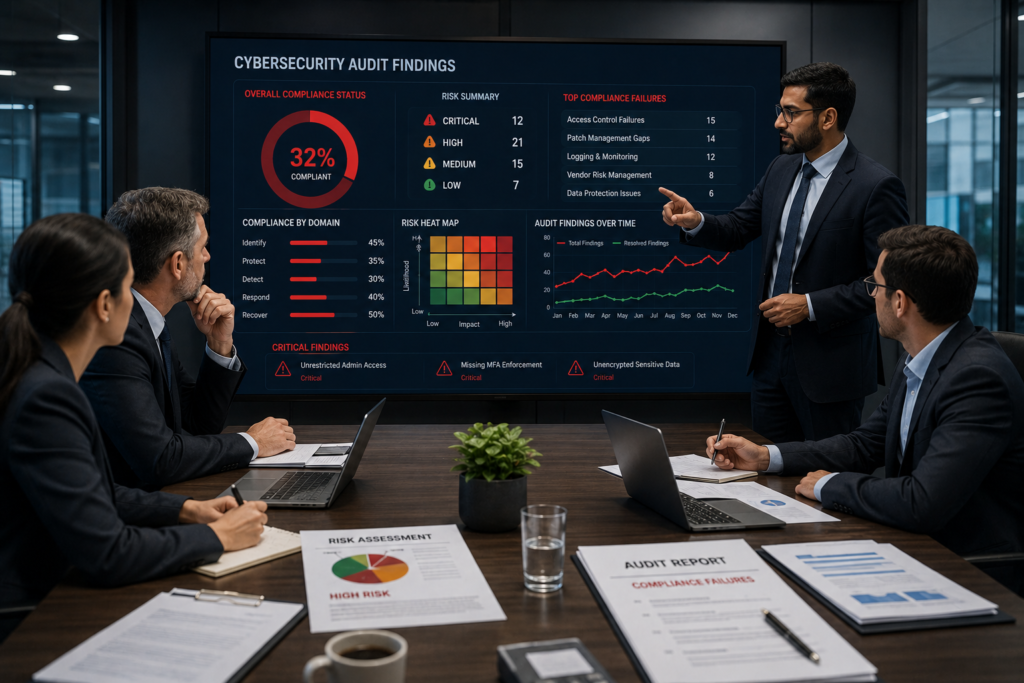
One recurring audit lesson from my consulting engagements is simple: organizations rarely fail because they lack controls; they fail because they cannot demonstrate consistent execution.
How Small Businesses Can Achieve Compliance Cybersecurity Goals
Small businesses often assume cybersecurity compliance is too expensive.
That assumption is usually incorrect.
Budget-Friendly Compliance Strategies
- Prioritize high-risk assets.
- Use cloud-based security solutions.
- Implement MFA.
- Standardize security policies.
Prioritizing Risks
Focus resources on protecting critical systems and sensitive data.
Cloud Security Considerations
Leverage cloud providers with strong security certifications and compliance programs.
Using Managed Security Services
Managed Security Service Providers can provide expertise without requiring large internal teams.
Preparing for Audits
Maintain organized documentation and evidence throughout the year instead of scrambling before assessments.
Future Trends in Cybersecurity Compliance
AI-Driven Compliance Monitoring
Artificial intelligence will increasingly automate compliance validation.
Continuous Compliance Automation
Organizations will move beyond annual assessments toward real-time compliance monitoring.
Zero Trust Requirements
Regulators increasingly expect Zero Trust security principles.
Supply Chain Security Regulations
Third-party oversight will become more stringent.
Cloud Governance
Cloud environments will face expanded regulatory scrutiny.
Privacy-Focused Regulations
Privacy regulations will continue expanding globally.
Automated Audit Readiness
Organizations will adopt platforms that continuously collect audit evidence.
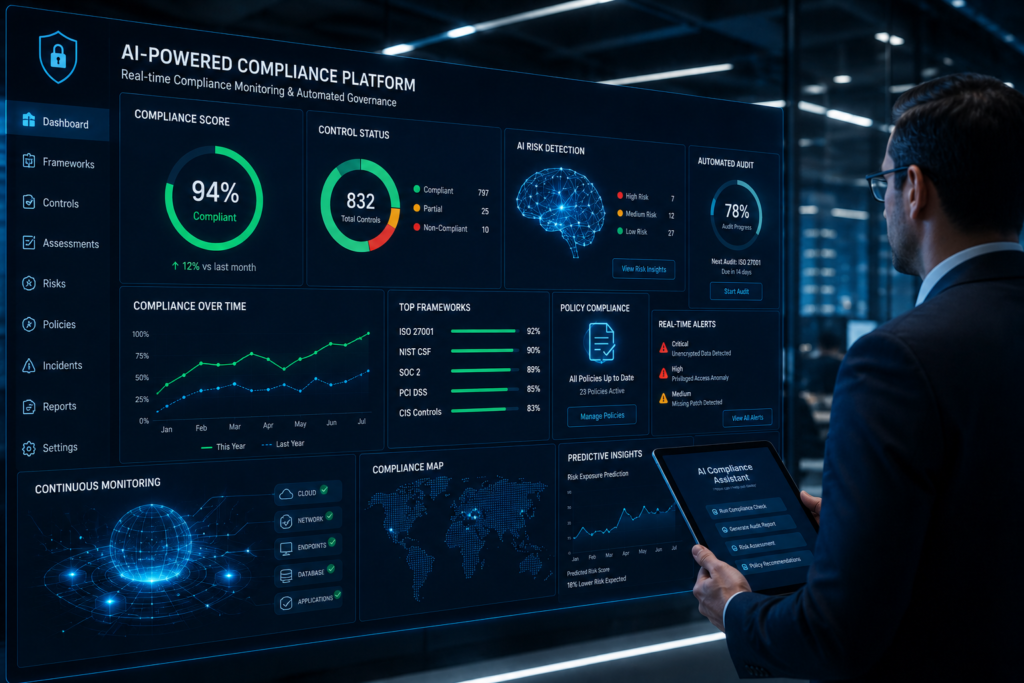
Based on current industry developments, future cybersecurity compliance programs will rely heavily on automation, continuous monitoring, and risk-based decision-making.
Frequently Asked Questions
What is cybersecurity compliance?
Cybersecurity compliance is the process of meeting legal, regulatory, contractual, and industry security requirements designed to protect systems, networks, and sensitive information.
Why are cybersecurity regulations important?
Cybersecurity regulations establish minimum security standards that reduce risk, protect customer data, improve accountability, and strengthen organizational resilience.
What are the most common cyber compliance requirements?
Common cyber compliance requirements include risk assessments, access controls, security policies, encryption, incident response planning, employee training, vulnerability management, and vendor risk management.
Which cybersecurity framework is best for small businesses?
Many small businesses benefit from starting with CIS Controls and the NIST Cybersecurity Framework because both provide practical, scalable guidance.
How often should organizations review compliance programs?
Organizations should review compliance programs continuously and perform formal assessments at least annually or whenever significant operational changes occur.
Conclusion
Cybersecurity compliance has evolved from a regulatory obligation into a strategic business requirement. Organizations that invest in mature compliance cybersecurity programs not only satisfy cyber compliance requirements but also strengthen security, improve resilience, and build customer trust.
Successful compliance programs depend on several key elements: risk assessments, access controls, encryption, employee awareness training, incident response planning, vendor oversight, and continuous monitoring. A well-designed security compliance checklist helps organizations maintain consistency and prepare for audits with confidence.
As cybersecurity regulations continue to expand worldwide, organizations must move beyond checkbox compliance and adopt a long-term, risk-based approach. The most effective programs integrate governance, security operations, and continuous improvement into everyday business processes.
Now is the time to assess your cybersecurity compliance posture, identify gaps, strengthen controls, and build a sustainable compliance strategy that protects your organization well into the future.
Author

razakh6402@gmail.com
Related Posts

Browser Security Extensions: Top Chrome Security Extensions & Privacy Browser Extensions You Need in 2026
- 0
- 2,358 words
best budgeting appsEvery year, browsers become smarter, websites become faster, and online services become more convenient. Unfortunately, cybercriminals evolve just as quickly....
Read out all
Passkeys: How Passwordless Authentication Is Replacing Passwords in 2026
- 0
- 2,452 words
If you’ve ever forgotten a password, reset the same account multiple times, or worried that your login credentials were exposed in a...
Read out all
Cybersecurity Checklist: Essential Small Business Cybersecurity Guide (2026)
- 0
- 2,462 words
Cyberattacks are no longer a problem reserved for large enterprises. Over the last 15 years, I’ve worked with startups, retail stores, healthcare...
Secure Cloud Storage: Best Secure Cloud Storage Services for Business & Personal Use (2026 Guide)
- 0
- 2,443 words
Whether you’re backing up family photos, sharing confidential client documents, or managing sensitive business files, choosing the right secure cloud storage service...

AI Scams: How to Protect Yourself from AI-Powered Scams in 2026 (Expert Guide)
- 0
- 1,918 word
Artificial intelligence has transformed the way we work, communicate, and manage our finances. Unfortunately, cybercriminals have embraced the same technology to create...
Read out all
Future of Cybersecurity: Top Cybersecurity Trends 2026, AI Innovations, and Predictions for the Next Decade
- 1
- 2,173 words
Twenty-five years ago, cybersecurity focused primarily on protecting desktop computers, on-premises servers, and corporate networks. Firewalls, antivirus software, and perimeter defenses formed...
4 comments