
- 3
- 2,758 words
Identity theft is no longer a problem that affects only a handful of people. Over the past decade, I have watched cybercriminals evolve from stealing physical wallets to exploiting massive data breaches, phishing campaigns, and sophisticated social engineering attacks. Today, a single leaked password or exposed Social Security number can lead to financial fraud, unauthorized loans, tax fraud, or even complete account takeovers.
Throughout my 25 years working in cybersecurity and identity protection, I’ve helped individuals recover from devastating identity theft incidents. One client discovered fraudulent credit cards opened in their name months after their information appeared in a large data breach. Another lost access to online banking after criminals hijacked their phone number through a SIM swapping attack. These experiences taught me one important lesson: prevention is far easier, less stressful, and significantly less expensive than recovery.
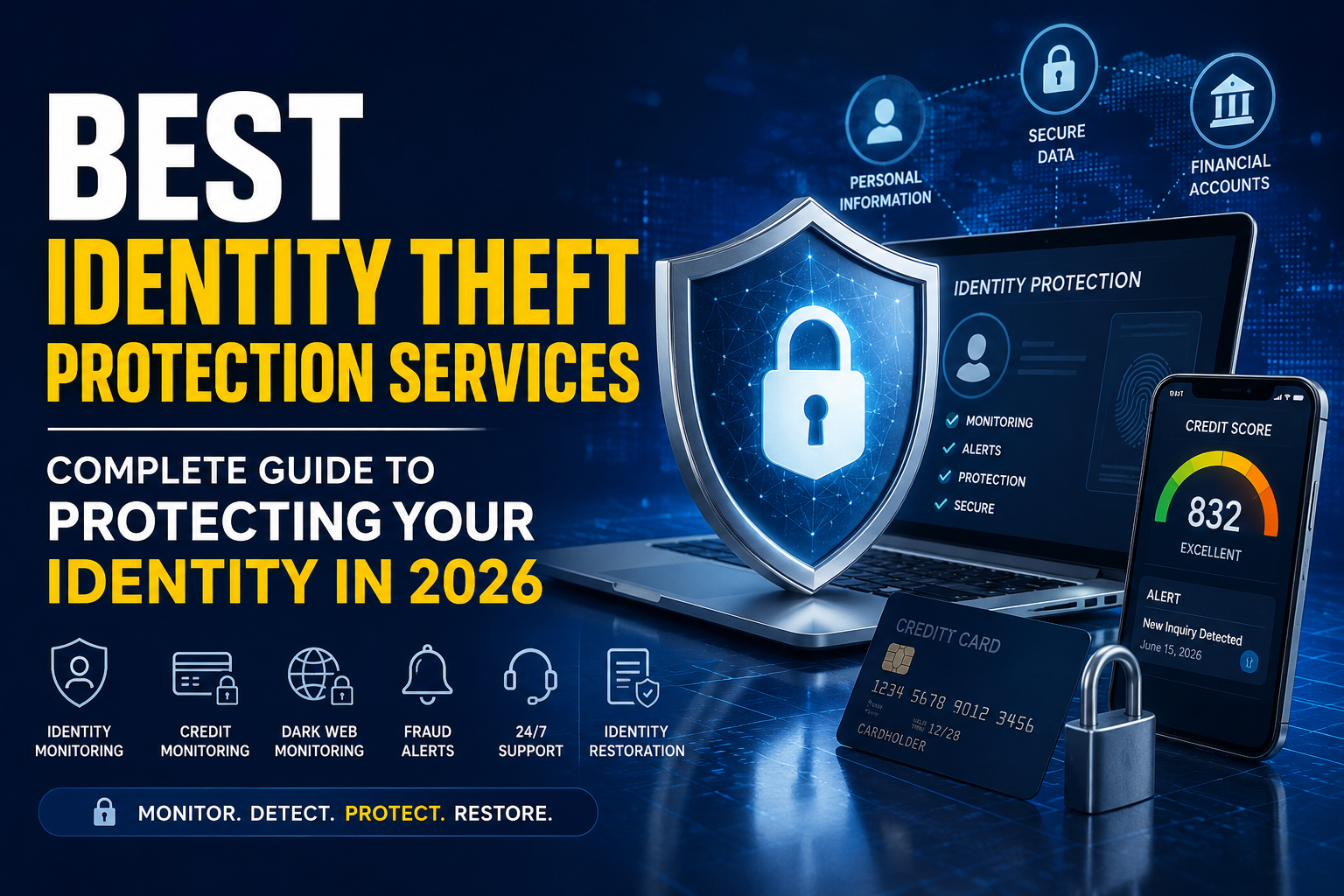
This is where the best identity theft protection services make a real difference. Modern identity theft protection services continuously monitor your personal information, alert you to suspicious activity, and help you recover if criminals misuse your identity. Many providers also combine identity monitoring services, credit monitoring, fraud alerts, dark web surveillance, and dedicated recovery specialists into one comprehensive solution.
If you spend time online, use digital banking, shop on e-commerce websites, or maintain multiple online accounts, investing in credit monitoring and identity theft protection has become one of the smartest security decisions you can make.
What Is Identity Theft Protection?
Simple Definition
Identity theft protection is a security service that monitors your personal information, detects suspicious activity, sends real-time alerts, and provides recovery assistance if someone attempts to steal or misuse your identity.
Unlike traditional antivirus software, these services focus on protecting your personal identity rather than just your devices.
How Identity Theft Happens
Many people believe hackers only target wealthy individuals or large corporations. My experience says otherwise. Cybercriminals often focus on everyday consumers because they typically have weaker security practices.
Some of the most common identity theft methods include:
- Large-scale data breaches exposing millions of customer records
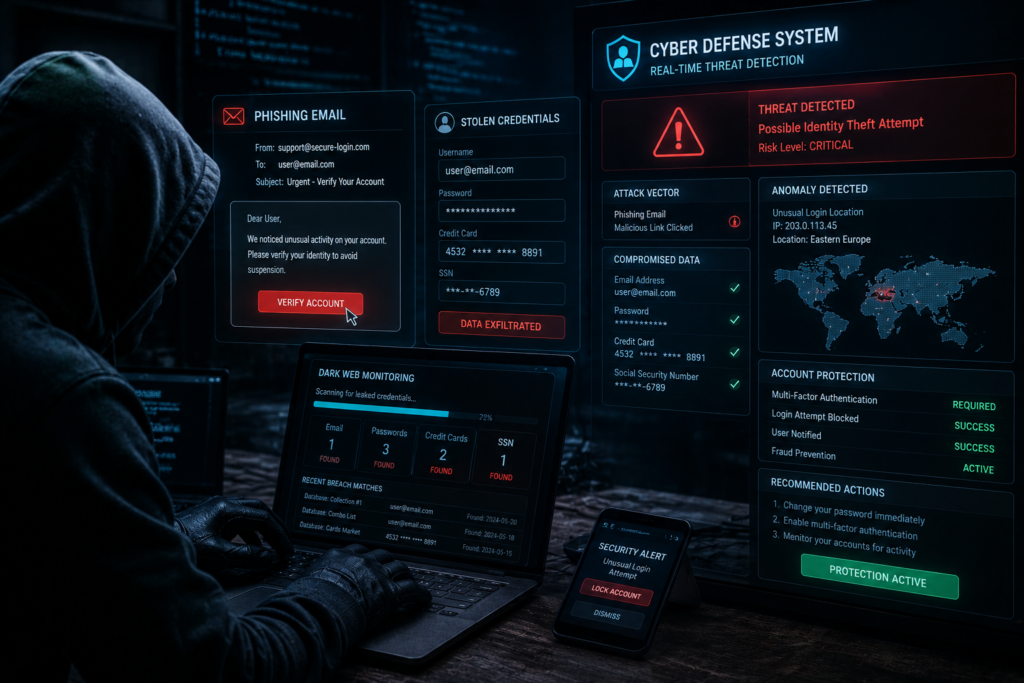
- Phishing emails designed to steal login credentials
- Social engineering attacks that manipulate victims into revealing sensitive information
- Public Wi-Fi networks intercepting unsecured communications
- Malware and spyware silently collecting passwords and financial data
One case I investigated involved a victim who simply connected to an unsecured airport Wi-Fi network to check online banking. Within days, unauthorized transactions appeared across multiple financial accounts. That incident reinforced how small security mistakes can have significant consequences.
Why Traditional Security Is No Longer Enough
Installing antivirus software and using a firewall remain important, but they no longer provide complete protection.
Modern cybercriminals target identities rather than devices. They purchase stolen credentials on underground marketplaces, combine leaked information from multiple breaches, and use automated tools to impersonate victims.
This is why identity theft monitoring has become essential. It helps detect suspicious activity before financial damage becomes irreversible.
Why Identity Theft Protection Services Matter in 2026
Increasing Data Breaches
Every year, organizations across healthcare, retail, finance, education, and government sectors experience data breaches. Even companies with strong cybersecurity programs can become targets.
Unfortunately, consumers have little control over how businesses protect stored personal information. Once your data is exposed, criminals may attempt to exploit it months or even years later.
This is why identity theft protection services provide continuous monitoring rather than one-time scans.
Growth of Online Banking
Digital banking has transformed personal finance by offering convenience and instant access to accounts. However, it has also expanded the attack surface for cybercriminals.
Fraudsters now target banking credentials, payment apps, and digital wallets using phishing pages and credential stuffing attacks. A quality identity protection service monitors these risks and alerts you before fraudulent transactions escalate.
Rise of Financial Fraud
Financial fraud has become increasingly sophisticated. Criminals can:
- Open credit cards
- Apply for personal loans
- File fraudulent tax returns
- Redirect benefit payments
- Access retirement accounts
I’ve seen victims spend months repairing damaged credit because they detected fraud too late. Early alerts from identity monitoring services could have significantly reduced their recovery time.
Expansion of Digital Identities
Most people now maintain dozens of online accounts, including email, social media, streaming platforms, healthcare portals, and e-commerce websites.
Each account stores valuable personal information that can contribute to identity theft when combined with data from other sources.
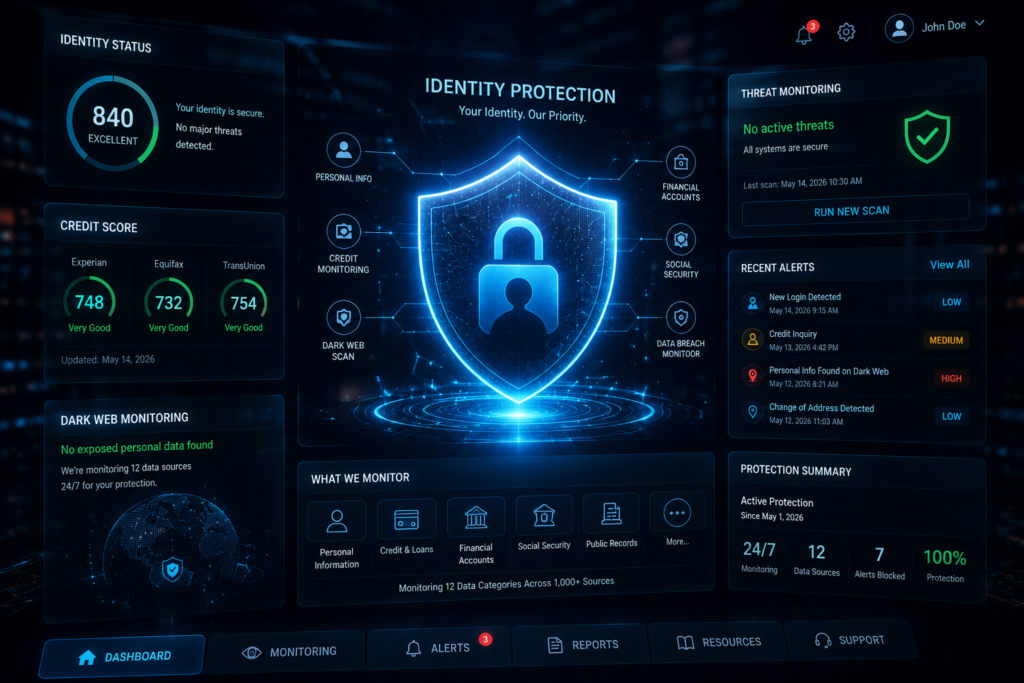
Modern identity theft monitoring protects more than just your credit report. It watches for suspicious activity across multiple aspects of your digital identity.
Social Media Exposure Risks
Many identity theft cases begin with information people voluntarily share online.
Birthdays, family names, hometowns, pet names, and employment history often appear on social media profiles. Criminals use this information to answer security questions or craft convincing phishing attacks.
One of the simplest recommendations I give clients is to review privacy settings regularly and avoid oversharing personal details.
Best Identity Theft Protection Services Compared
| Service | Credit Monitoring | Identity Monitoring | Fraud Alerts | Insurance Coverage | Family Plans |
|---|---|---|---|---|---|
| Aura | Yes | Yes | Yes | Yes | Yes |
| LifeLock | Yes | Yes | Yes | Yes | Yes |
| Identity Guard | Yes | Yes | Yes | Yes | Yes |
| ID Watchdog | Yes | Yes | Yes | Yes | Limited |
| PrivacyGuard | Yes | Yes | Yes | Limited | No |
Aura
Aura consistently ranks among the best identity theft protection services because it combines powerful monitoring tools with an intuitive user experience.
Key Features
- Real-time identity monitoring
- Dark web surveillance
- Three-bureau credit monitoring on eligible plans
- Fraud alerts
- Identity theft insurance
- Family protection plans
Pros
- Easy-to-use dashboard
- Fast fraud notifications
- Comprehensive monitoring
- Excellent customer support
Cons
- Premium plans cost more than basic competitors.
Ideal Users
Families, professionals, remote workers, and individuals seeking all-in-one protection.
From my experience evaluating identity security platforms, Aura strikes one of the best balances between automation, monitoring depth, and recovery assistance.
LifeLock
LifeLock has remained one of the most recognizable names in identity theft protection services for years.
Its extensive monitoring network, fraud detection capabilities, and recovery specialists make it attractive for consumers who prioritize brand reputation.
Pros
- Comprehensive monitoring
- Identity restoration assistance
- Multiple plan options
Cons
- Some premium features require higher-priced subscriptions.
Ideal Users
Individuals seeking broad identity and credit monitoring with established recovery support.
Identity Guard
Identity Guard emphasizes intelligent threat detection powered by advanced analytics.
Its platform focuses on identifying unusual behavior before it develops into full-scale identity fraud.
Pros
- Strong identity monitoring
- Dark web monitoring
- Credit monitoring
- Family plans
Cons
- Some advanced monitoring features depend on subscription level.
Ideal Users
Families and consumers looking for proactive fraud detection.
ID Watchdog
ID Watchdog delivers reliable monitoring with an emphasis on identity recovery.
One feature I appreciate is its dedicated restoration specialists, who guide victims through the recovery process rather than leaving them to navigate complicated paperwork alone.
Pros
- Excellent recovery support
- Identity monitoring
- Credit monitoring
- Insurance coverage
Cons
- Family plan options are more limited.
Ideal Users
Consumers concerned about recovery assistance after identity theft.
PrivacyGuard
PrivacyGuard focuses on credit monitoring and identity protection while offering affordable entry-level plans.
Although it doesn’t provide as many family-focused features as some competitors, it remains a solid option for individuals.
Pros
- Budget-friendly
- Credit monitoring
- Identity monitoring
- Fraud alerts
Cons
- Limited insurance coverage
- No family plans
Ideal Users
Individuals seeking affordable credit monitoring and identity theft protection without paying for features they may not need.
Key Features to Look for in Identity Theft Protection Services
Choosing the best identity theft protection service involves more than comparing prices. Over the years, I’ve found that the most effective identity theft protection services share several core features that work together to detect, prevent, and recover from fraud.
Identity Theft Monitoring
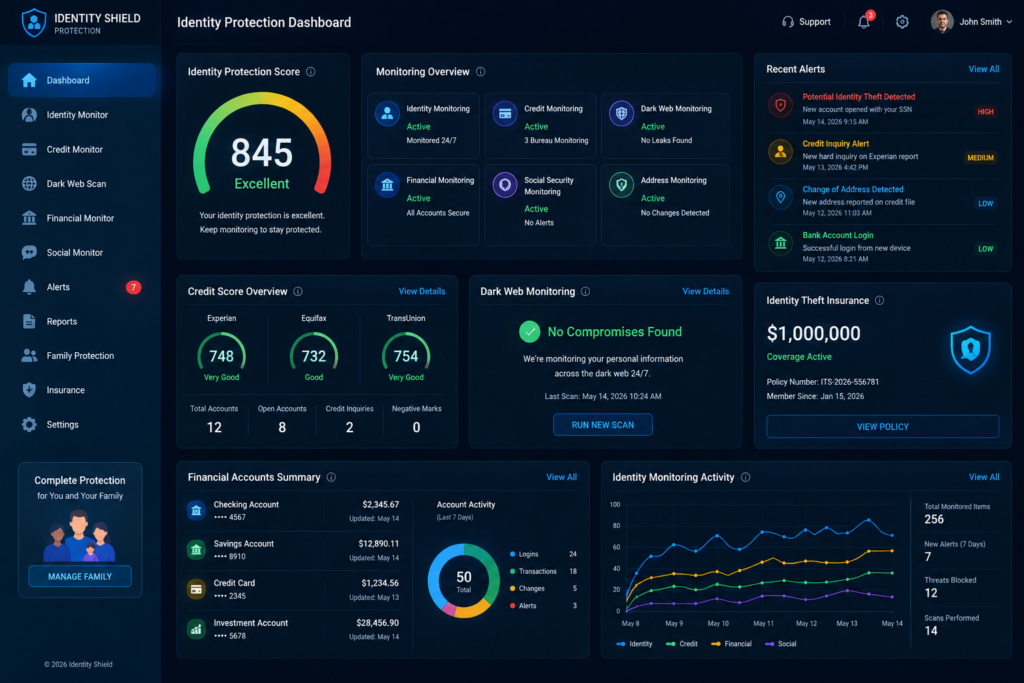
At the heart of every quality service is identity theft monitoring. These tools continuously scan databases, public records, and online sources for suspicious use of your personal information. The sooner unusual activity is detected, the faster you can respond.
Credit Monitoring and Identity Theft Protection
While credit monitoring tracks changes to your credit reports, comprehensive credit monitoring and identity theft protection goes much further. It also monitors personal information, alerts you to potential fraud, and often includes identity recovery assistance.
Dark Web Monitoring
Cybercriminals frequently sell stolen email addresses, passwords, Social Security numbers, and financial information on dark web marketplaces. Dark web monitoring scans these hidden forums and alerts you if your information appears.
Financial Account Monitoring
Many services monitor linked bank accounts and credit cards for suspicious transactions or unusual account activity, helping you catch fraud before it escalates.
Fraud Resolution Assistance
One feature I always recommend is access to fraud recovery specialists. Recovering from identity theft can involve contacting banks, credit bureaus, and government agencies. Experienced restoration experts can save victims countless hours and reduce stress.
Identity Theft Insurance
Most premium providers include insurance that helps cover eligible expenses related to restoring your identity, such as legal fees, lost wages, or document replacement costs. Remember that insurance doesn’t reimburse every financial loss, so review policy details carefully.
Social Security Number Monitoring
Monitoring for unauthorized use of your Social Security number adds another important layer of protection, especially against tax fraud and fraudulent credit applications.
Family Identity Protection
Children are increasingly targeted because their identities often remain unused for years. Family plans extend monitoring to spouses and children, making them a valuable investment for households.
Identity Monitoring Services Explained
What Are Identity Monitoring Services?
Identity monitoring services continuously watch for signs that your personal information is being misused. They monitor information such as email addresses, phone numbers, passwords, bank accounts, and government-issued identification.
How Monitoring Works
Modern monitoring platforms use automated systems that compare your personal information against data breaches, dark web marketplaces, public records, and financial activity. If something unusual appears, you’ll receive an alert so you can investigate immediately.
Types of Information Monitored
Depending on the provider, monitoring may include:
- Social Security numbers
- Email addresses
- Passwords
- Bank accounts
- Credit cards
- Driver’s licenses
- Passport numbers
- Medical identity
- Home title records
Real-Time Alerts
Speed matters. A real-time notification can help you freeze accounts, change passwords, or contact your bank before criminals cause extensive damage.
Fraud Prevention Benefits
From my experience helping identity theft victims, early detection consistently makes recovery faster and less expensive. That’s why identity monitoring services have become a critical part of personal cybersecurity.
Credit Monitoring and Identity Theft Protection
| Feature | Credit Monitoring | Identity Theft Protection |
|---|---|---|
| Credit Report Tracking | Yes | Often Included |
| Dark Web Monitoring | No | Yes |
| Fraud Resolution | Limited | Yes |
| Identity Recovery | No | Yes |
| Financial Monitoring | Limited | Yes |
| Insurance Coverage | Rare | Common |
Many consumers assume credit monitoring alone is enough, but that’s a common misconception.
Credit monitoring focuses primarily on changes to your credit reports. It may alert you to new credit inquiries or accounts, but it won’t necessarily detect compromised passwords, stolen Social Security numbers, or information circulating on the dark web.
Comprehensive credit monitoring and identity theft protection combines credit tracking with identity monitoring, fraud alerts, recovery services, and insurance coverage. Together, these tools provide broader protection against modern cyber threats.
Common Cyber Threats Leading to Identity Theft
Phishing Scams
Fraudulent emails, text messages, and fake login pages remain one of the most successful methods for stealing credentials. Always verify website addresses before entering sensitive information.
Data Breaches
Large-scale breaches continue to expose millions of customer records every year. Even if you practice good security habits, your information may still be compromised through third parties.
Account Takeovers
Criminals use stolen usernames and passwords to gain access to email, banking, and shopping accounts. Enabling multi-factor authentication significantly reduces this risk.
Malware Infections
Malicious software can record keystrokes, steal passwords, and monitor online activity without your knowledge. Keeping devices updated and using trusted security software helps reduce exposure.
Fake Websites
Cybercriminals often create convincing copies of banking and shopping websites. Double-check URLs and avoid clicking links from unexpected messages.
SIM Swapping
Attackers convince mobile carriers to transfer your phone number to another SIM card. Once successful, they may intercept security codes and reset passwords.
Social Engineering Attacks
Some of the most damaging attacks don’t rely on hacking at all. Instead, criminals manipulate people into revealing confidential information through phone calls, emails, or social media conversations.
How to Prevent Identity Theft
Protecting your identity requires consistent habits rather than a single security tool.
- Use strong, unique passwords for every account.
- Enable multi-factor authentication whenever available.
- Freeze your credit reports if you don’t plan to apply for new credit.
- Review financial statements regularly.
- Be cautious with unexpected emails and text messages.
- Limit the amount of personal information you share on social media.
- Keep smartphones and computers updated with the latest security patches.
- Invest in reliable identity theft monitoring and identity monitoring services for continuous protection.
Emerging Trends in Identity Theft Protection
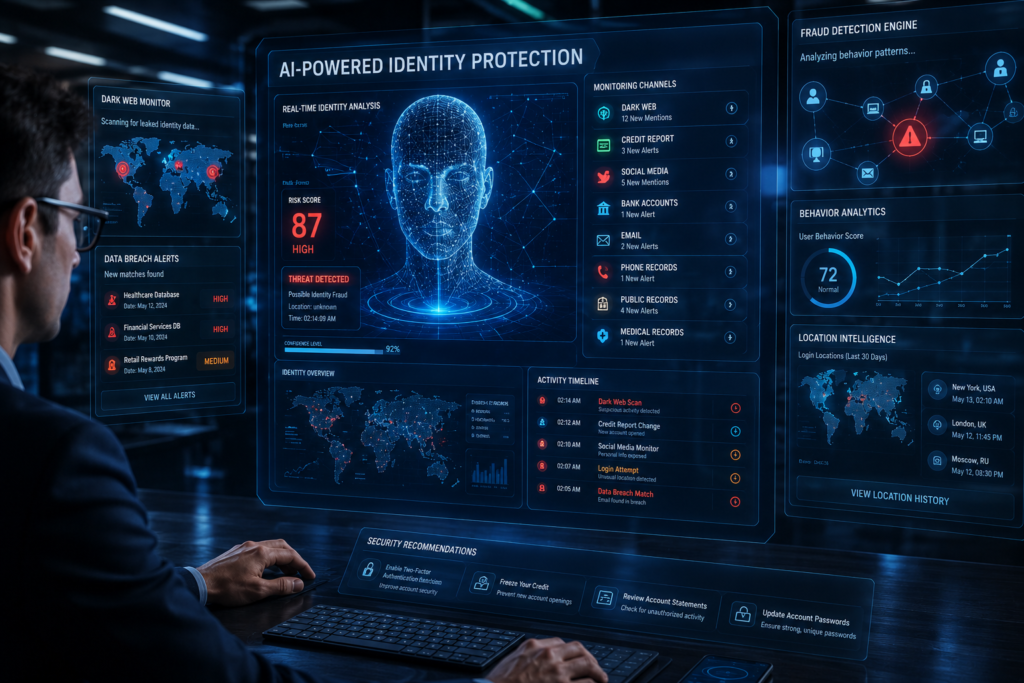
The future of identity theft protection services is becoming increasingly intelligent.
AI-Powered Fraud Detection
Behavioral Analytics
Continuous Identity Monitoring
Biometric Authentication
Passwordless Security
Digital Identity Protection Platforms
Many providers now combine identity monitoring, VPN services, antivirus protection, password managers, and secure cloud storage into a single platform.
Real-Time Threat Intelligence
Advanced monitoring systems use global threat intelligence to identify emerging fraud tactics before they become widespread.
Frequently Asked Questions
What is the best identity theft protection service?
The best service depends on your needs, but Aura, LifeLock, Identity Guard, ID Watchdog, and PrivacyGuard consistently rank among the top options for monitoring, alerts, and recovery assistance.
Are identity theft protection services worth it?
Yes. If you bank online, shop digitally, or have been affected by a data breach, these services provide valuable monitoring, fraud alerts, and recovery assistance that can save significant time and money.
What do identity monitoring services do?
They monitor your personal information across credit files, public records, breach databases, and the dark web, notifying you when suspicious activity is detected.
Is credit monitoring enough?
No. Credit monitoring only tracks credit-related activity. Comprehensive identity protection also includes dark web monitoring, fraud recovery, identity restoration, and broader personal information monitoring.
What is identity theft monitoring?
It is the continuous monitoring of personal information to detect unauthorized use and provide alerts before fraud causes extensive damage.
How does credit monitoring and identity theft protection work together?
Credit monitoring detects changes to your credit reports, while identity protection monitors a wider range of personal information and provides recovery services if fraud occurs.
Can identity theft protection stop fraud completely?
No service can prevent every attack, but continuous monitoring, early alerts, and rapid recovery assistance greatly reduce the impact of identity theft.
What should I do if my identity is stolen?
Immediately contact your financial institutions, place a fraud alert or credit freeze with the credit bureaus, change compromised passwords, report the theft through IdentityTheft.gov, and follow guidance from the Federal Trade Commission (FTC).
Conclusion
Identity theft has evolved into one of the most persistent cybersecurity threats facing consumers today. As digital banking, online shopping, and connected services continue to expand, protecting your personal information requires more than strong passwords alone.
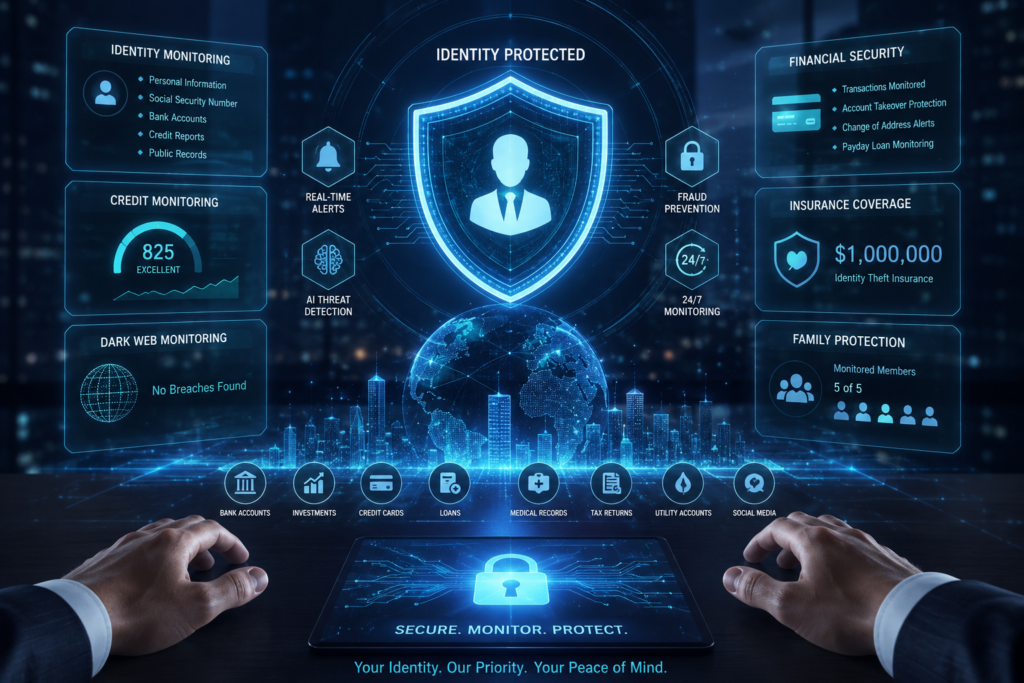
The best identity theft protection solutions combine identity monitoring services, identity theft monitoring, dark web surveillance, fraud alerts, recovery assistance, and credit monitoring and identity theft protection into a single, proactive defense. Whether you’re protecting yourself or your entire family, investing in a trusted service can help you detect threats early and recover more quickly if fraud occurs.
After more than 25 years helping individuals and organizations respond to identity theft incidents, one lesson has remained constant: the people who monitor their identities consistently experience less financial loss, recover faster, and avoid much of the stress associated with fraud.
Don’t wait until your identity is compromised. Take proactive steps today by strengthening your online security, enabling multi-factor authentication, monitoring your financial accounts, and choosing an identity protection service that fits your needs. In today’s digital world, prevention remains your strongest defense.
Author

razakh6402@gmail.com
Related Posts
Browser Security Extensions: Top Chrome Security Extensions & Privacy Browser Extensions You Need in 2026
- 0
- 2,358 words
best budgeting appsEvery year, browsers become smarter, websites become faster, and online services become more convenient. Unfortunately, cybercriminals evolve just as quickly....
Read out all
Passkeys: How Passwordless Authentication Is Replacing Passwords in 2026
- 0
- 2,452 words
If you’ve ever forgotten a password, reset the same account multiple times, or worried that your login credentials were exposed in a...
Read out all
Cybersecurity Checklist: Essential Small Business Cybersecurity Guide (2026)
- 0
- 2,462 words
Cyberattacks are no longer a problem reserved for large enterprises. Over the last 15 years, I’ve worked with startups, retail stores, healthcare...

Secure Cloud Storage: Best Secure Cloud Storage Services for Business & Personal Use (2026 Guide)
- 0
- 2,443 words
Whether you’re backing up family photos, sharing confidential client documents, or managing sensitive business files, choosing the right secure cloud storage service...
AI Scams: How to Protect Yourself from AI-Powered Scams in 2026 (Expert Guide)
- 0
- 1,918 word
Artificial intelligence has transformed the way we work, communicate, and manage our finances. Unfortunately, cybercriminals have embraced the same technology to create...
Read out all
Future of Cybersecurity: Top Cybersecurity Trends 2026, AI Innovations, and Predictions for the Next Decade
- 1
- 2,173 words
Twenty-five years ago, cybersecurity focused primarily on protecting desktop computers, on-premises servers, and corporate networks. Firewalls, antivirus software, and perimeter defenses formed...
3 comments